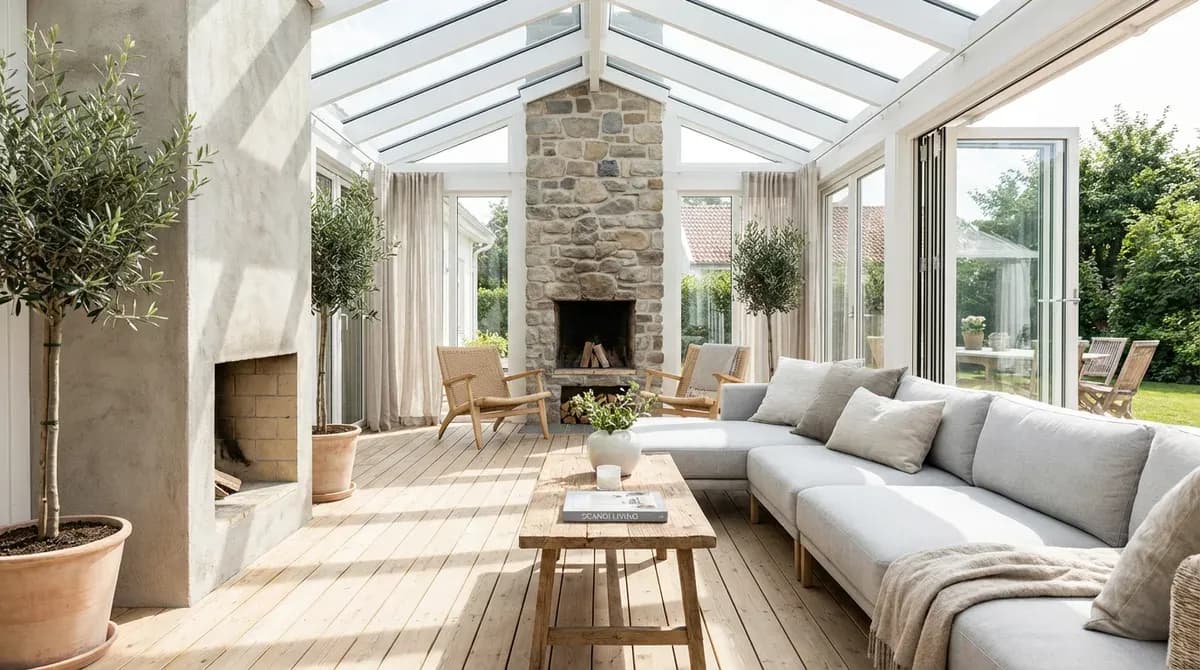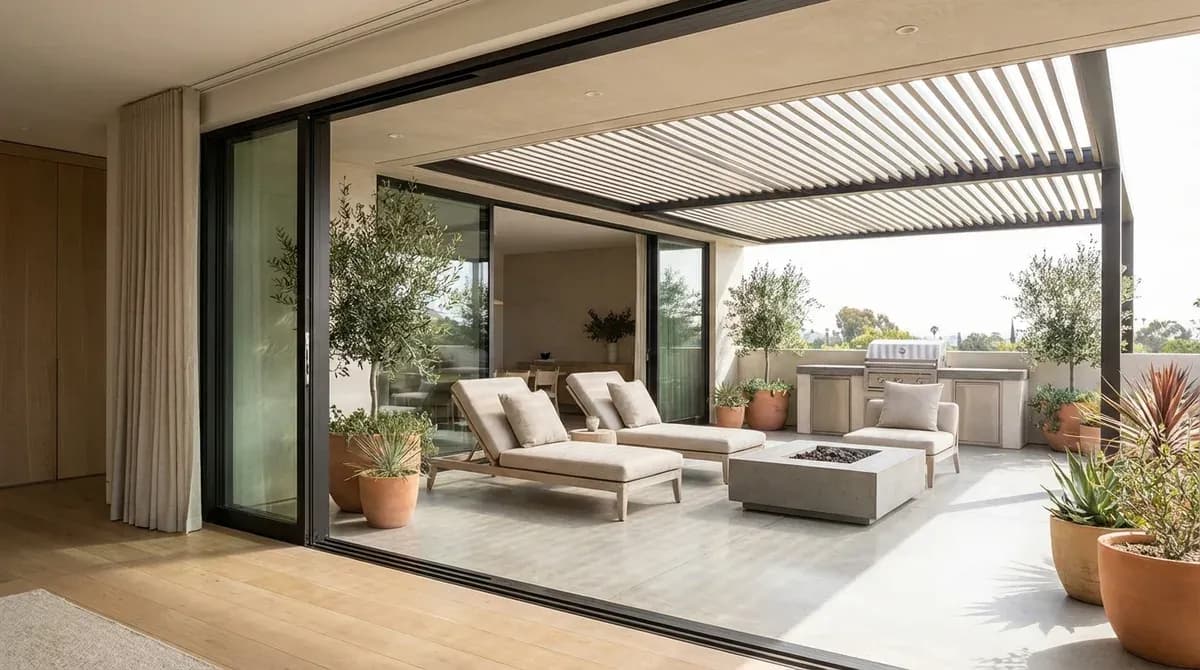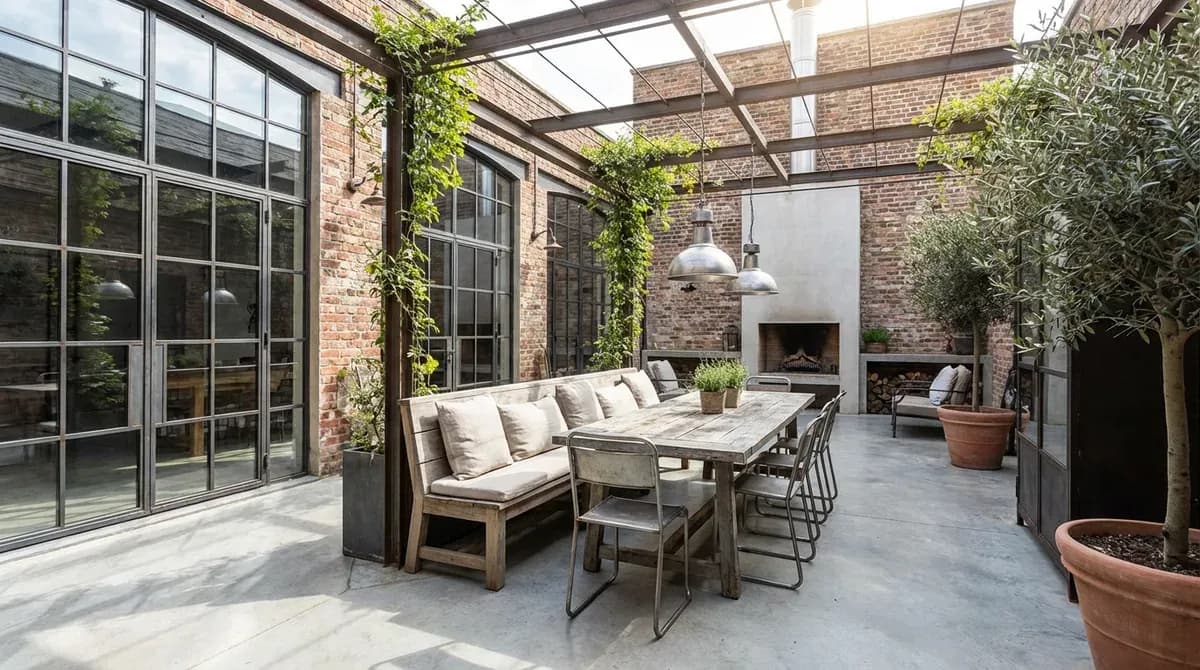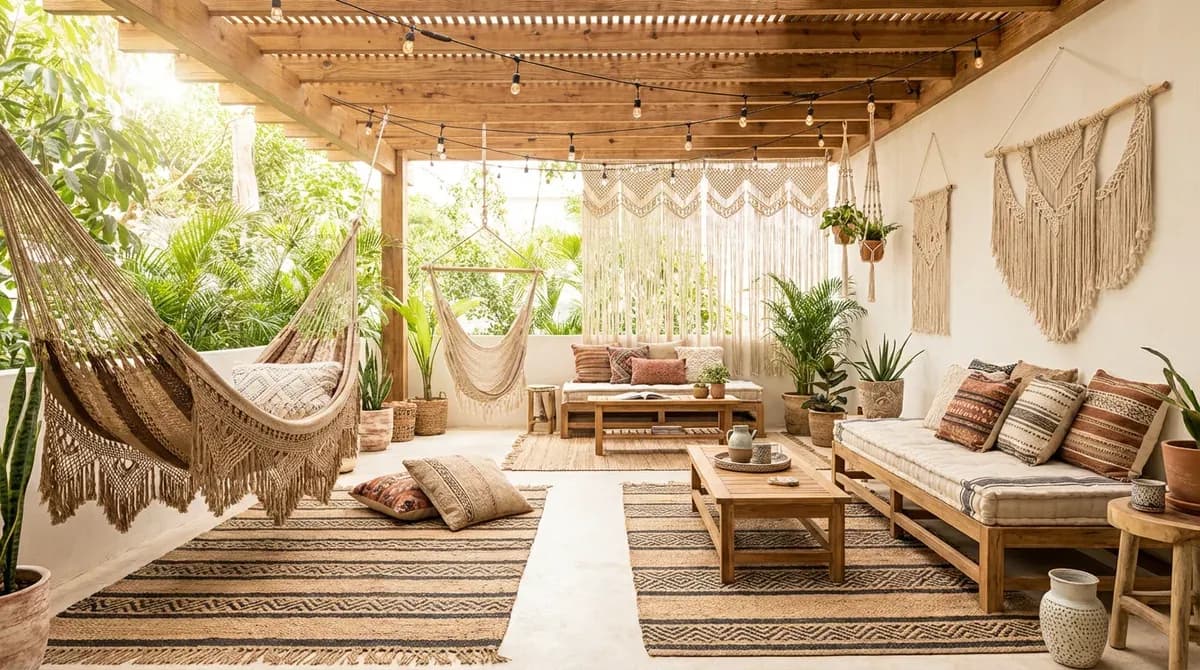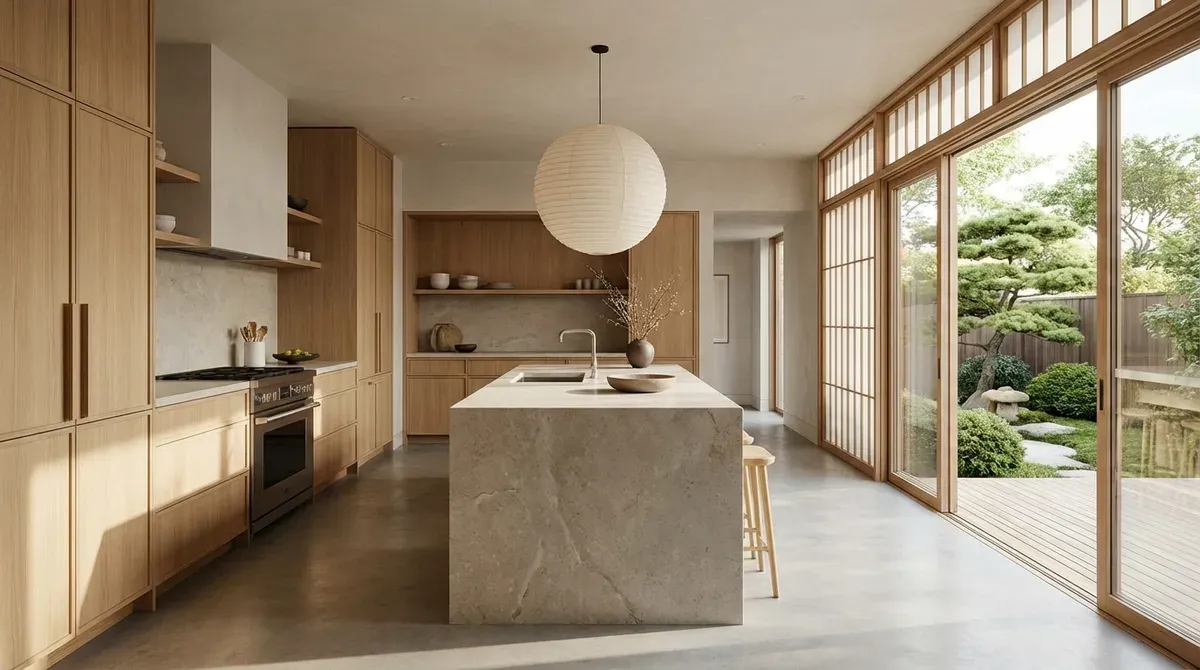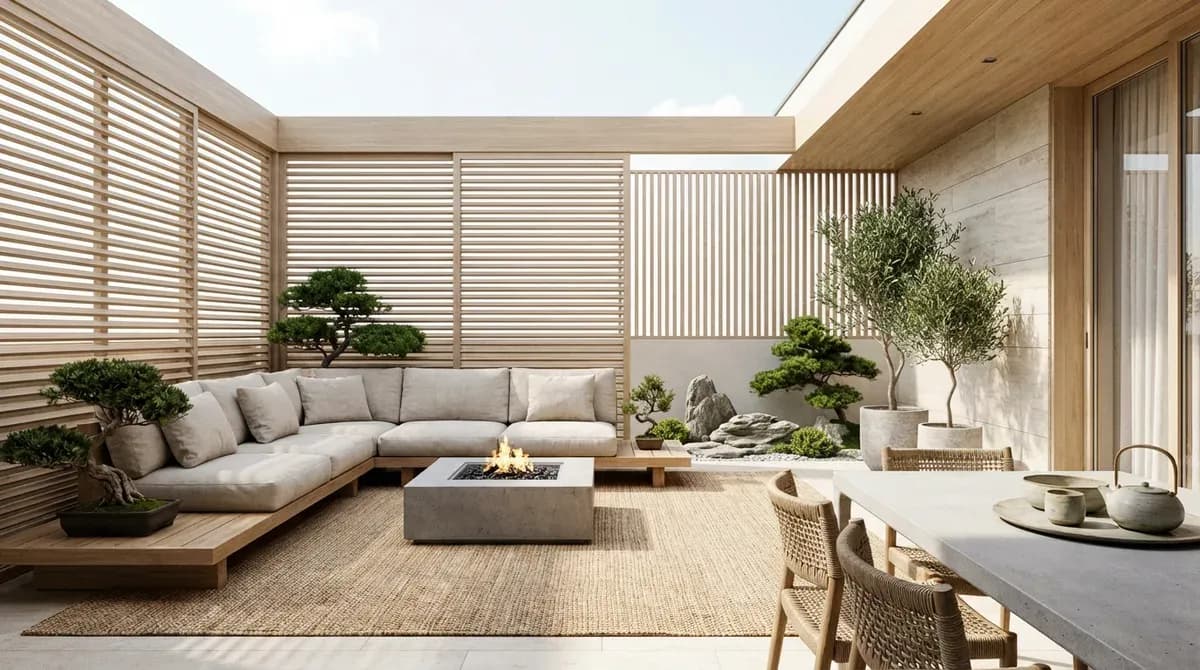
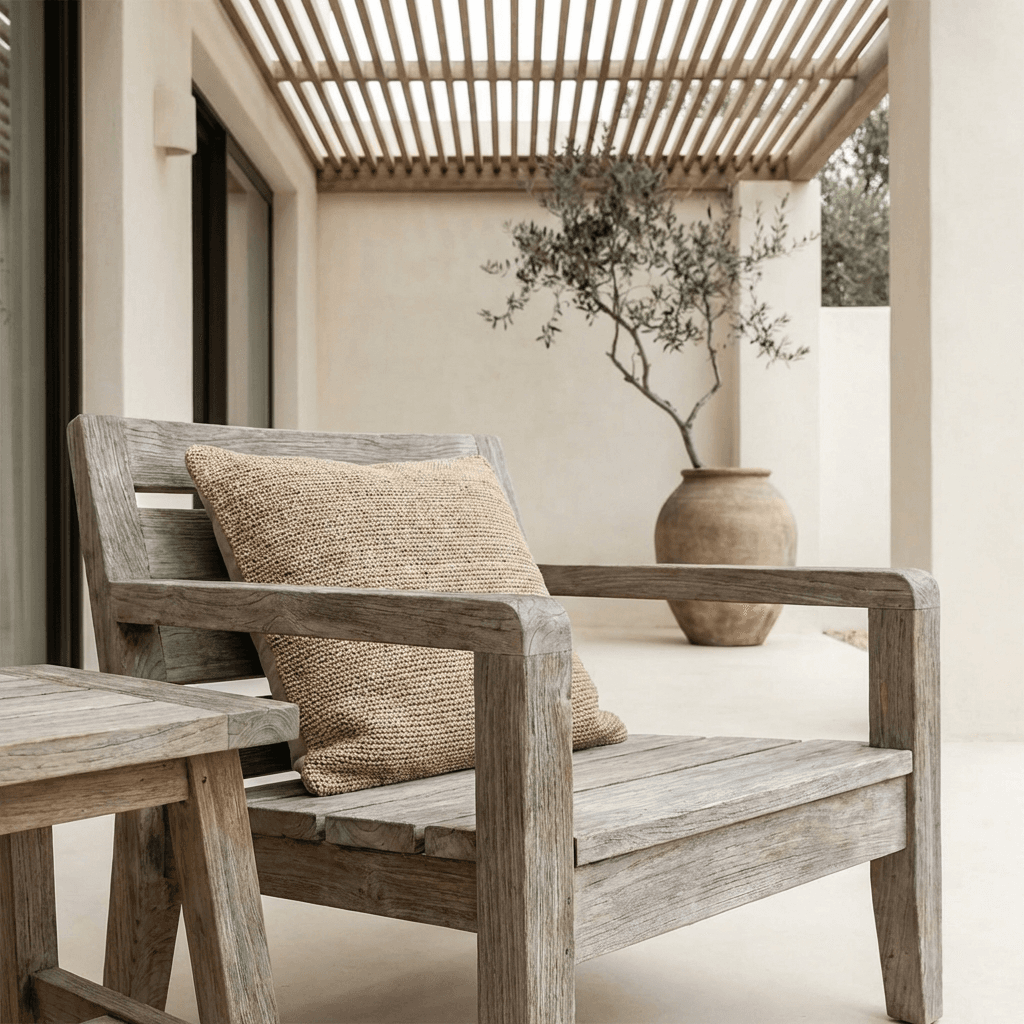
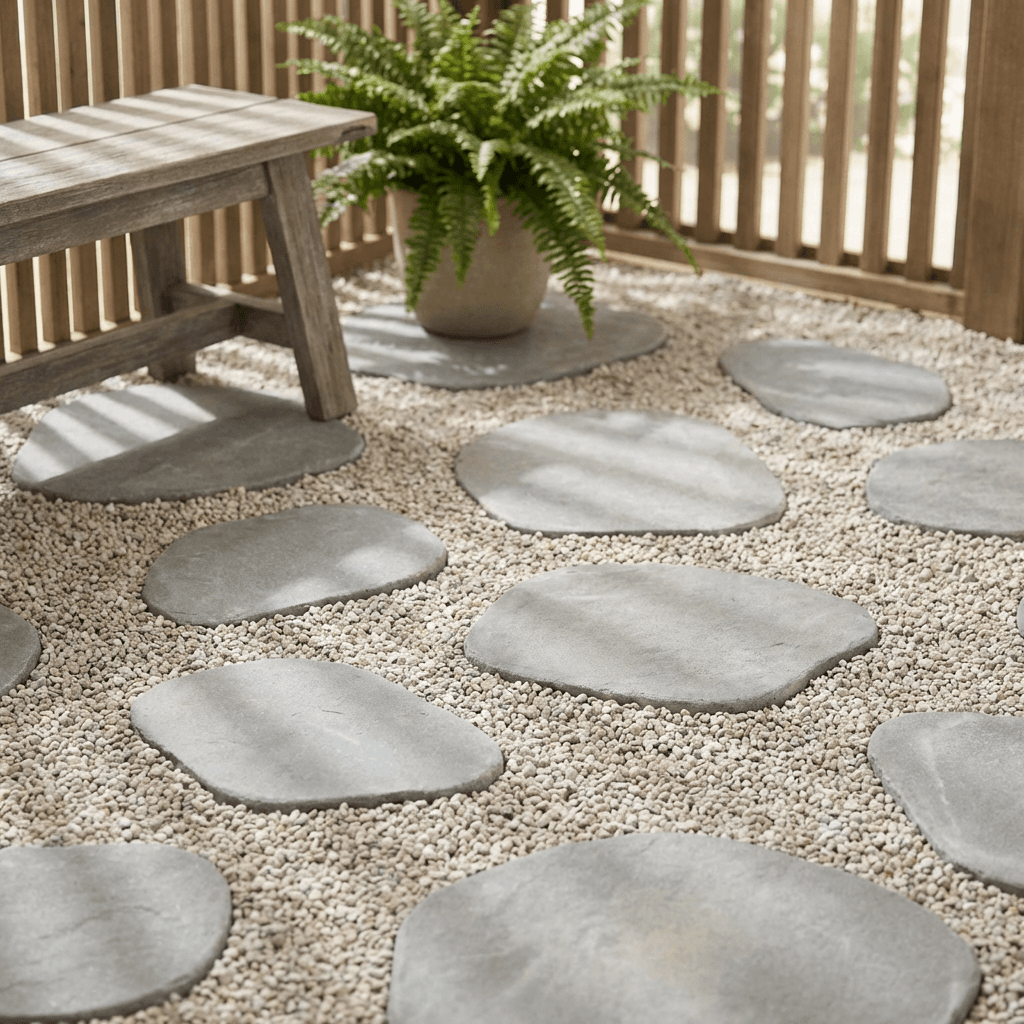
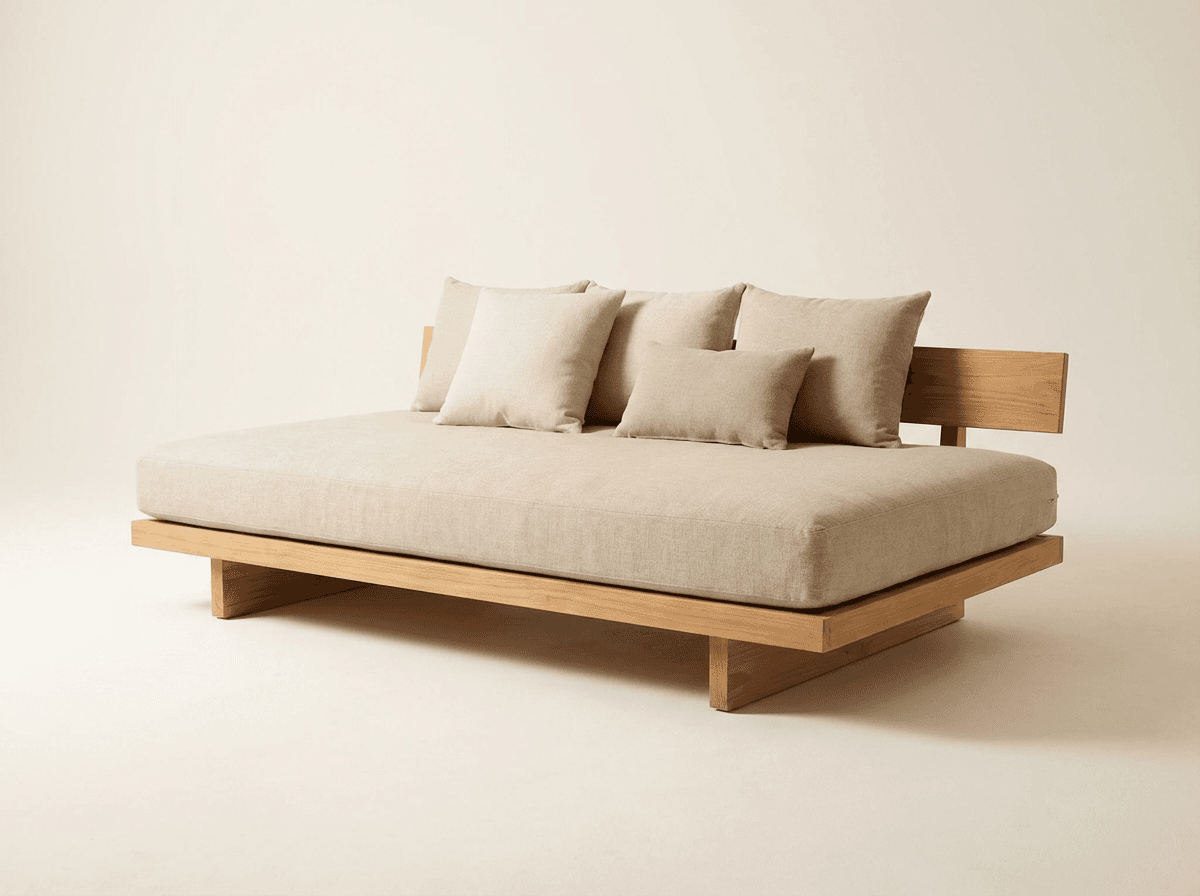
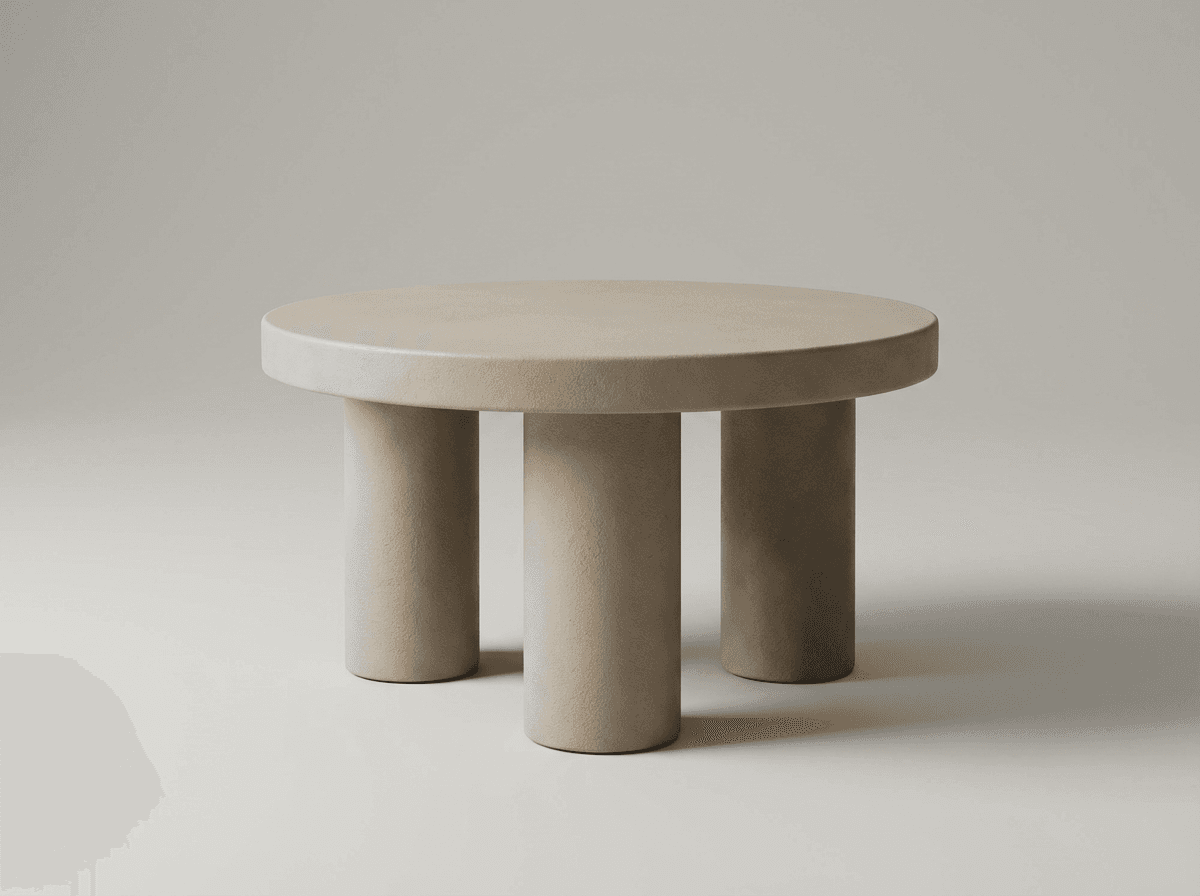
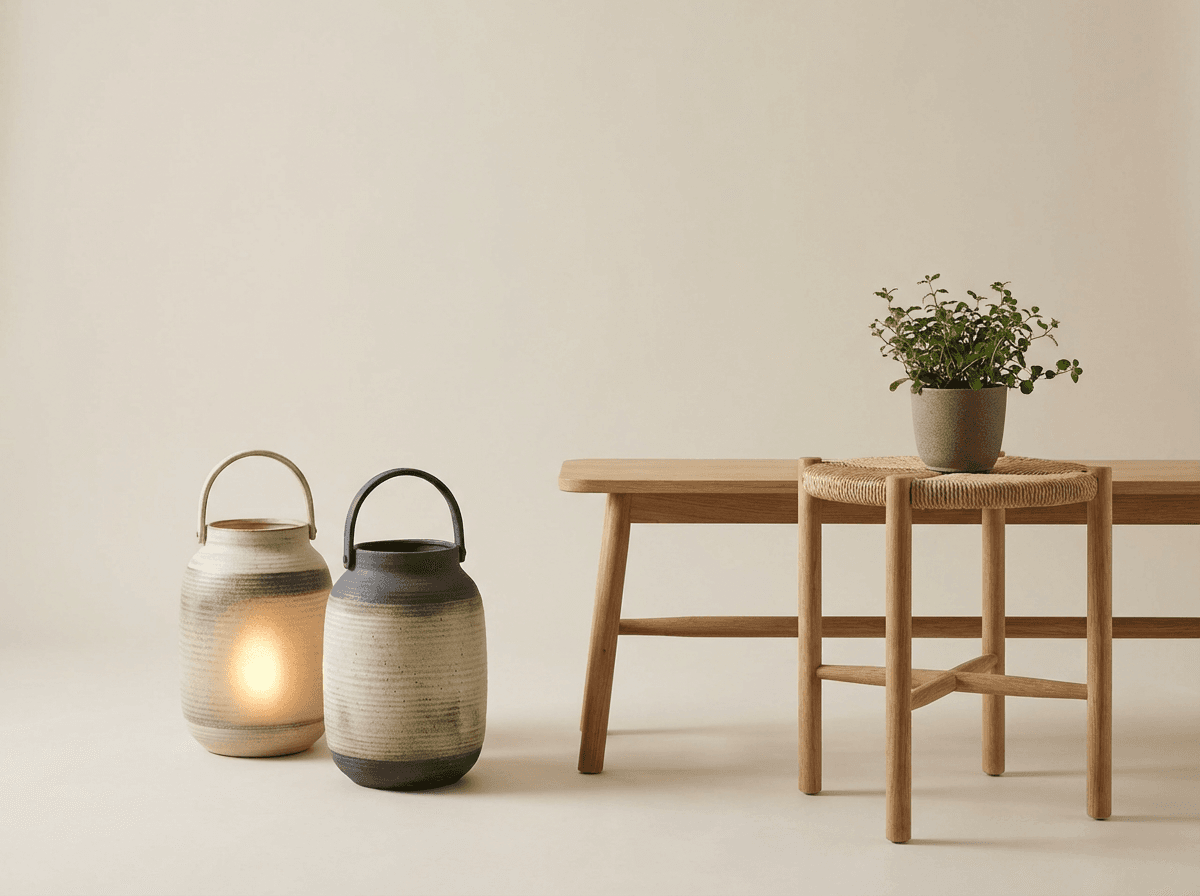
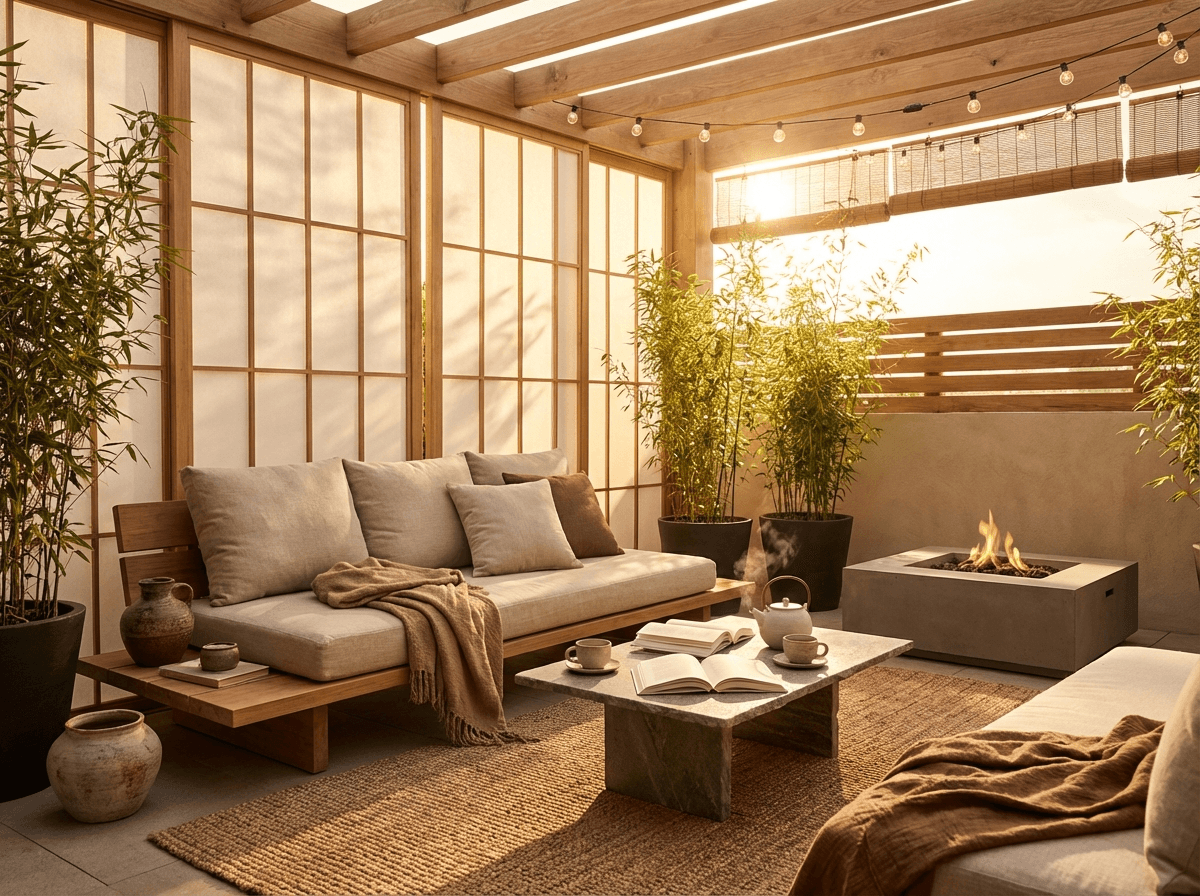
The Japandi patio dissolves the boundary between interior and garden, creating an outdoor room that feels as considered as any space inside the house. The ground plane is the first signal that something is different: irregular stone pavers set into fine gravel invite a slower pace, the crunch underfoot marking the transition from domestic life to nature. Furniture sits low — a teak daybed, a stone table, ceramic lanterns on the ground — keeping sightlines close to the earth and the greenery.
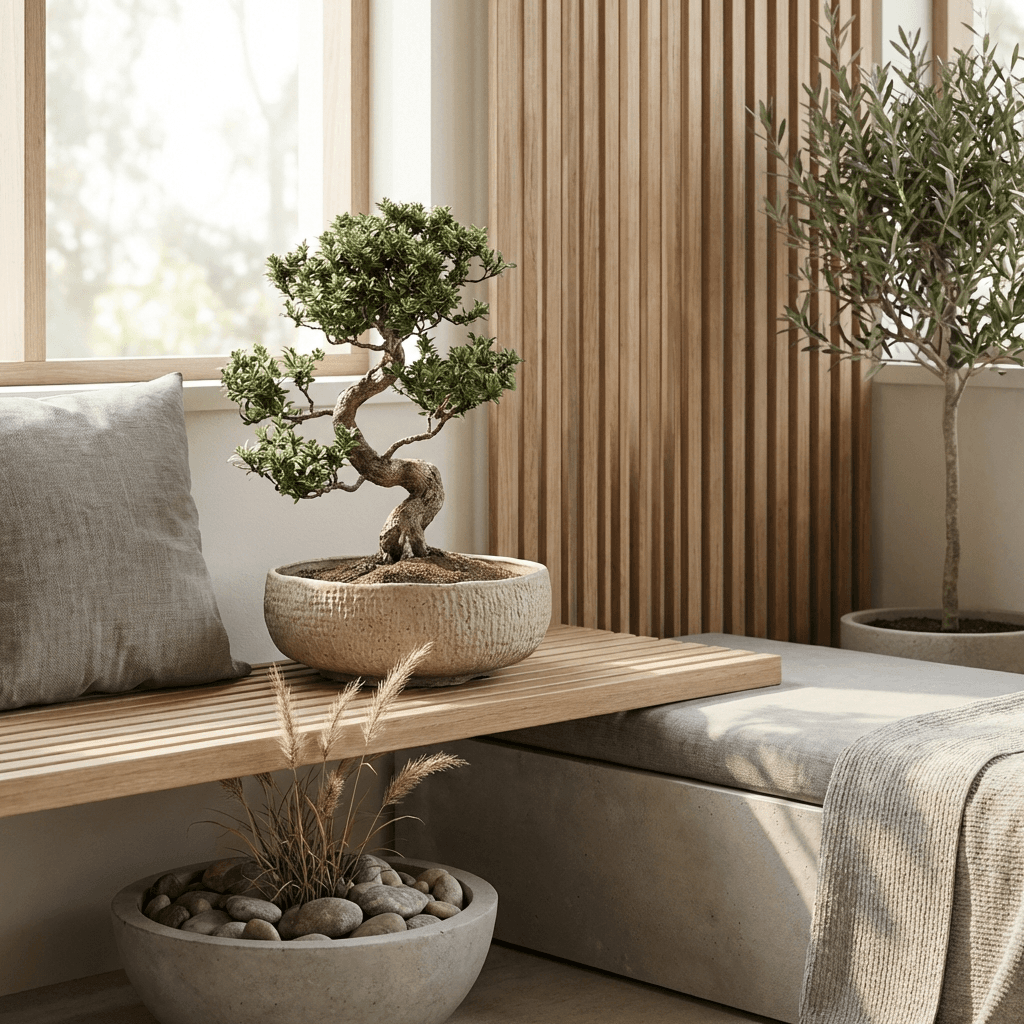
Planting follows the Japanese garden principle of editing rather than filling. Three carefully chosen species — an ornamental grass for movement, a Japanese maple for structure, moss for ground cover — create a landscape that changes with the seasons but never feels wild or unkept. Each plant is placed with the intention of a brushstroke, balancing volume, color, and negative space.
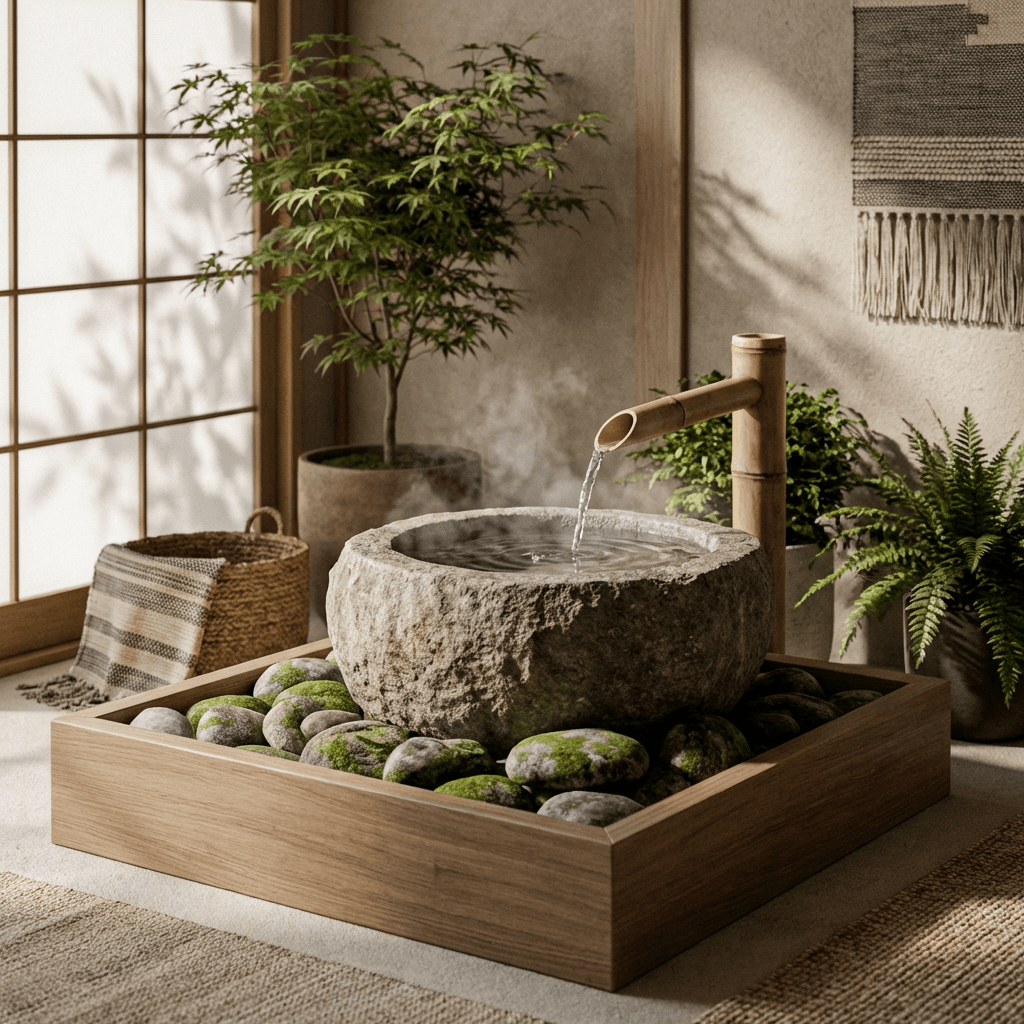
As evening falls, the patio comes alive differently. Candles flicker inside ceramic lanterns, a small water feature murmurs in the background, and the silver-gray teak furniture catches the last light. The Japandi patio is not an outdoor living room transplanted outside — it is a meditative space that uses nature's materials to create the same calm you feel within your walls.