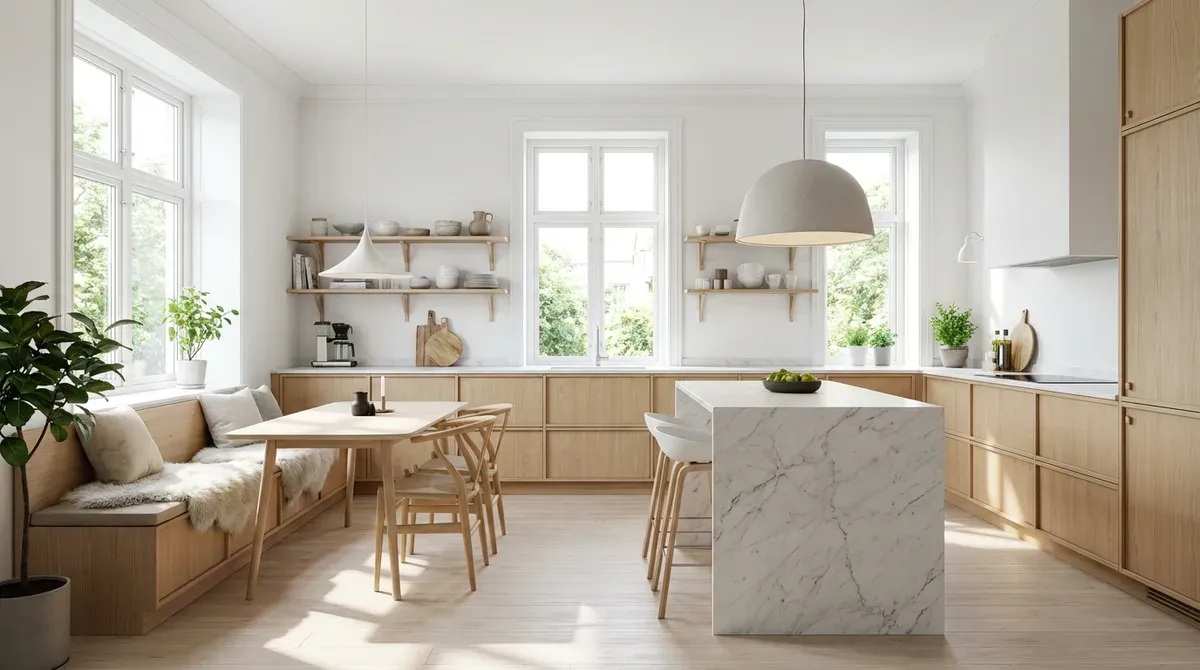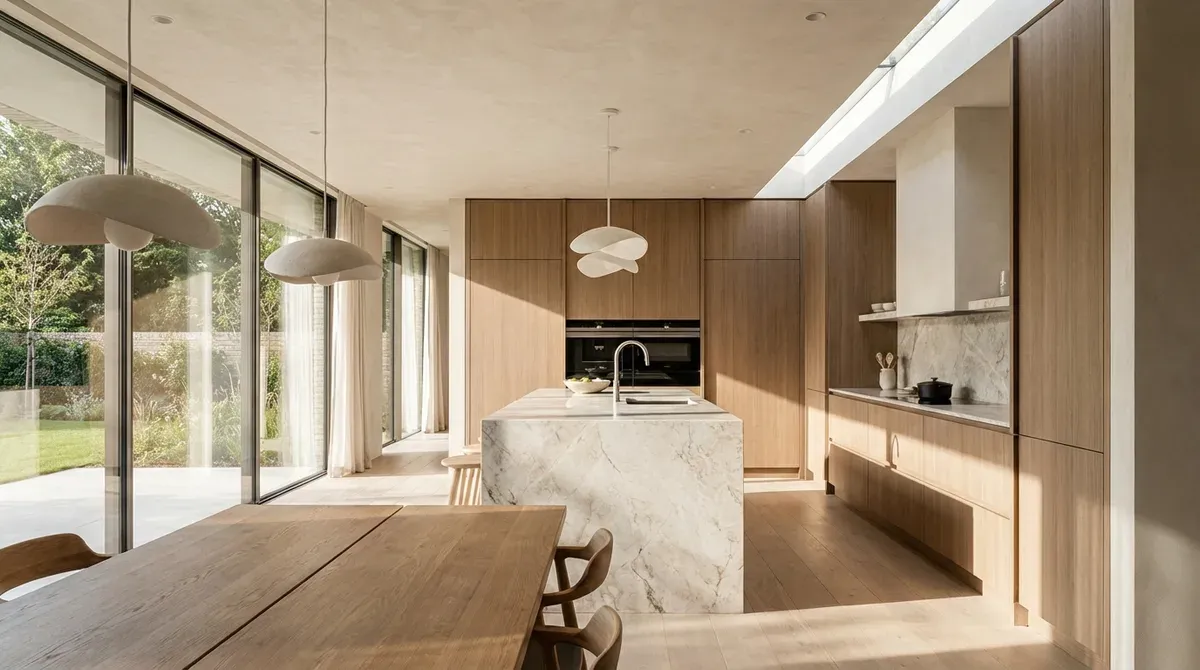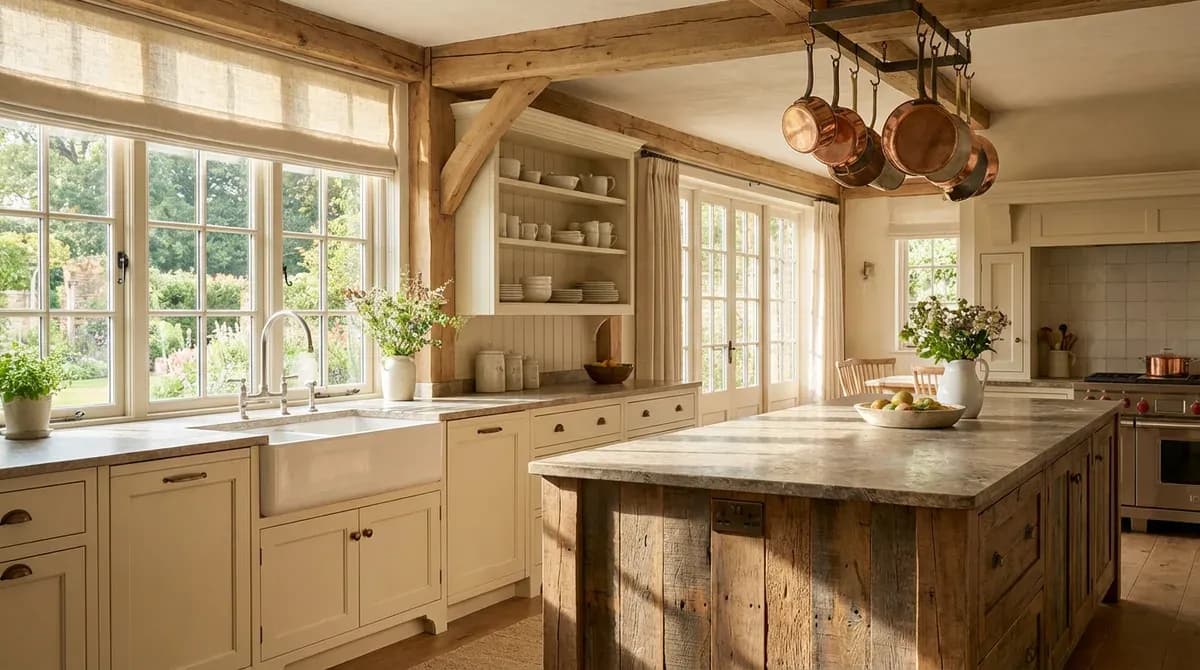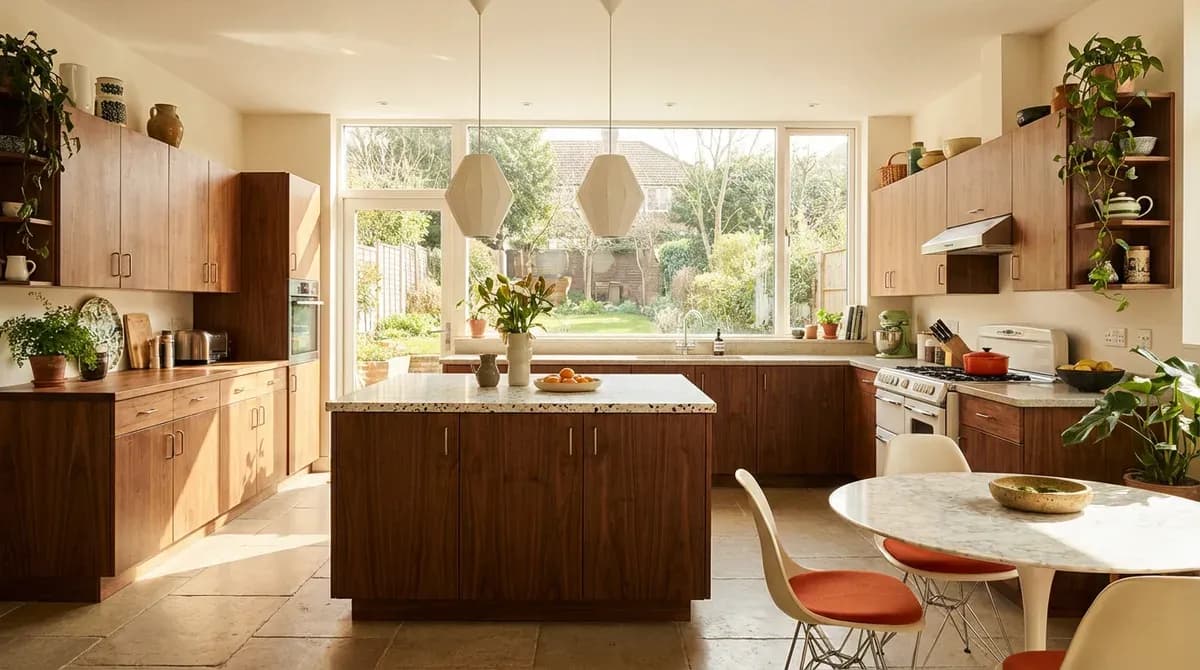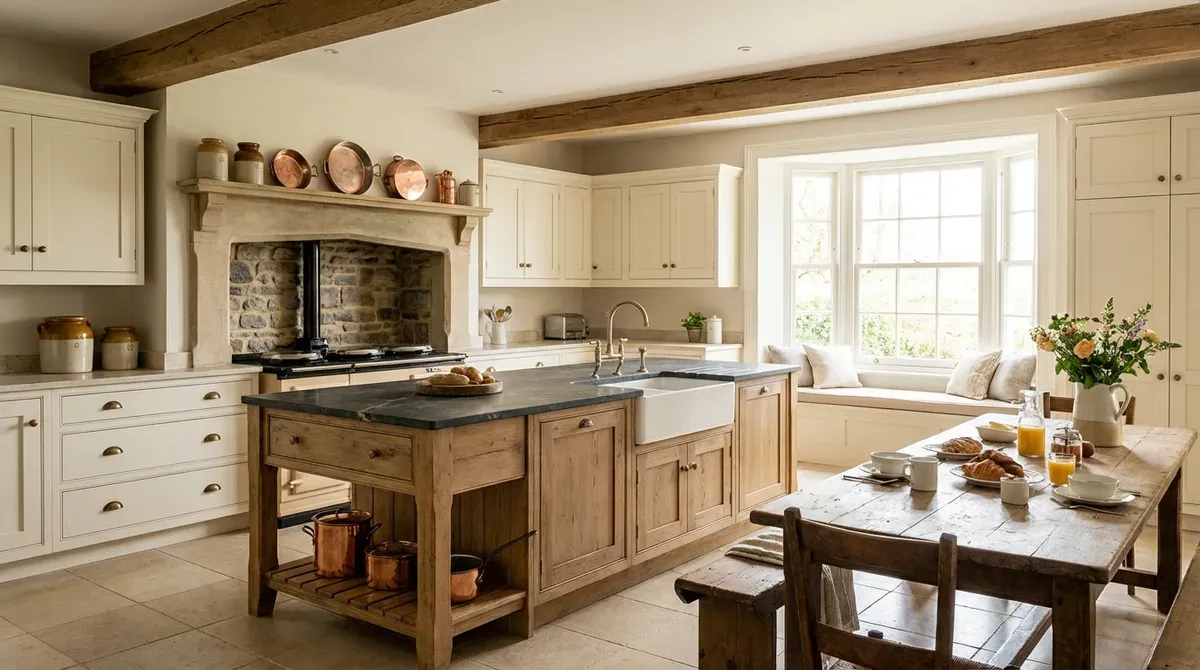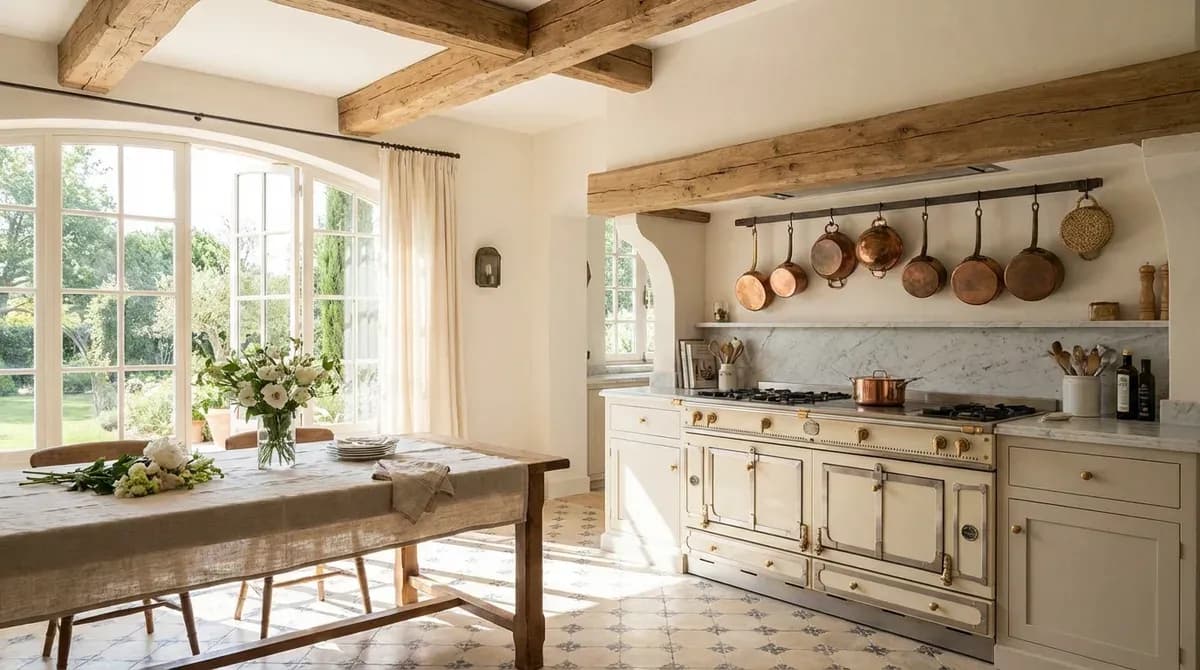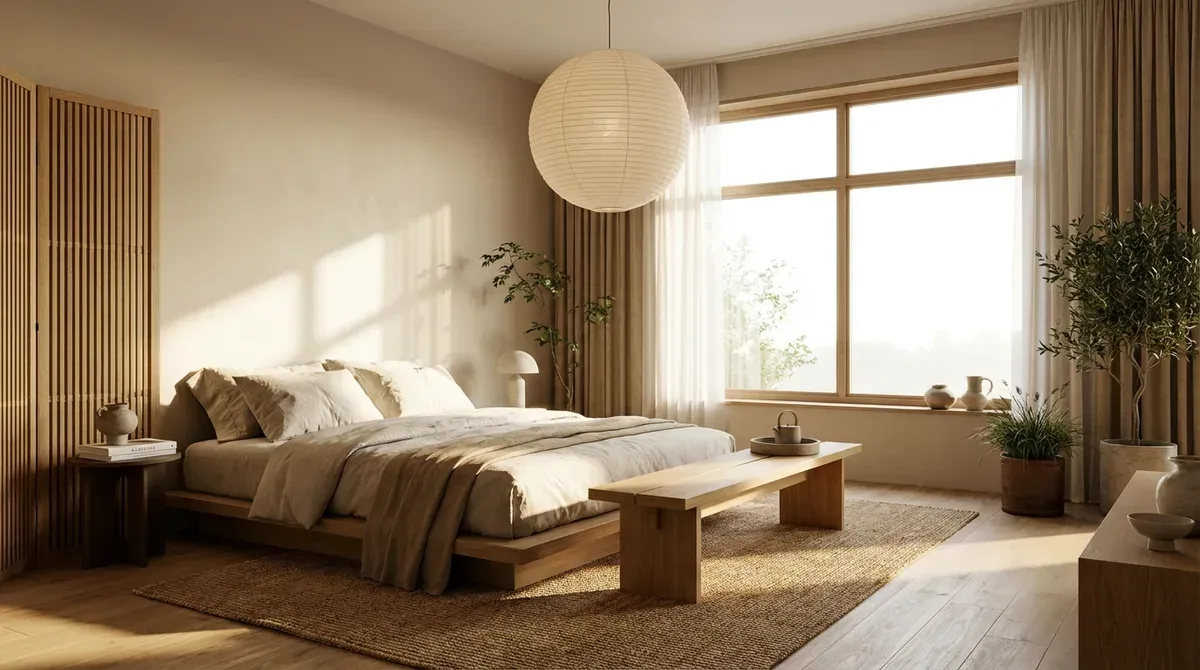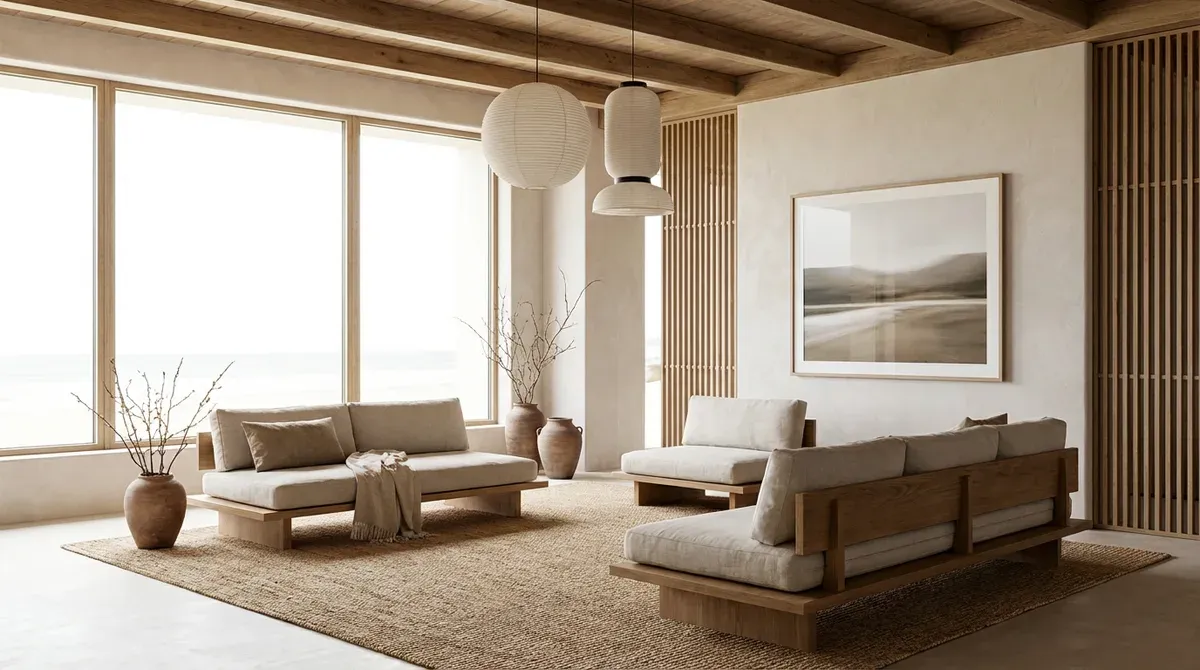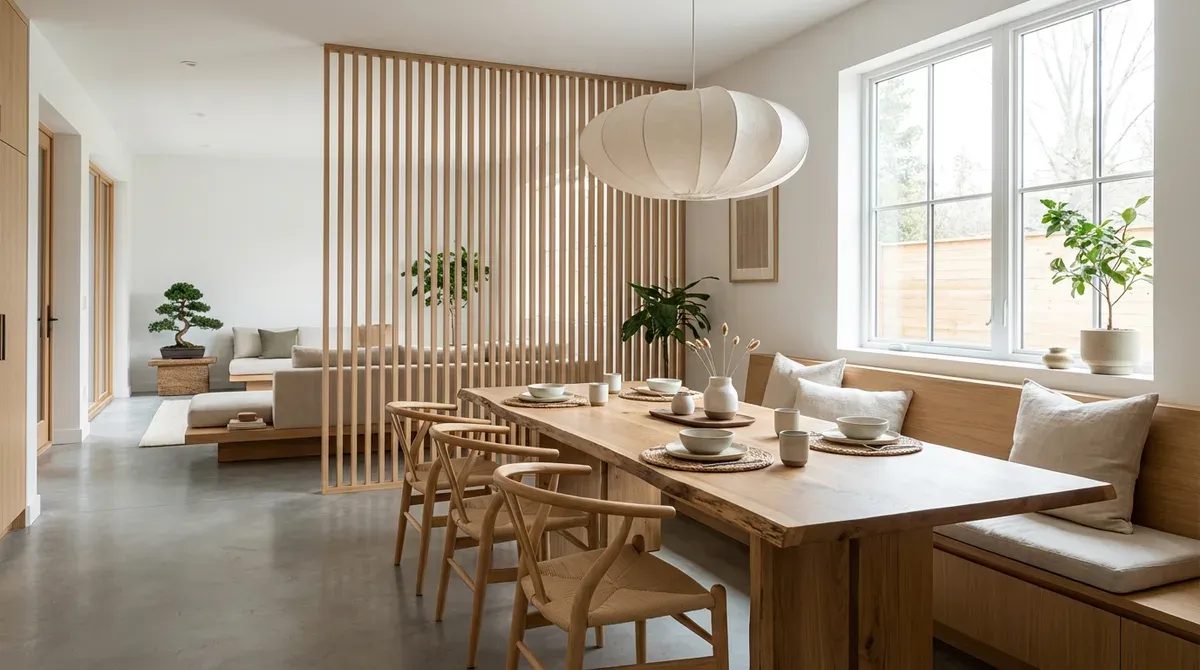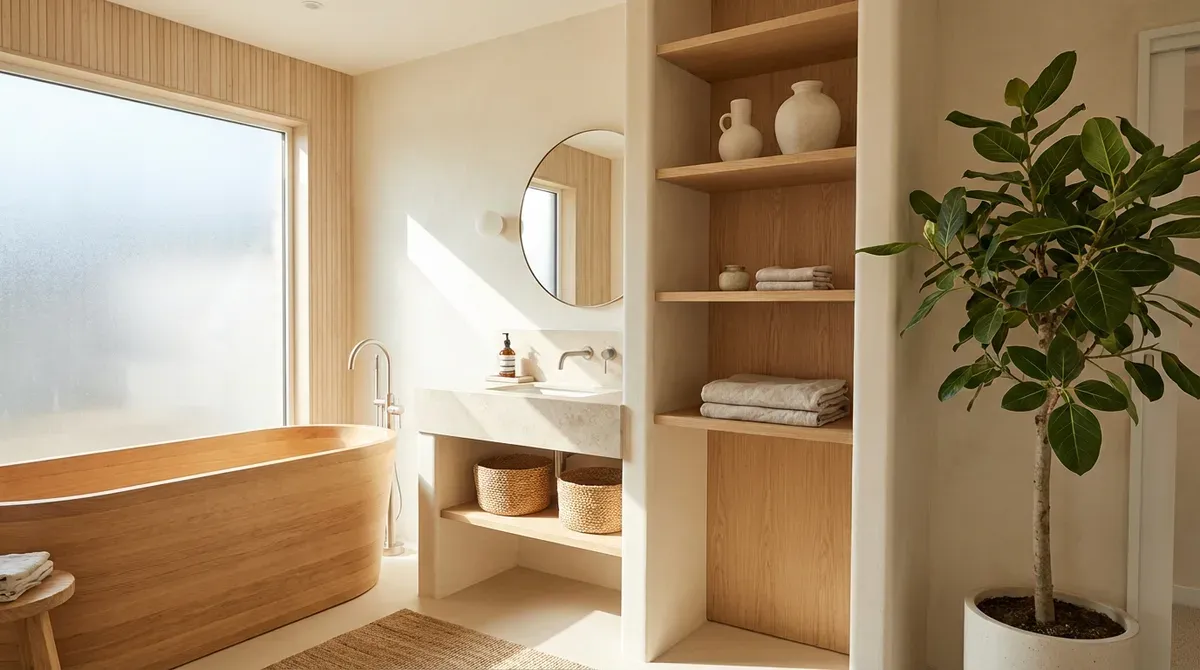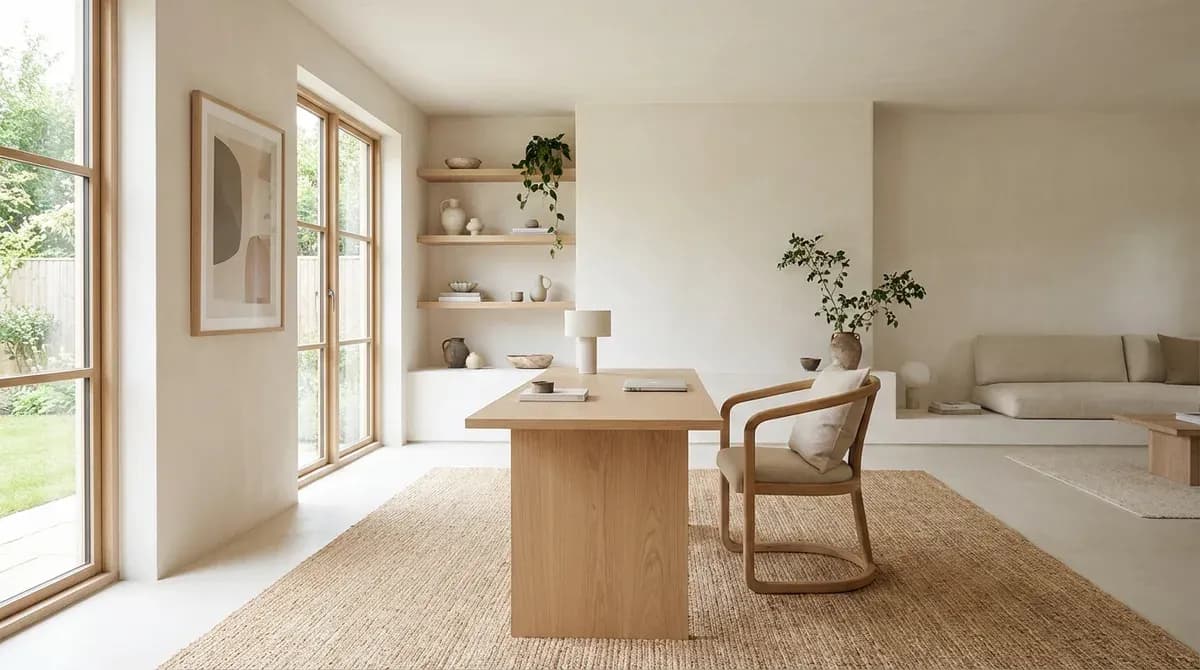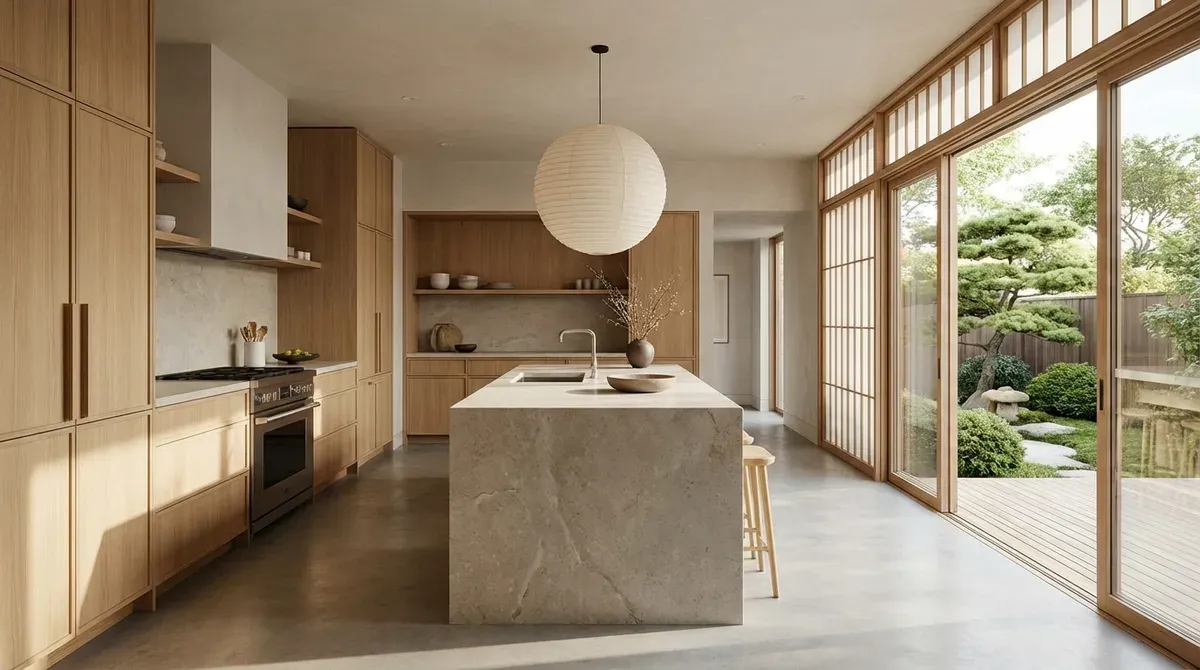
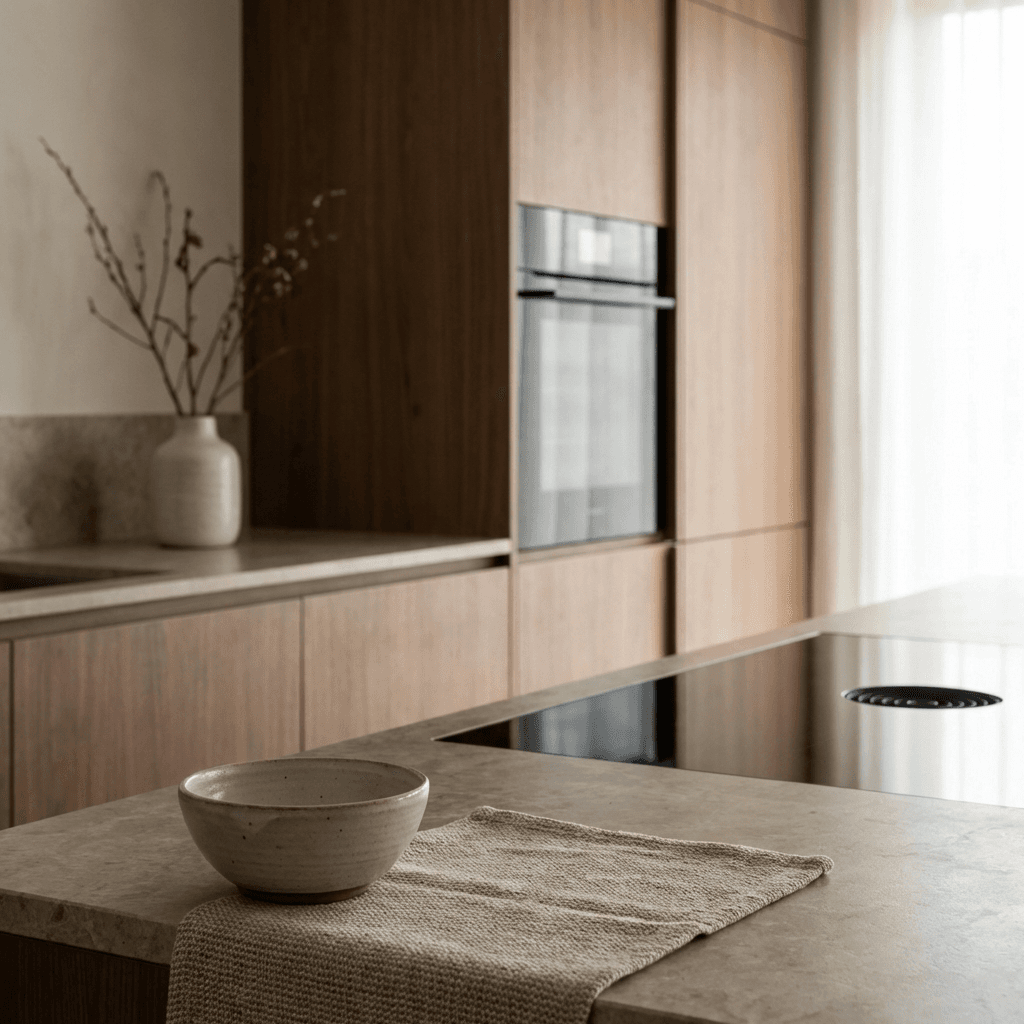
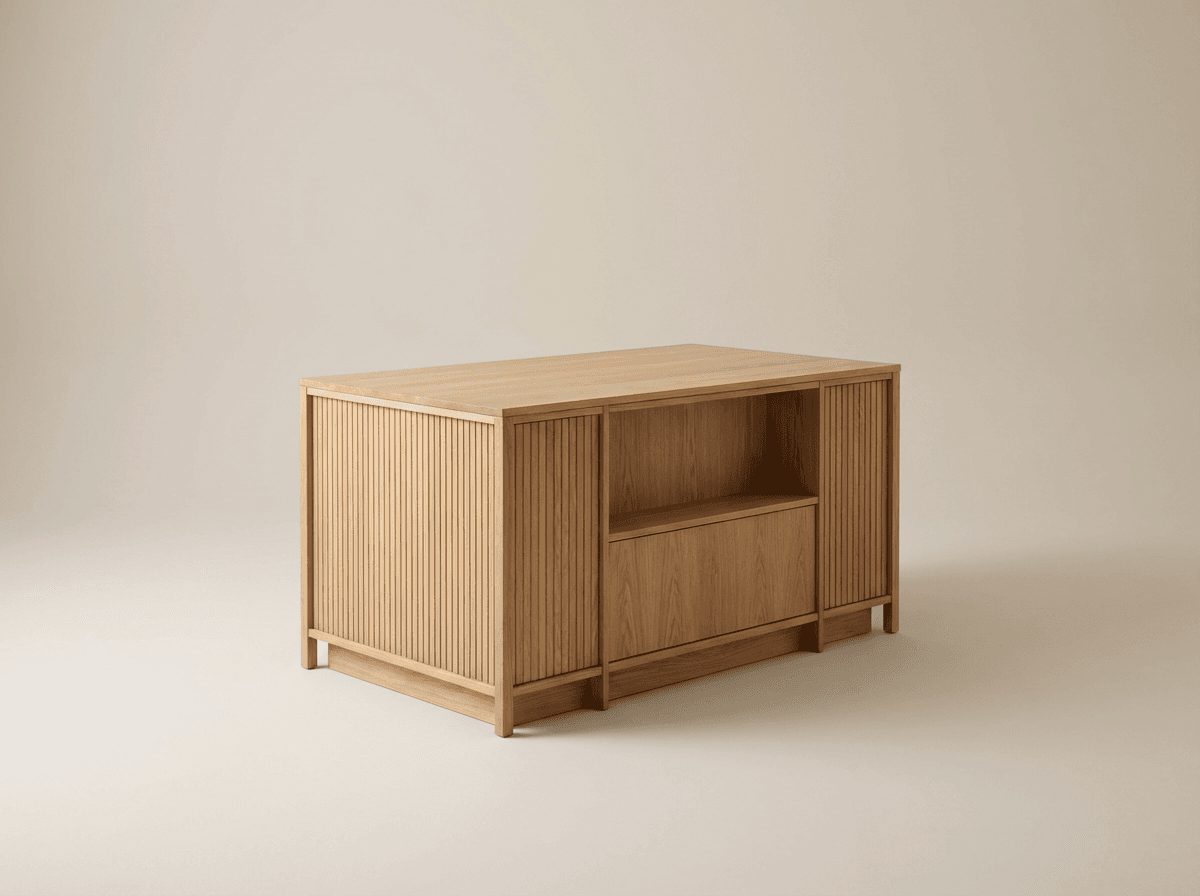
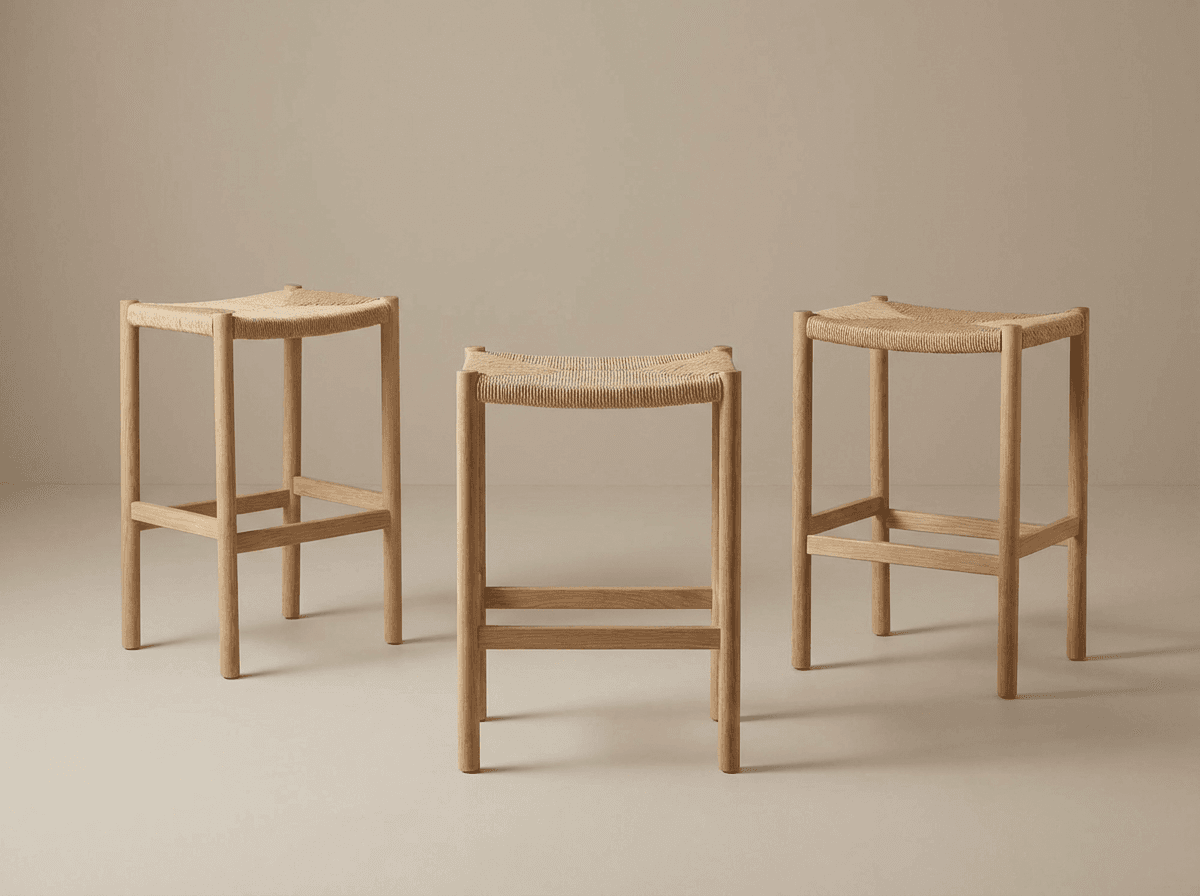
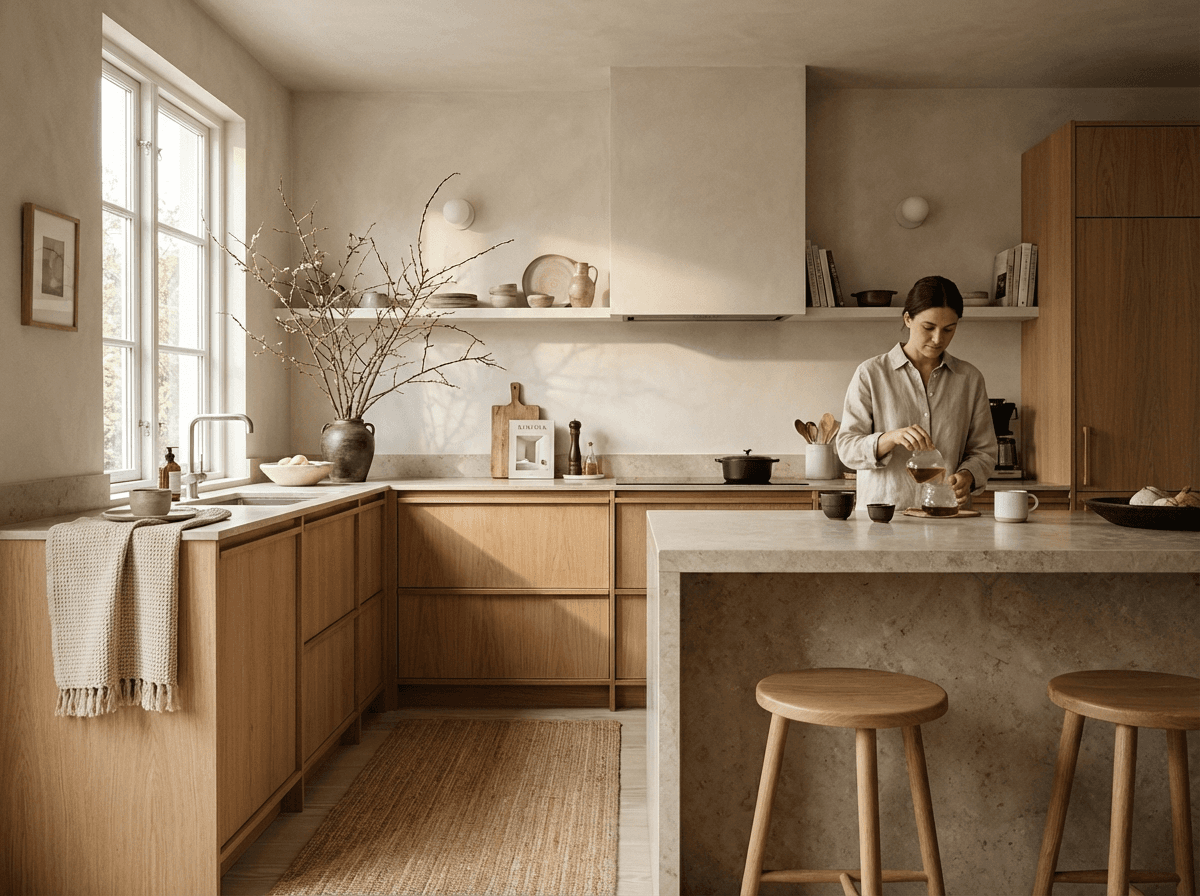
A Japandi kitchen distills cooking to its essence: honest materials, thoughtful storage, and just enough beauty to make the daily ritual of preparing food feel intentional. The cabinetry is typically flat-fronted in a warm neutral — think greige or pale oat — with one section in natural wood to break the monotony. Hardware is minimal or absent, letting the grain and finish of the materials speak for themselves.
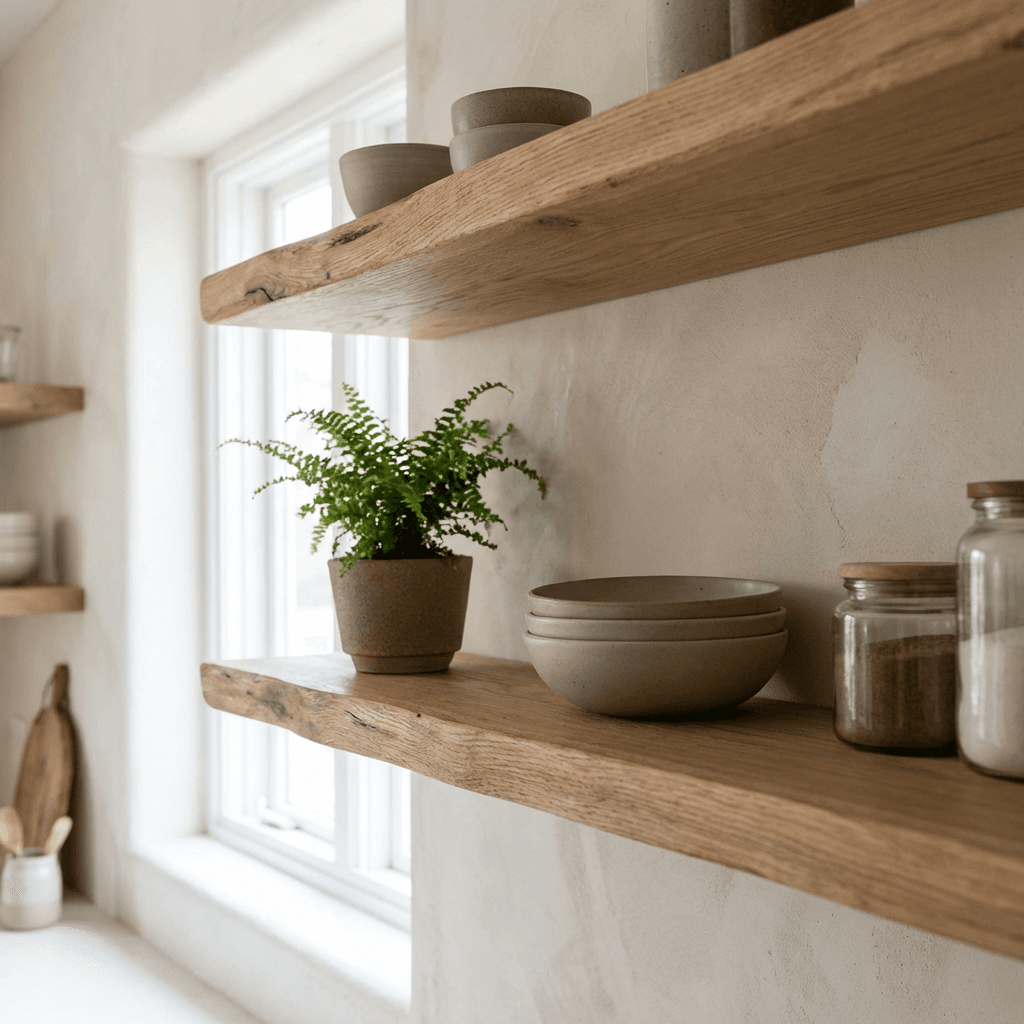
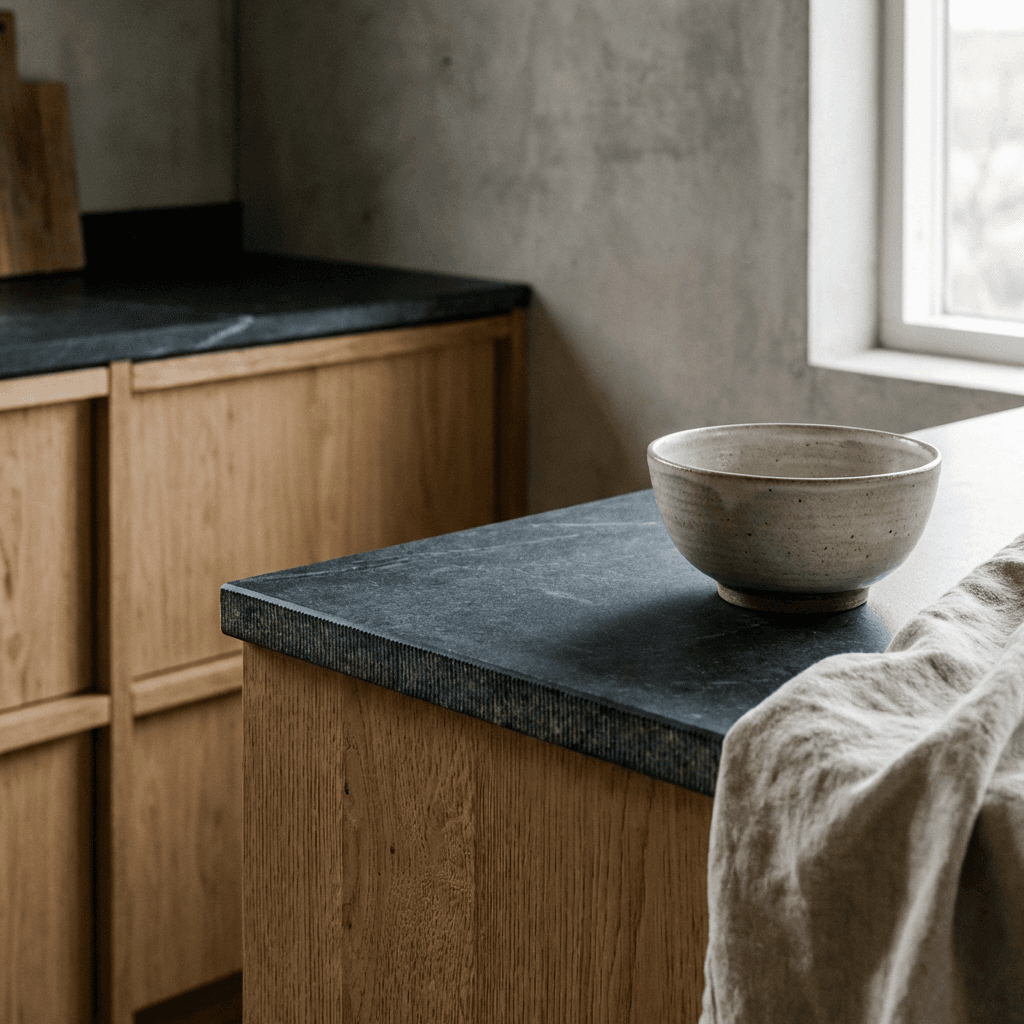
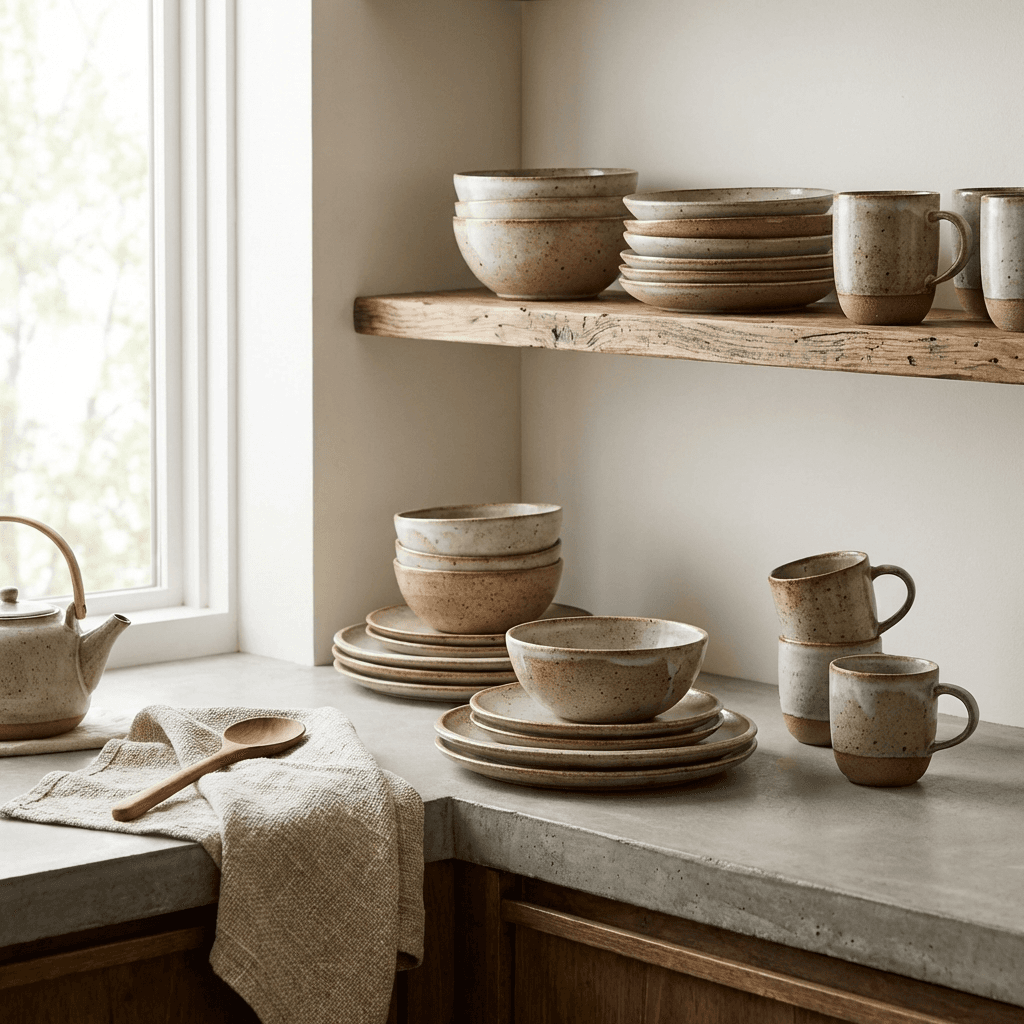
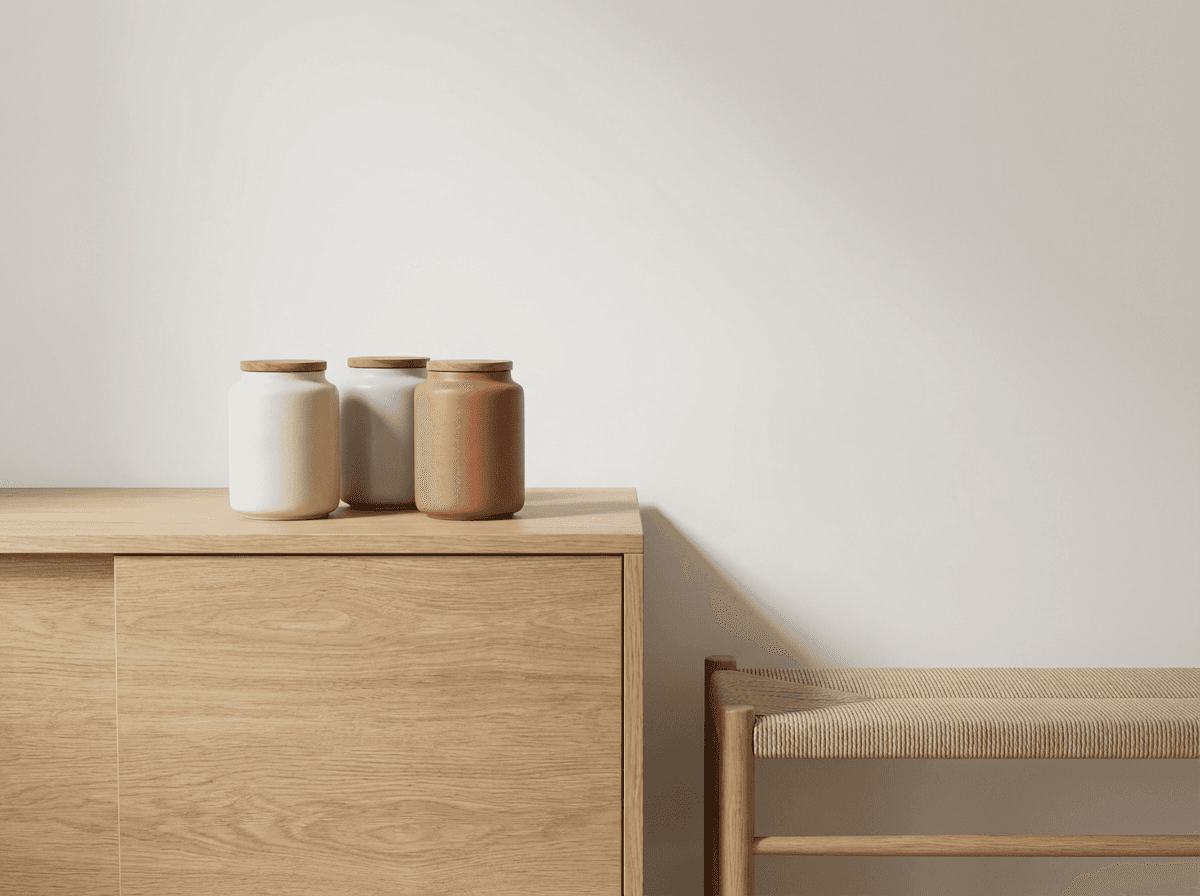
Countertops lean toward the organic: honed concrete that develops character over time, a thick slab of solid oak that doubles as a cutting surface, or leathered granite that invites touch. Open shelving replaces some upper cabinets, creating display niches for hand-thrown ceramic bowls and simple glass jars. Every item on the shelf earns its place through daily use or genuine beauty.
The Japandi kitchen works because it treats cooking as a craft worthy of a considered environment. A single linen tea towel draped over the oven handle, a wooden spoon resting in a ceramic holder, a small herb plant on the windowsill — these are not decorations but evidence of a kitchen that is used, loved, and carefully maintained.