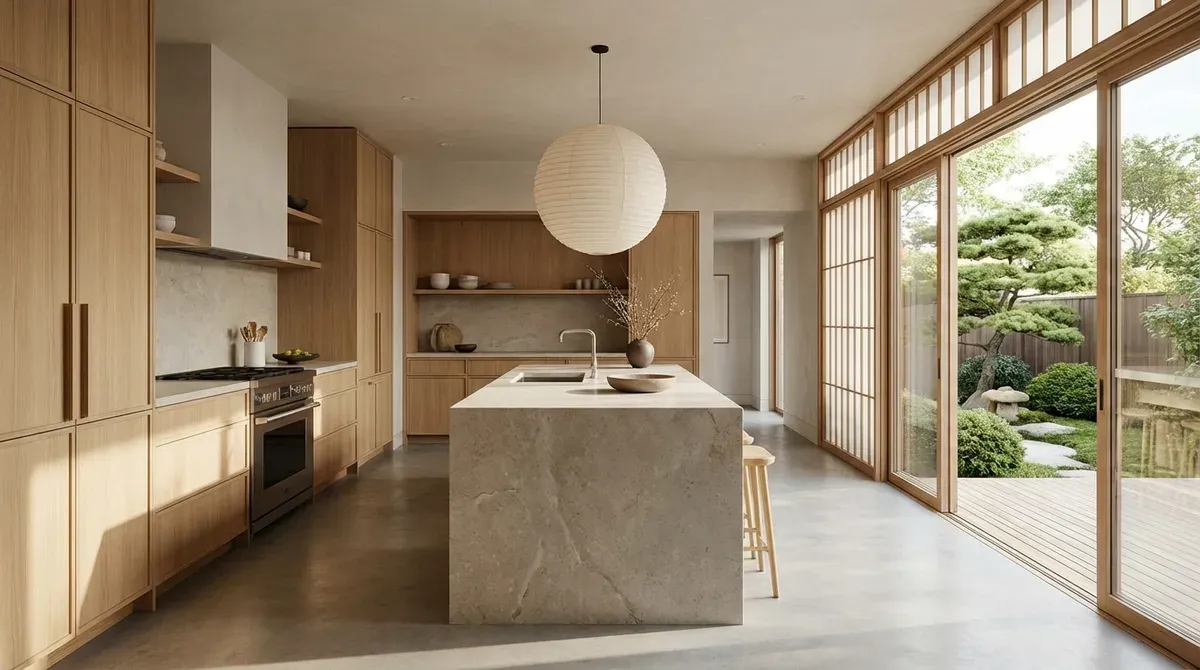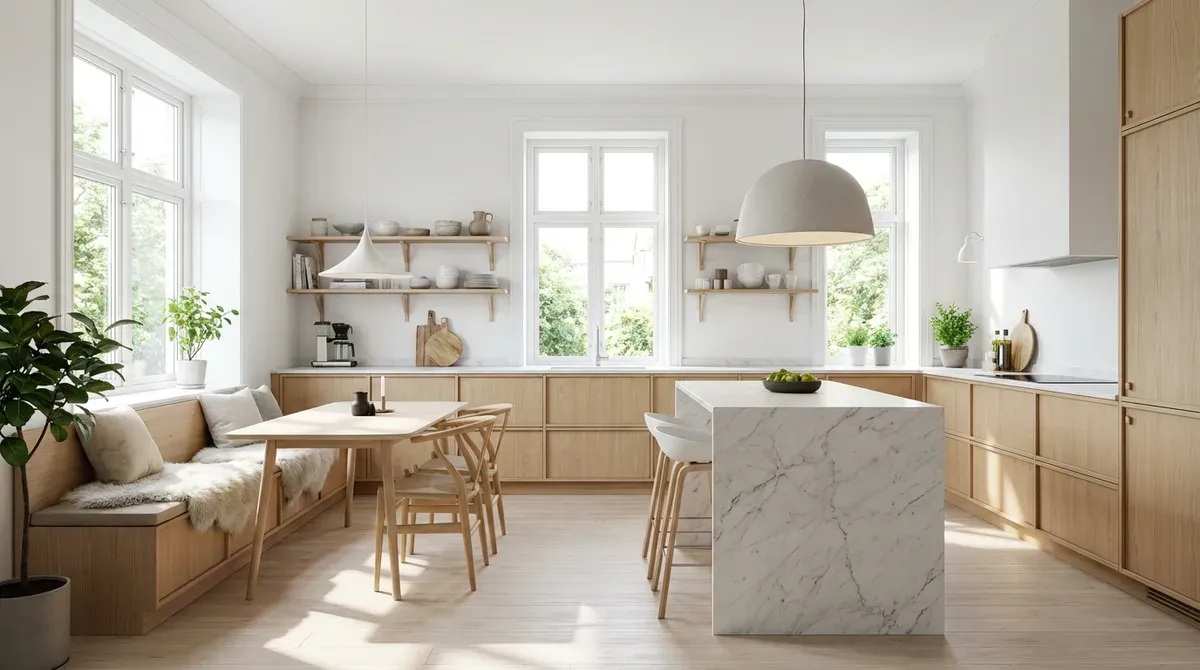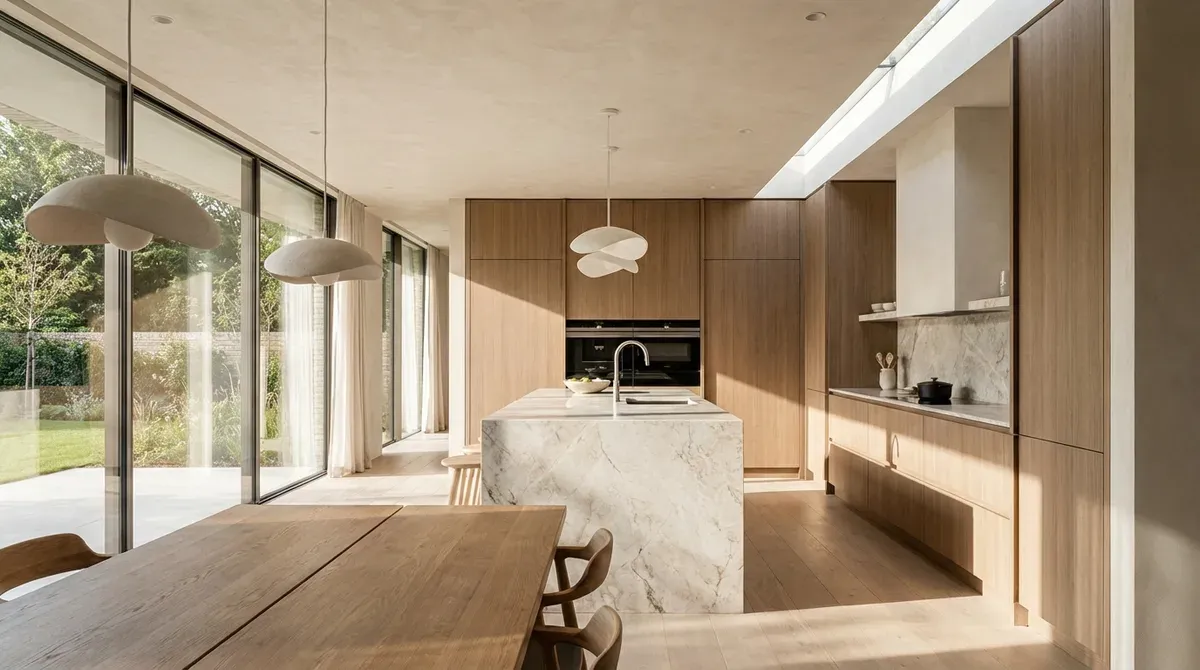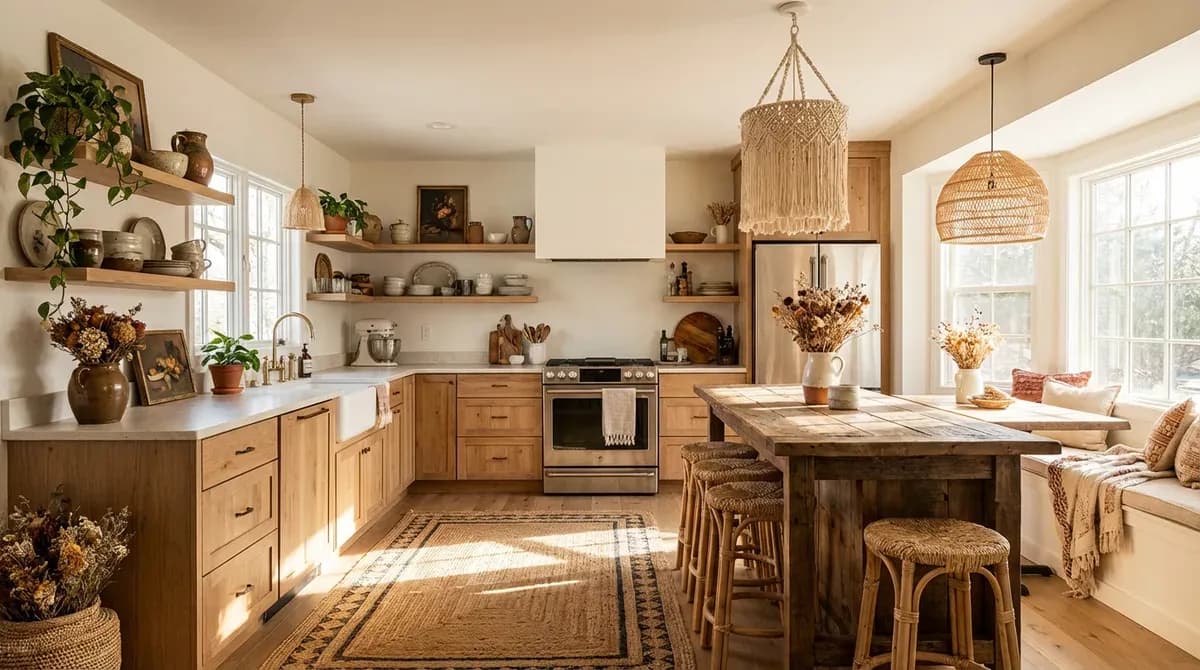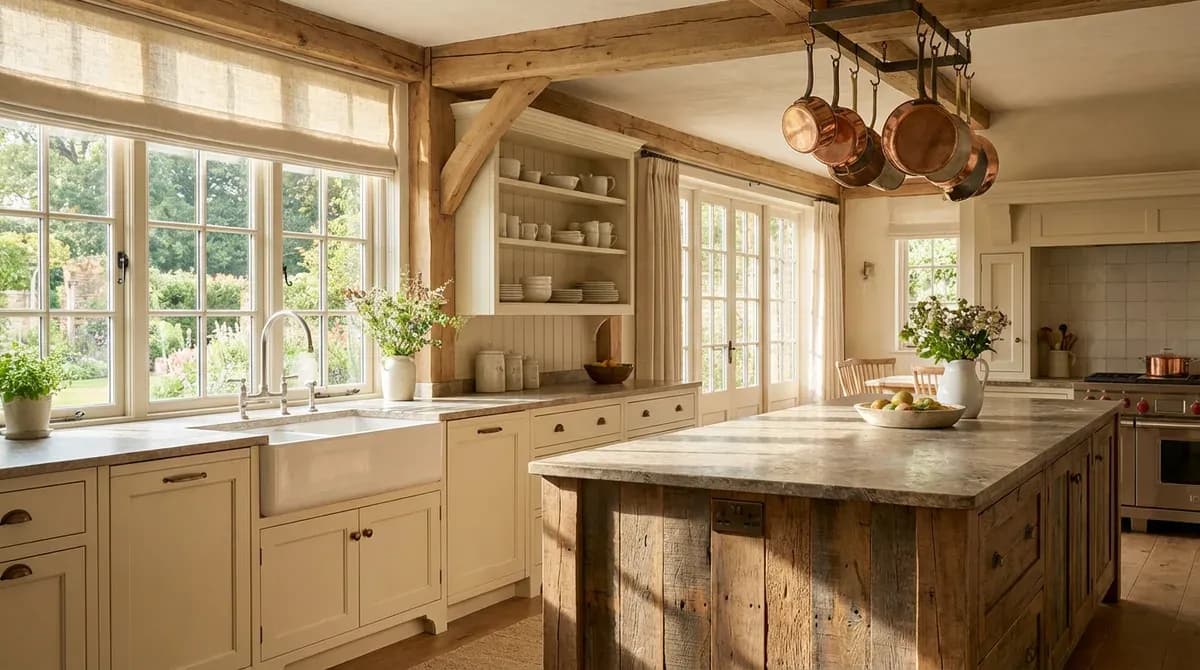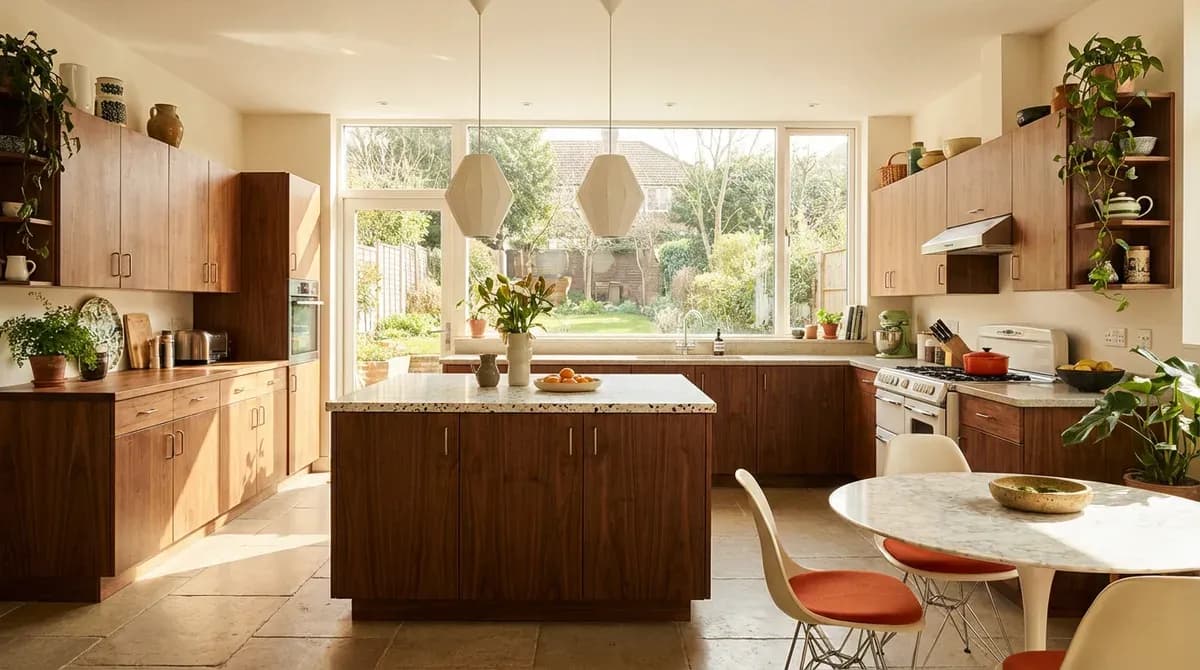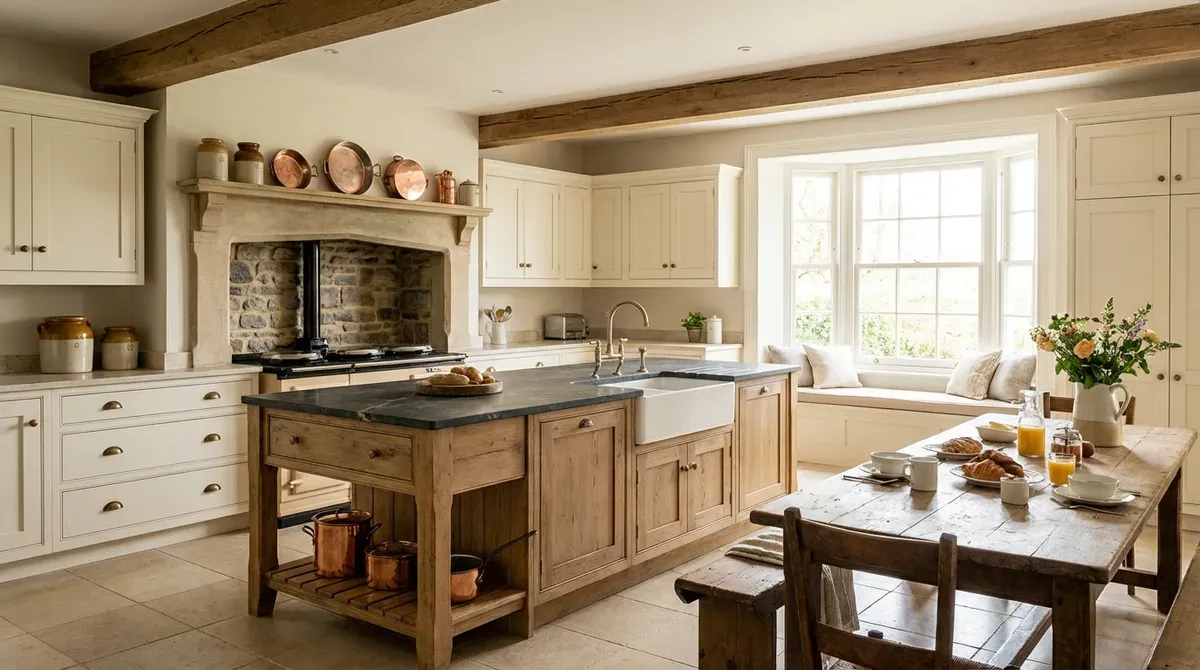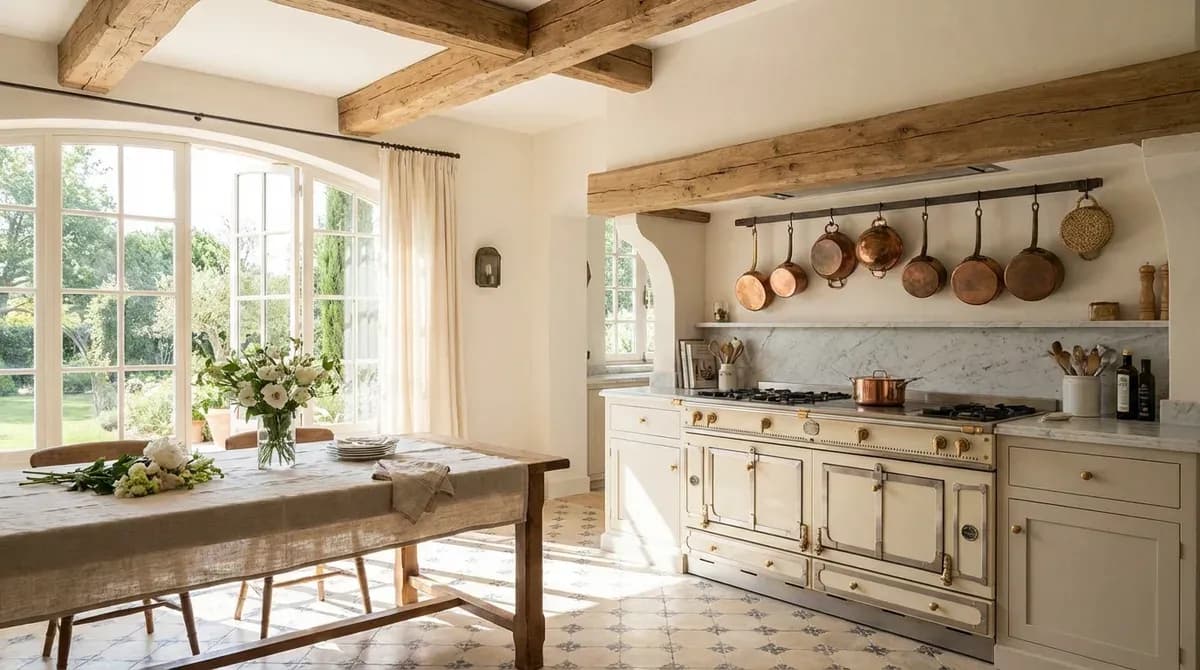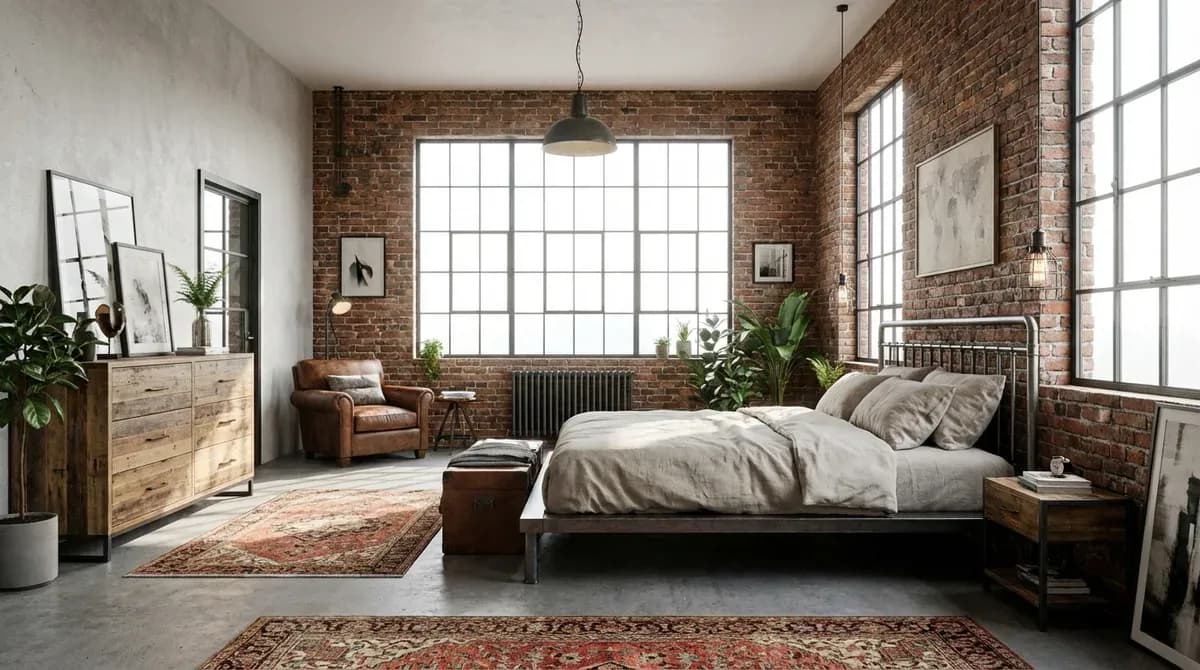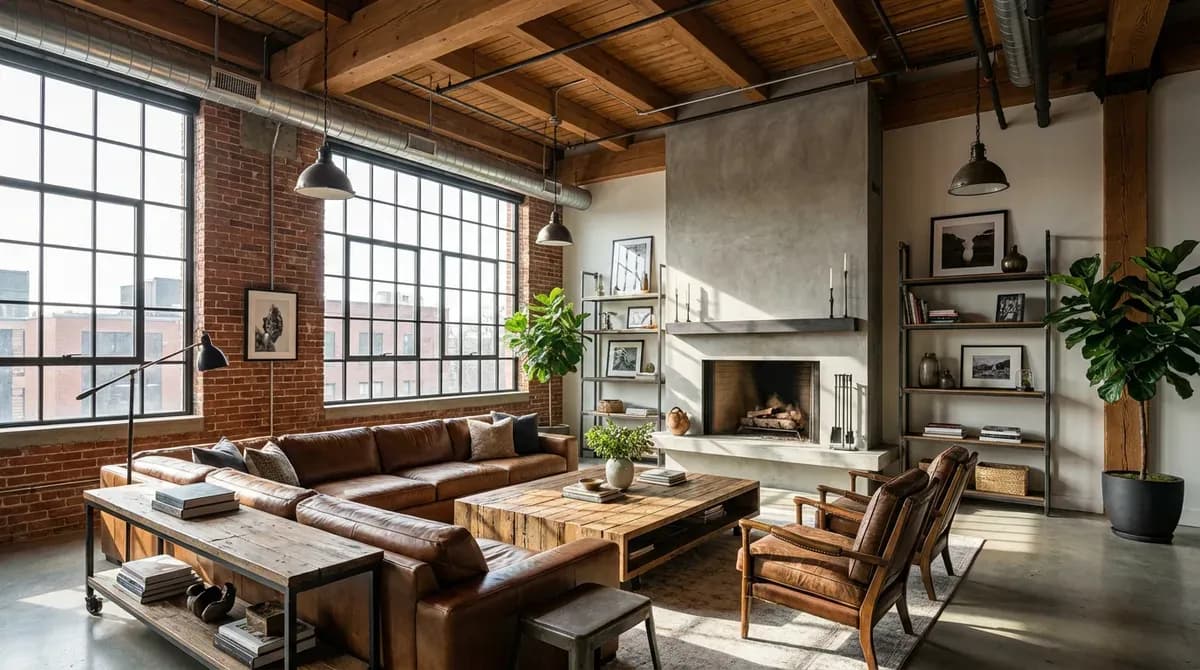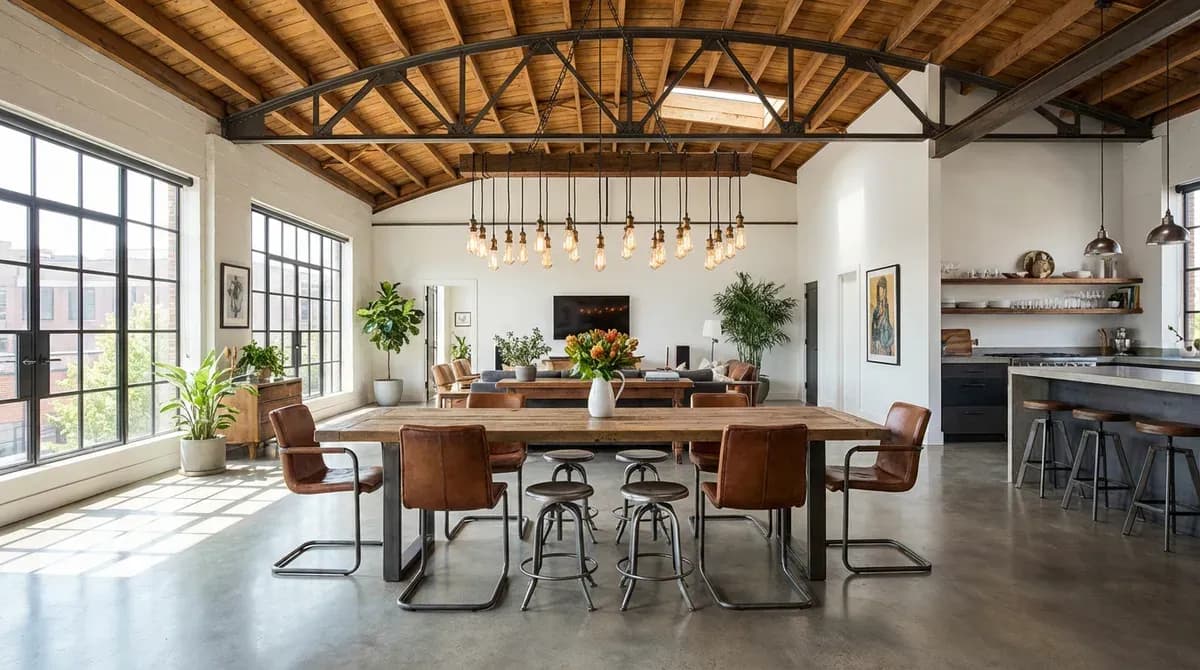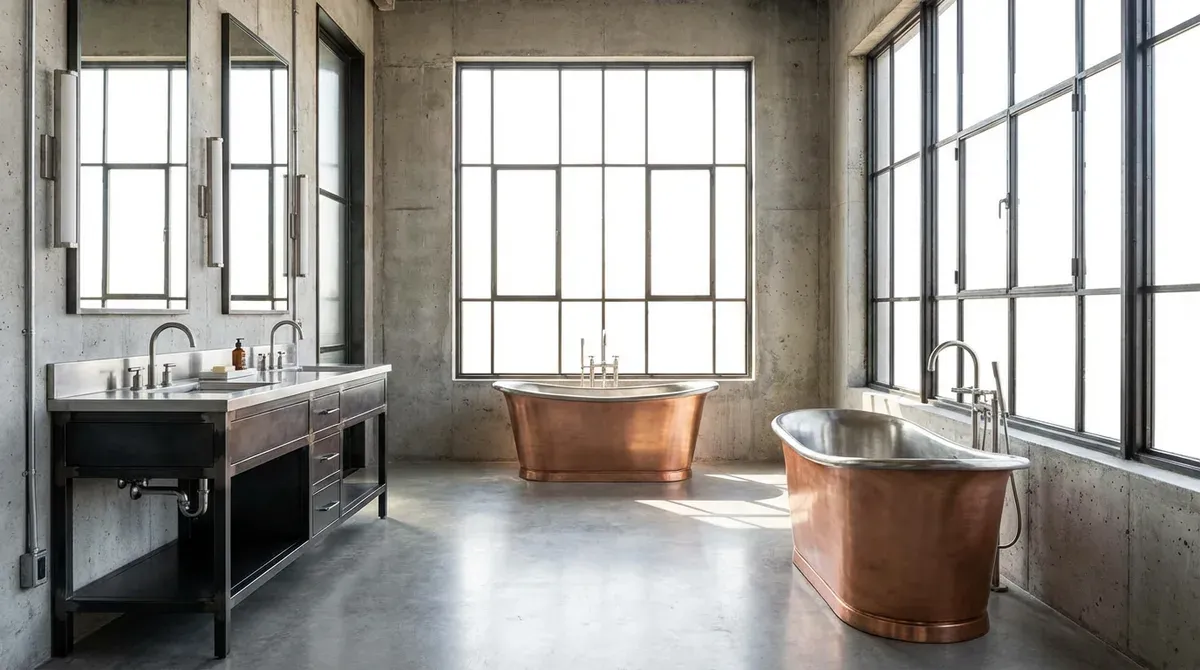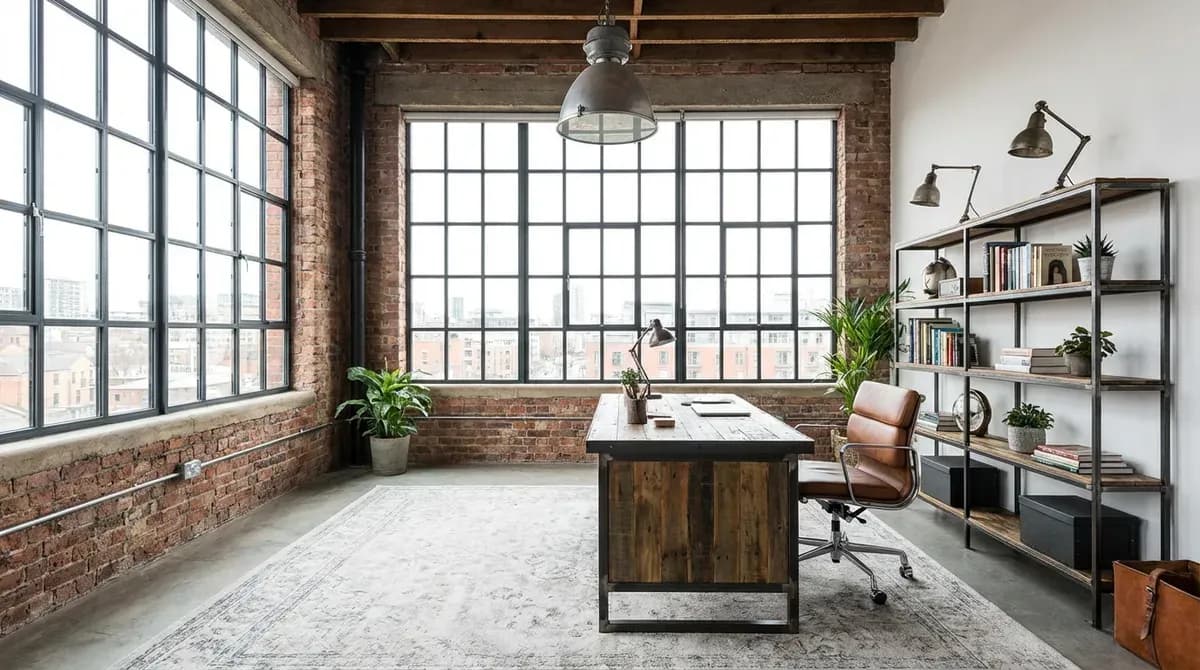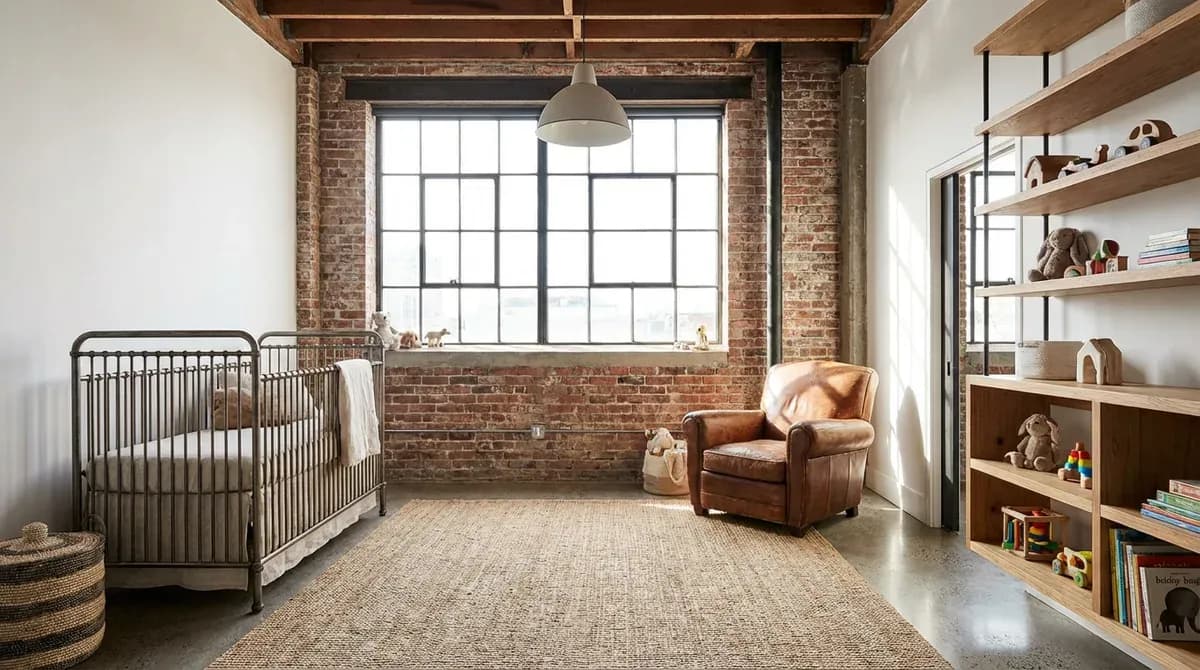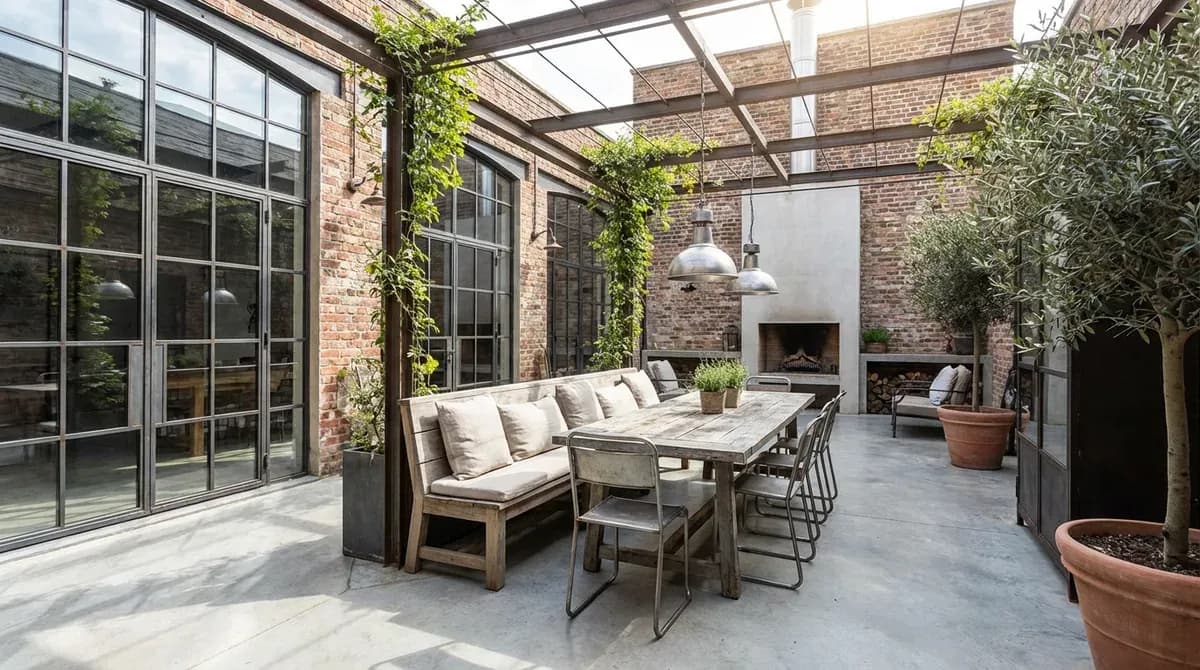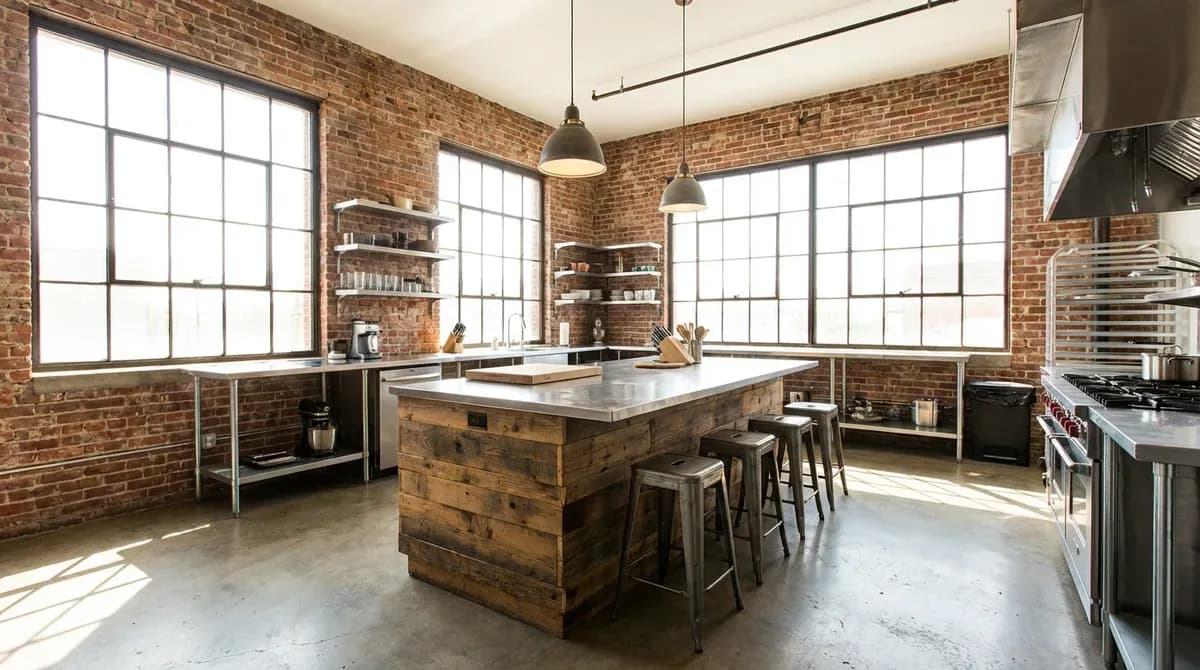
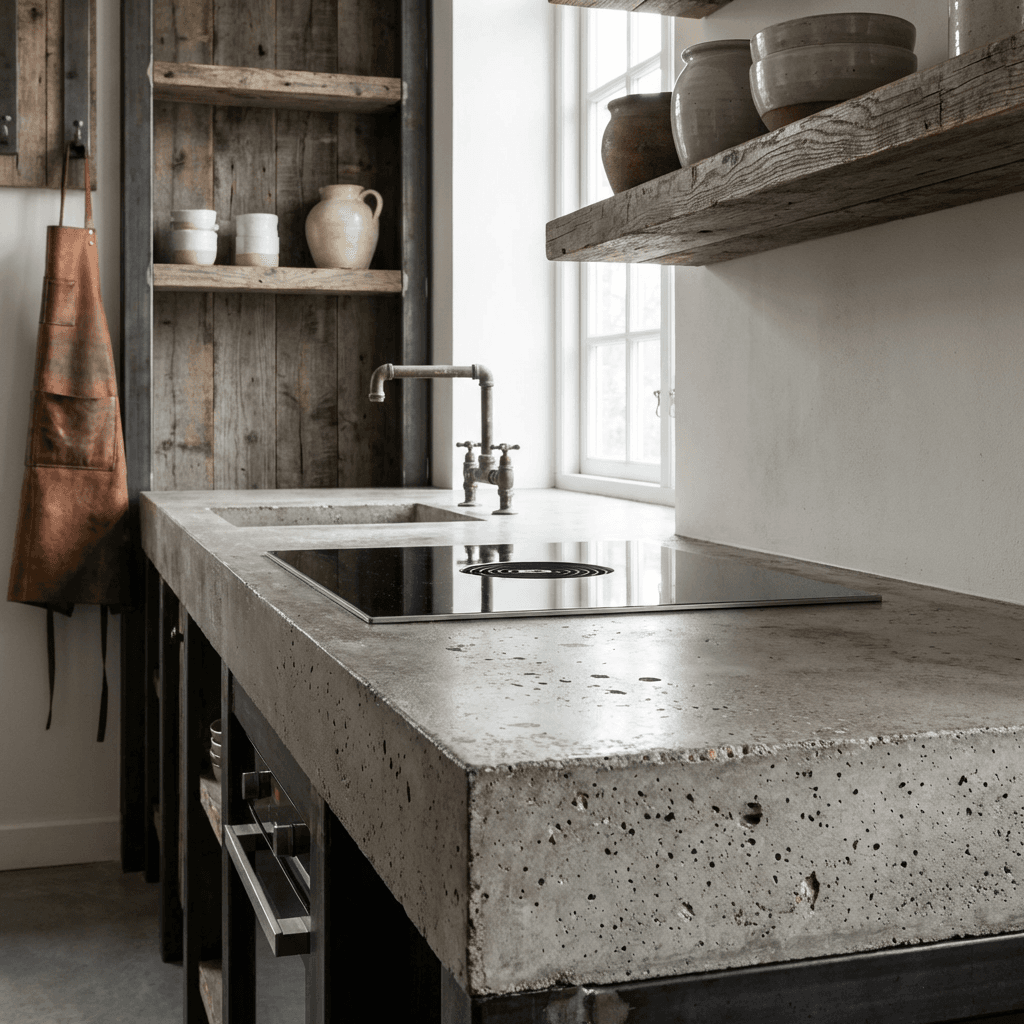

The industrial kitchen draws its DNA from the commercial restaurant kitchens and factory canteens of the early twentieth century — spaces where durability and efficiency trumped decoration. Today that utilitarian heritage translates into a domestic kitchen that feels energetic, honest, and built to handle real cooking. Stainless steel, concrete, exposed brick, and raw iron replace the painted cabinetry and polished stone of conventional kitchens.
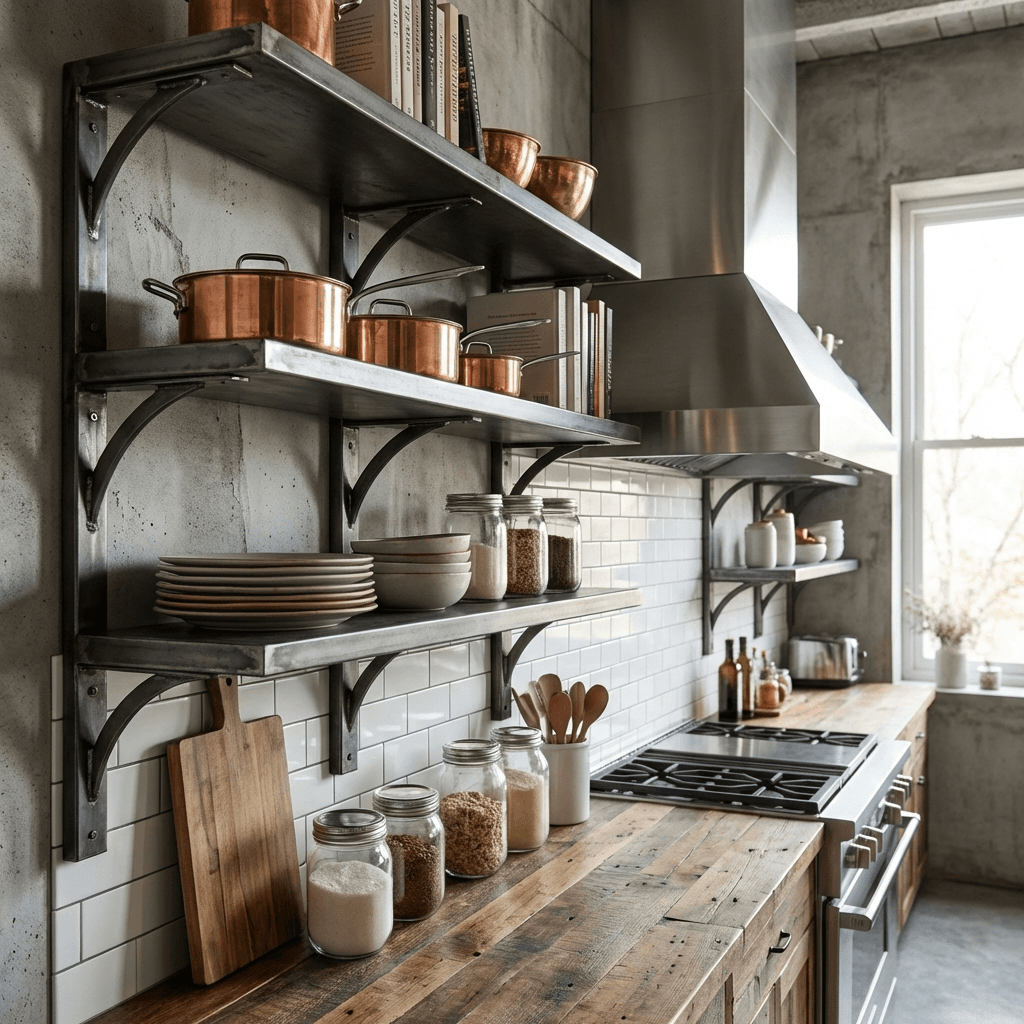
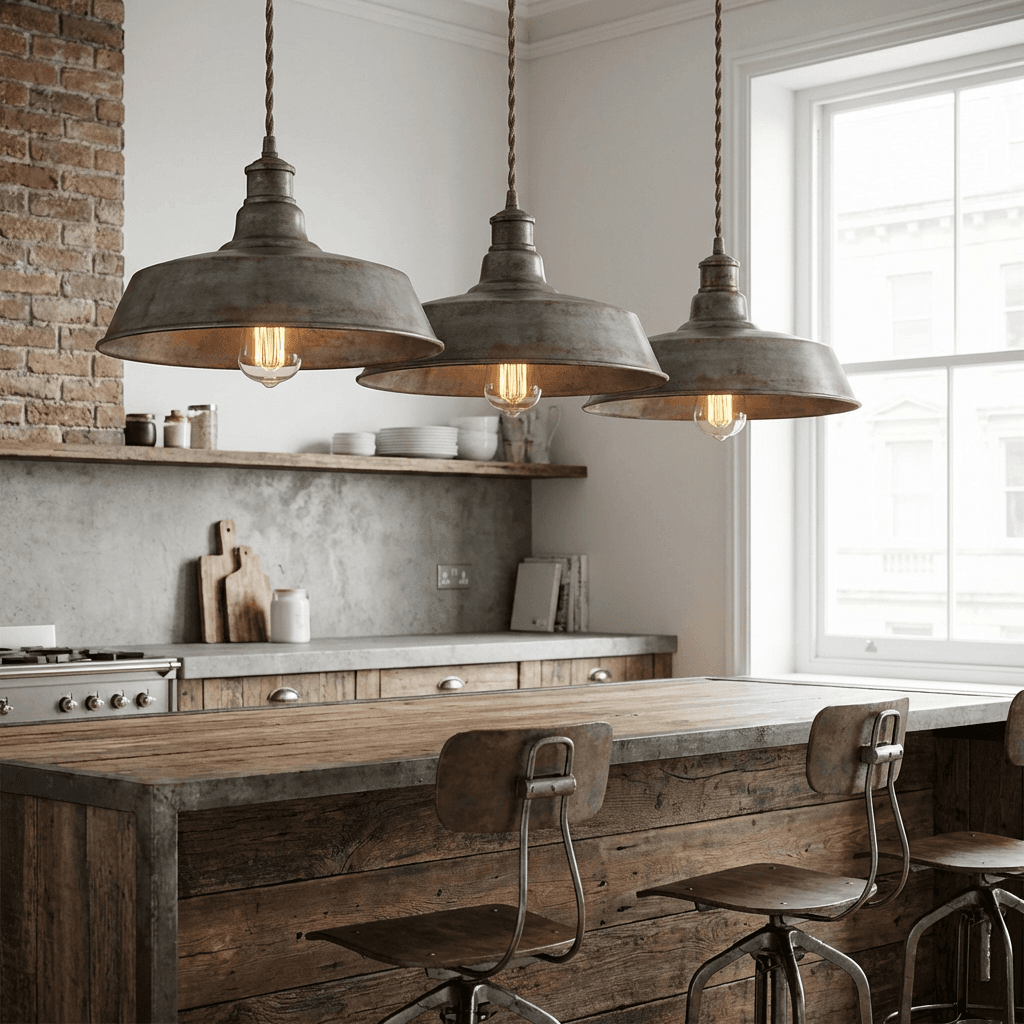
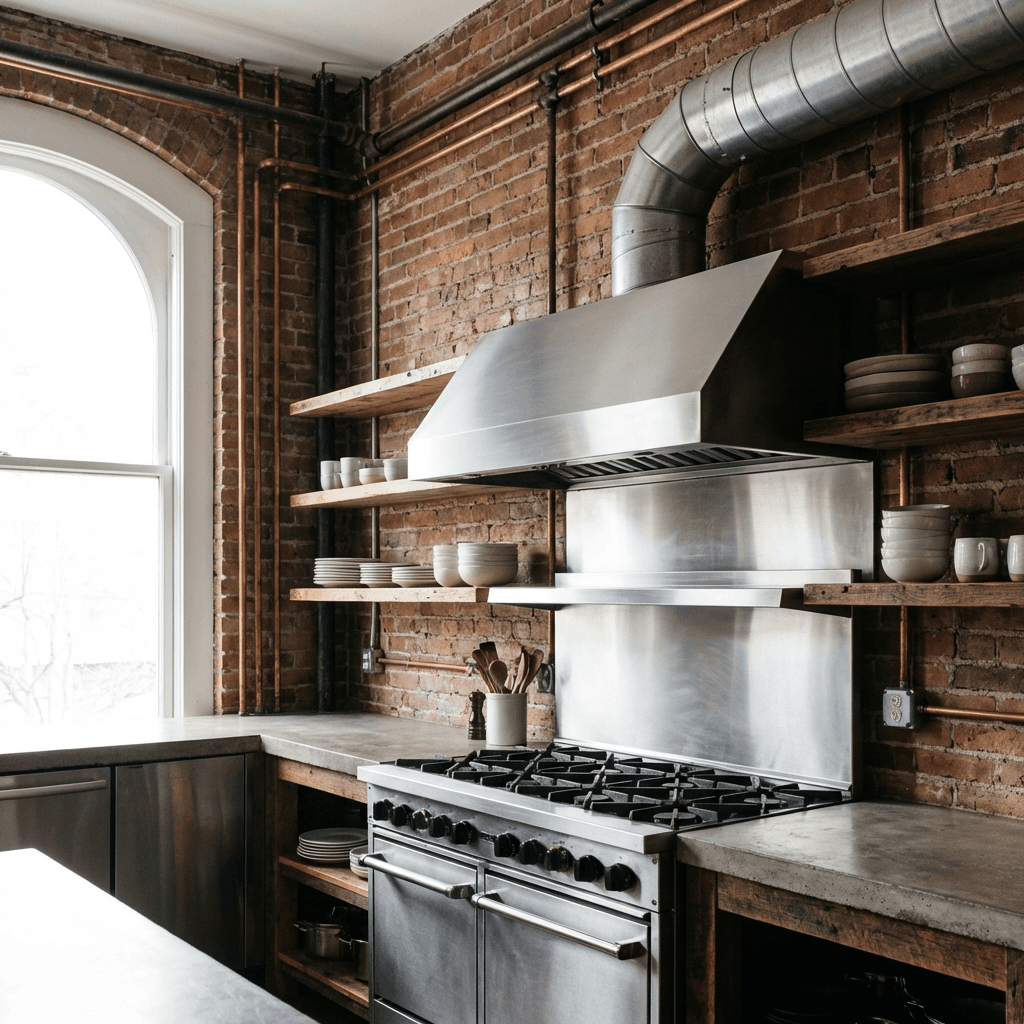
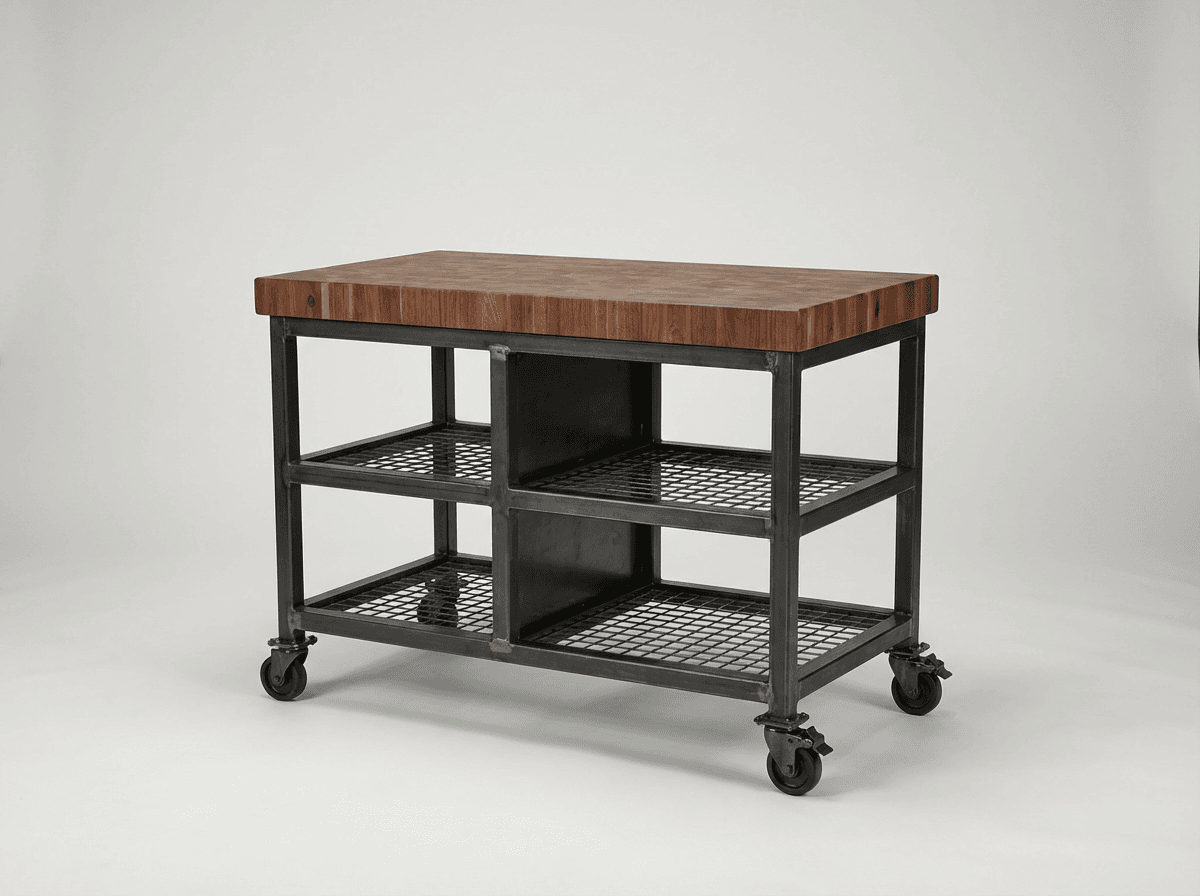
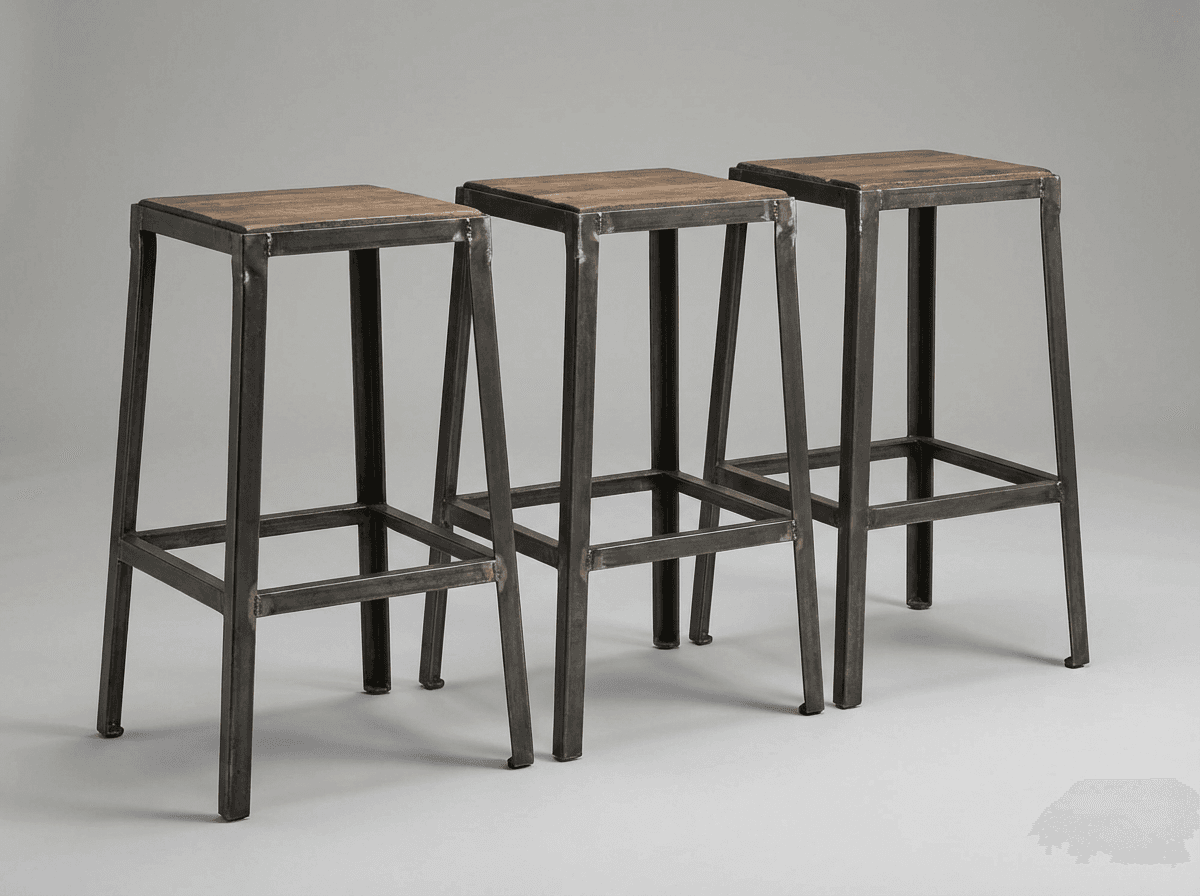
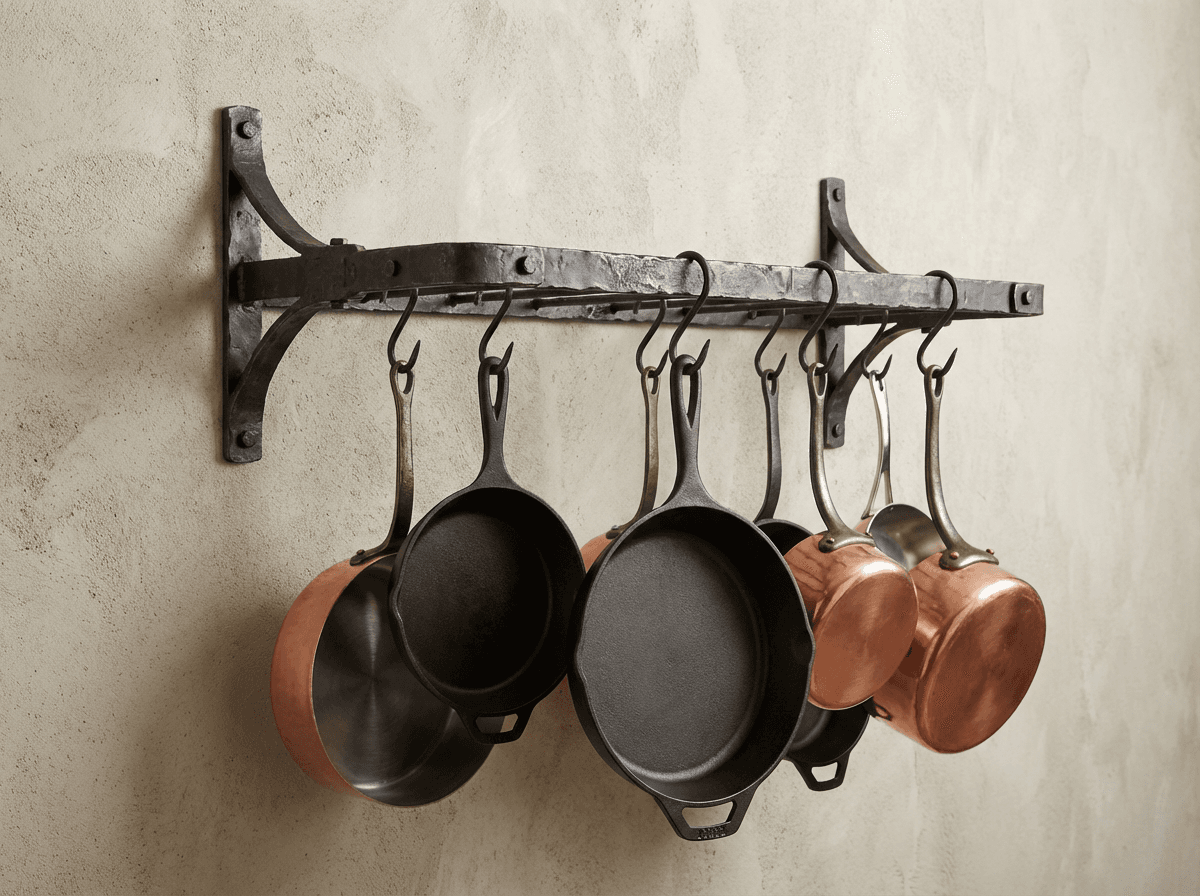
The layout favors an open plan with a substantial island at its center: a steel-framed workstation topped with butcher block or poured concrete, ringed by metal stools, and lit from above by oversized factory pendants. Upper cabinets give way to open shelving that puts everything on display — stacked plates, glass jars of spices, a row of cast iron pans hanging from S-hooks. The range hood is not hidden inside cabinetry but celebrated as a sculptural stainless element.
What keeps the industrial kitchen from feeling cold is the interplay of textures. Rough brick behind the stove, warm timber on the island, the patina of aged brass faucet handles, and the glow of exposed-filament bulbs create a layered warmth that pure stainless environments lack. It is a kitchen that invites you to cook, to gather, and to leave flour on the counter without worry.