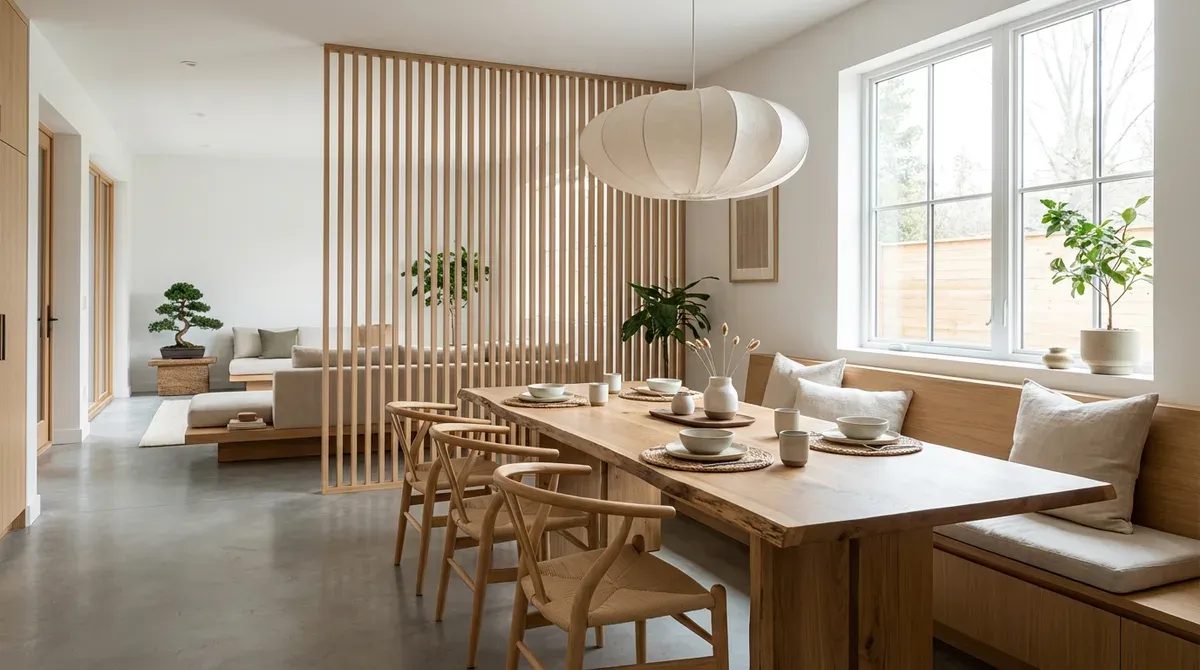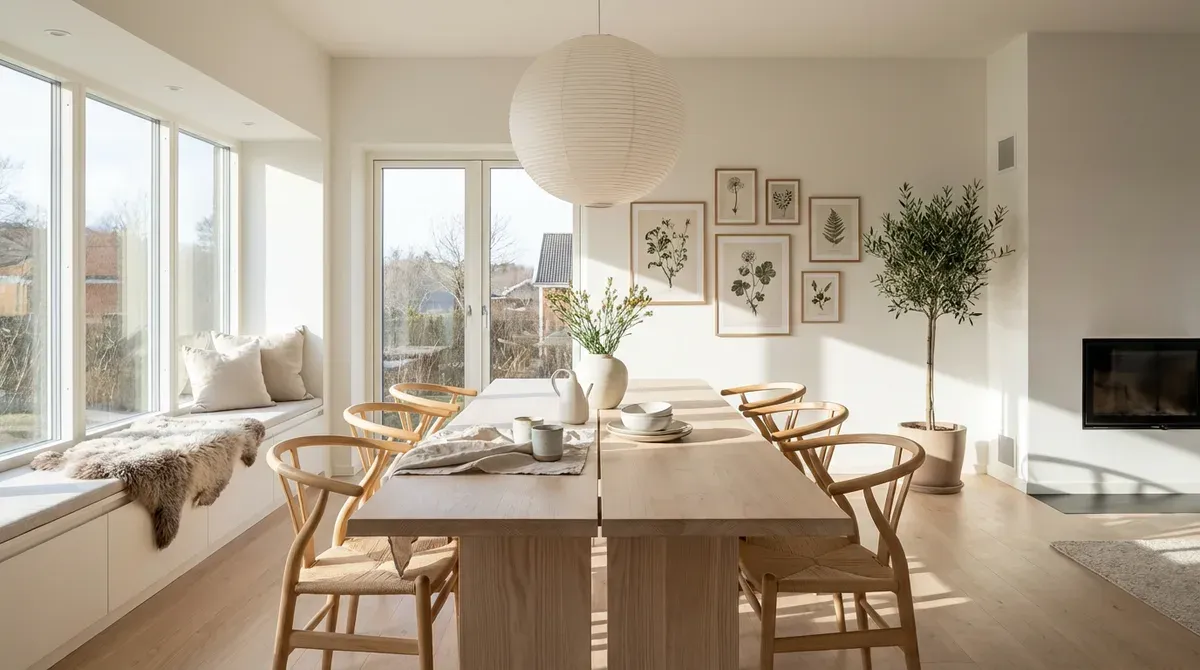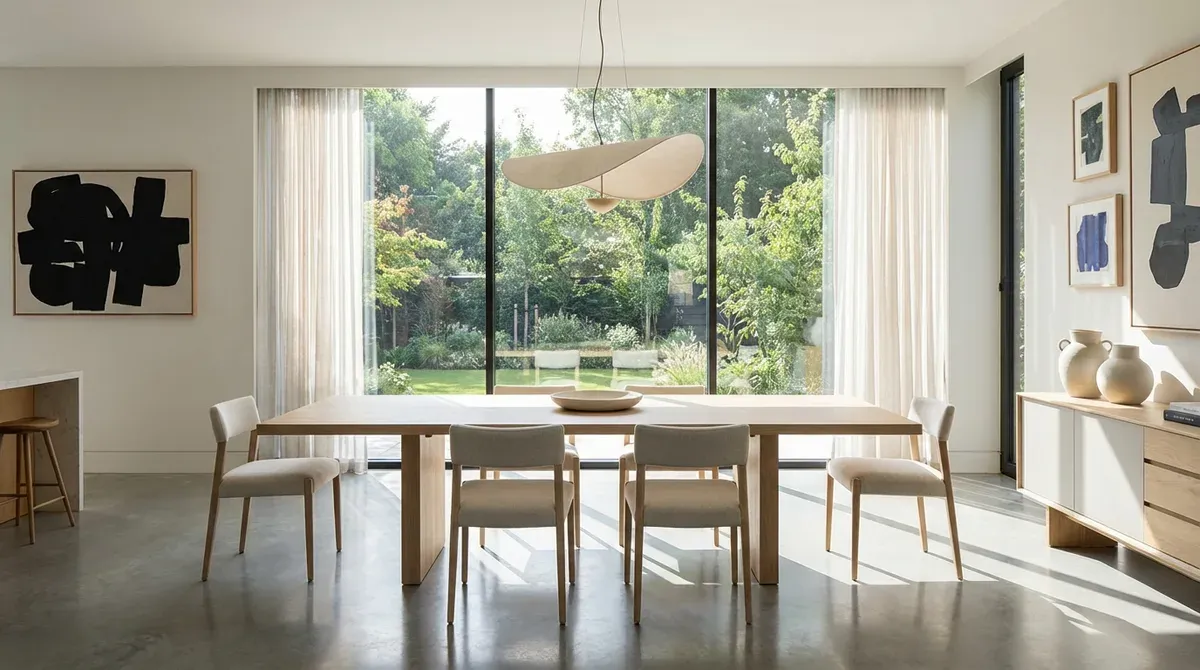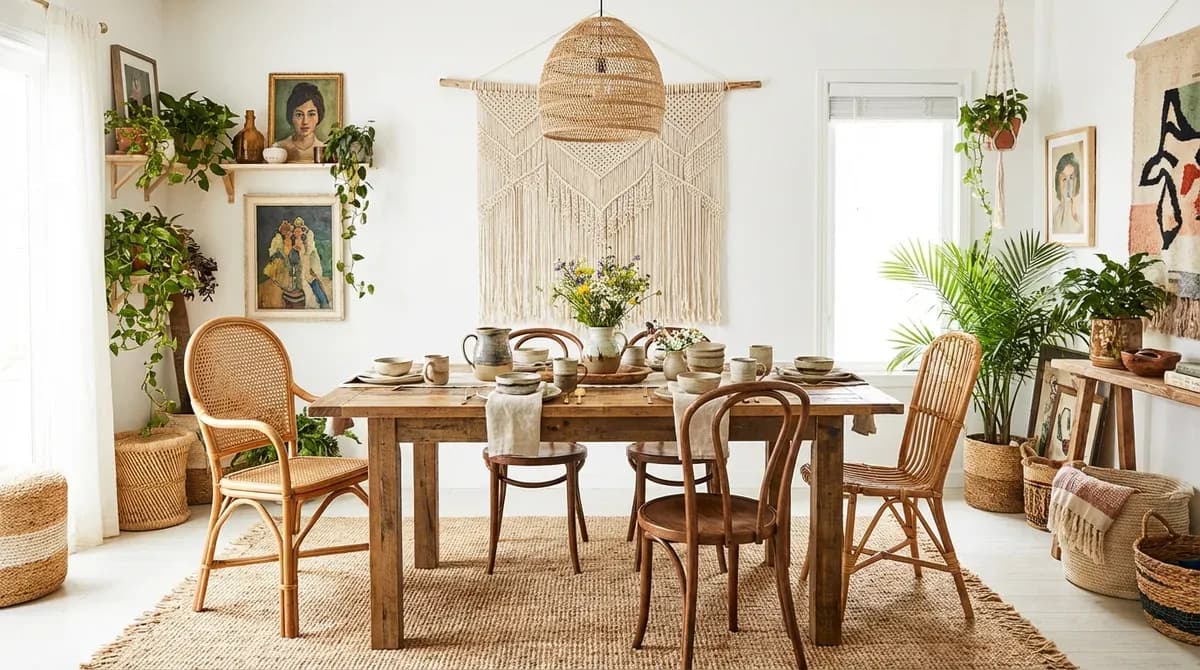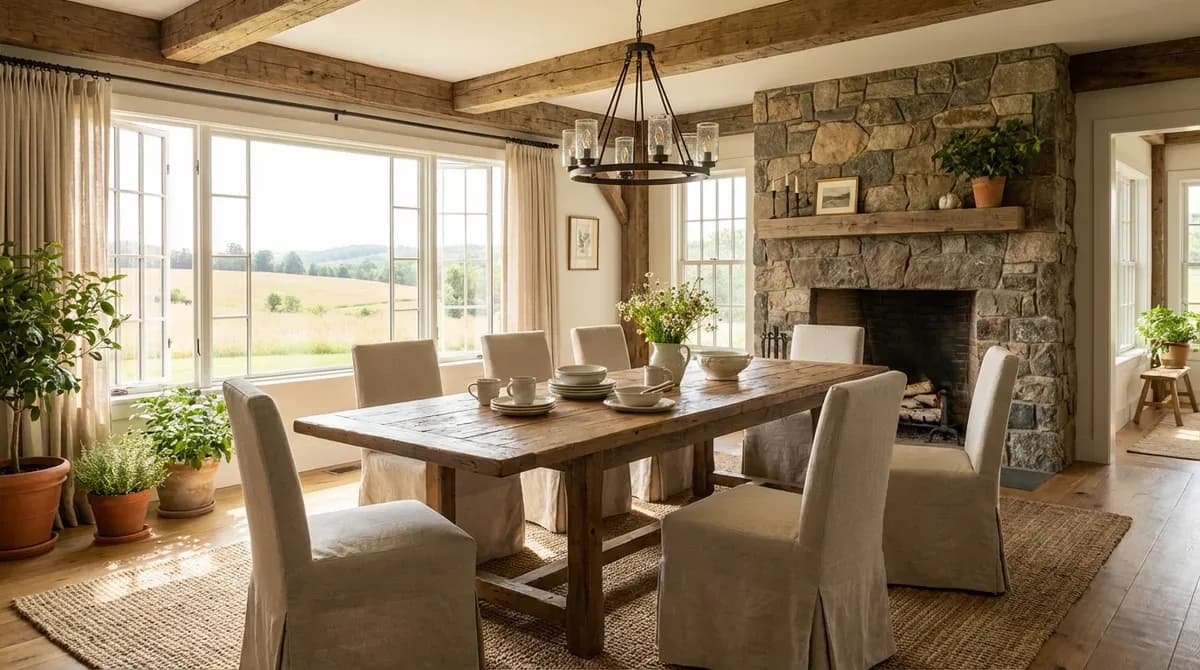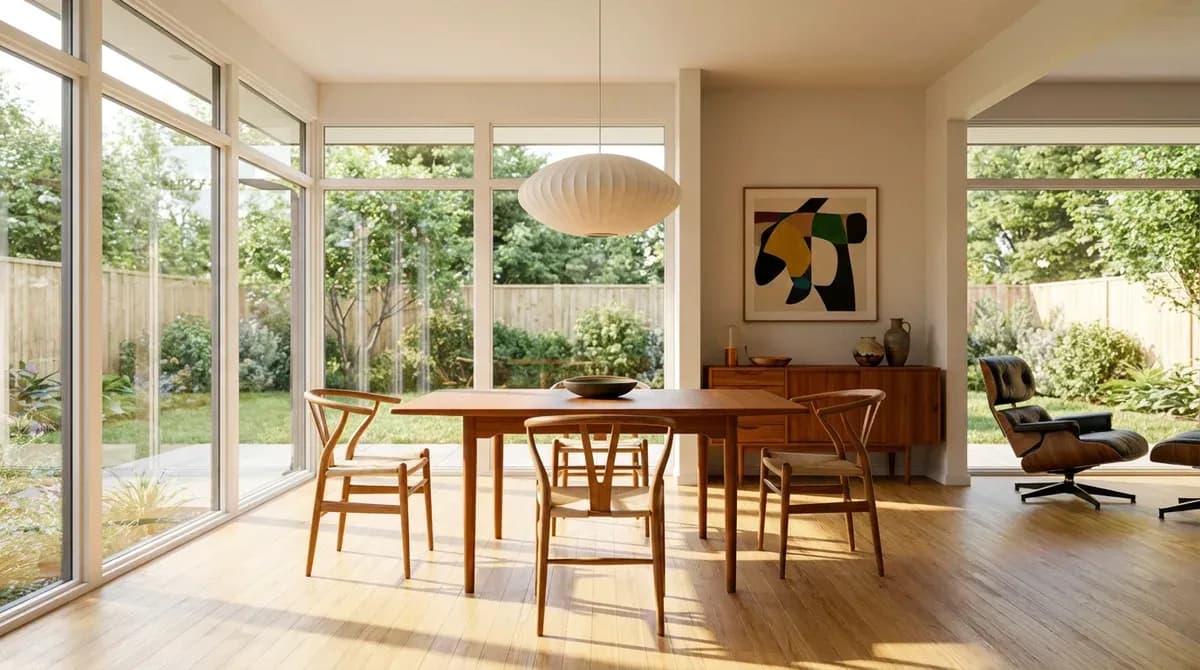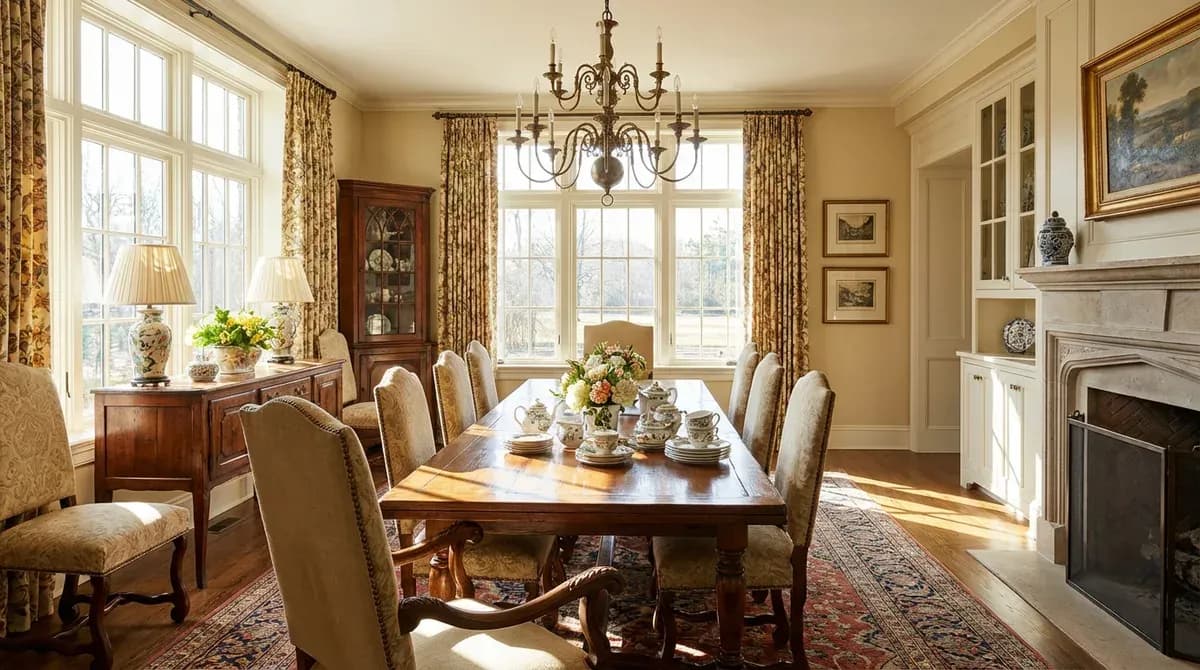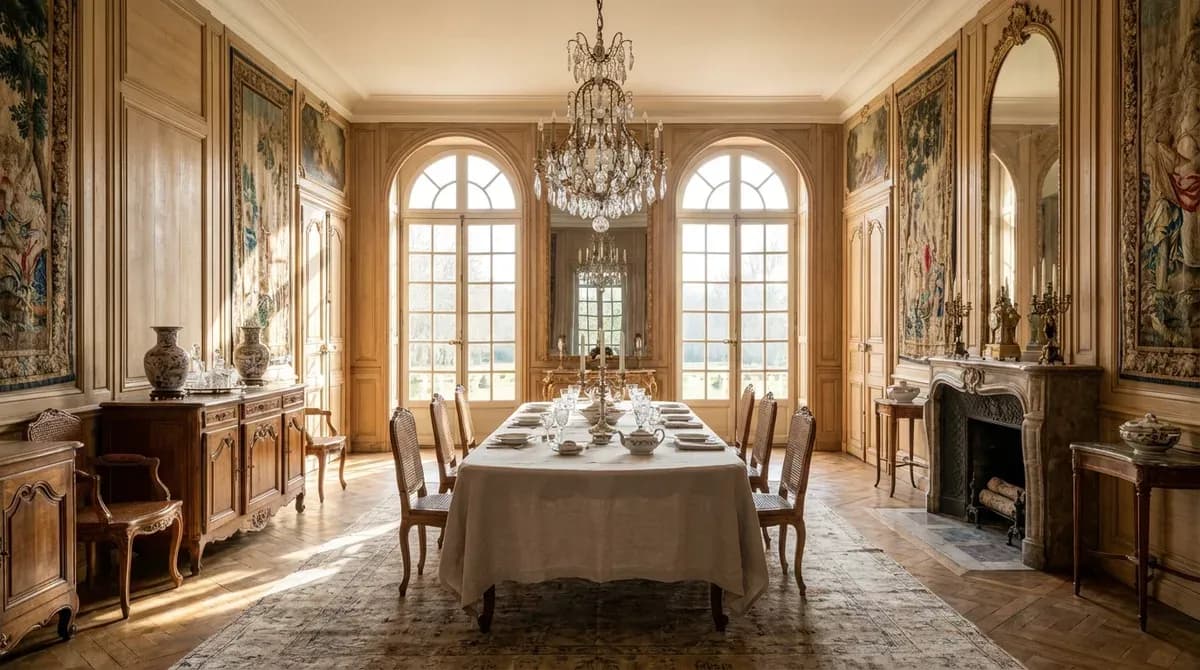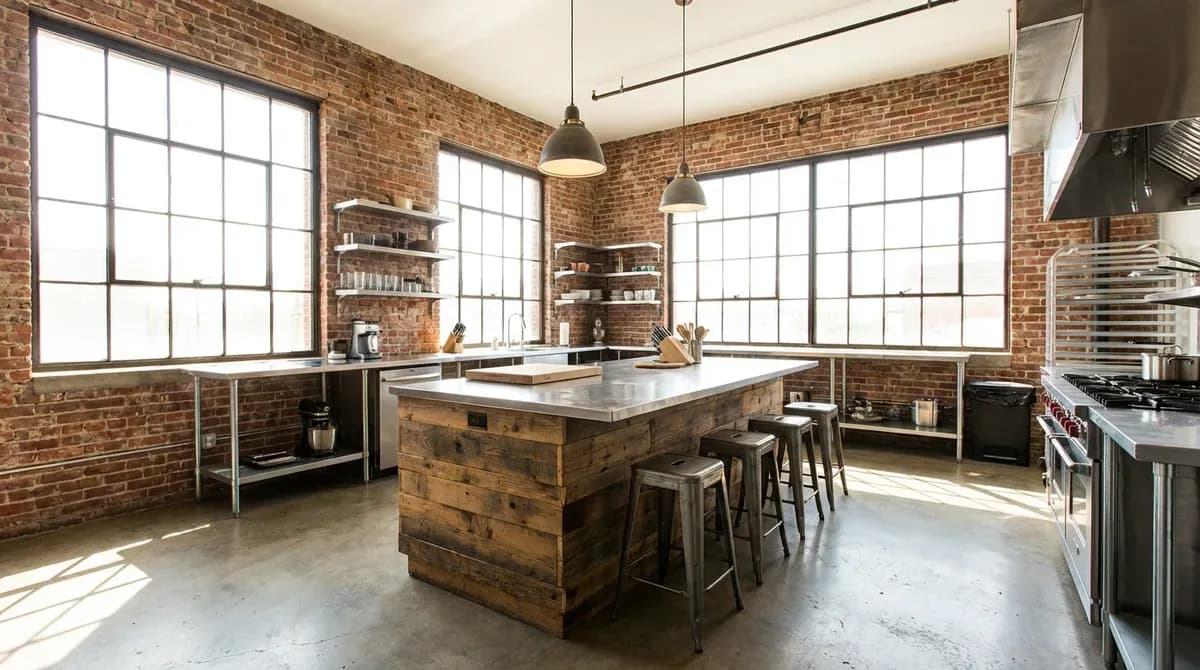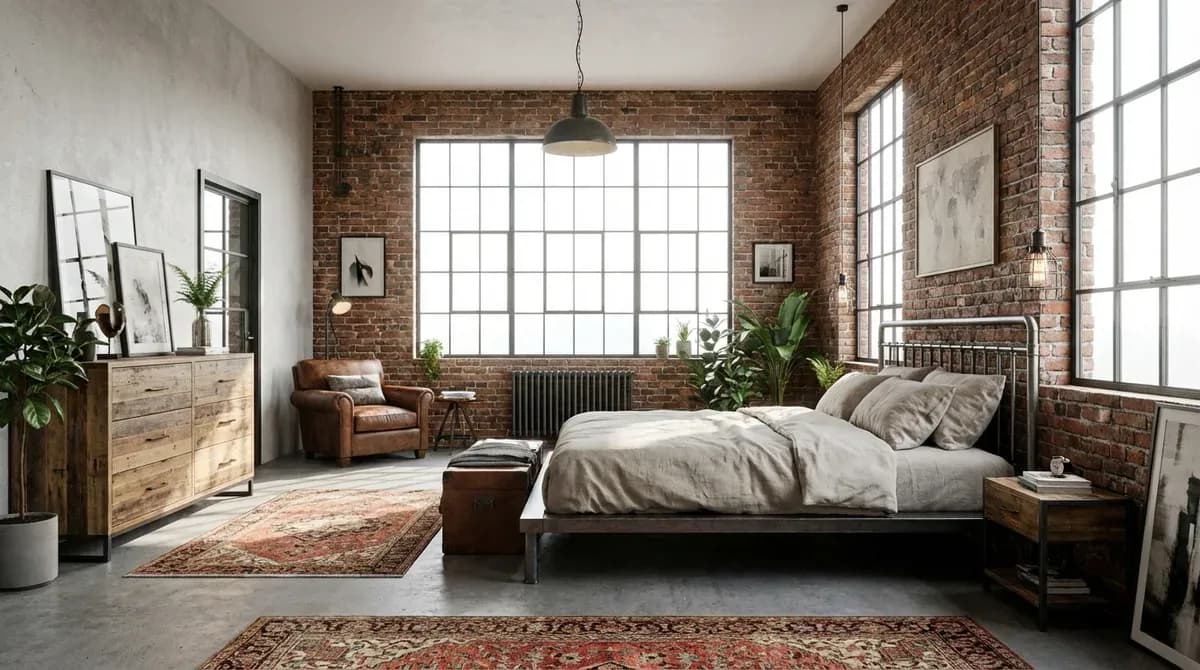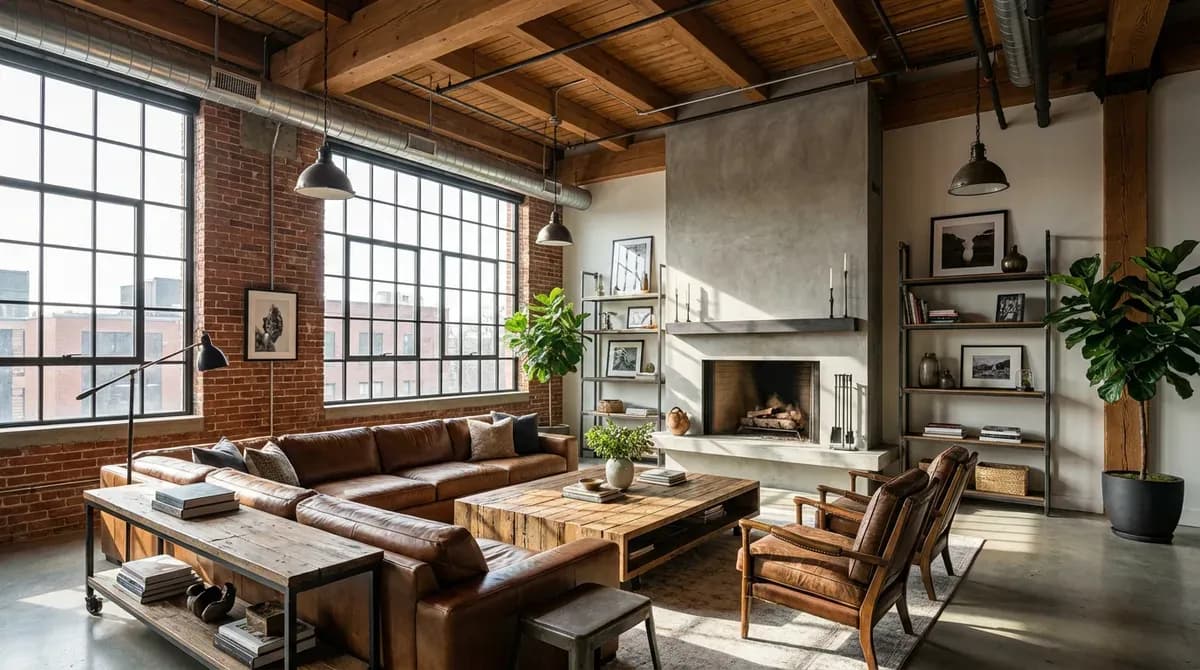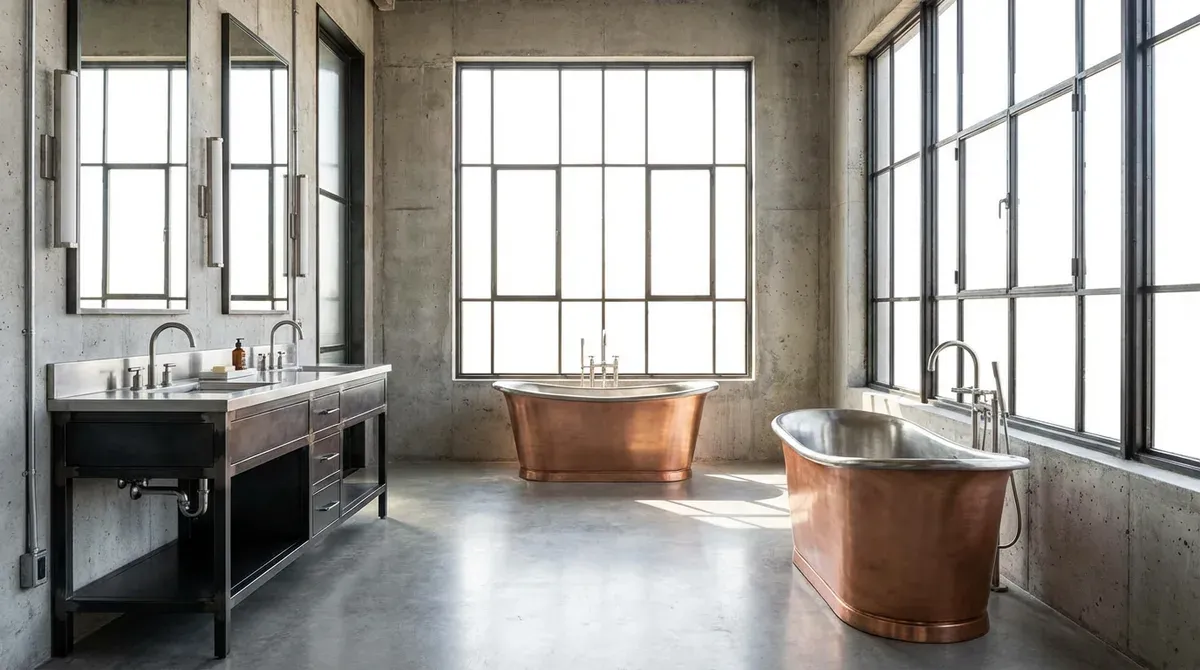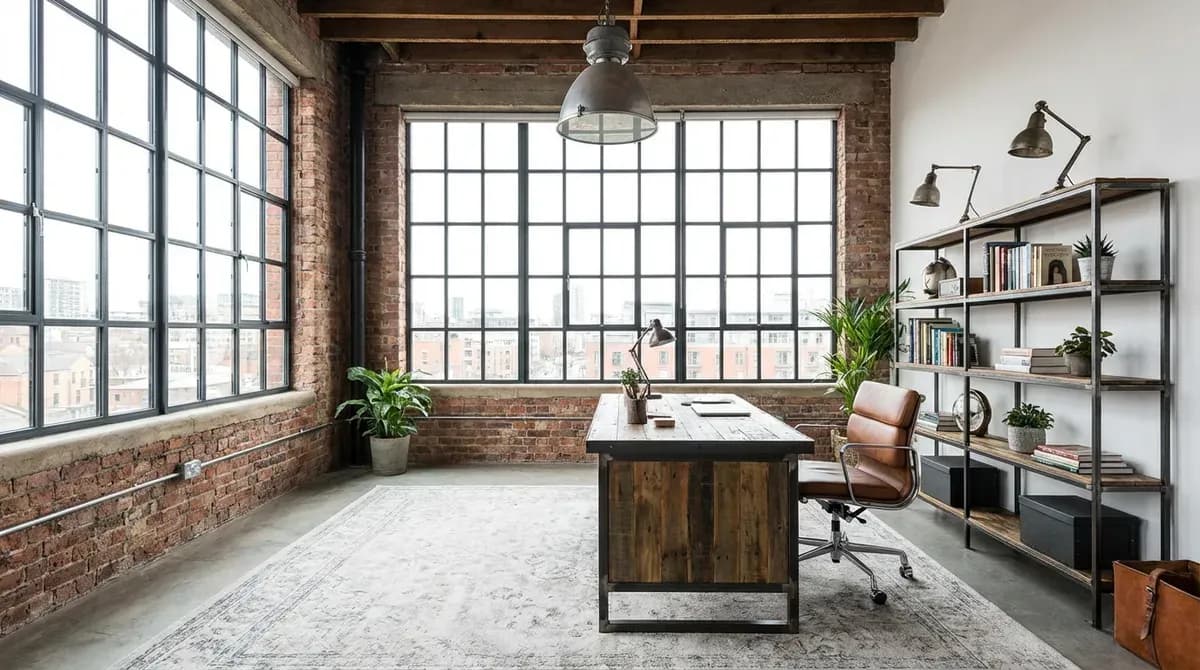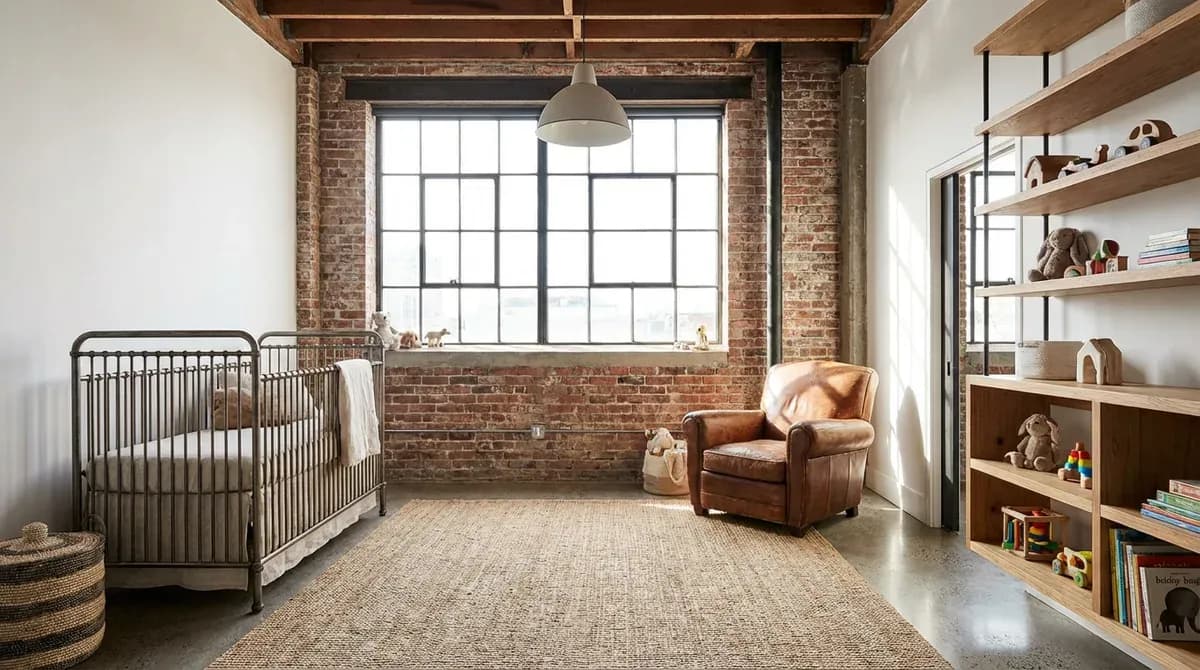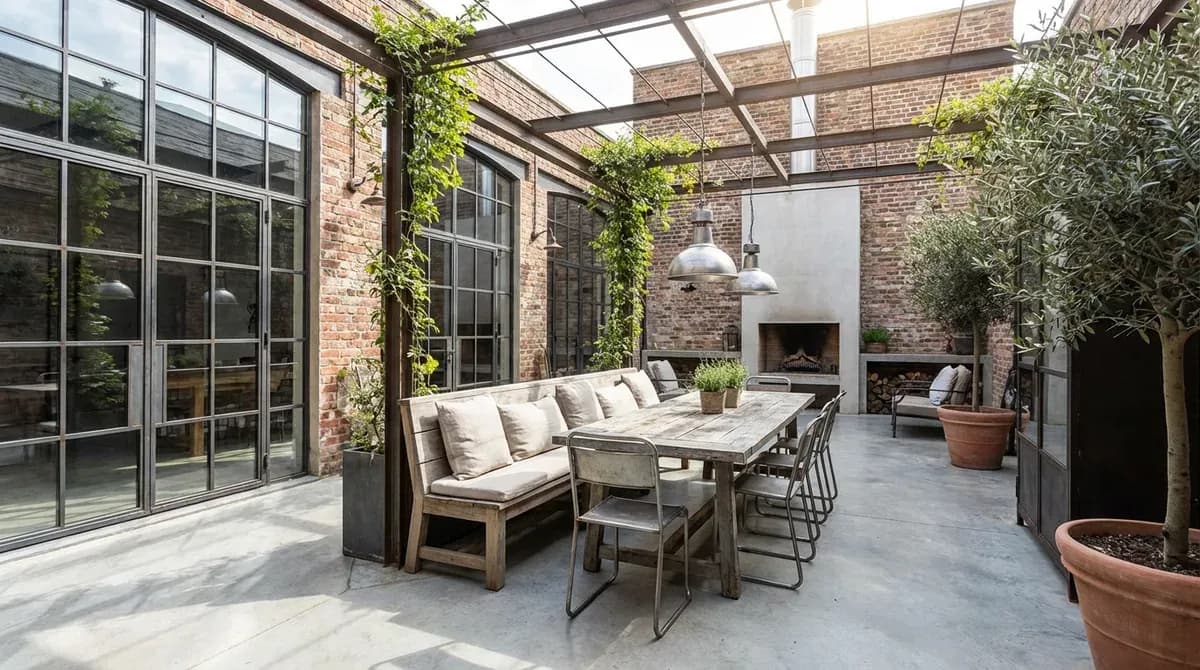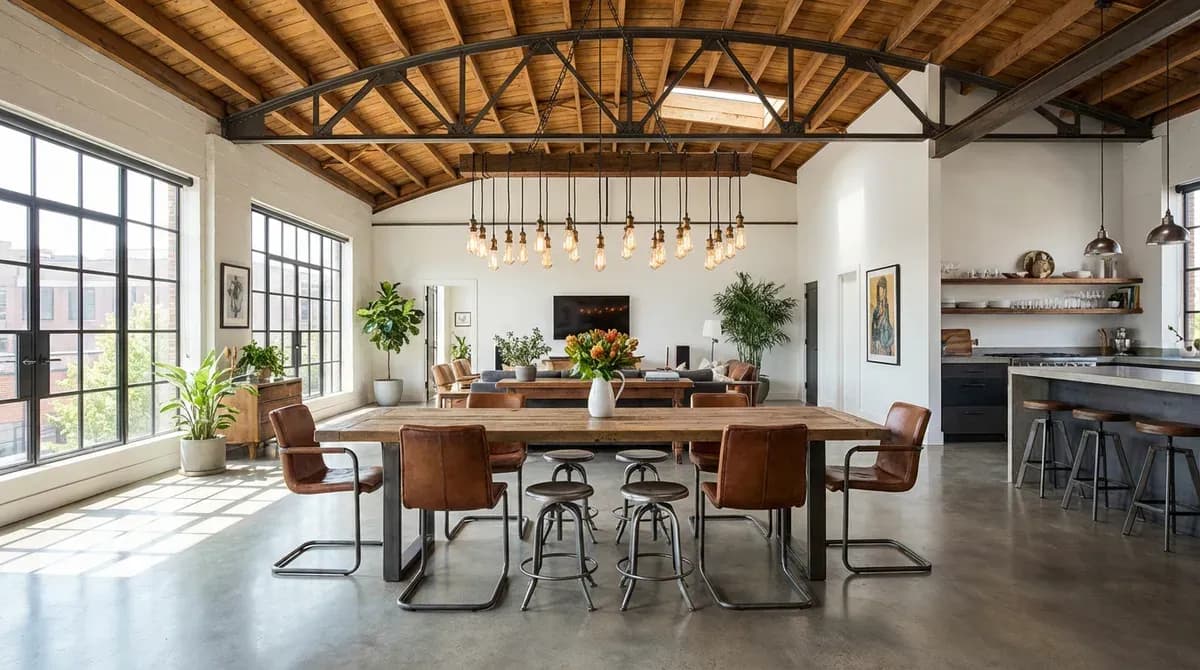
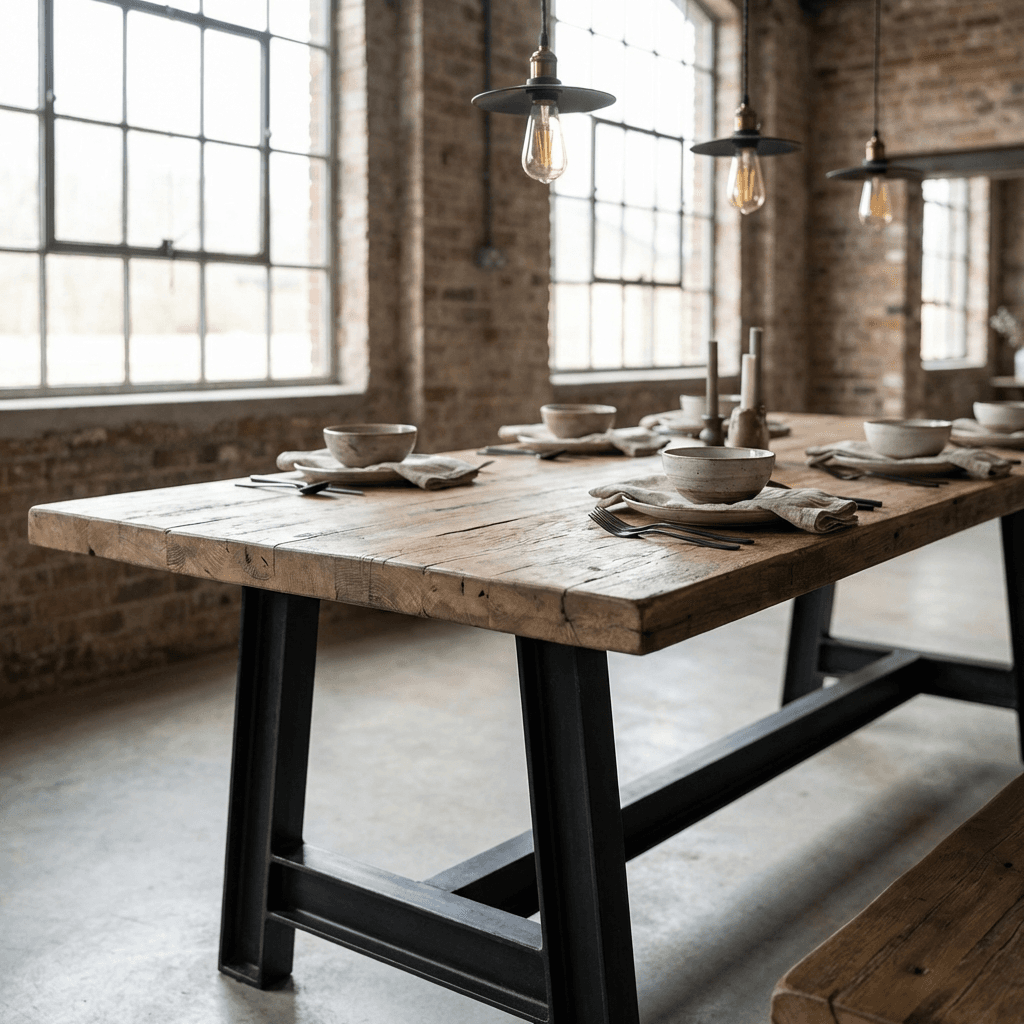
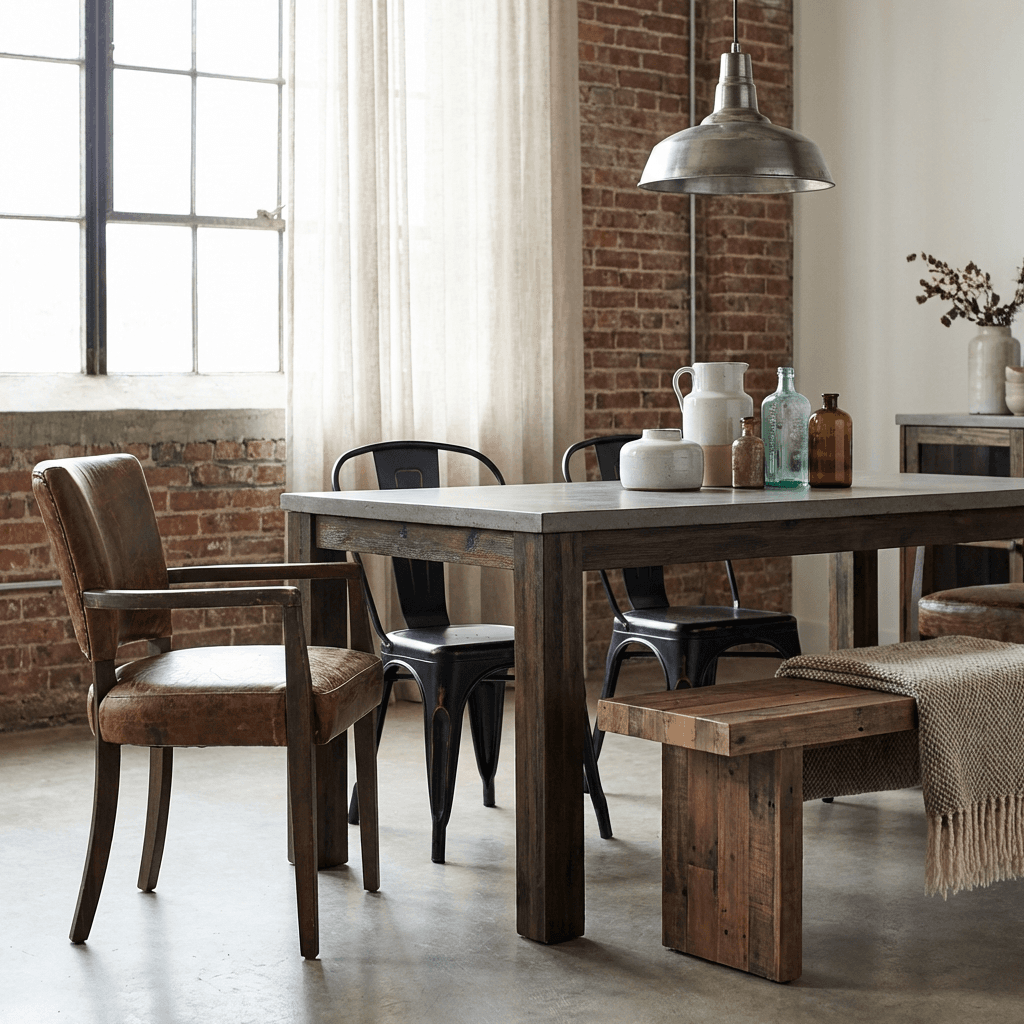
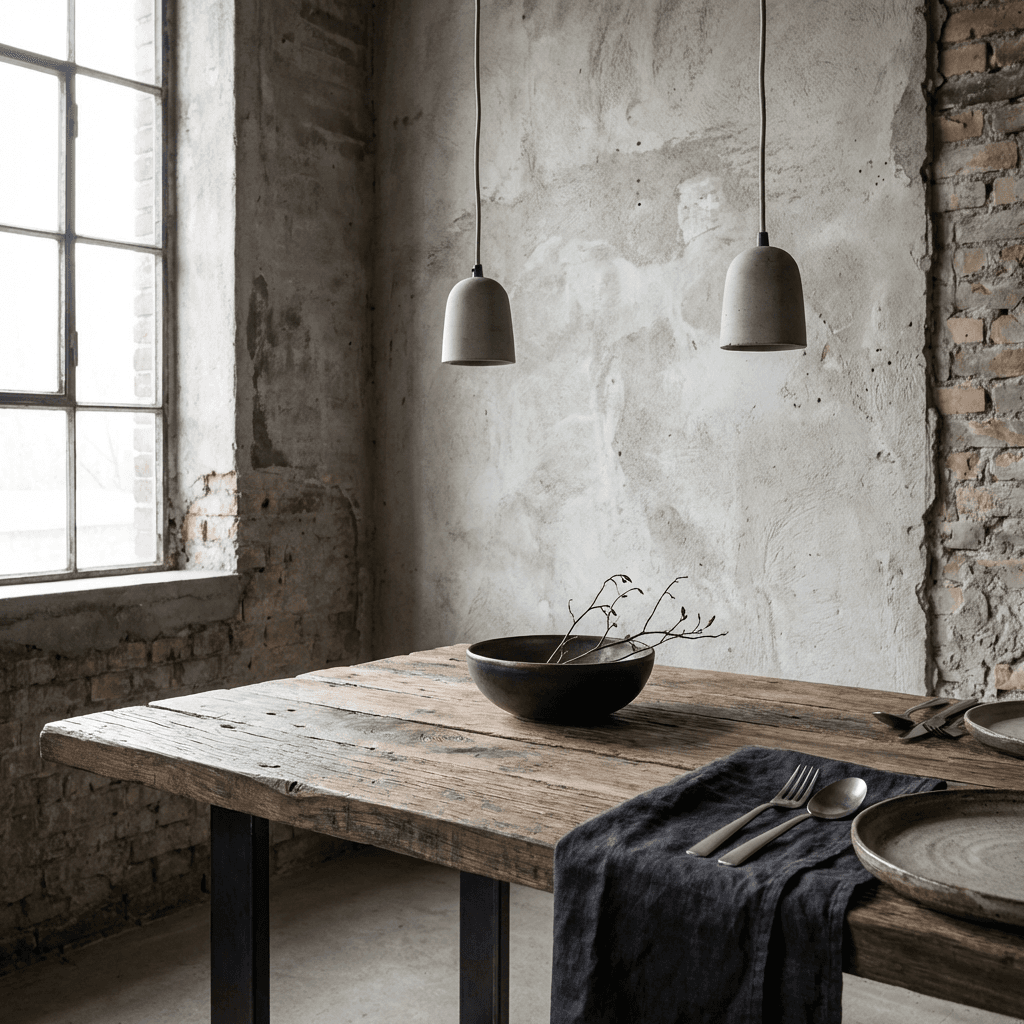
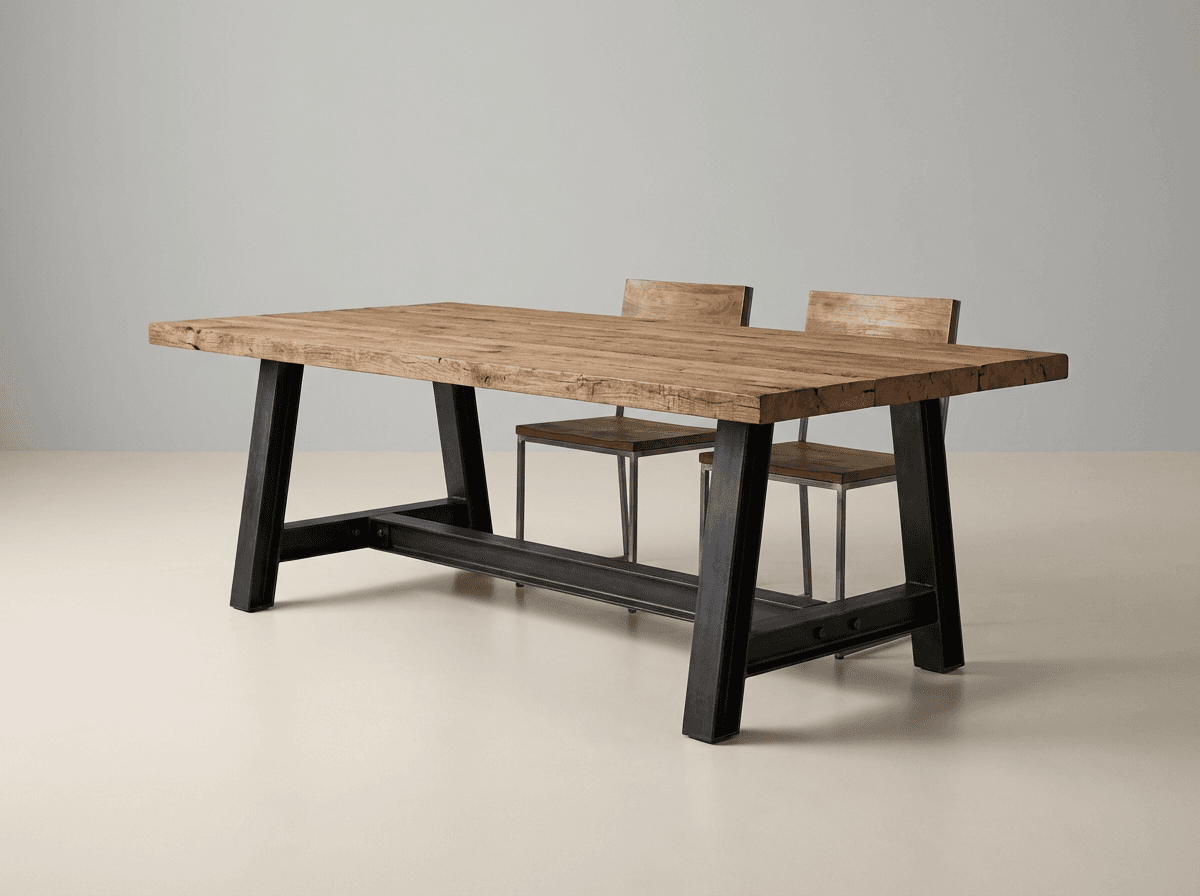
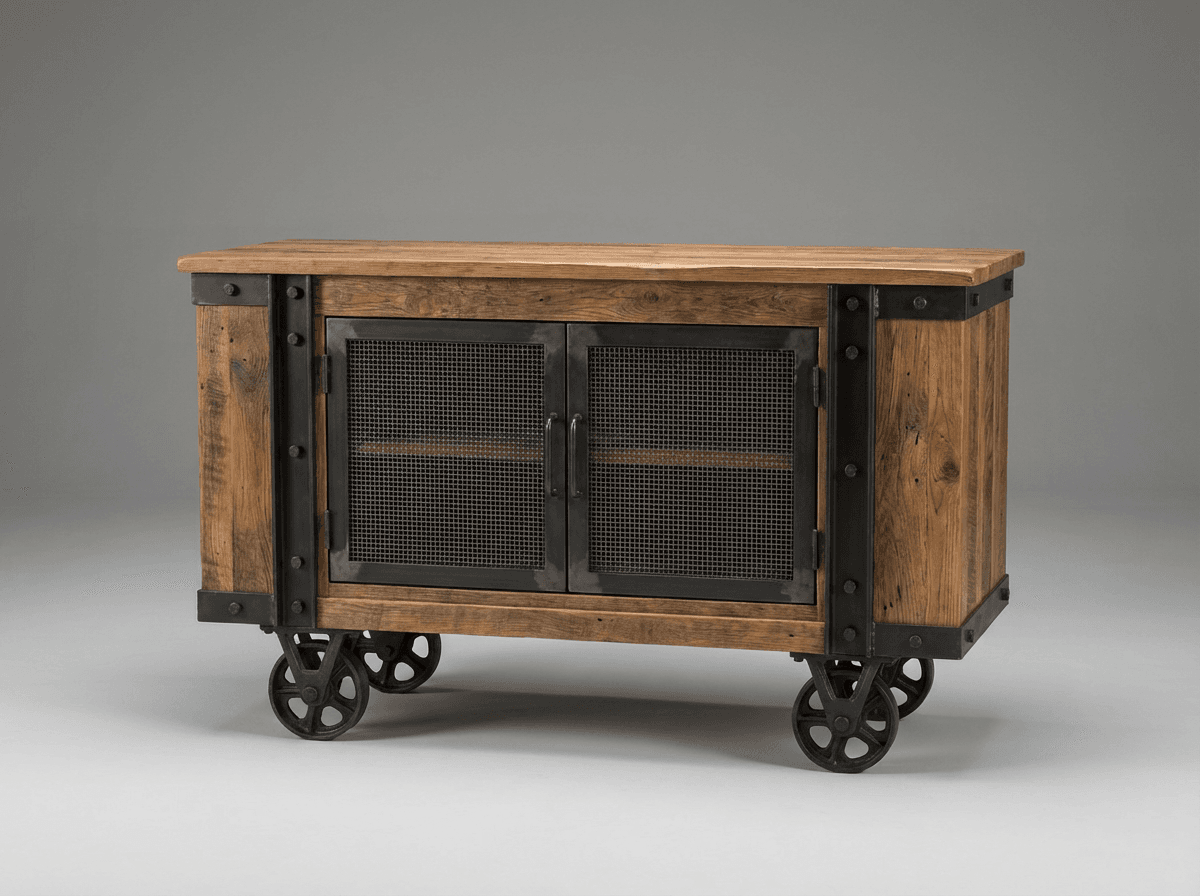
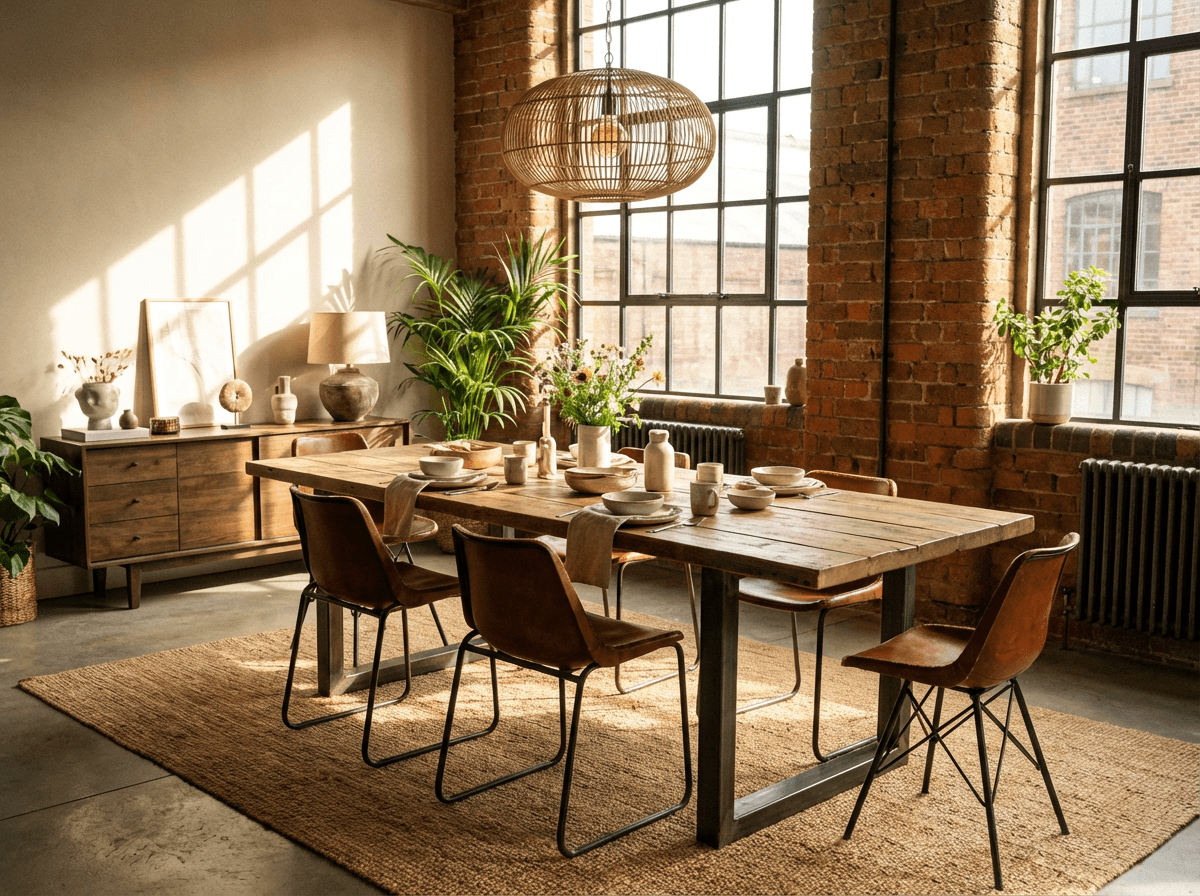
The industrial dining room is built around a single idea: a massive table where people gather. It borrows the communal spirit of factory break rooms and the visual weight of workshop benches, translating them into a space designed for long meals, animated conversation, and the kind of entertaining that does not require formality. Everything in the room supports the table — the lighting frames it, the seating surrounds it, the sideboard serves it.
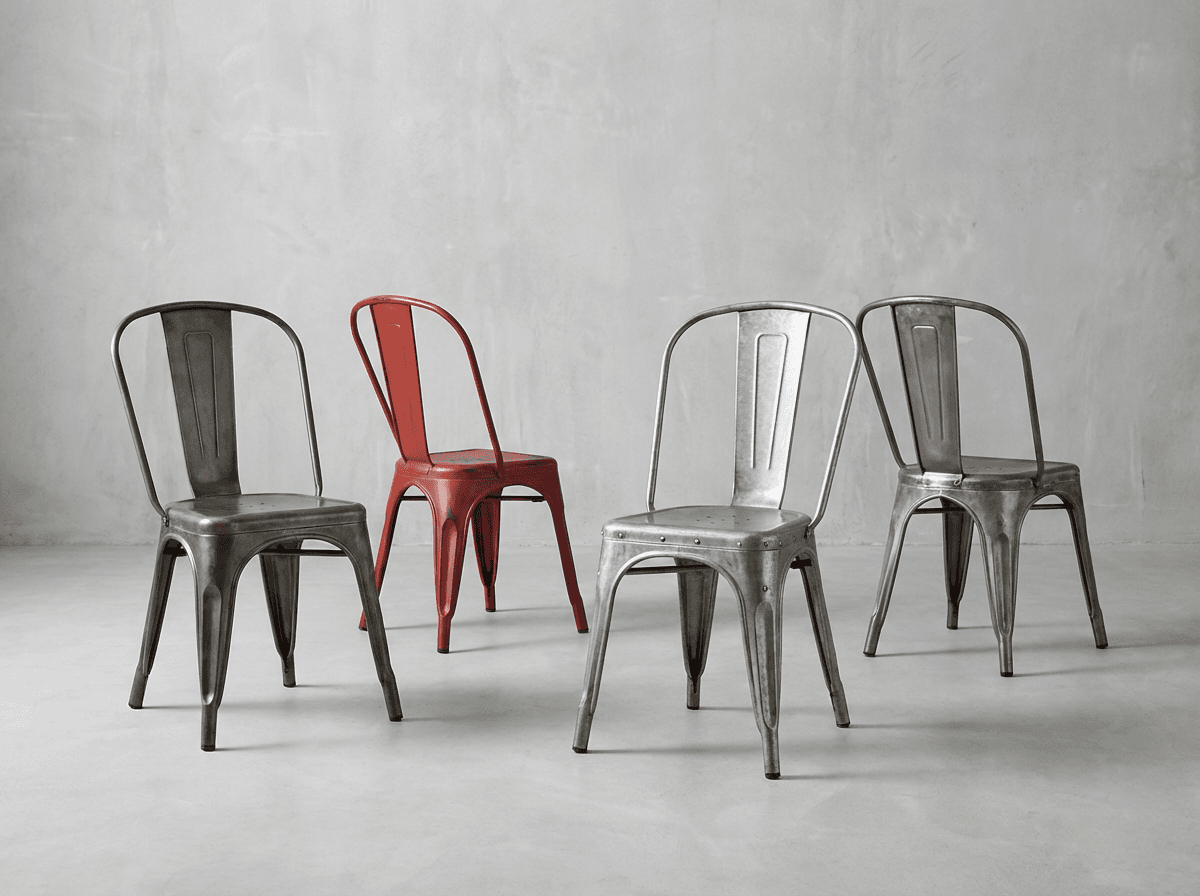
Scale matters here more than in any other room. The table must be substantial — thick planks of reclaimed wood carried by a steel base that looks like it could support a bridge. The chairs, by contrast, should be visually light: open metal frames that allow you to see through them, preventing the combined mass of table and seating from overwhelming the space. A long wooden bench on one side is a practical and aesthetic addition that seats extra guests without adding more chair backs.
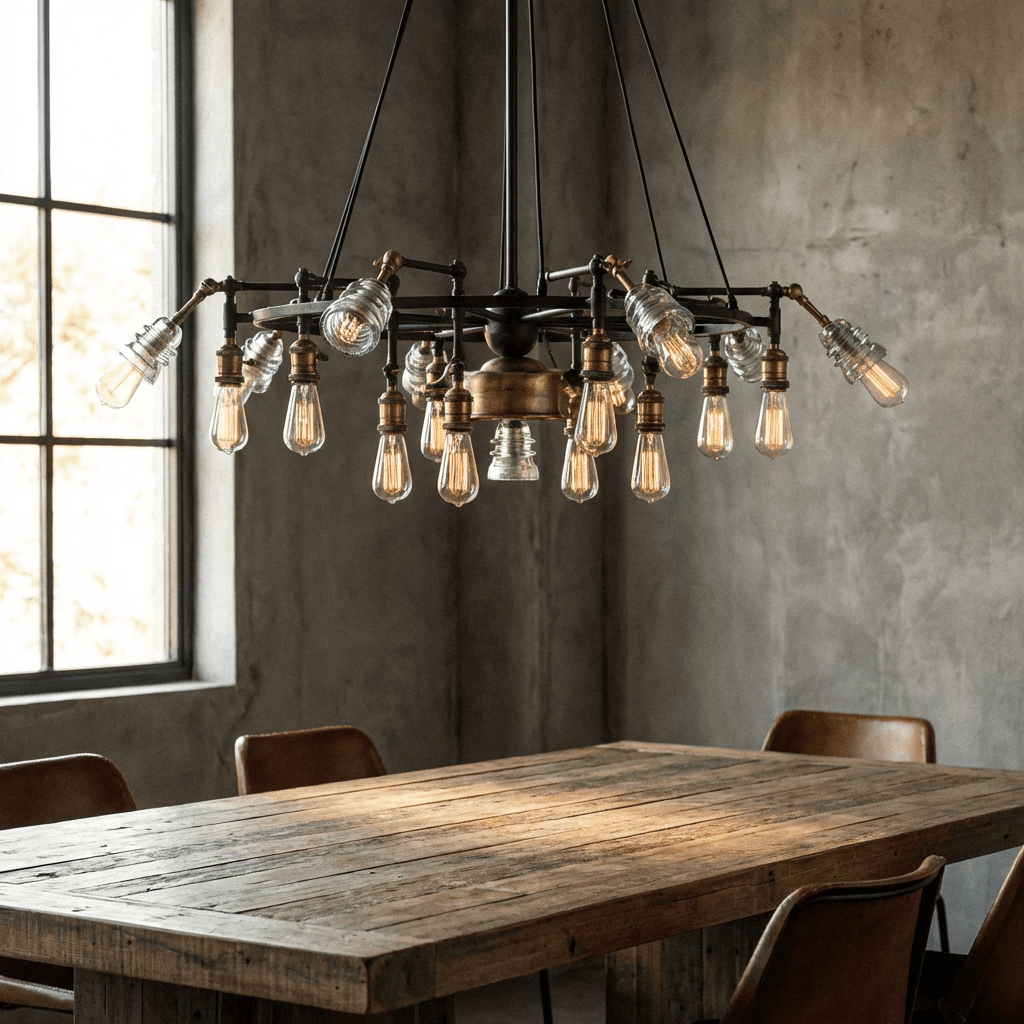
Overhead, a row of factory pendants or a linear suspension light hung low creates a canopy of warm light that draws the eye to the table surface and the food upon it. Use exposed-filament bulbs on a dimmer — bright for prep and serving, low and amber for the meal itself. The walls stay quiet: raw brick or plaster, a single large mirror in iron, and nothing more. The dining room is not a gallery; it is a gathering place.