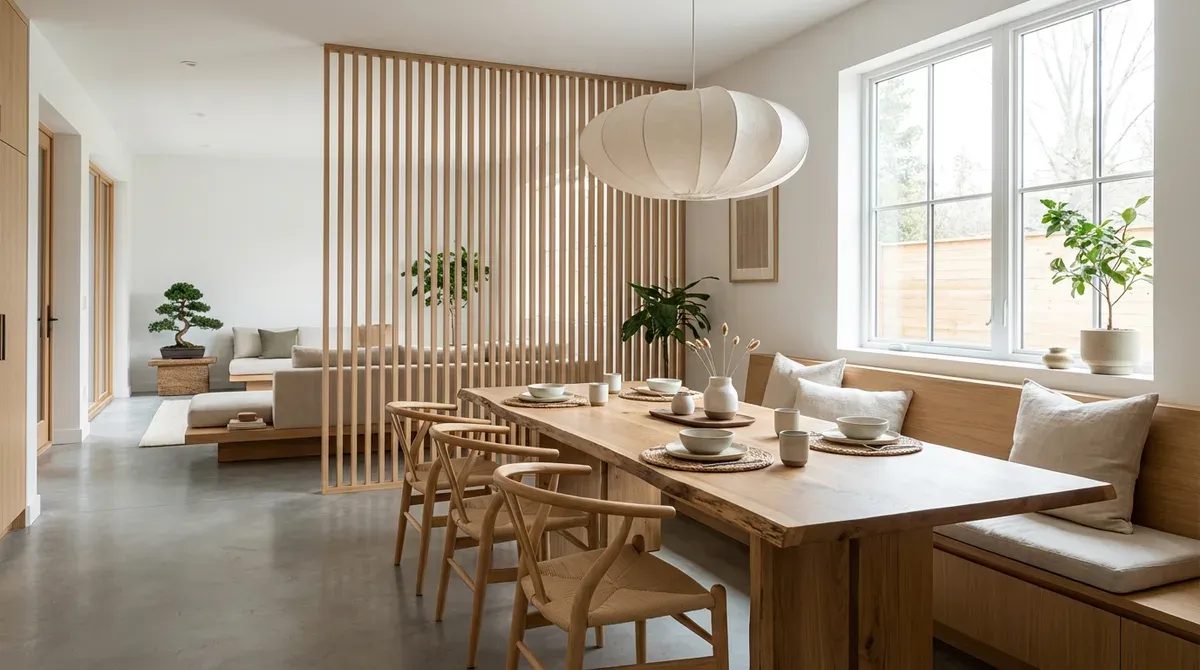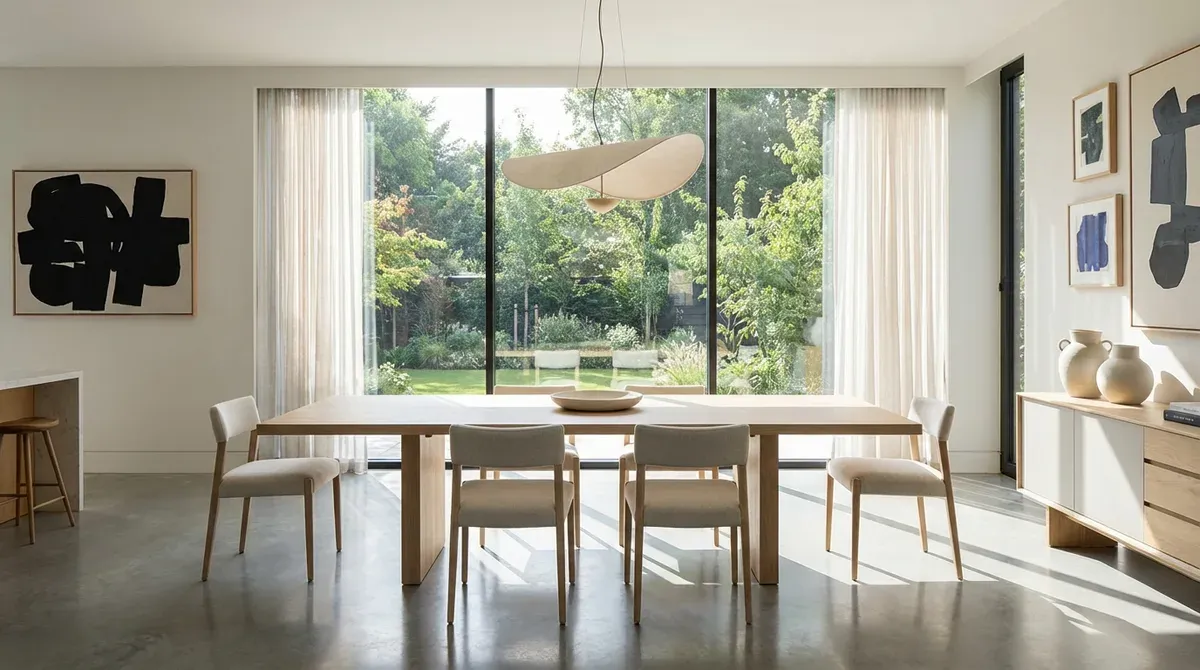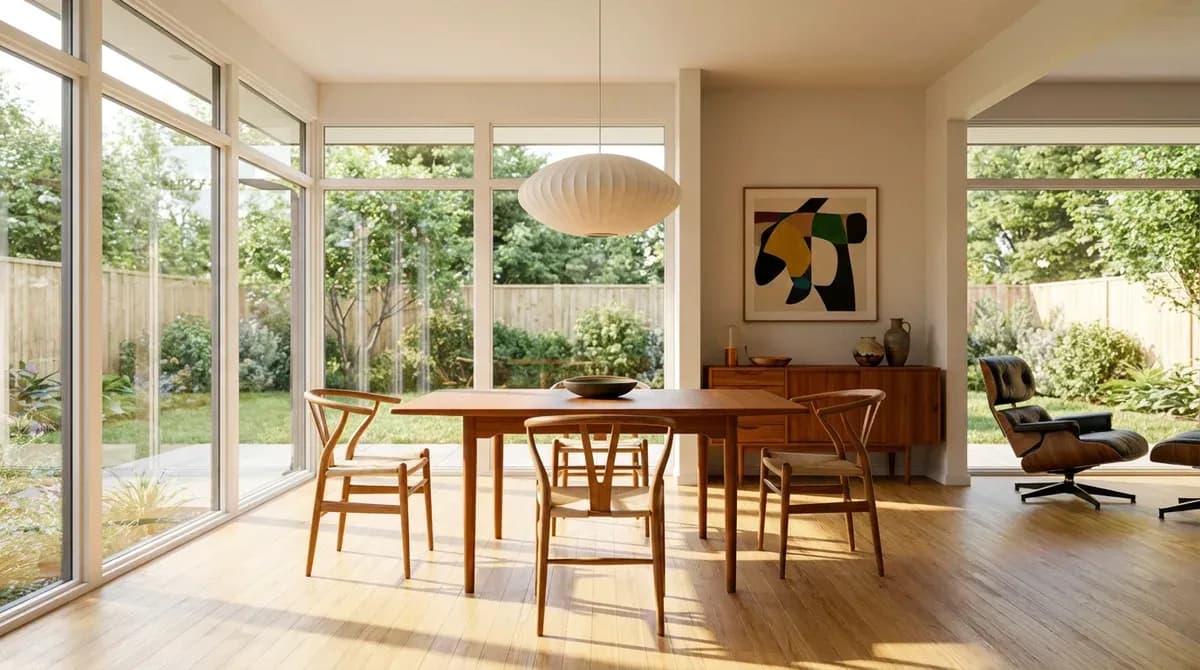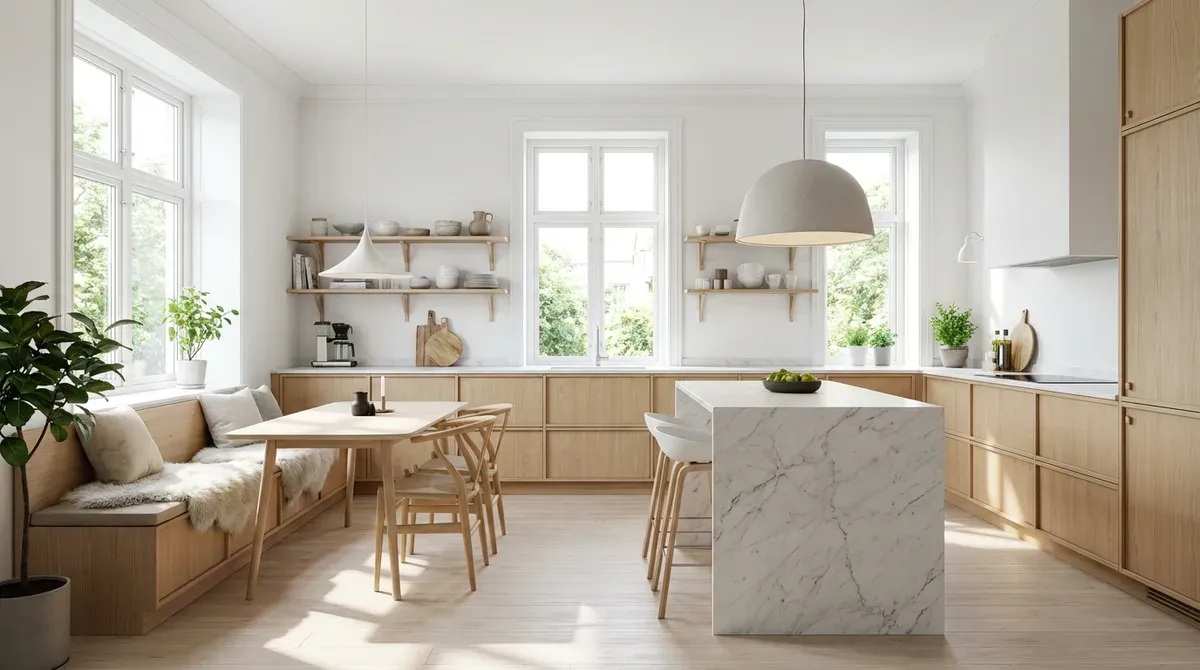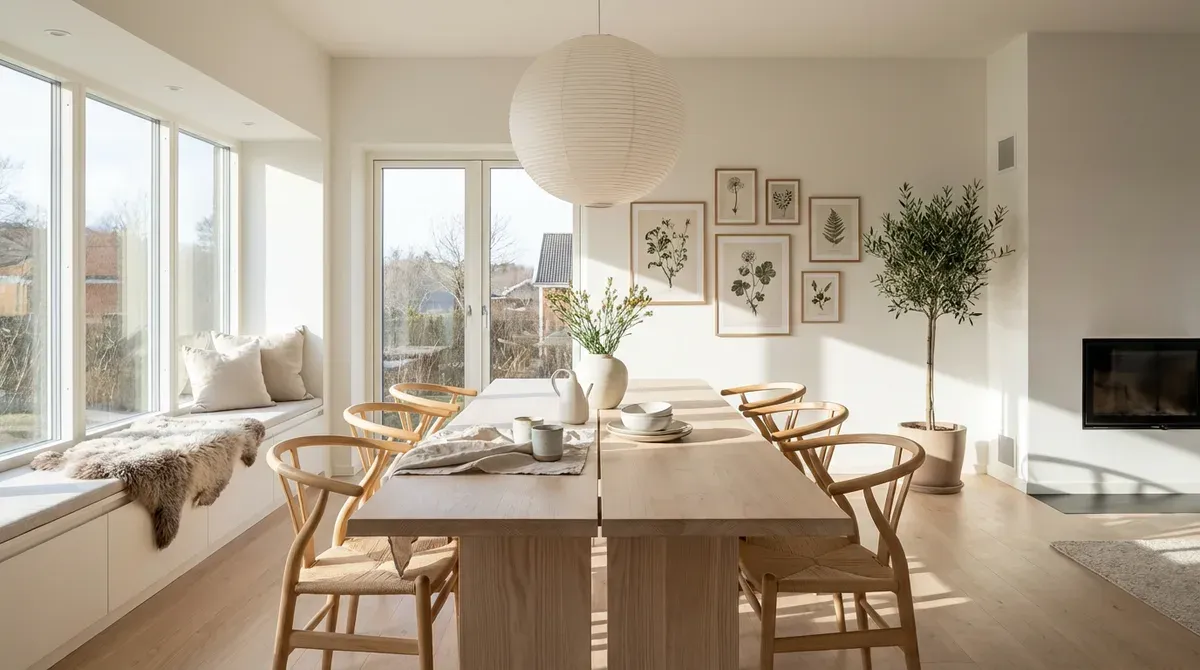
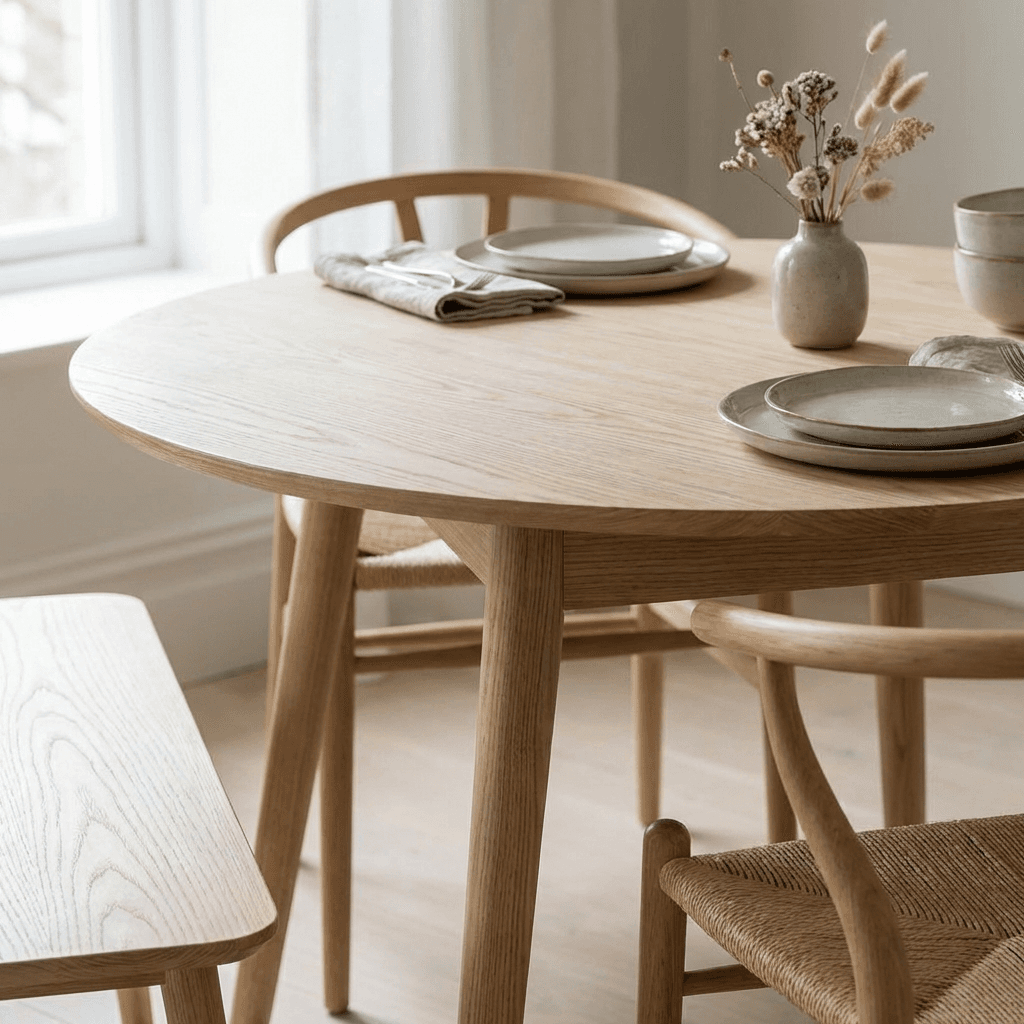
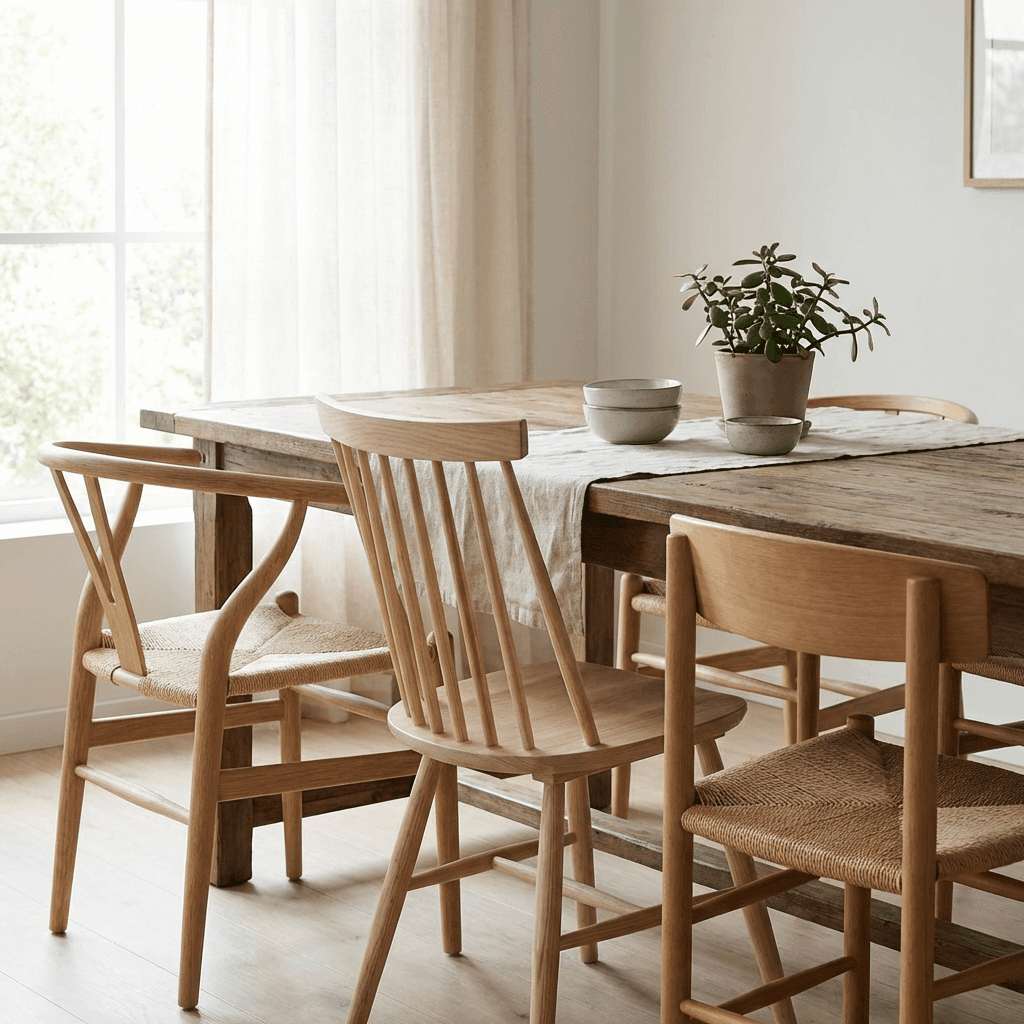
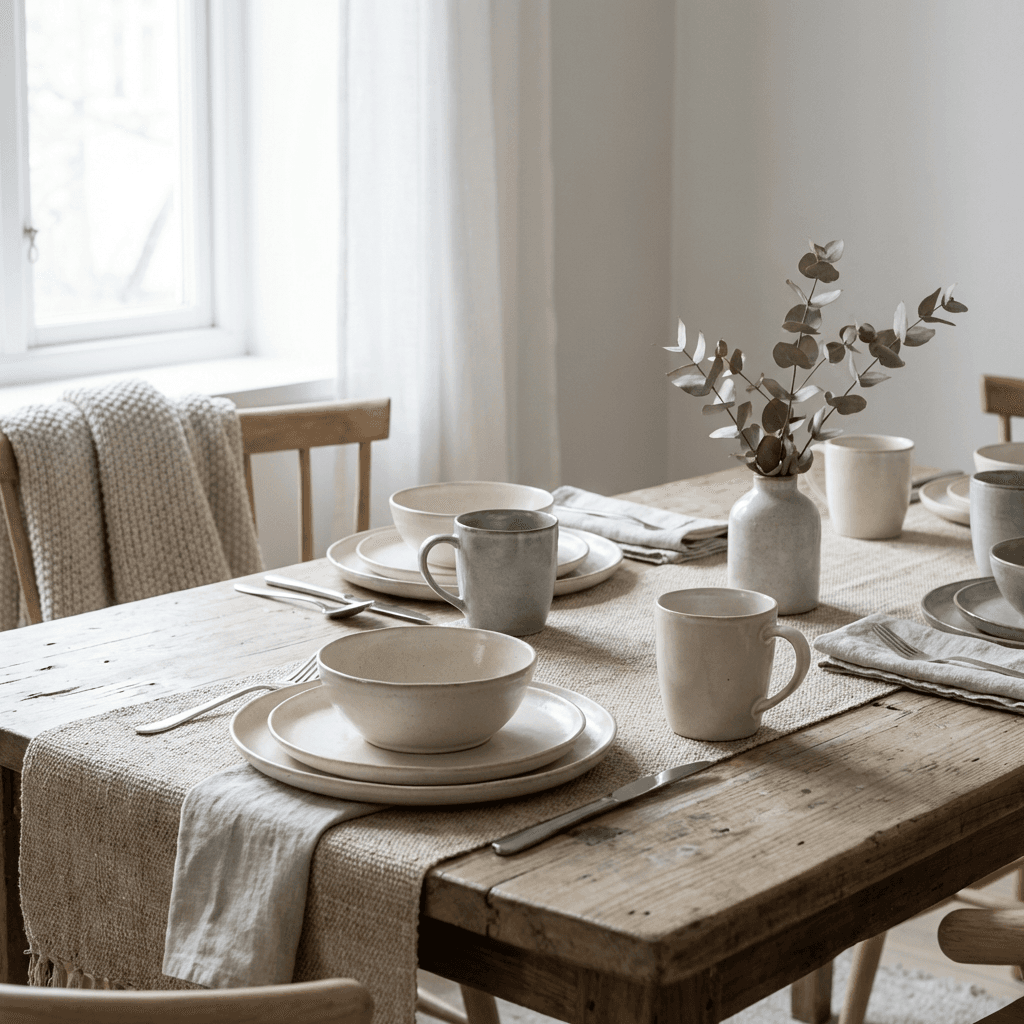
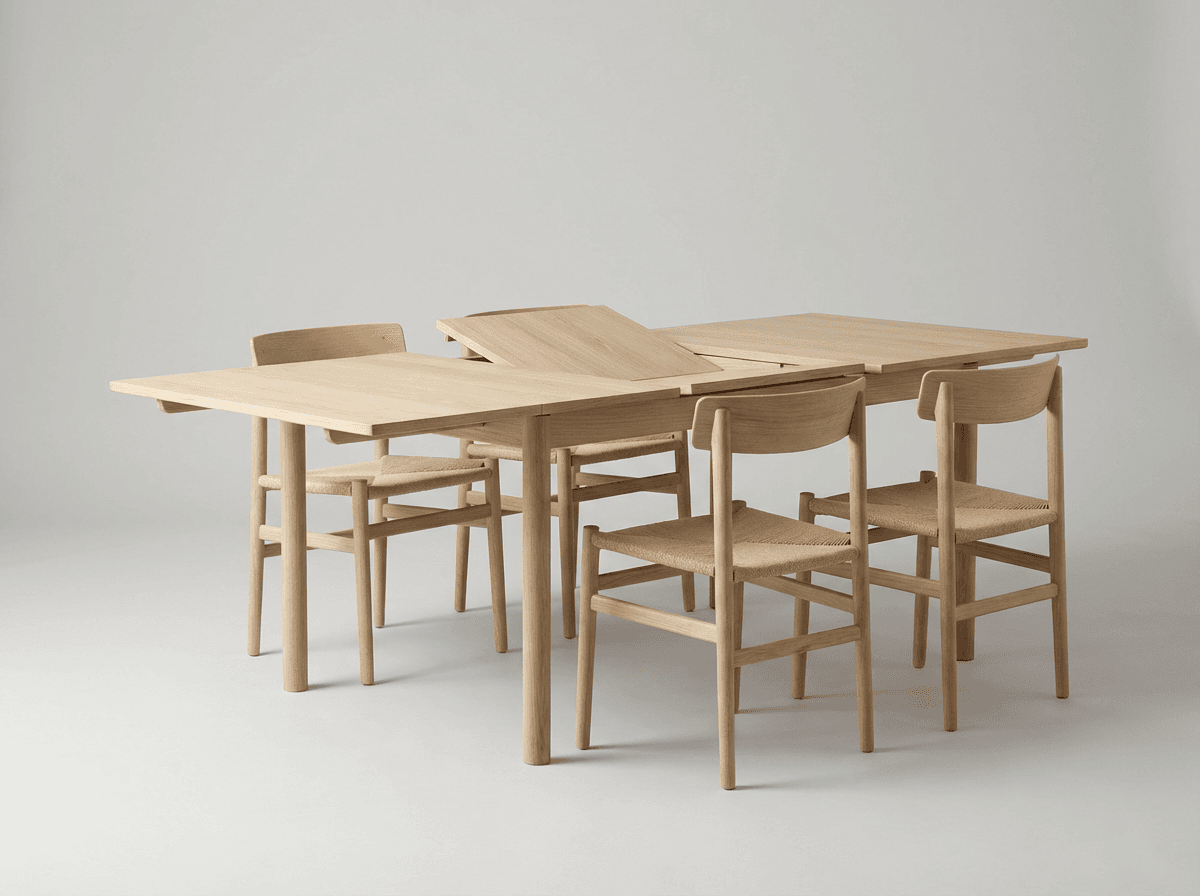
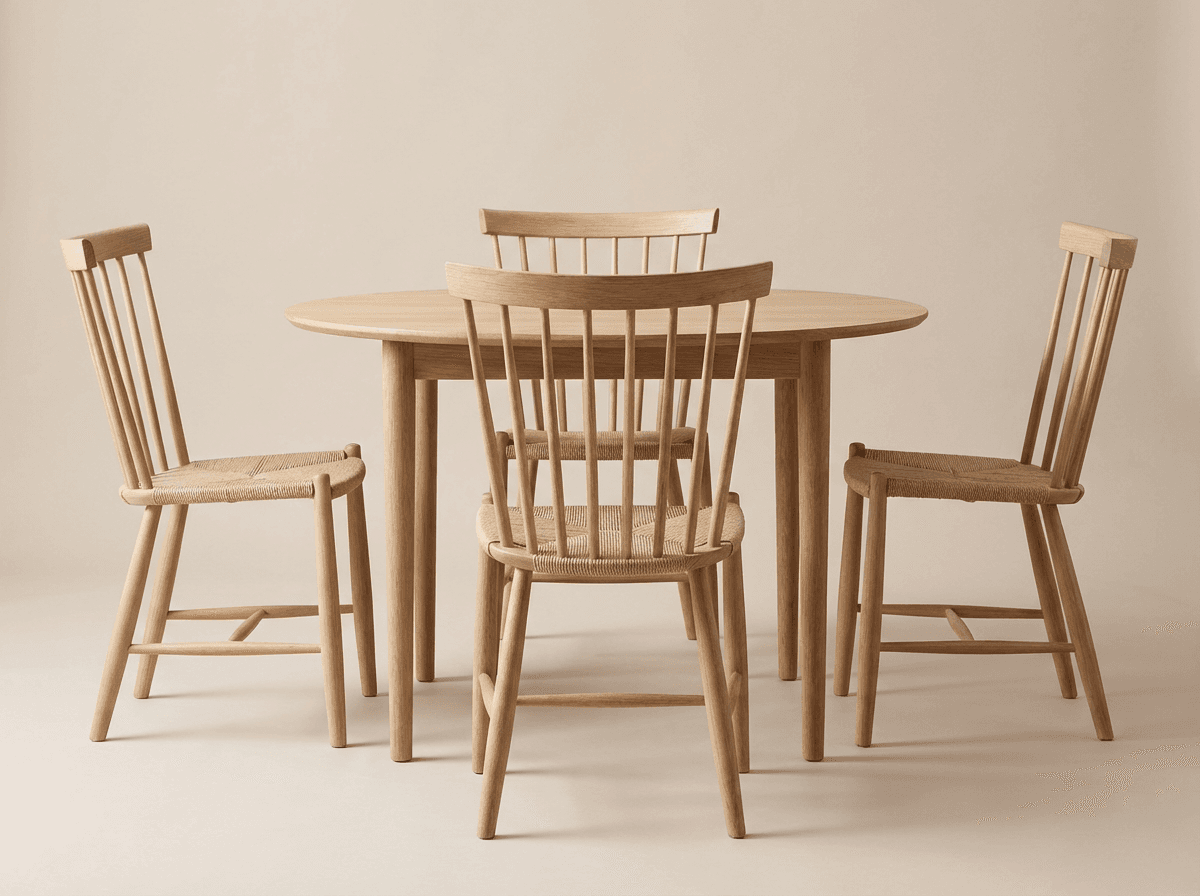
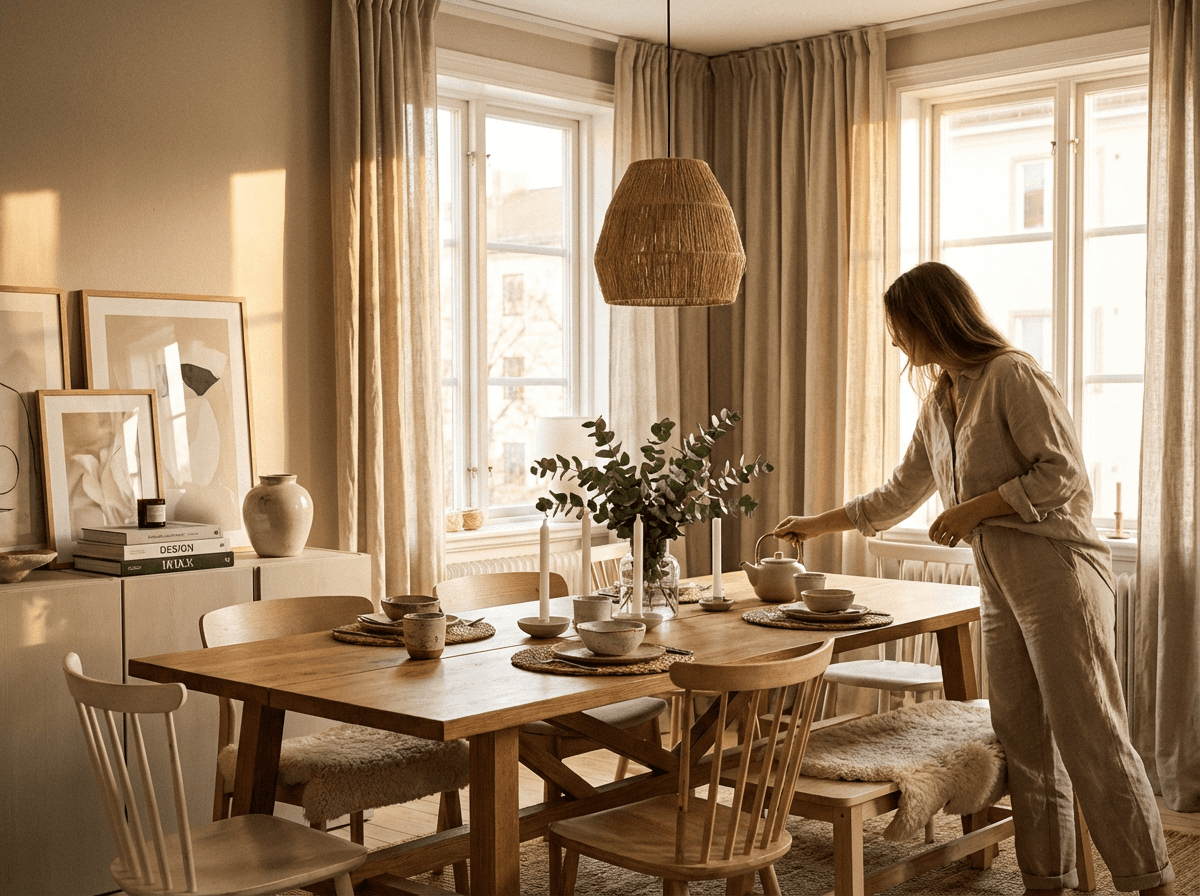
The Scandinavian dining room is designed for the everyday meal, not the dinner party. The table is solid oak or ash, its surface marked by years of use — water rings, pencil marks from homework, faint scratches from ceramic plates — and these marks are not flaws but evidence of a life well-lived. The chairs may not match perfectly, but they share a material language of pale wood and clean curves.
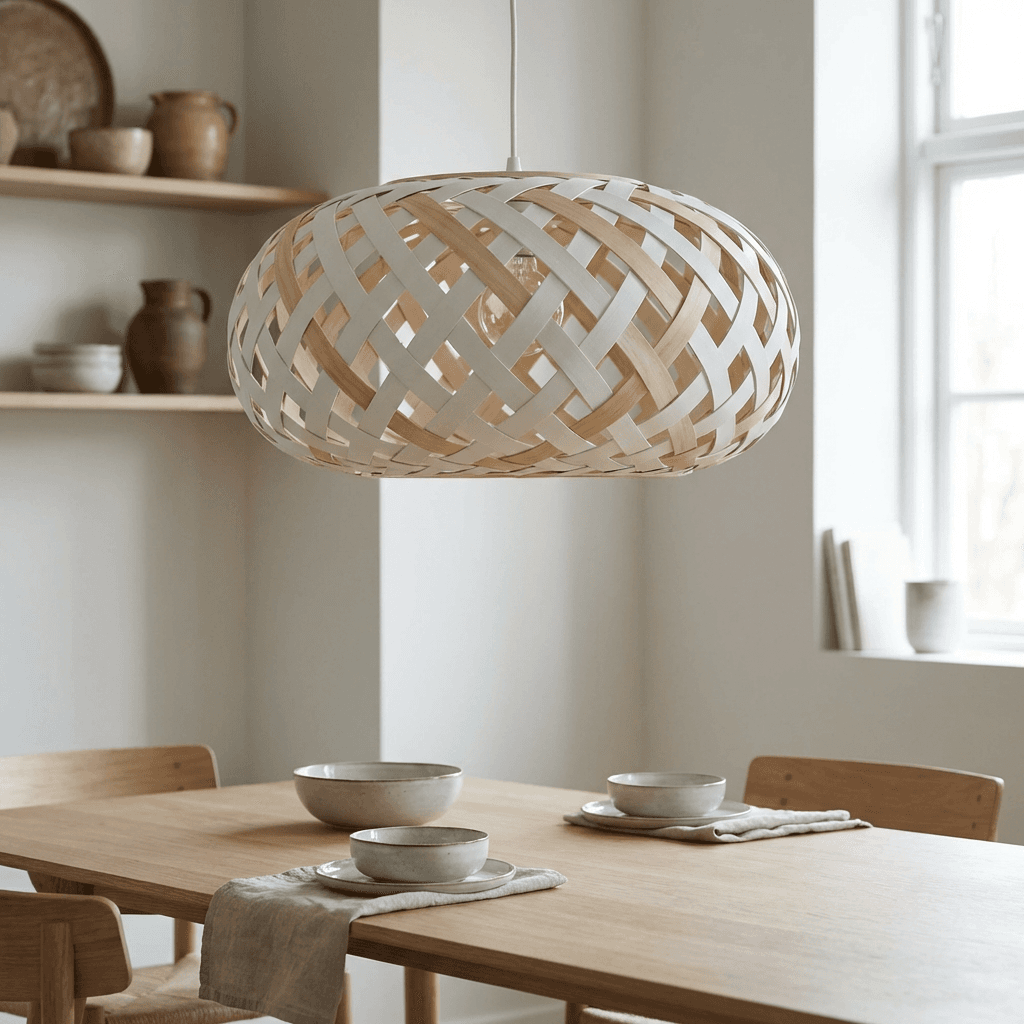
Light is ceremonial here. A generous pendant hangs low enough to create an intimate bubble of warmth above the table, and candles — always candles — appear at the center even for a Tuesday dinner. This ritual of lighting candles before a meal is deeply Scandinavian: it marks the transition from doing to being, from the workday to the evening.
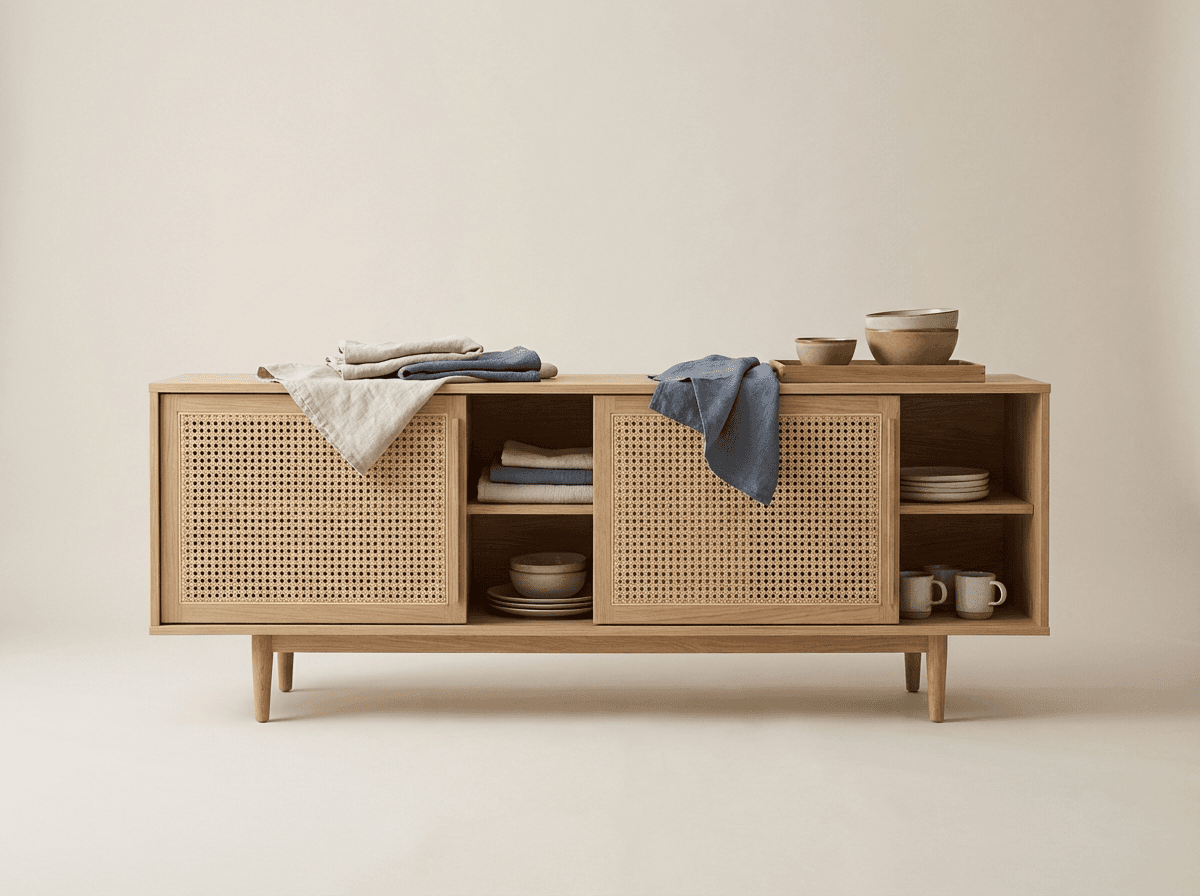
The room resists over-decoration. A low sideboard holds stacked plates and folded linen napkins. A single branch in a ceramic vase marks the season. The walls are calm — perhaps one print, perhaps nothing at all. The Scandinavian dining room trusts that food, conversation, and warm light are the only decoration a shared meal needs.