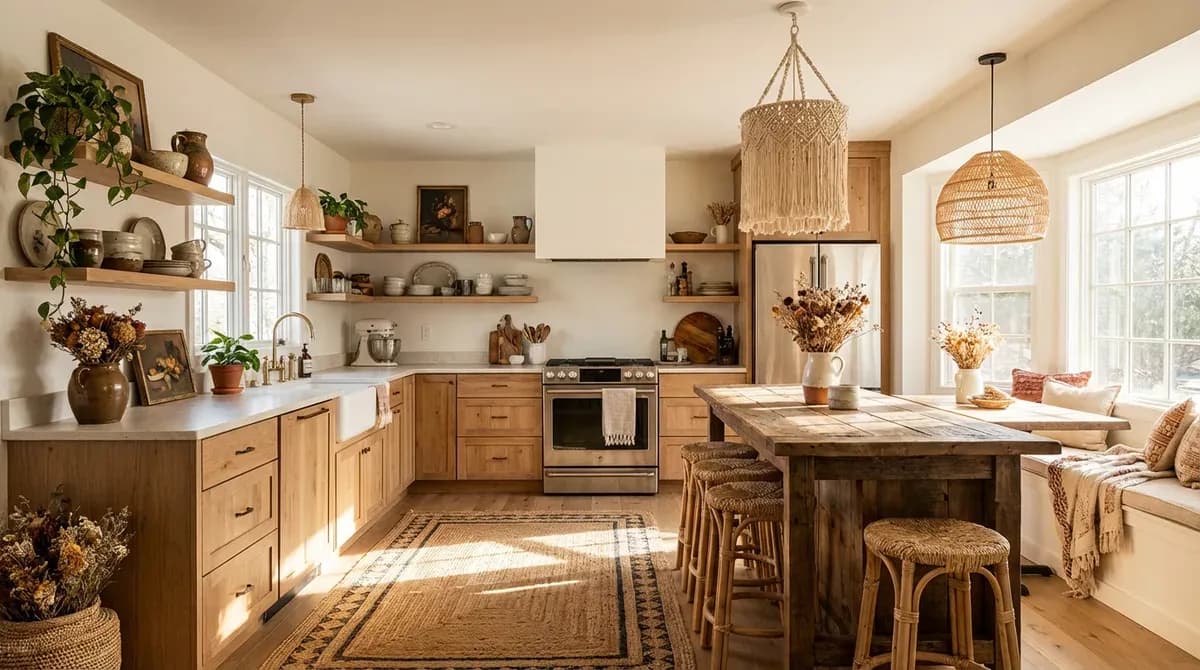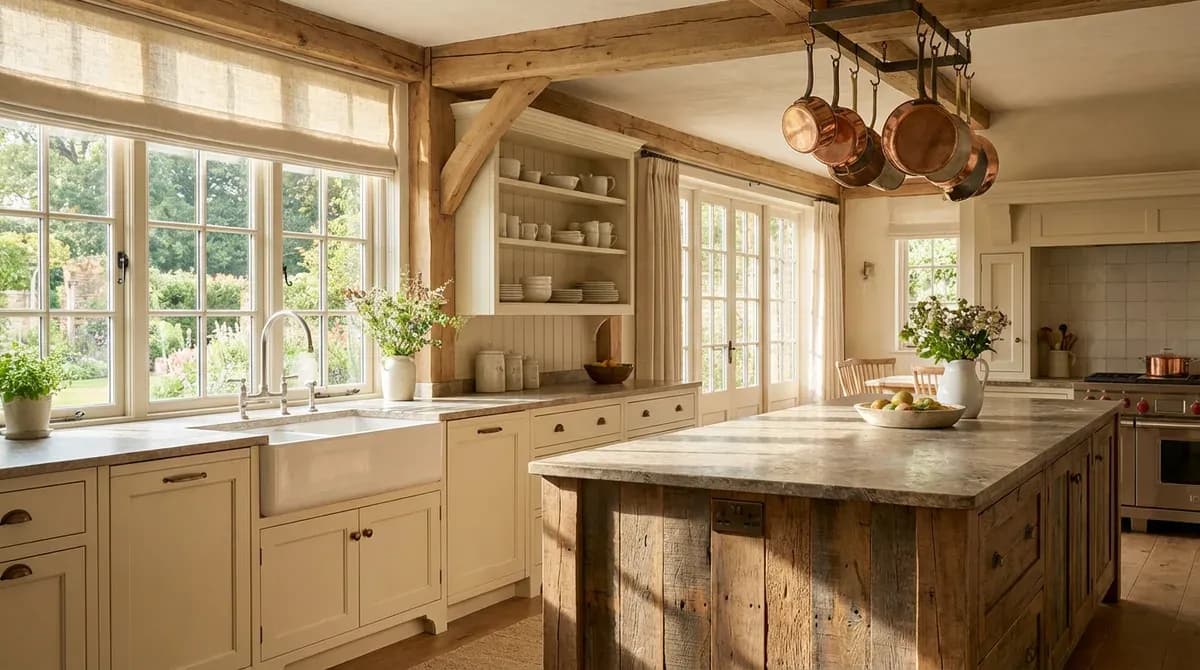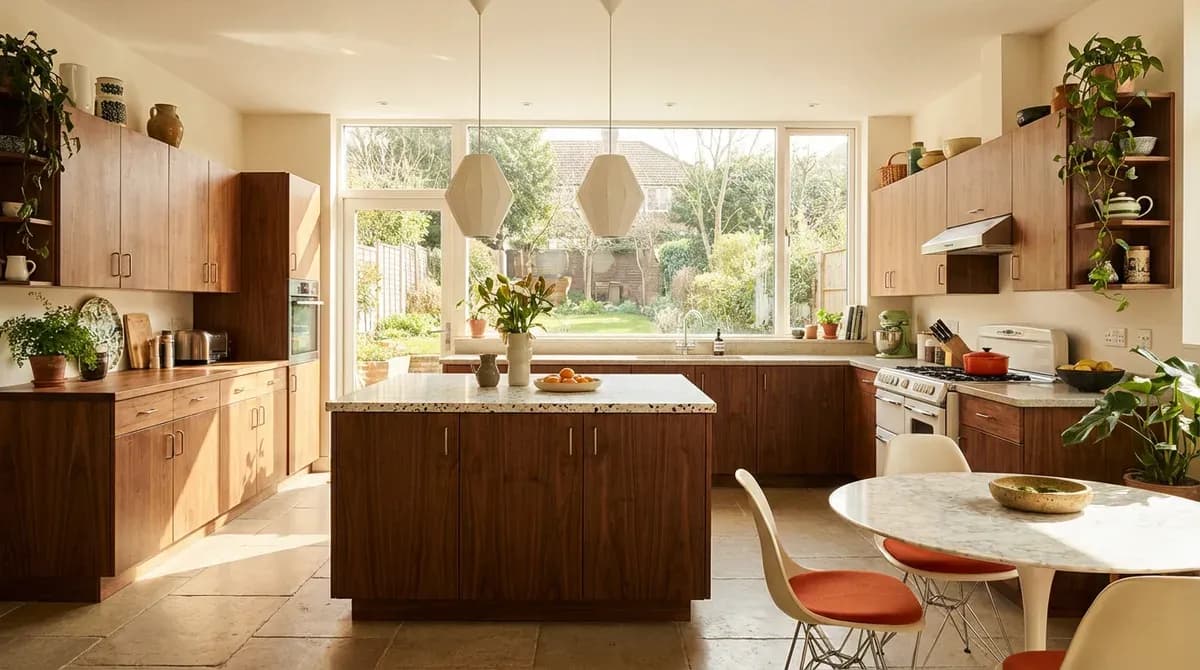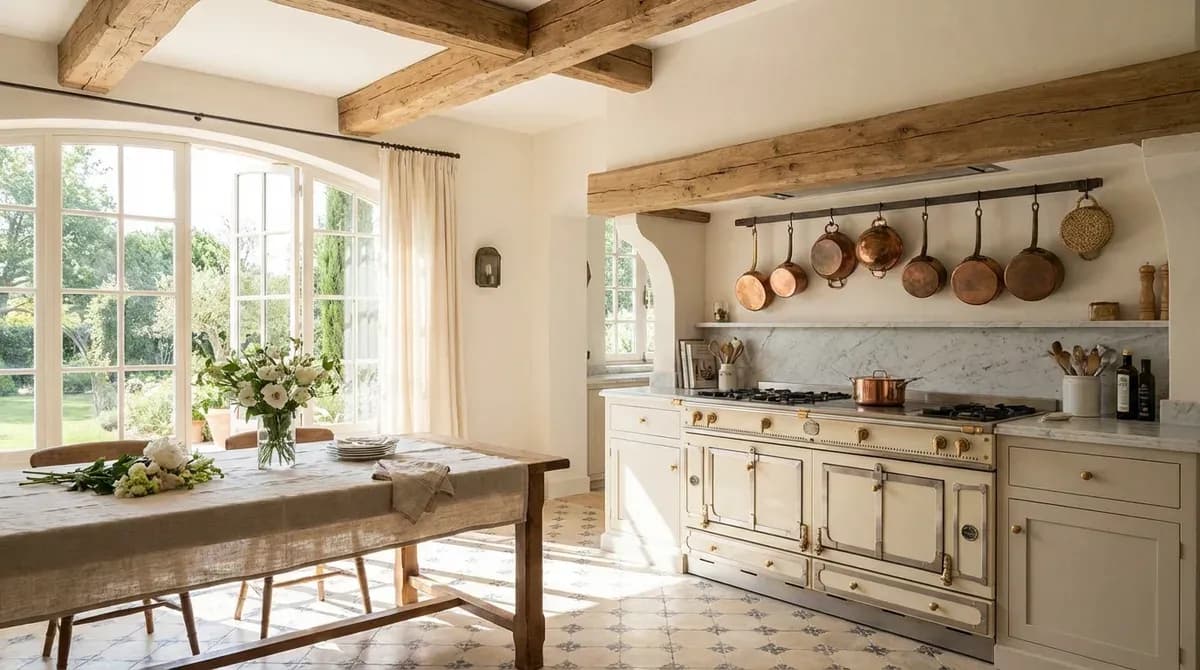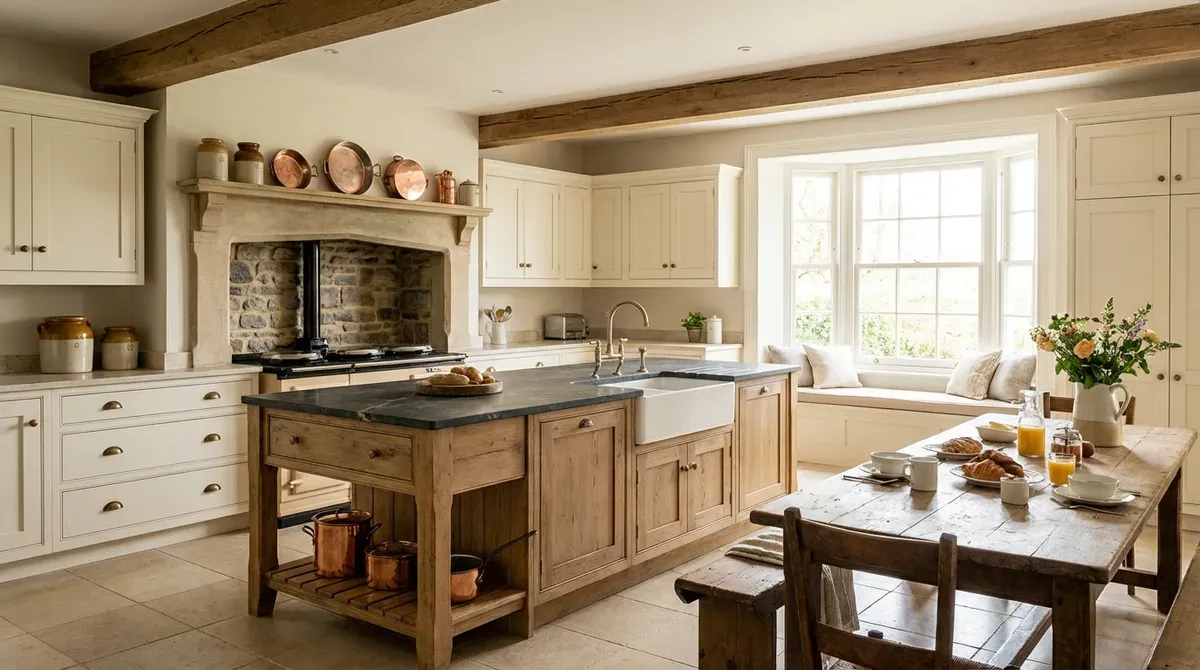
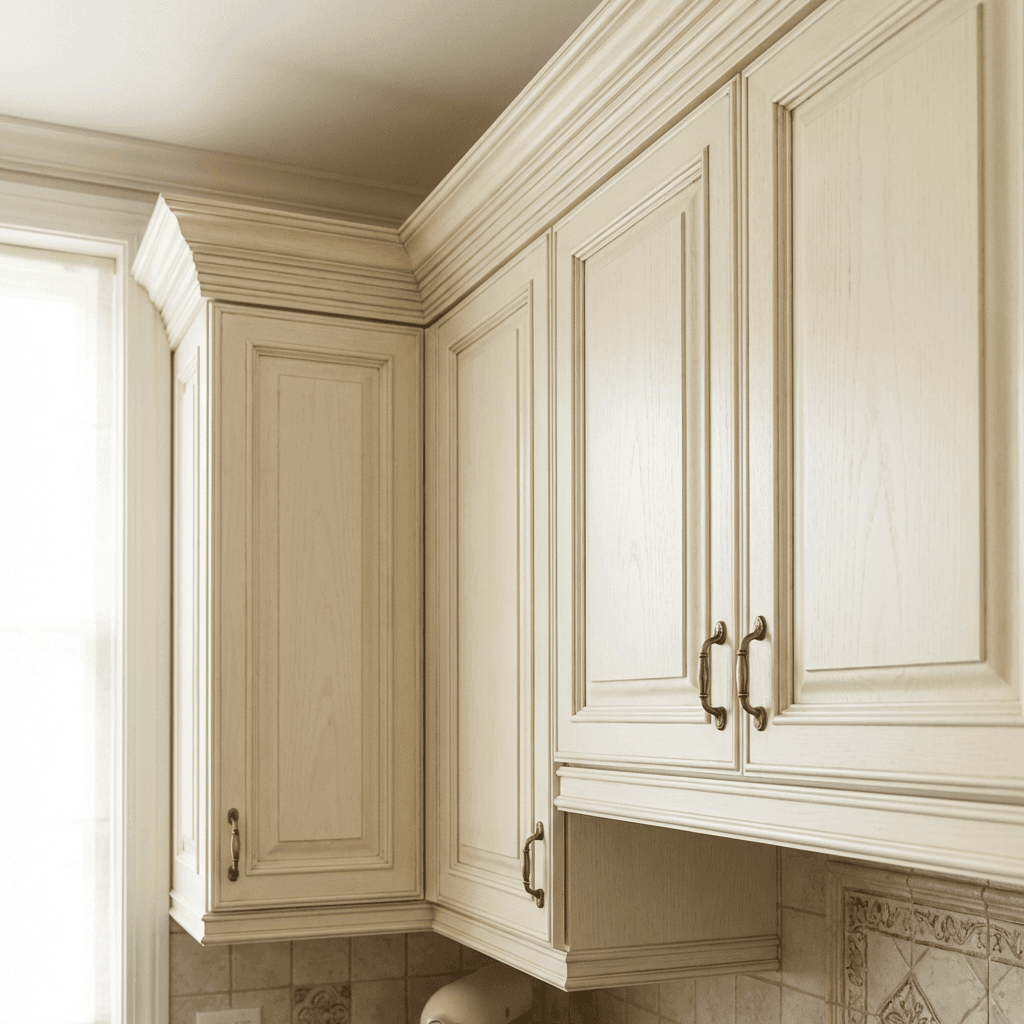
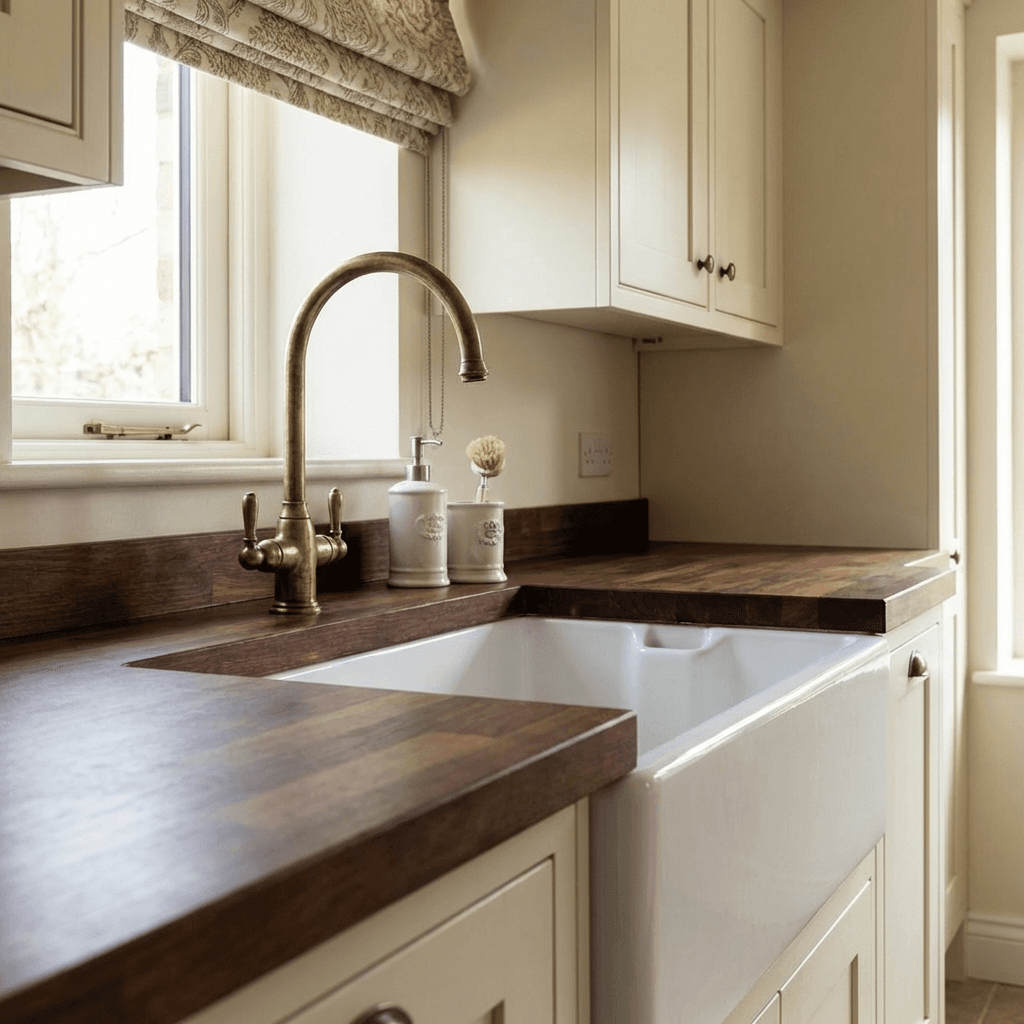
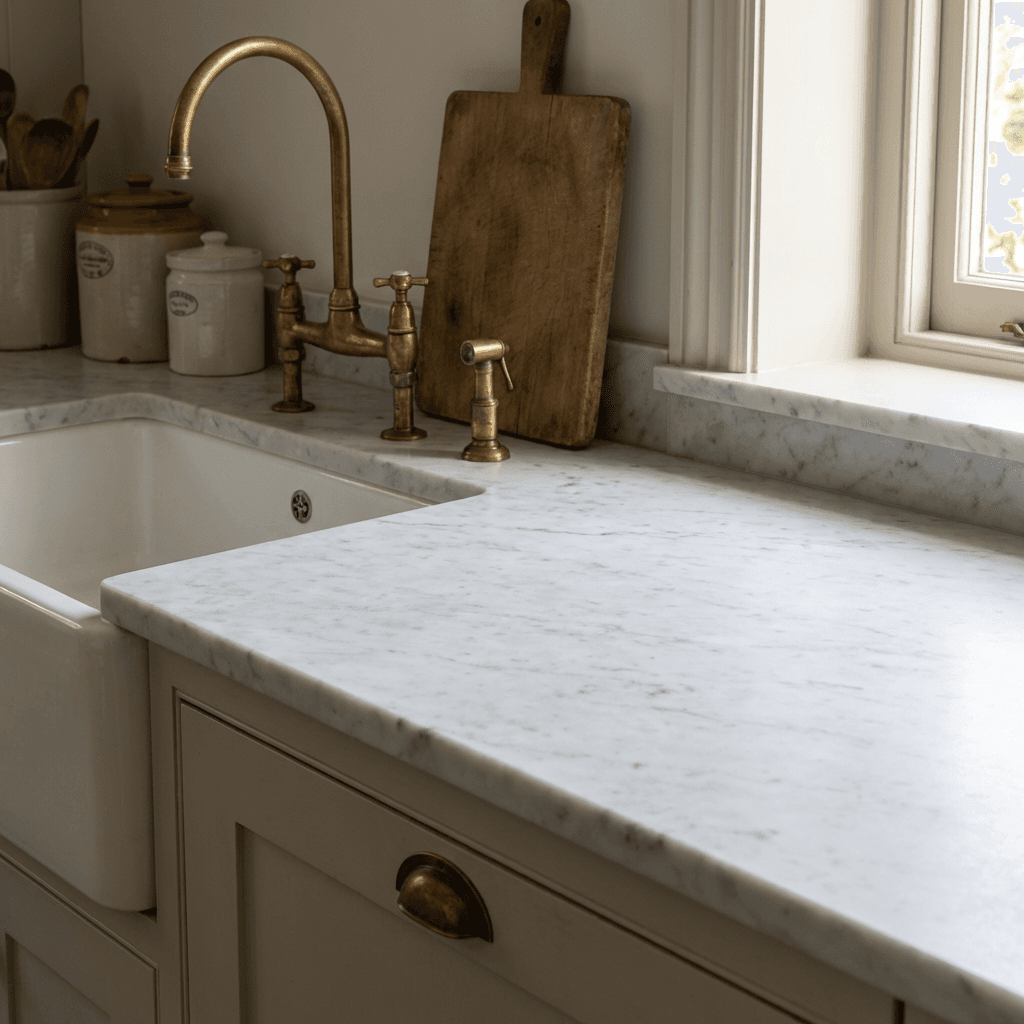
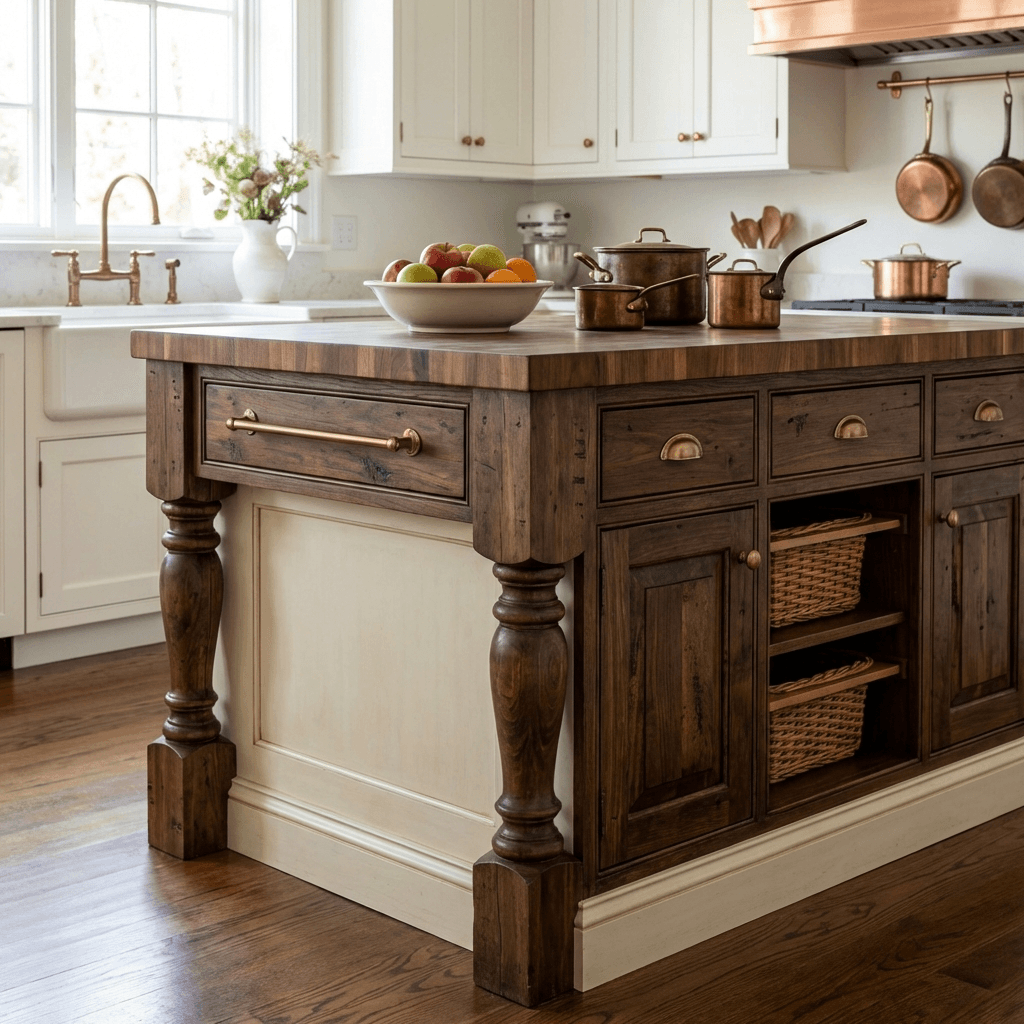
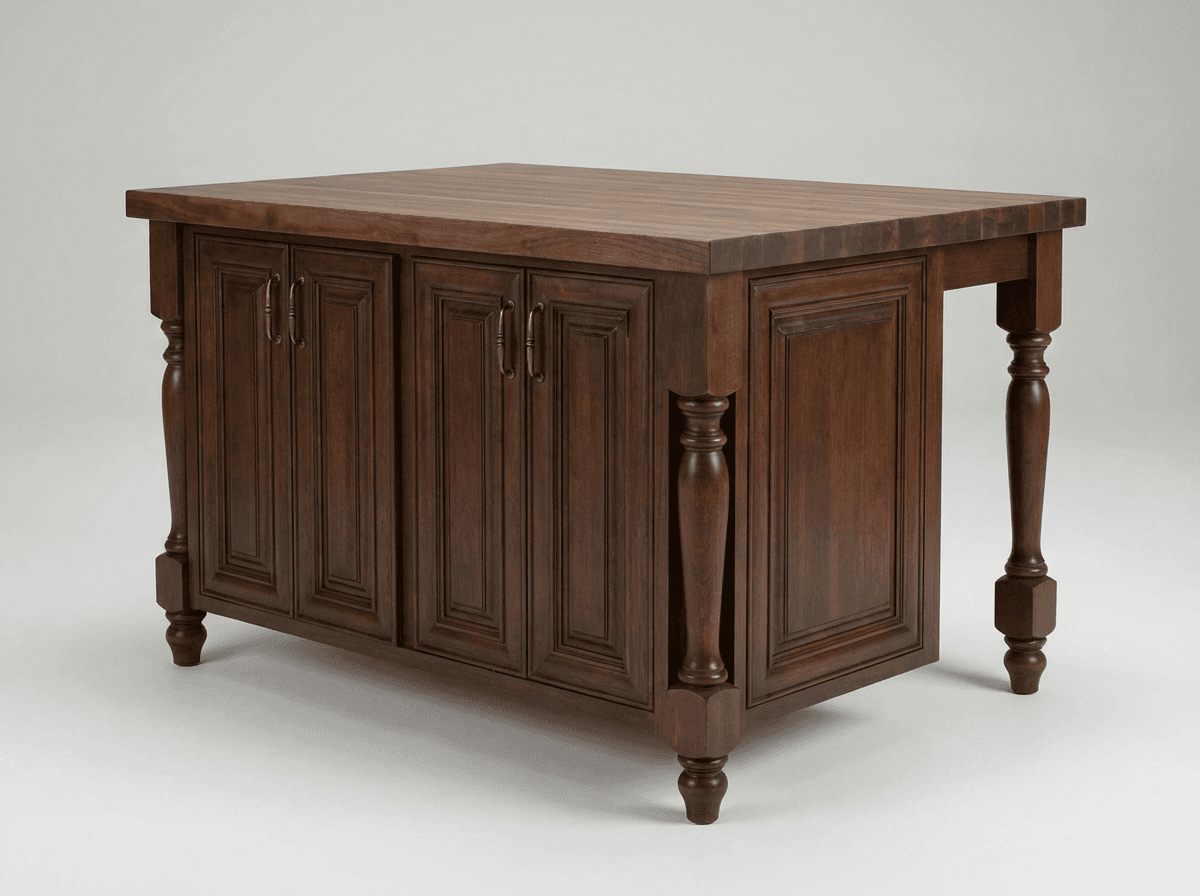
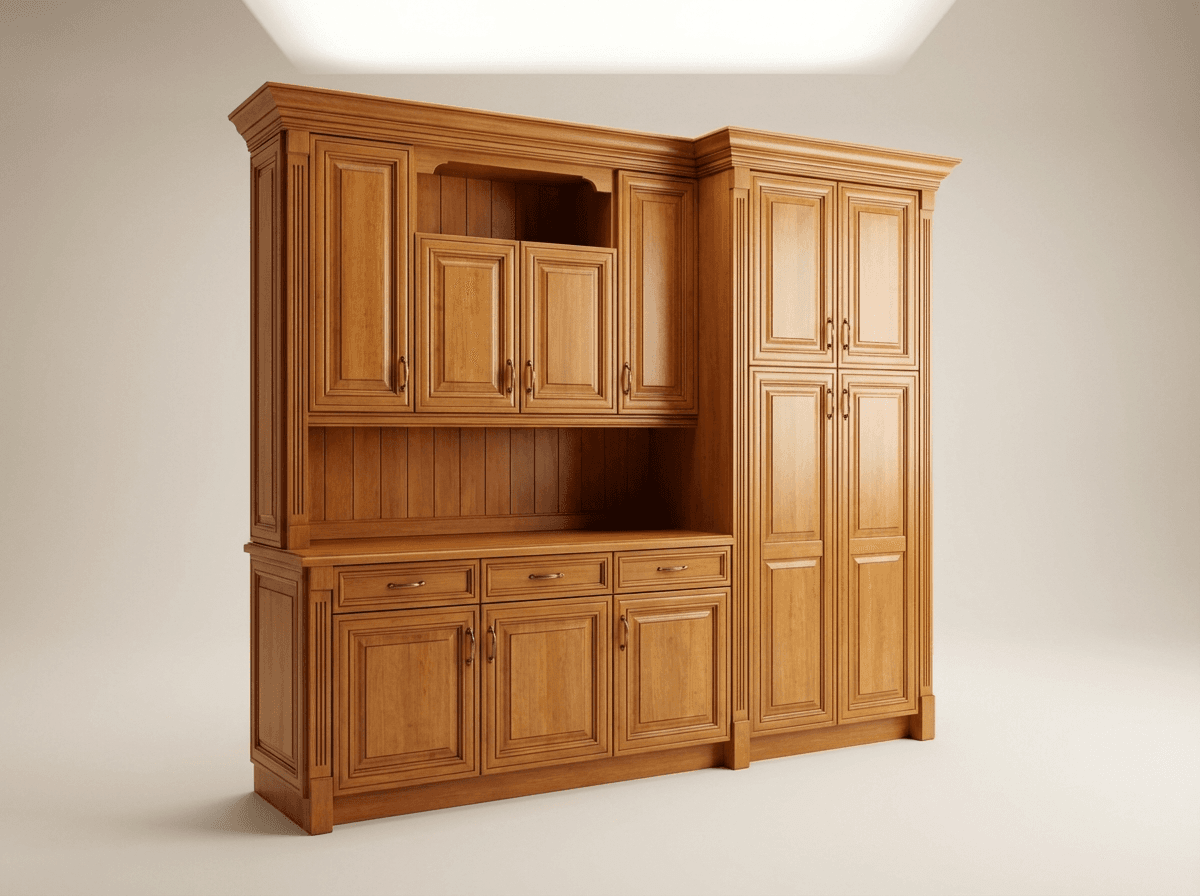
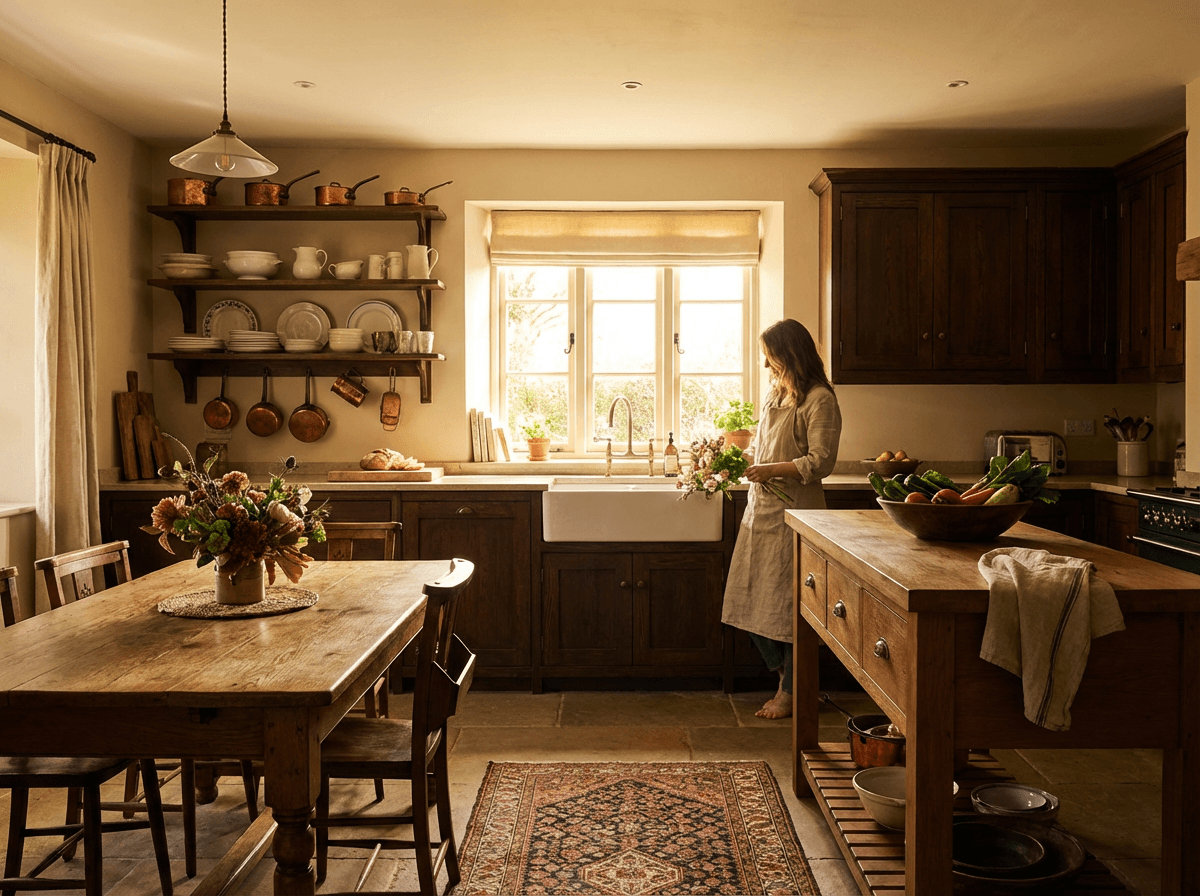
The traditional kitchen draws its warmth from layers of craftsmanship: raised-panel cabinetry with crown molding overhead, a stone countertop with visible grain, a farmhouse sink framed by turned-leg columns, and a kitchen island that looks more like a piece of heirloom furniture than a slab of laminate. These details accumulated over centuries of domestic architecture, and together they create a kitchen that feels substantial, permanent, and deeply hospitable.
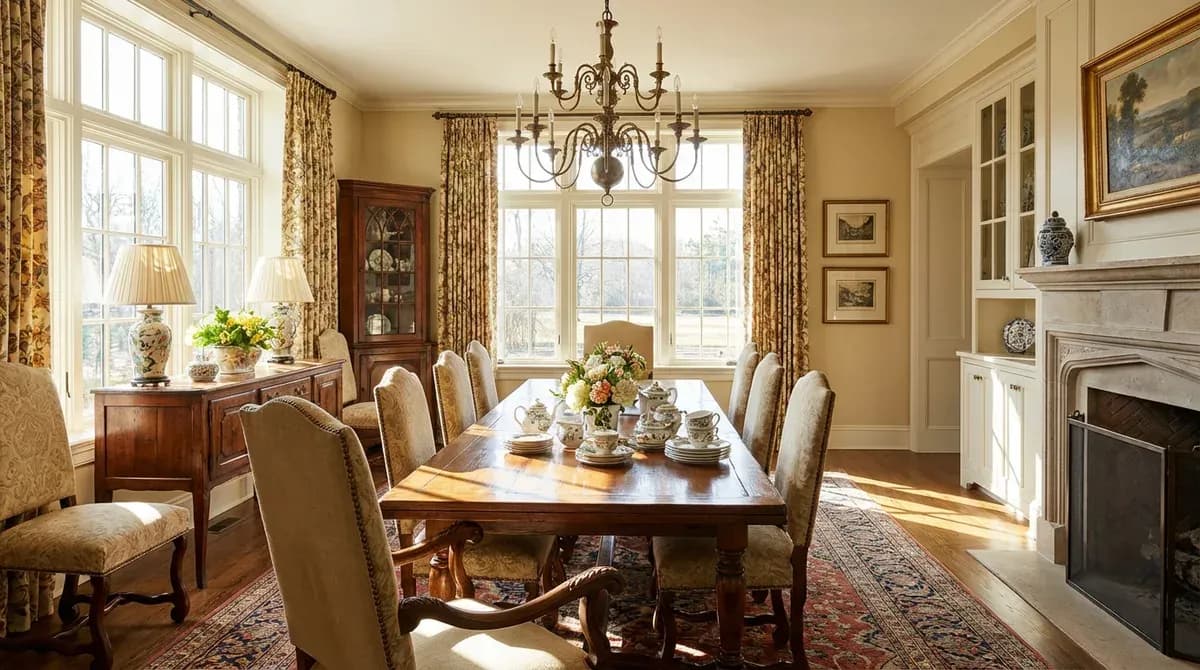
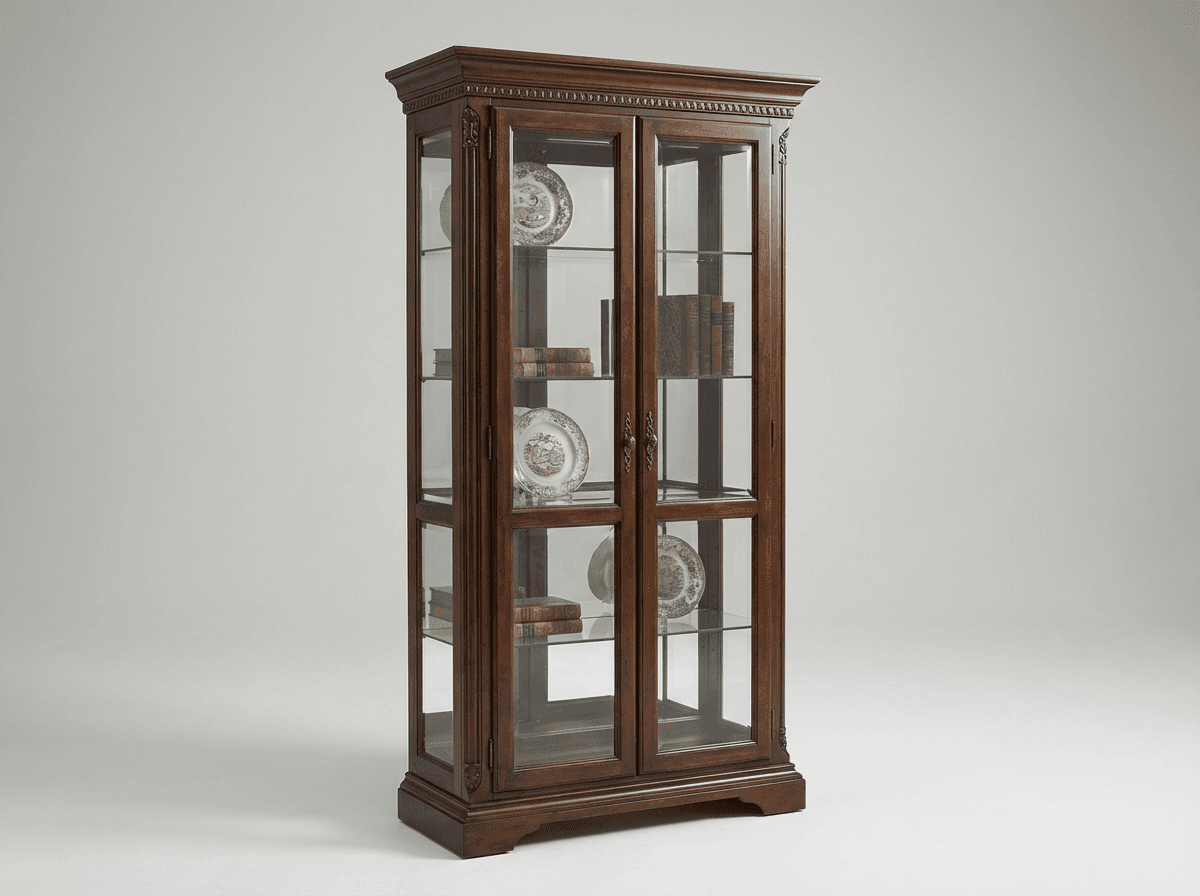
The palette centers on warm neutrals — ivory cabinets, cream walls, warm-toned stone — accented by richer tones on the island (hunter green, navy, dark cherry) and metallic warmth from brass or bronze hardware. Glass-front upper cabinets with interior lighting display a curated collection of china and glassware, turning functional storage into visual decoration.
What makes a traditional kitchen work for modern life is the blend of formality and comfort. The raised panels and turned legs satisfy the desire for beauty and craftsmanship, while the deep sink, expansive island, and generous pantry storage handle the practical demands of feeding a family. It is a kitchen designed for Sunday roasts, holiday baking, and long mornings with coffee and the newspaper — a room where function is dressed in its finest clothes.