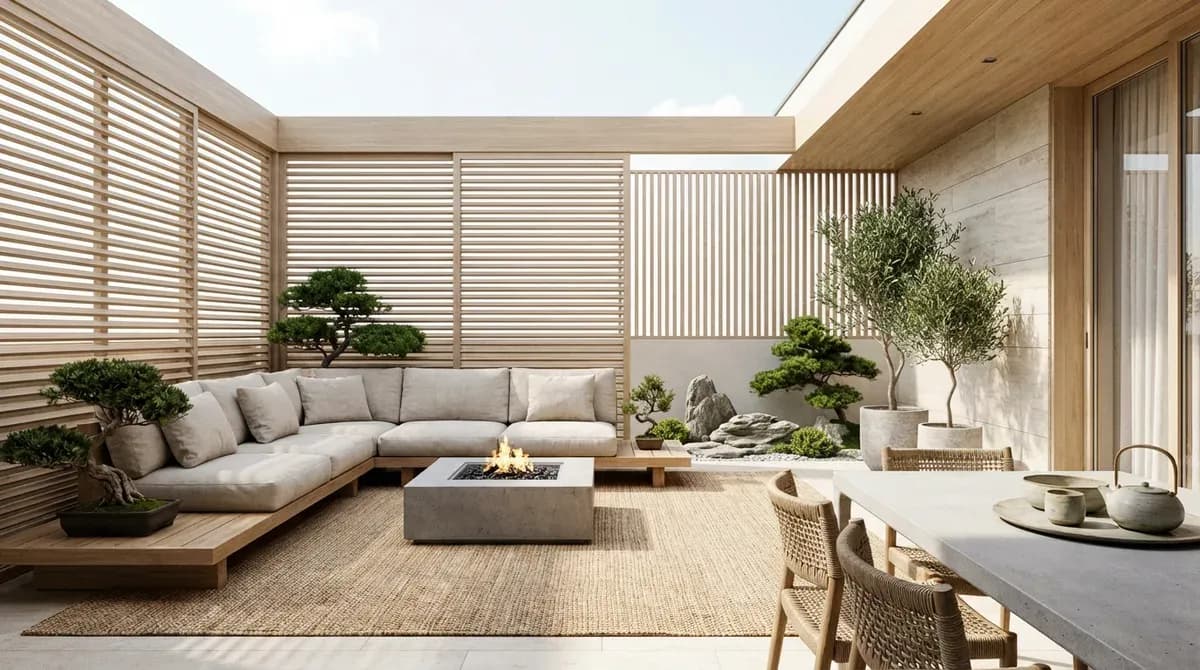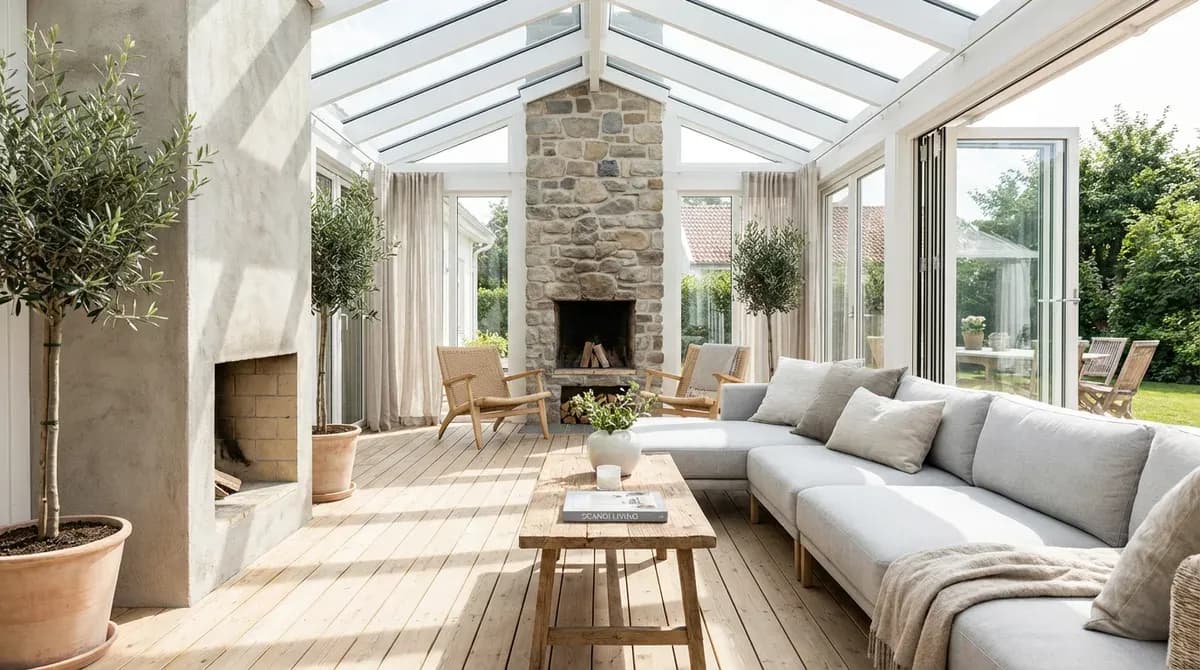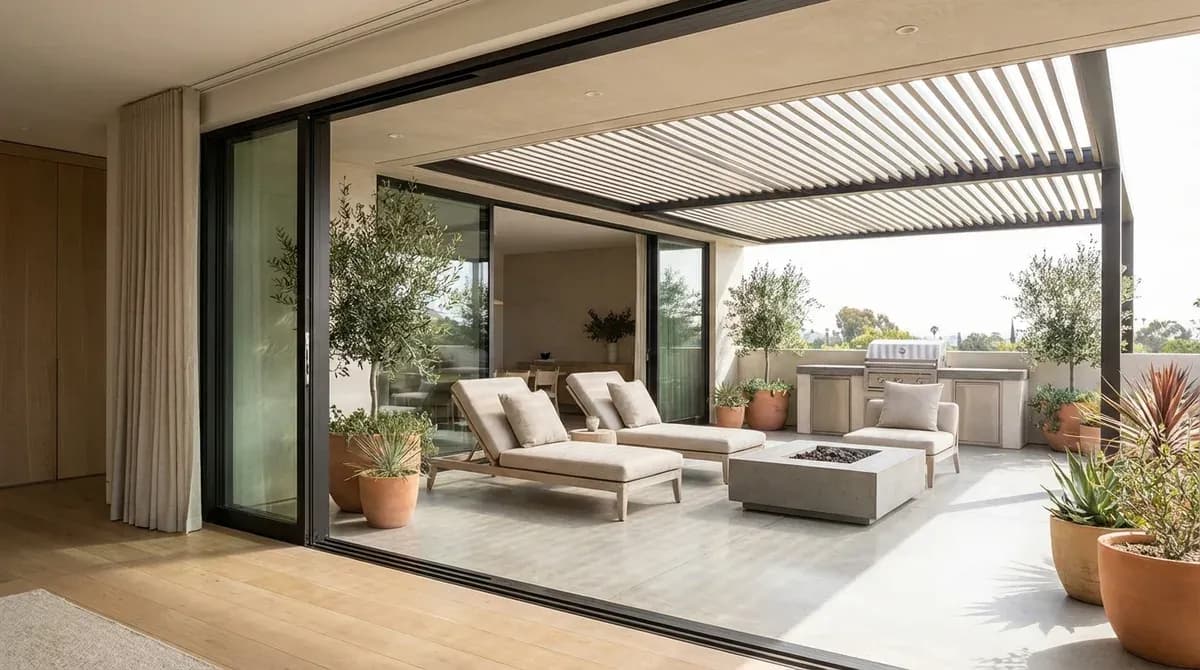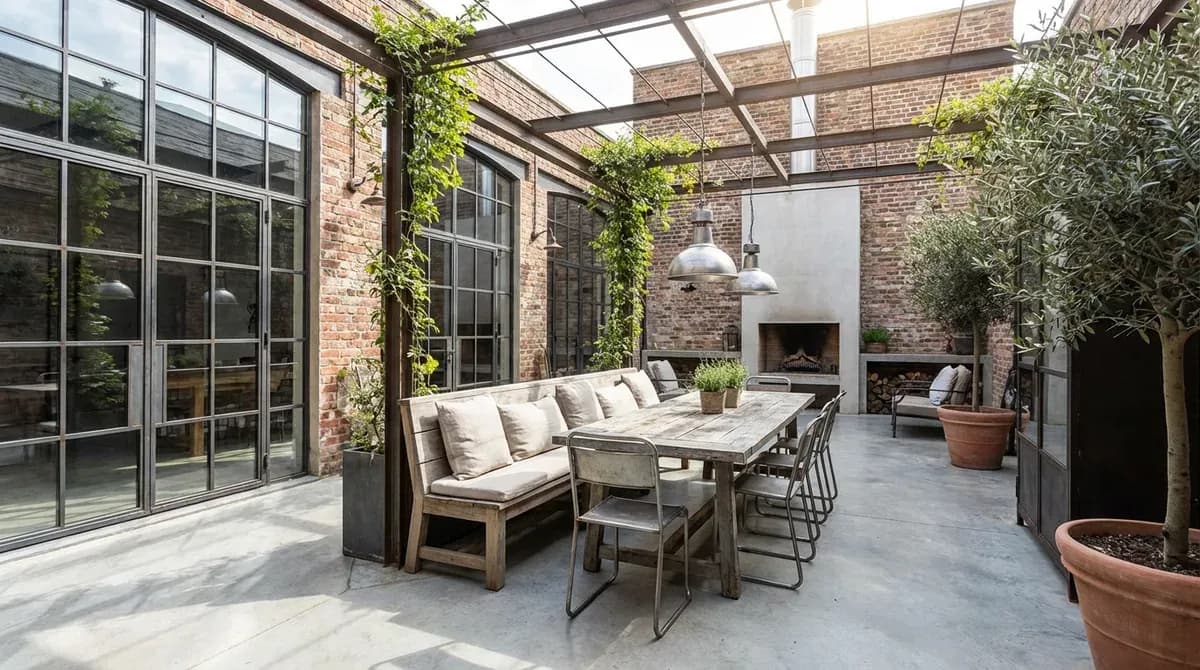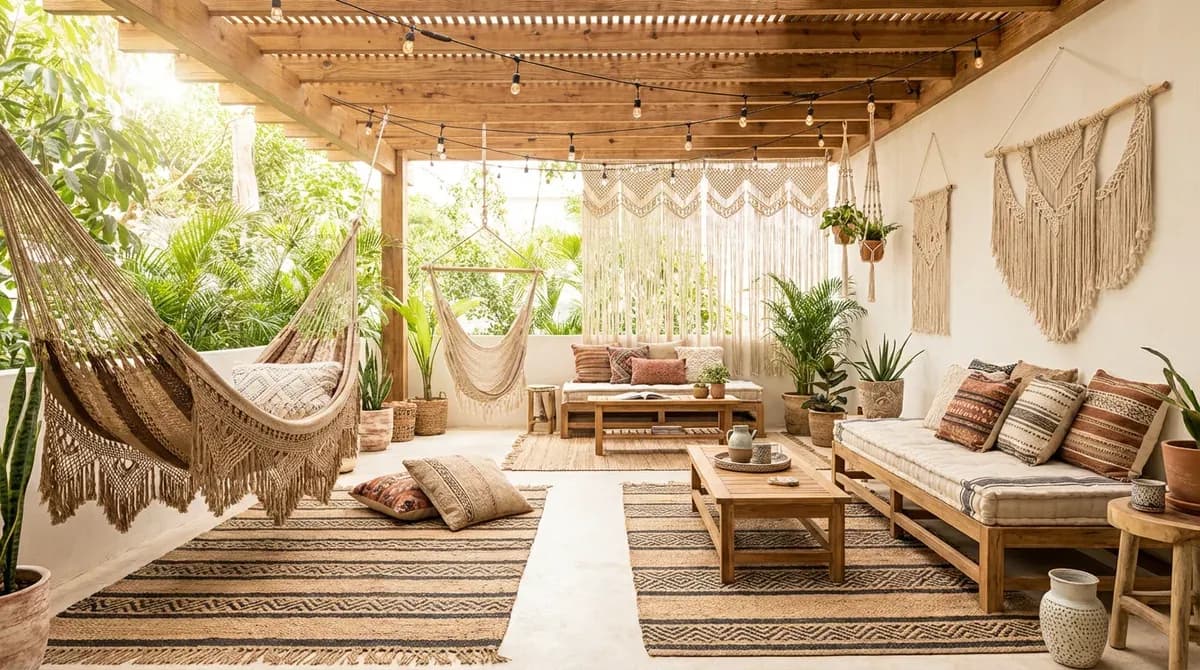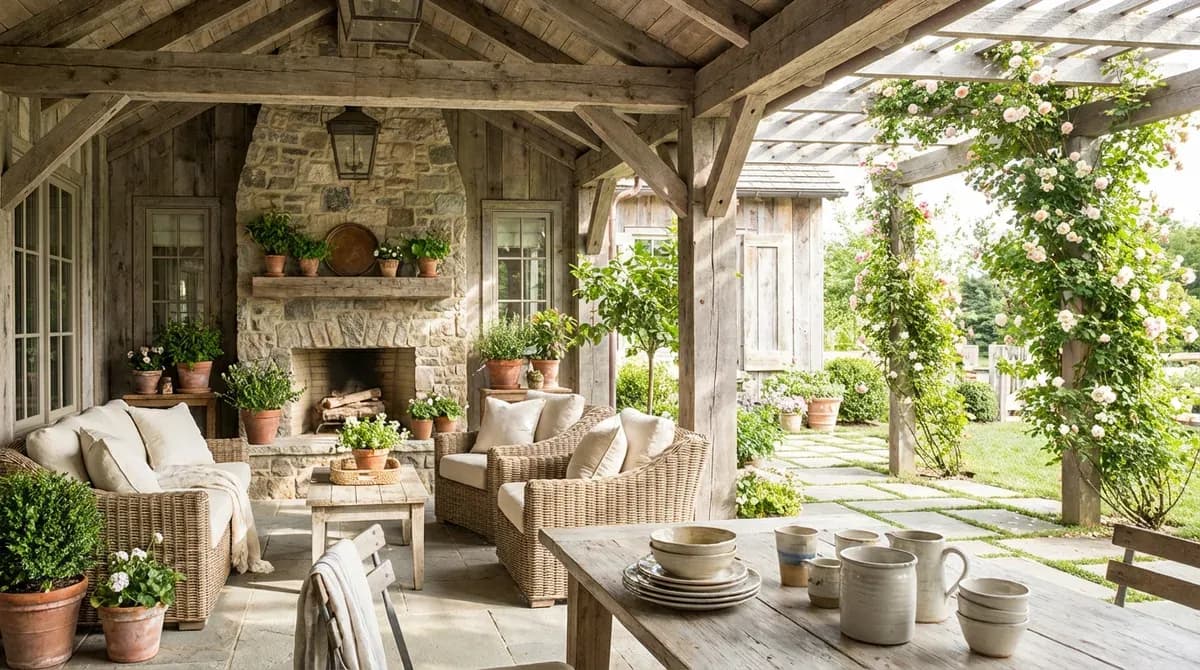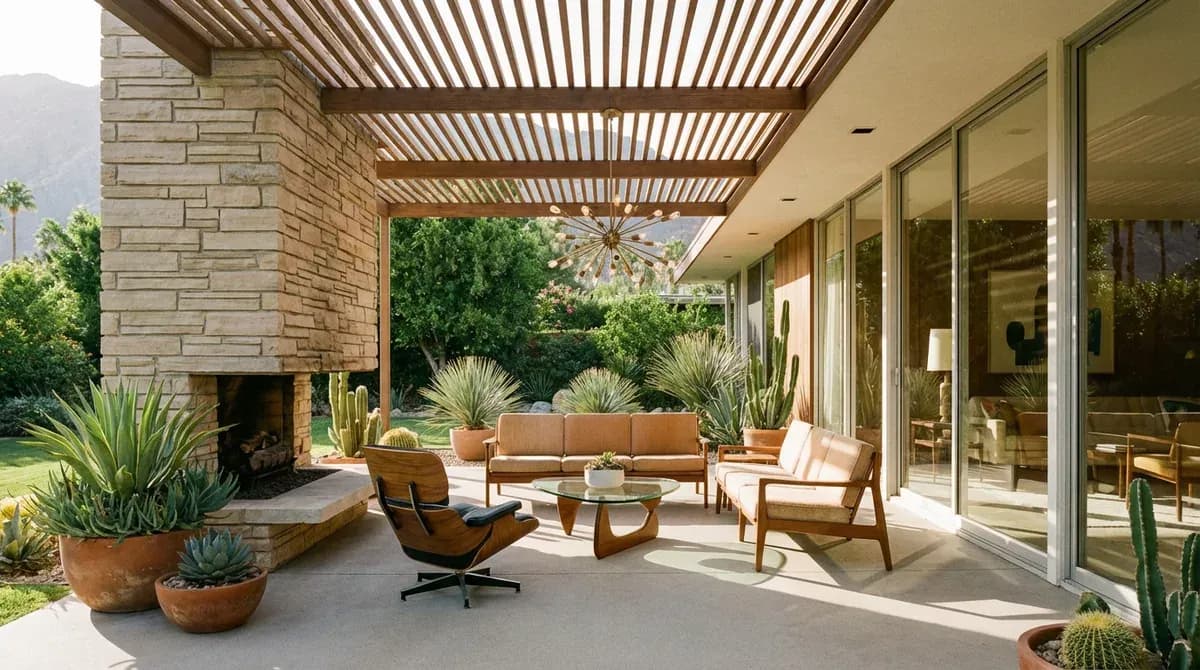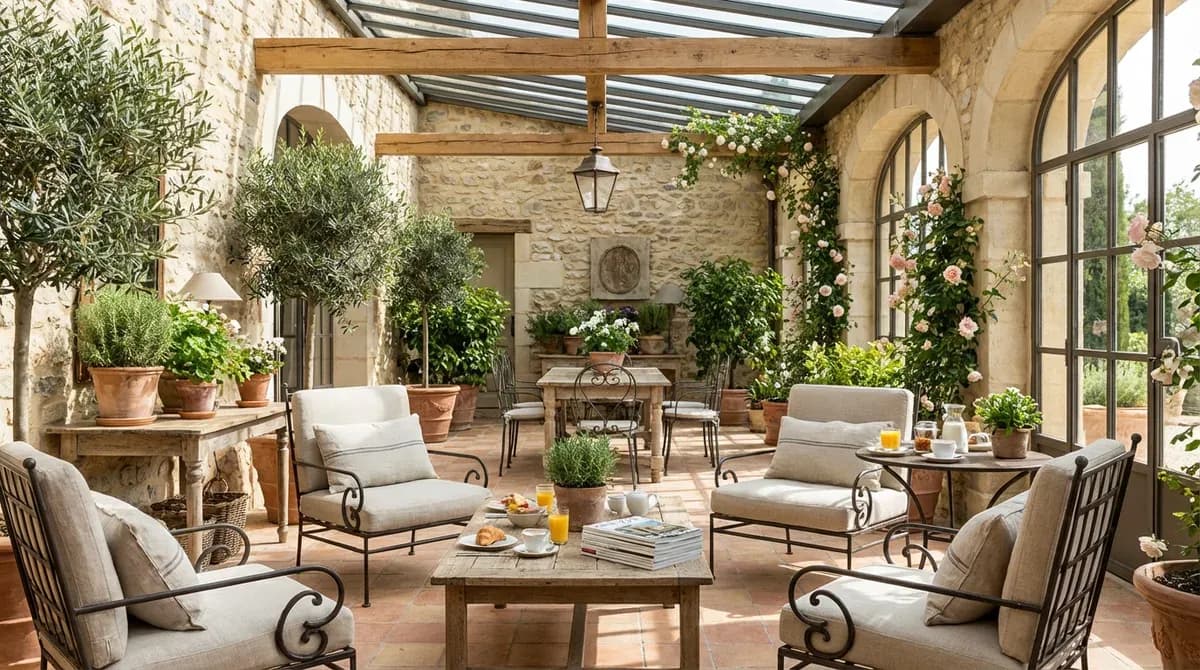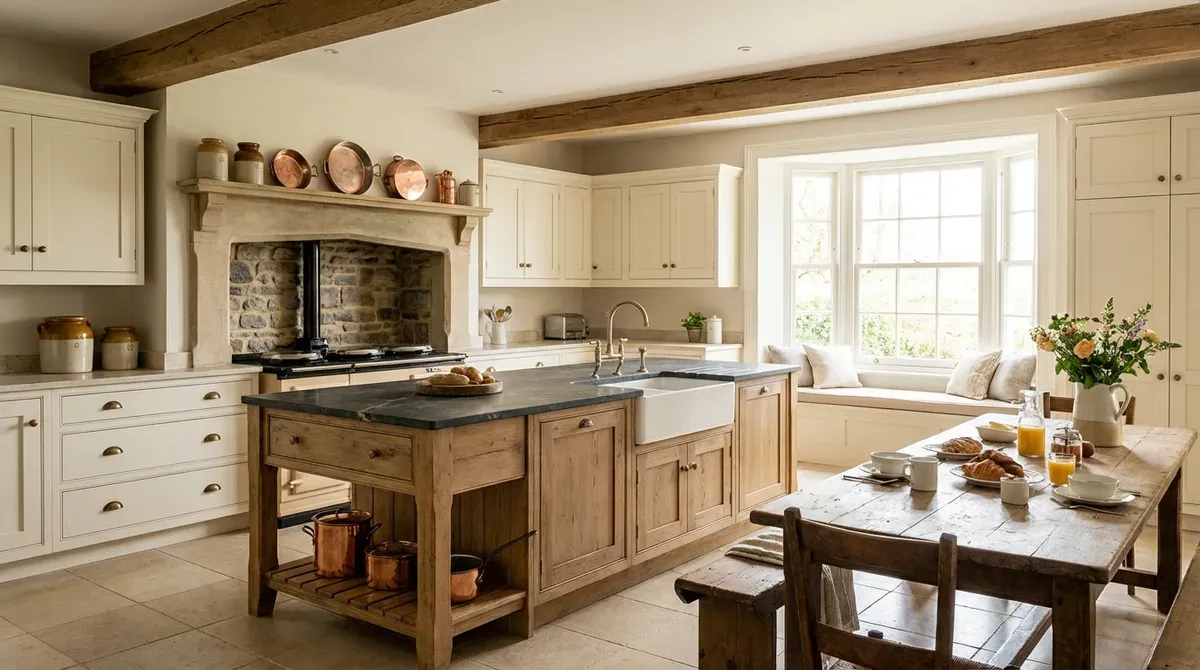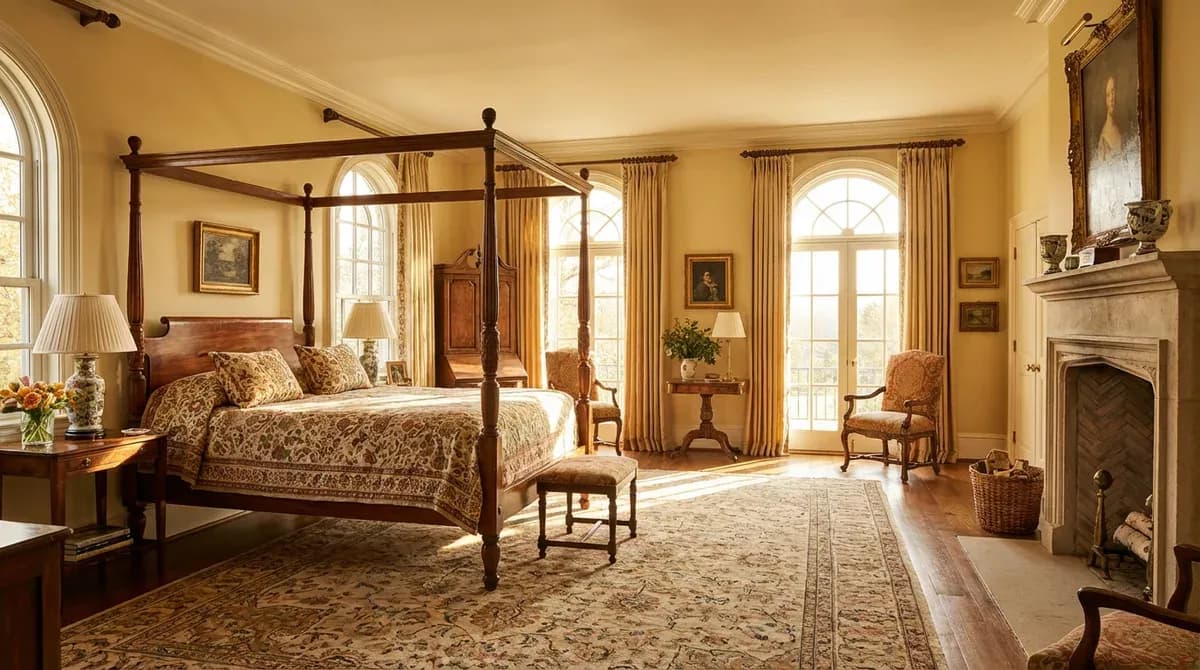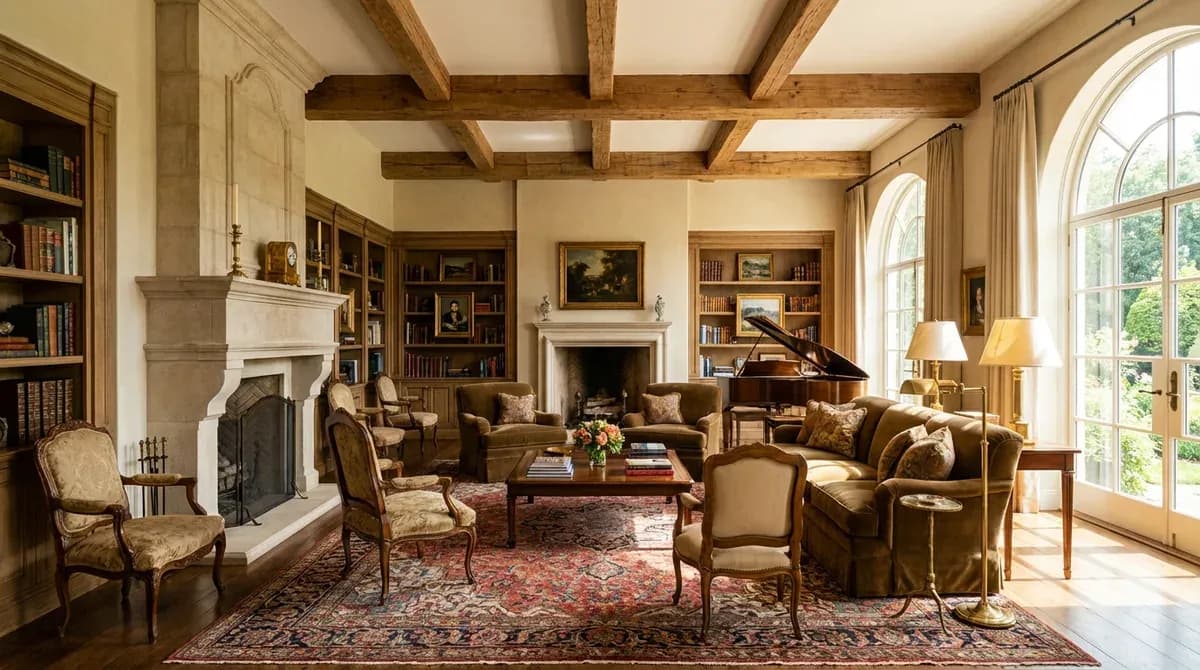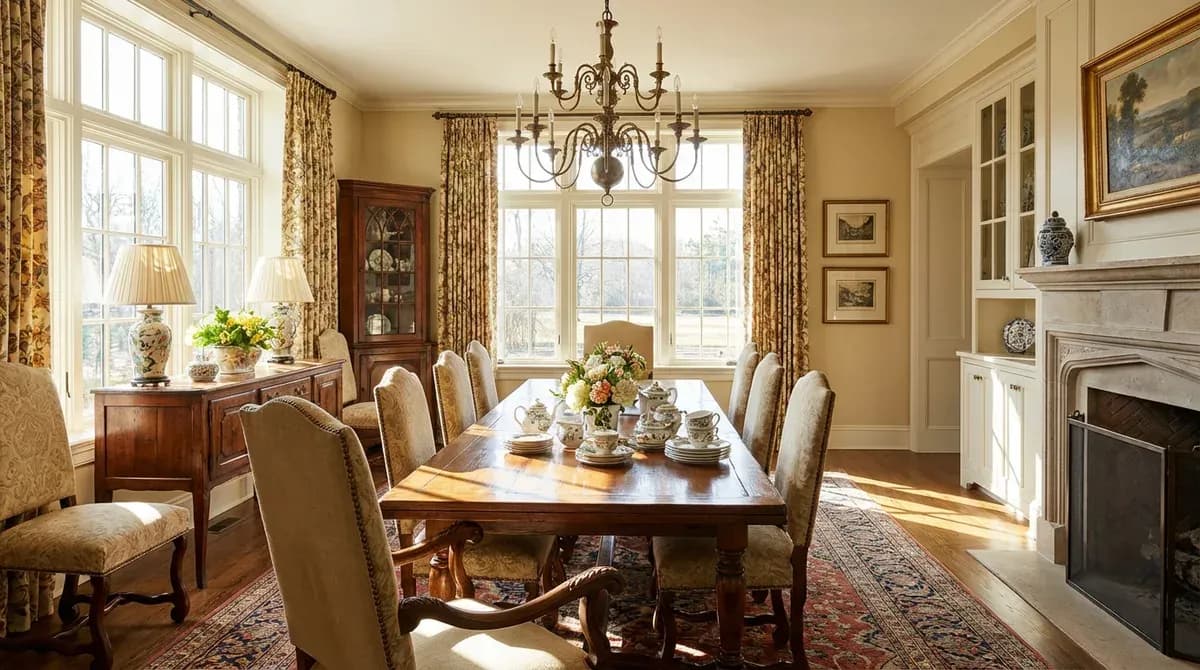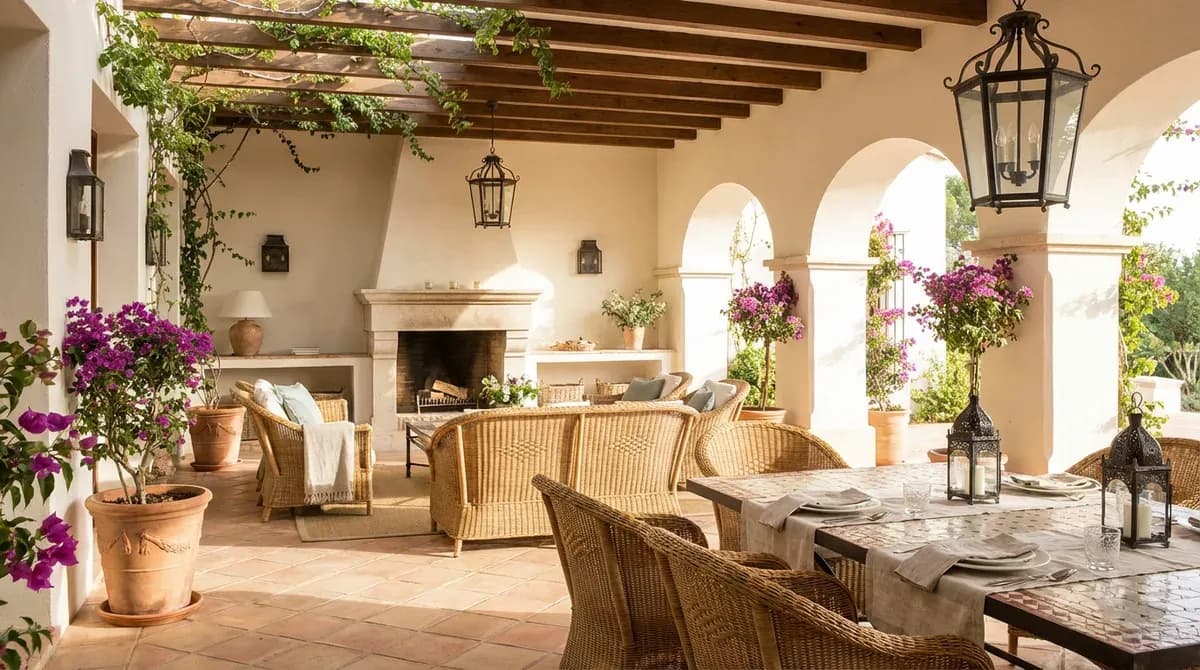

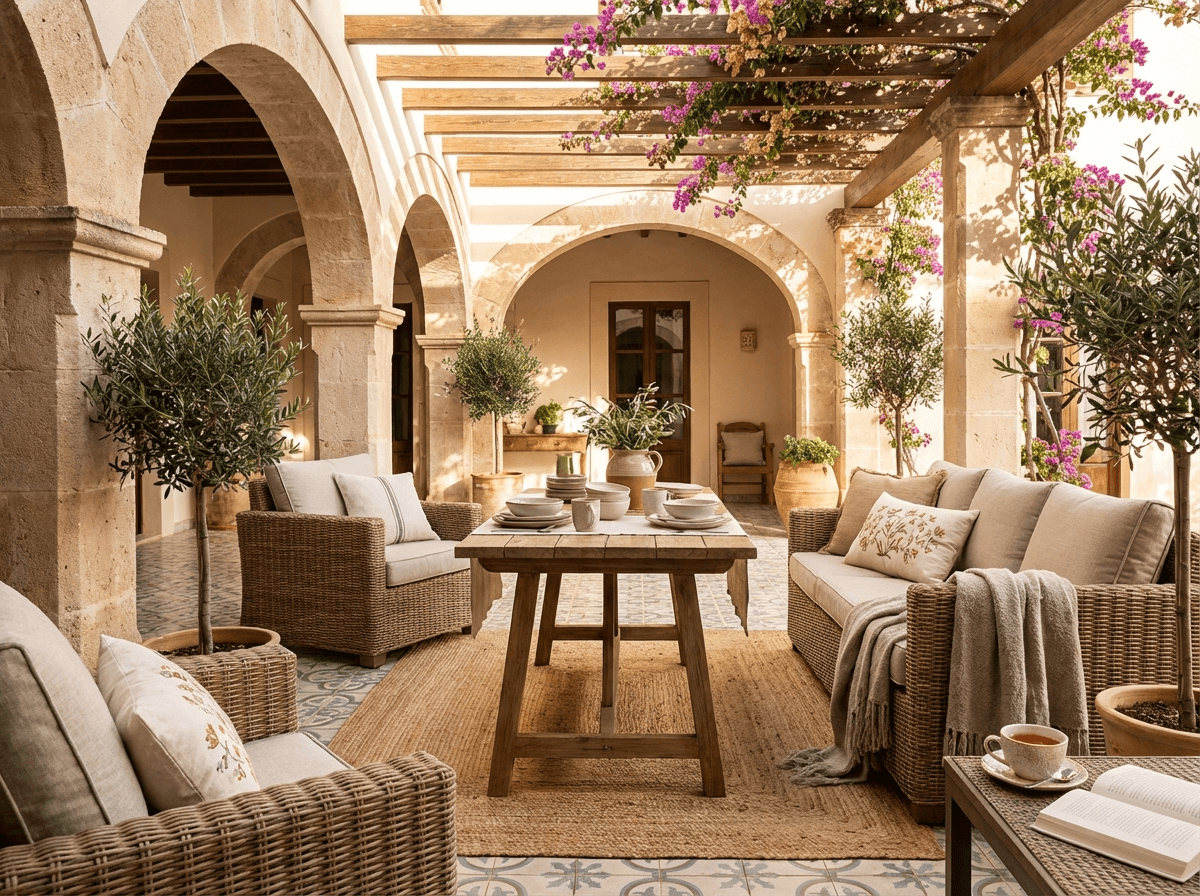
A traditional patio is the outdoor extension of a well-appointed home — not a concrete slab with a grill, but a designed room that happens to be under the sky. It shares the indoor rooms' commitment to quality materials, symmetry, and comfort: natural stone underfoot, substantial furniture arranged for conversation and dining, and garden structure that frames the space with the same intentionality as crown molding frames a ceiling.
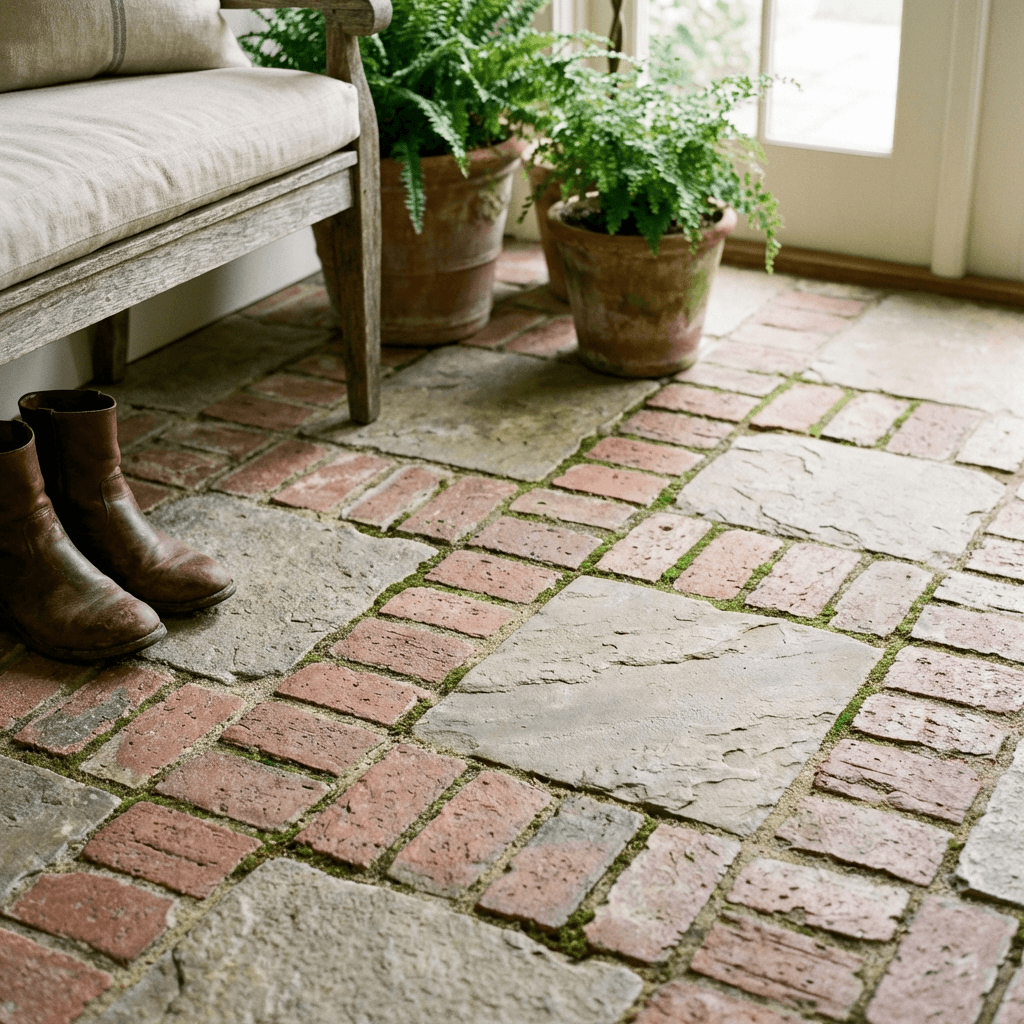
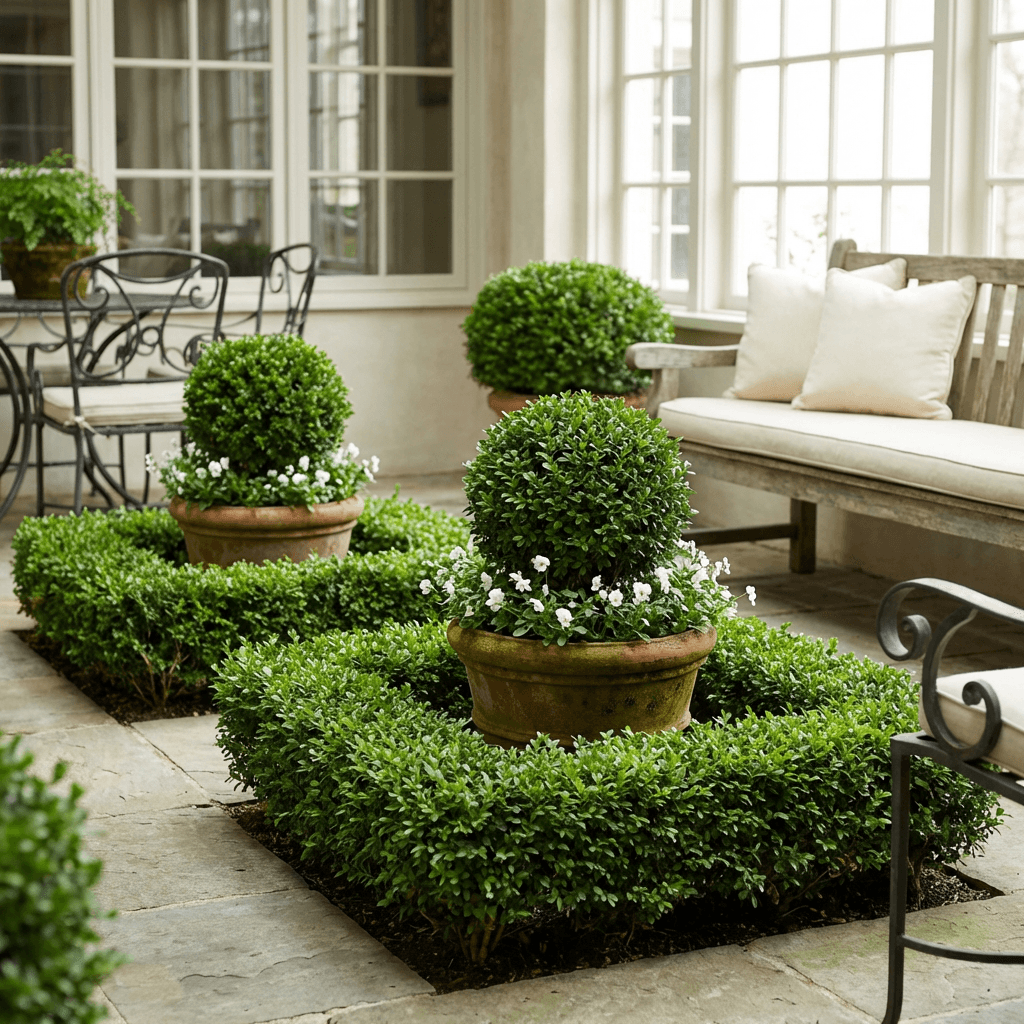
The surface matters. Bluestone, flagstone, or reclaimed brick — materials with natural variation, patina, and weight — establish the patio's character before a single piece of furniture arrives. Boxwood hedges and symmetrical plantings border the space, creating green walls that define the room and connect it to the garden beyond. A pair of planted stone urns flanks the door, echoing the bilateral balance found inside.
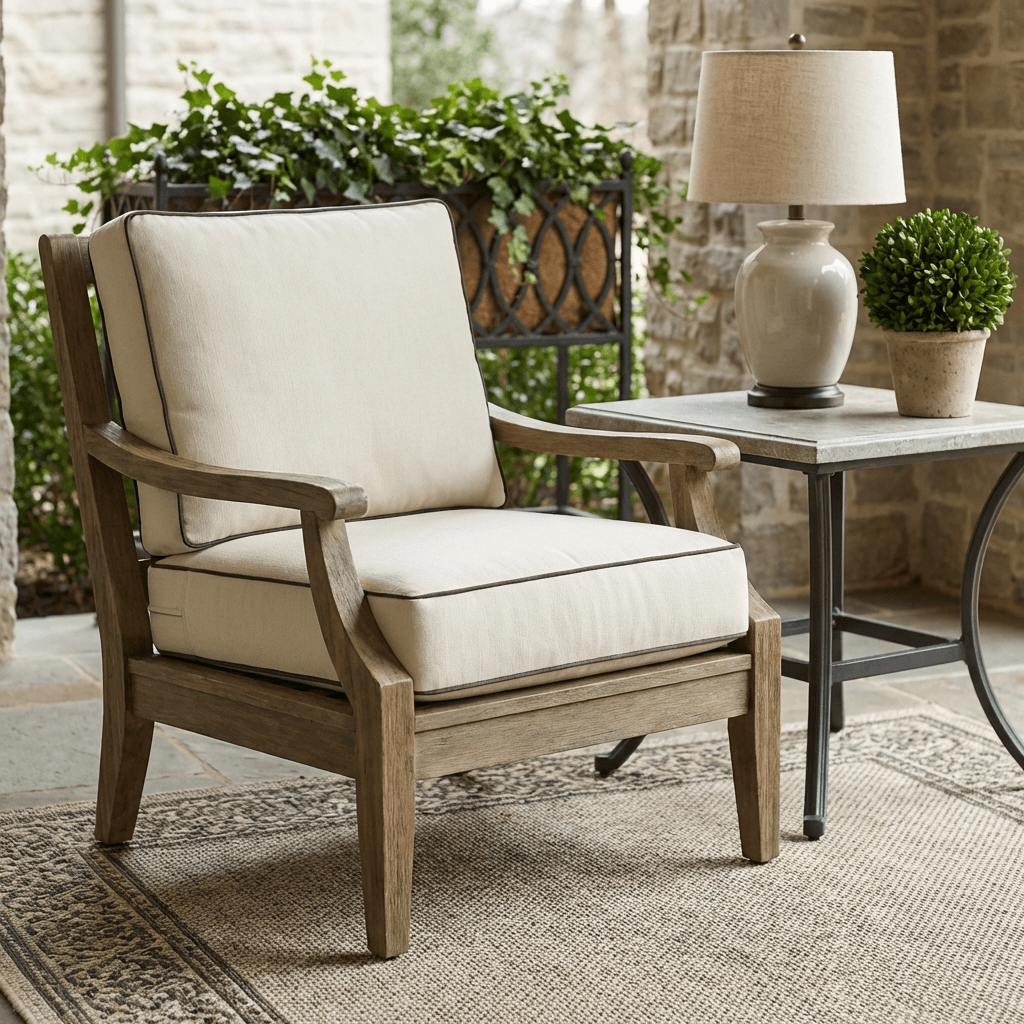
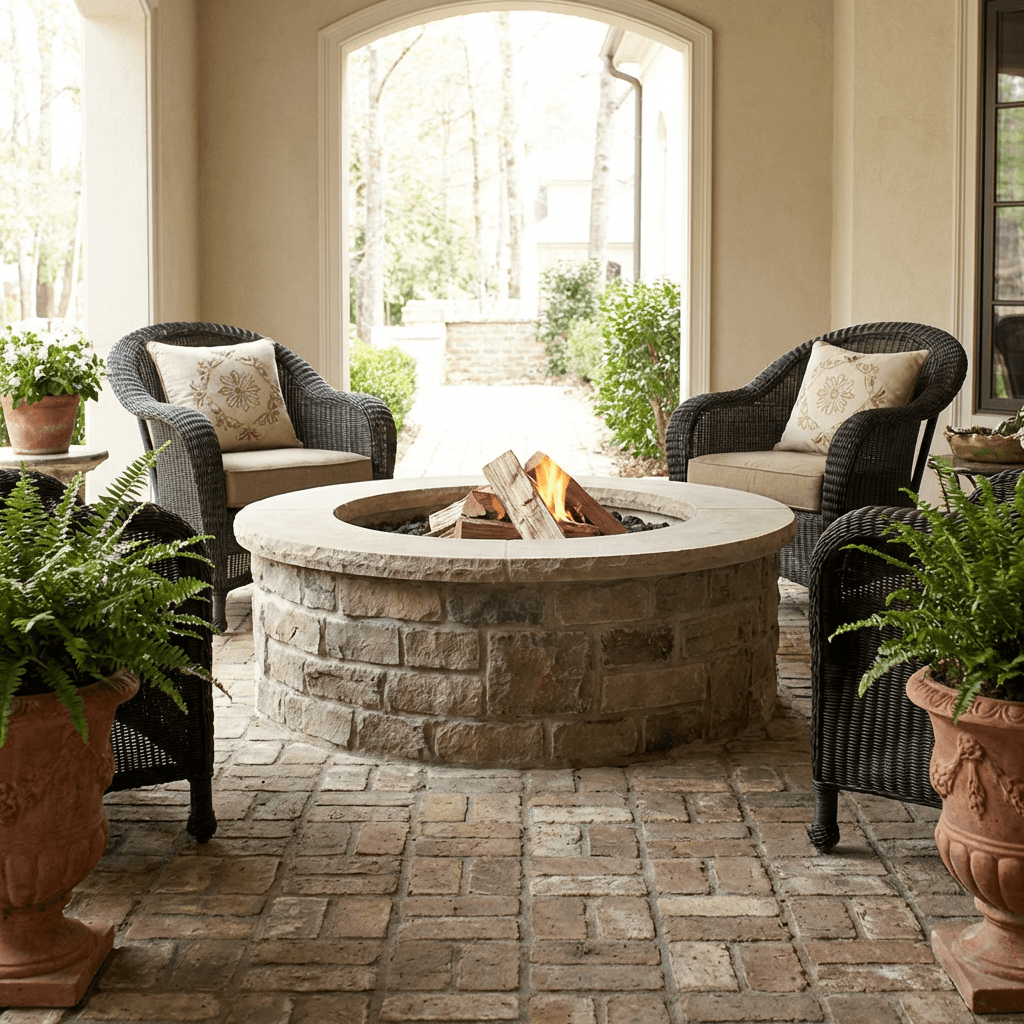
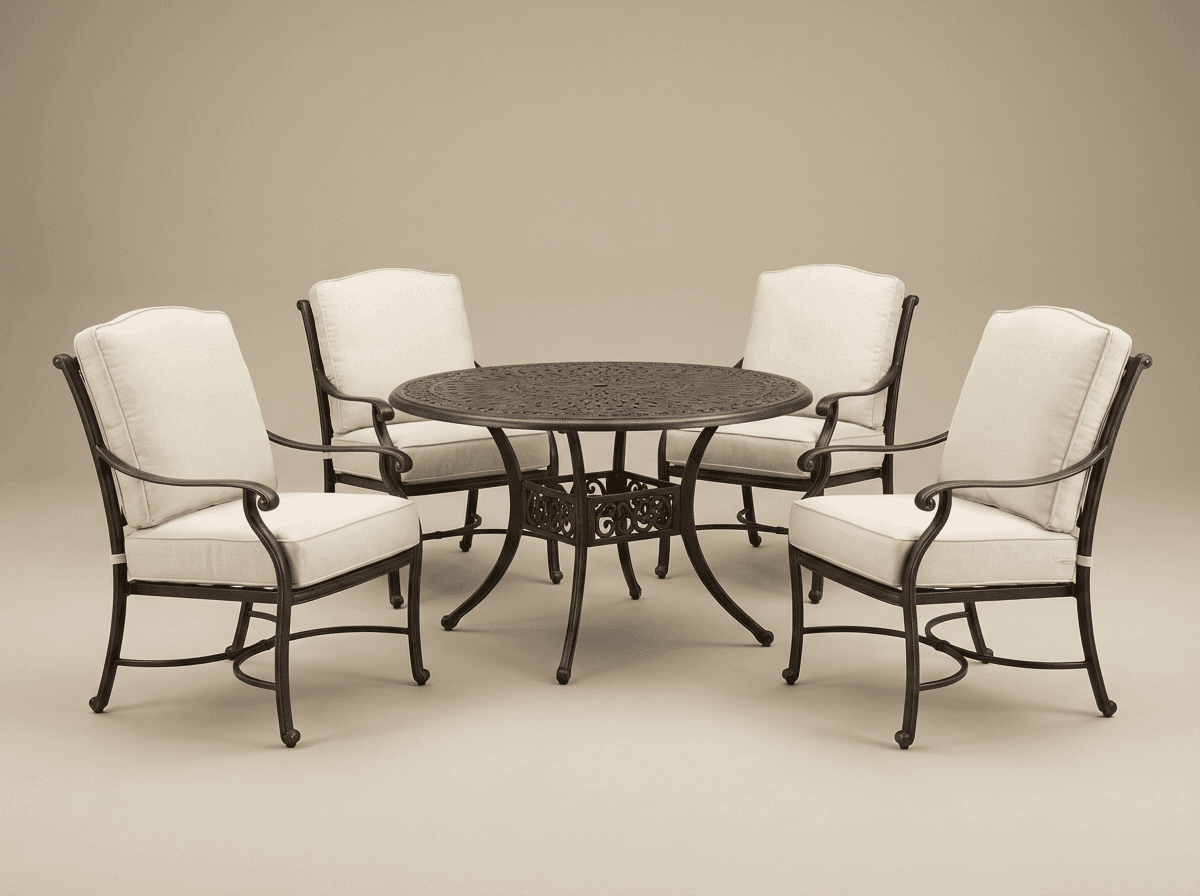
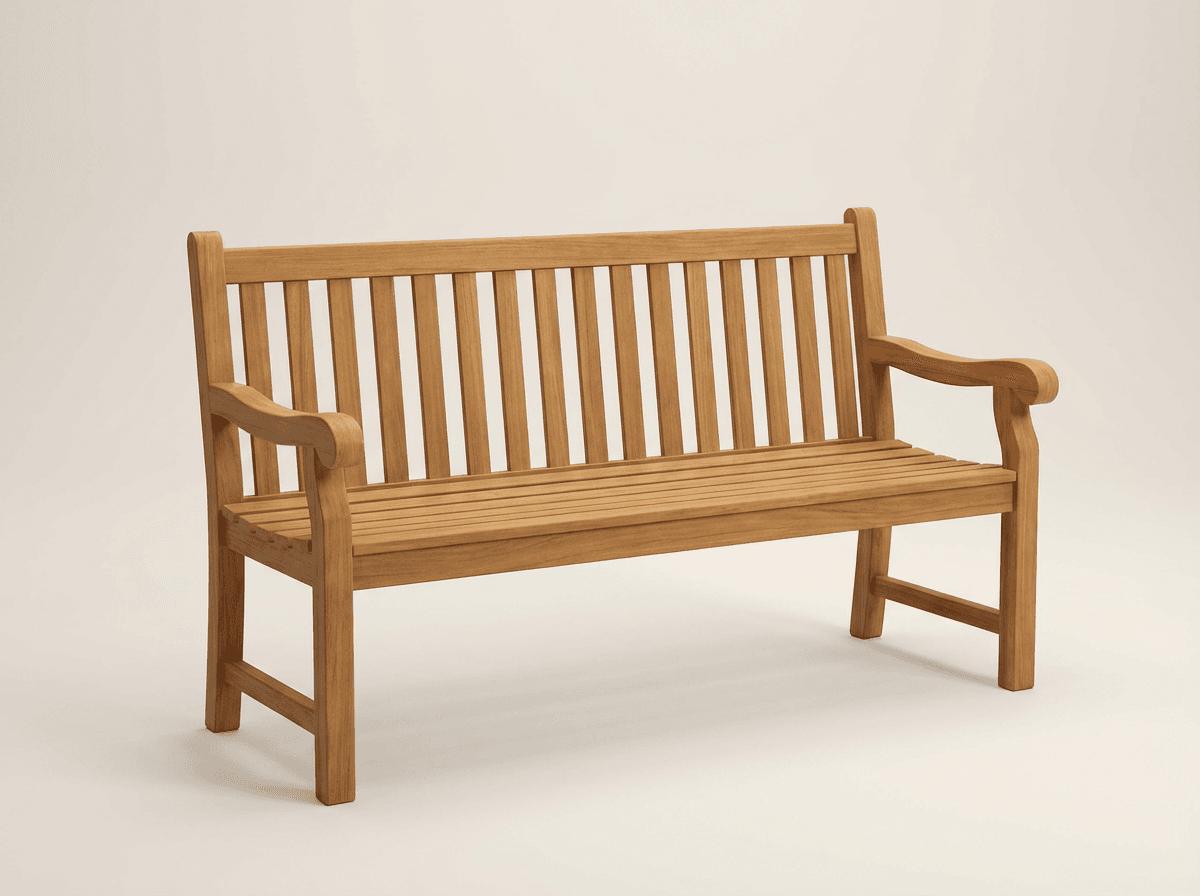
Furnished for lingering, the patio holds a cast-aluminum dining set for evening meals, a deep-seat wicker grouping around a fire pit for after-dinner conversation, and a teak bench along the garden wall for quiet morning reading. As evening falls, coach lanterns by the door and hurricane candles on the table cast the warm, flickering light that has drawn people outside since the first terrace was laid in the first garden — a tradition that no design trend can improve upon.