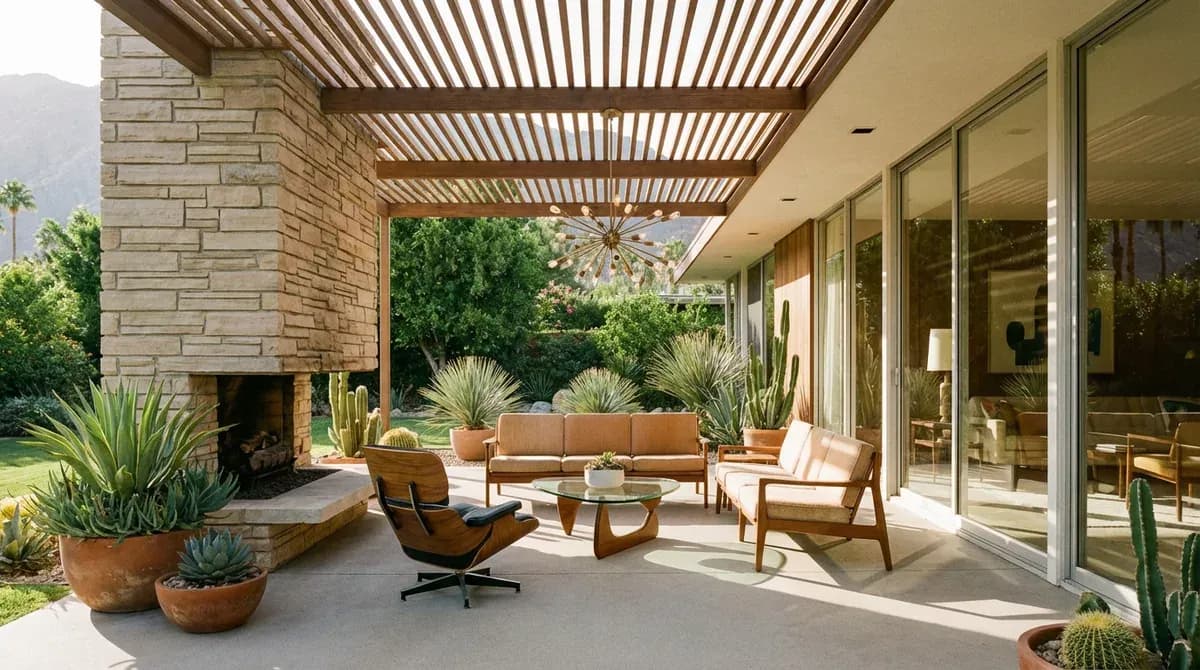
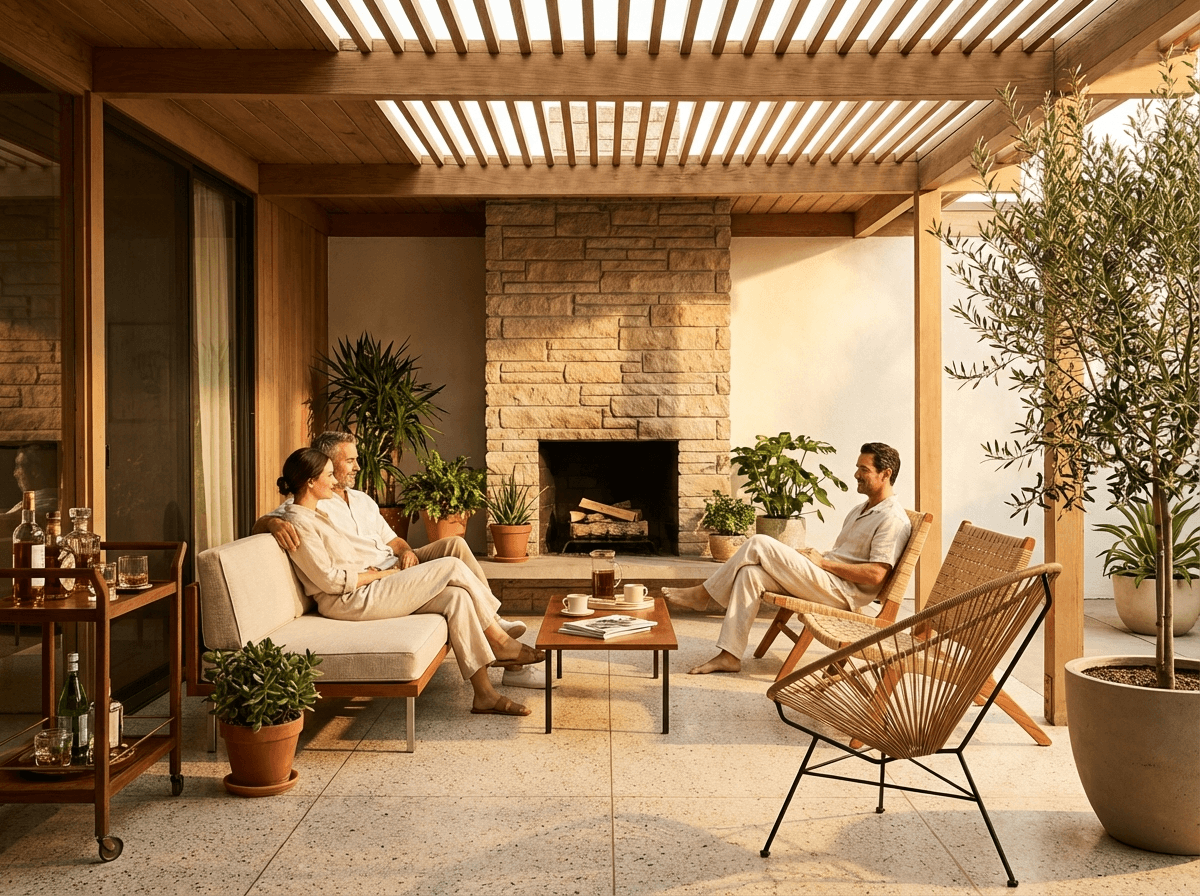
Gli architetti Mid-Century Modern concepivano il patio come un prolungamento del soggiorno — una stanza senza pareti in cui applicare gli stessi principi progettuali di linee pulite, materiali naturali e pianificazione intenzionale degli spazi. Il risultato è un ambiente esterno che trasmette cura e intenzionalità, ben lontano da un semplice accostamento di arredi su una lastra di calcestruzzo.
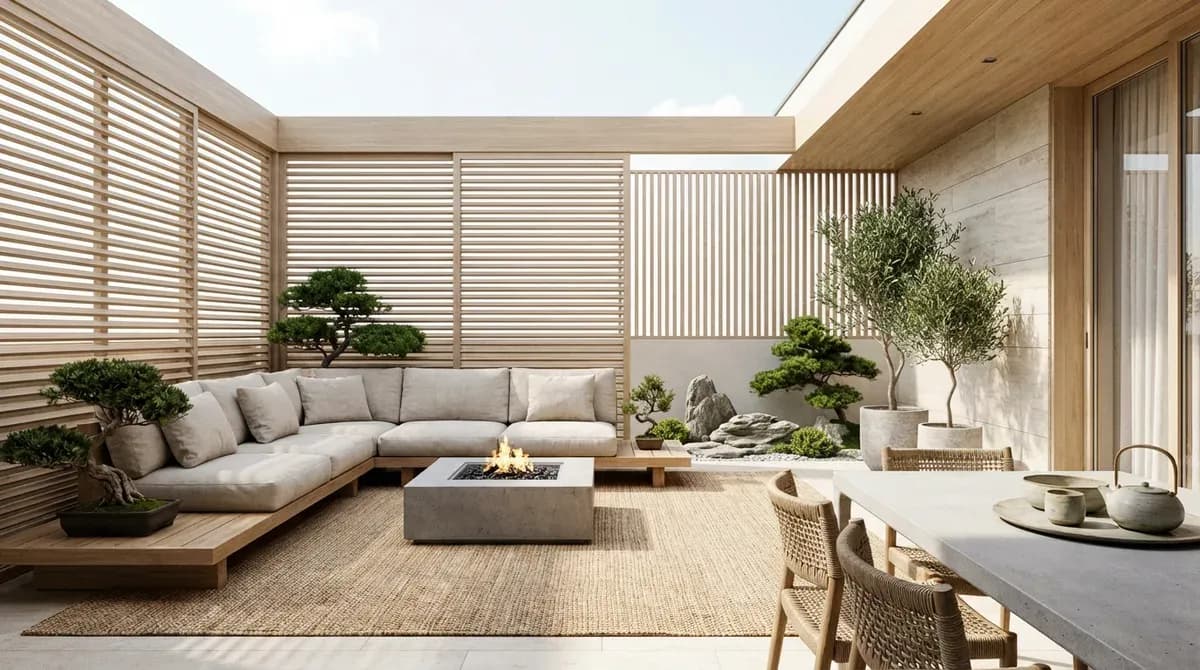
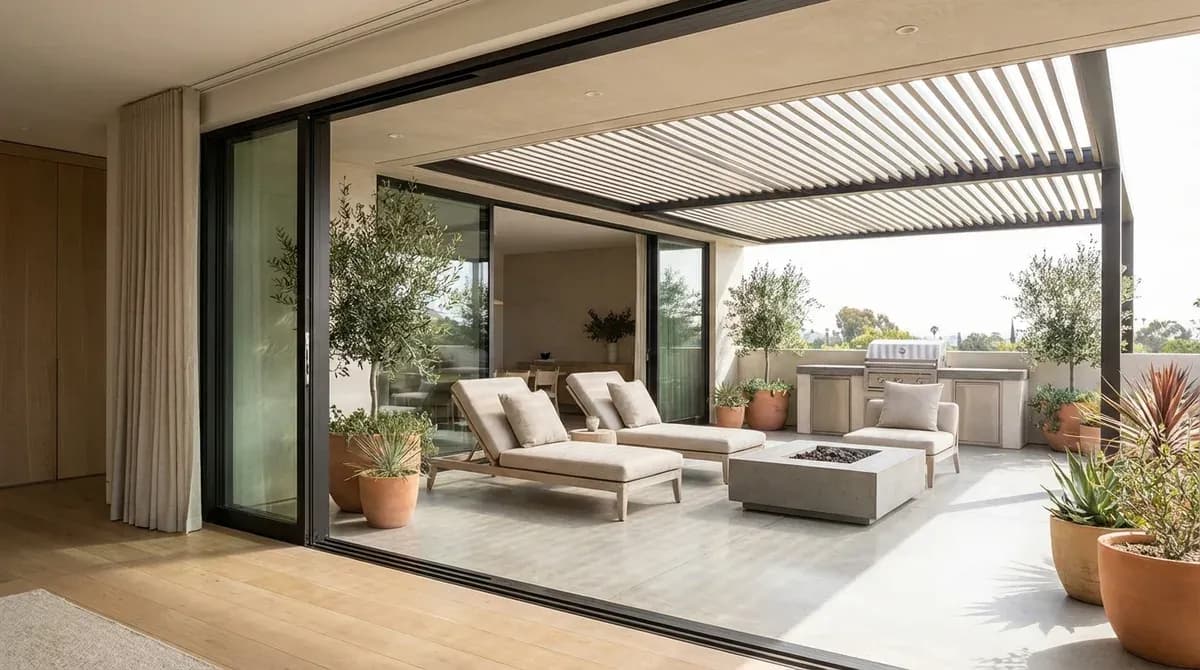
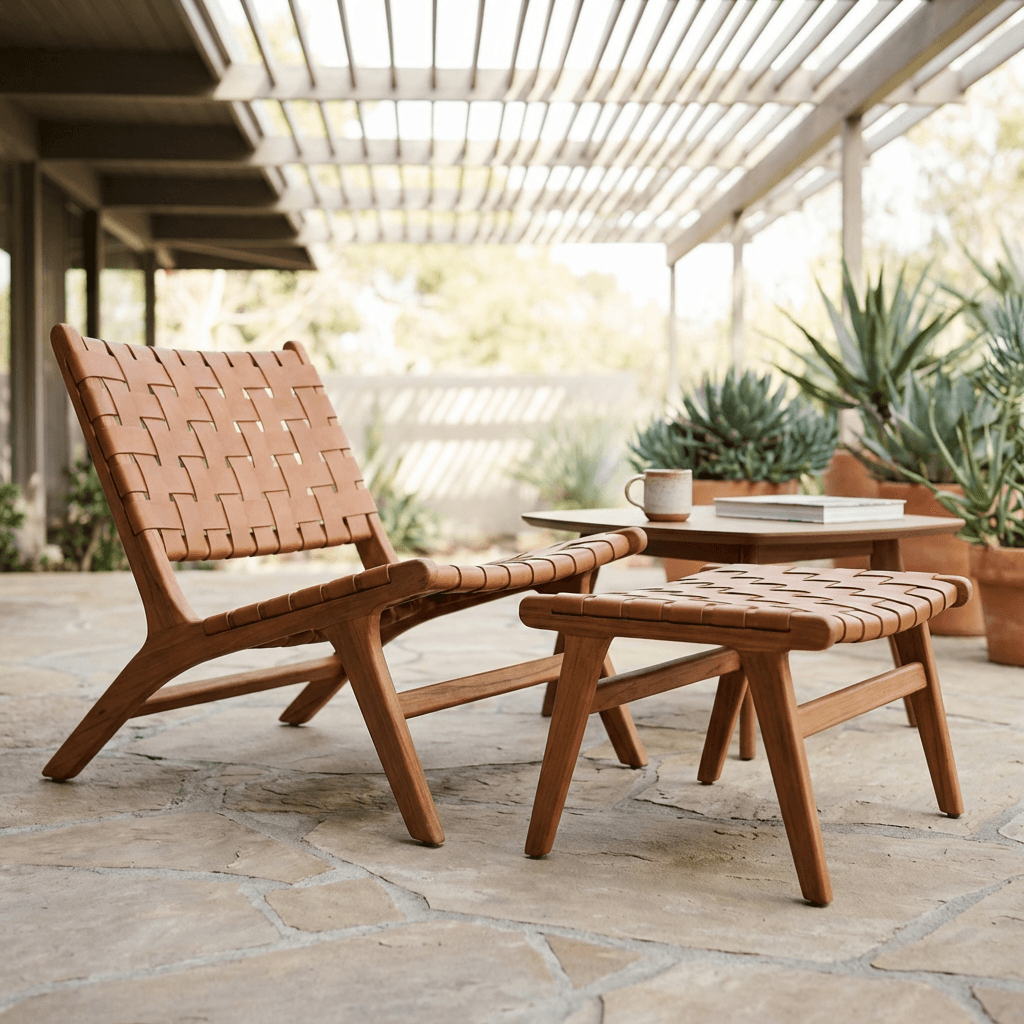
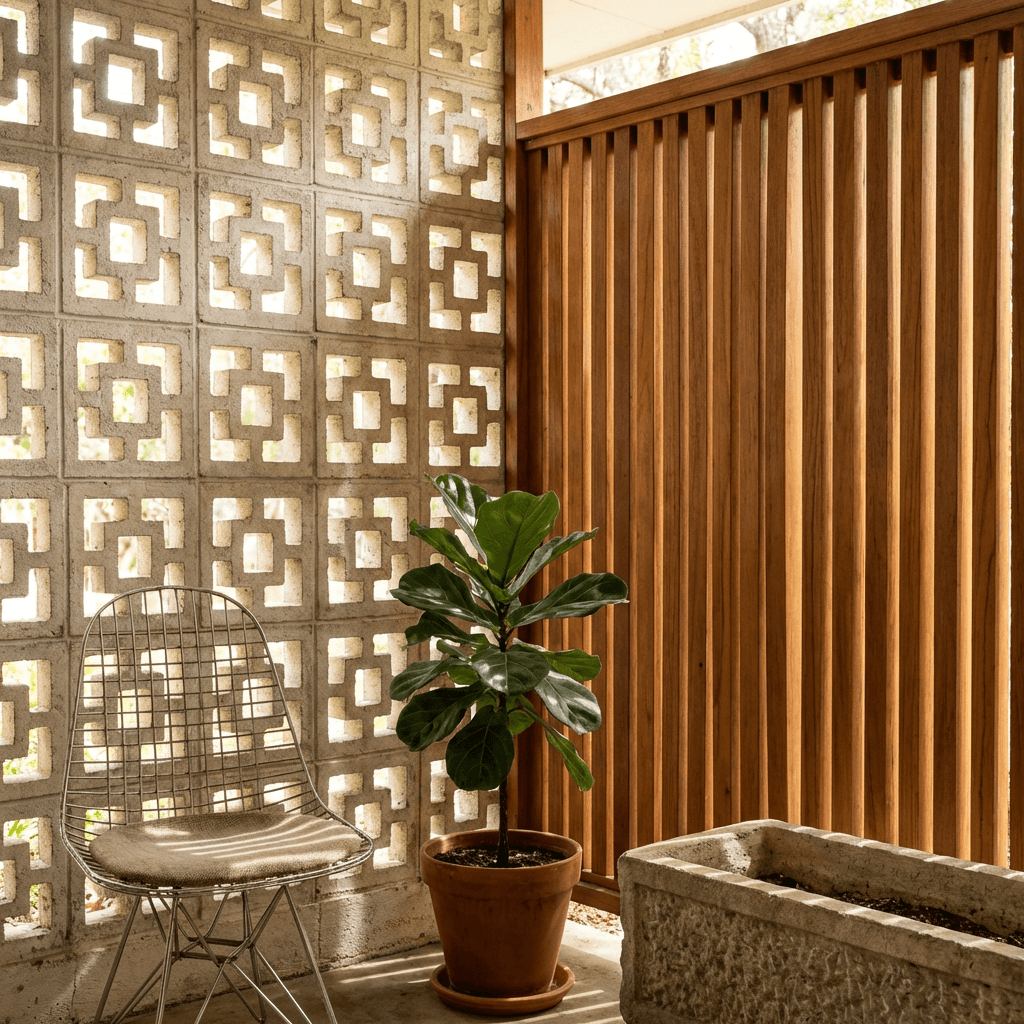
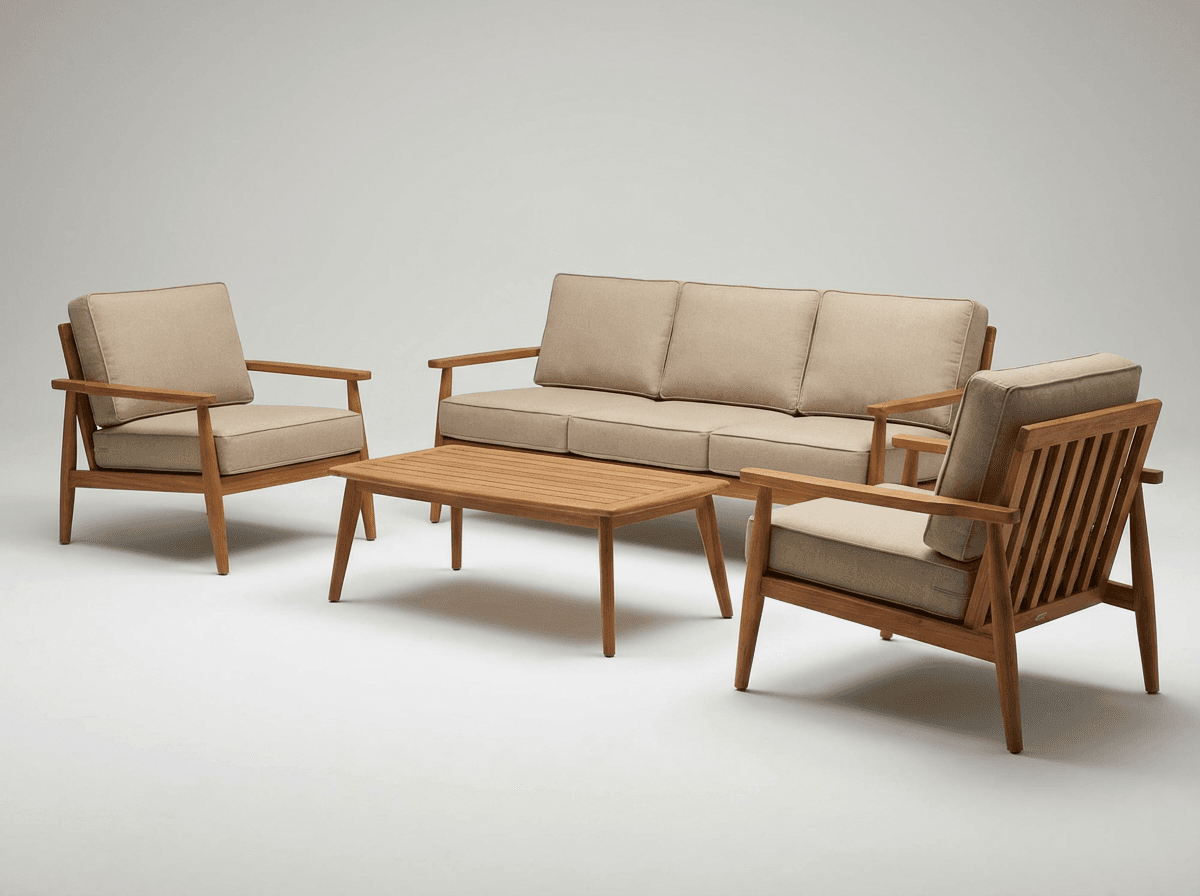
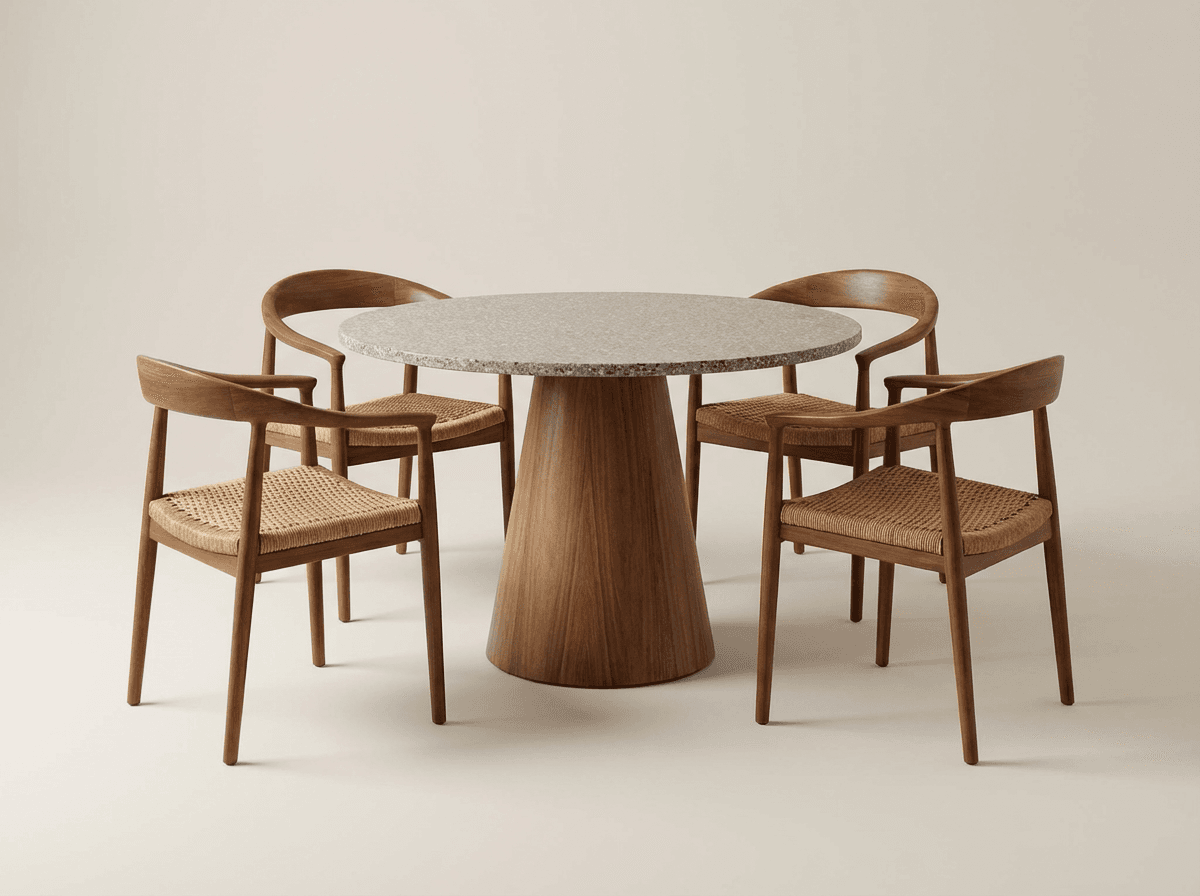
Gli arredi sono bassi ed eleganti: sedie lounge in teak con cuscini ben tesi, un tavolo da pranzo rotondo in calcestruzzo, sedie d'accento a struttura metallica. Tutto è progettato per abbracciare il suolo e lasciare che il paesaggio circostante — o l'architettura dell'edificio — rimanga l'elemento visivo dominante. I pannelli traforati e i listelli in teak garantiscono privacy e riparo dal vento, proiettando ombre geometriche che si spostano con il sole.
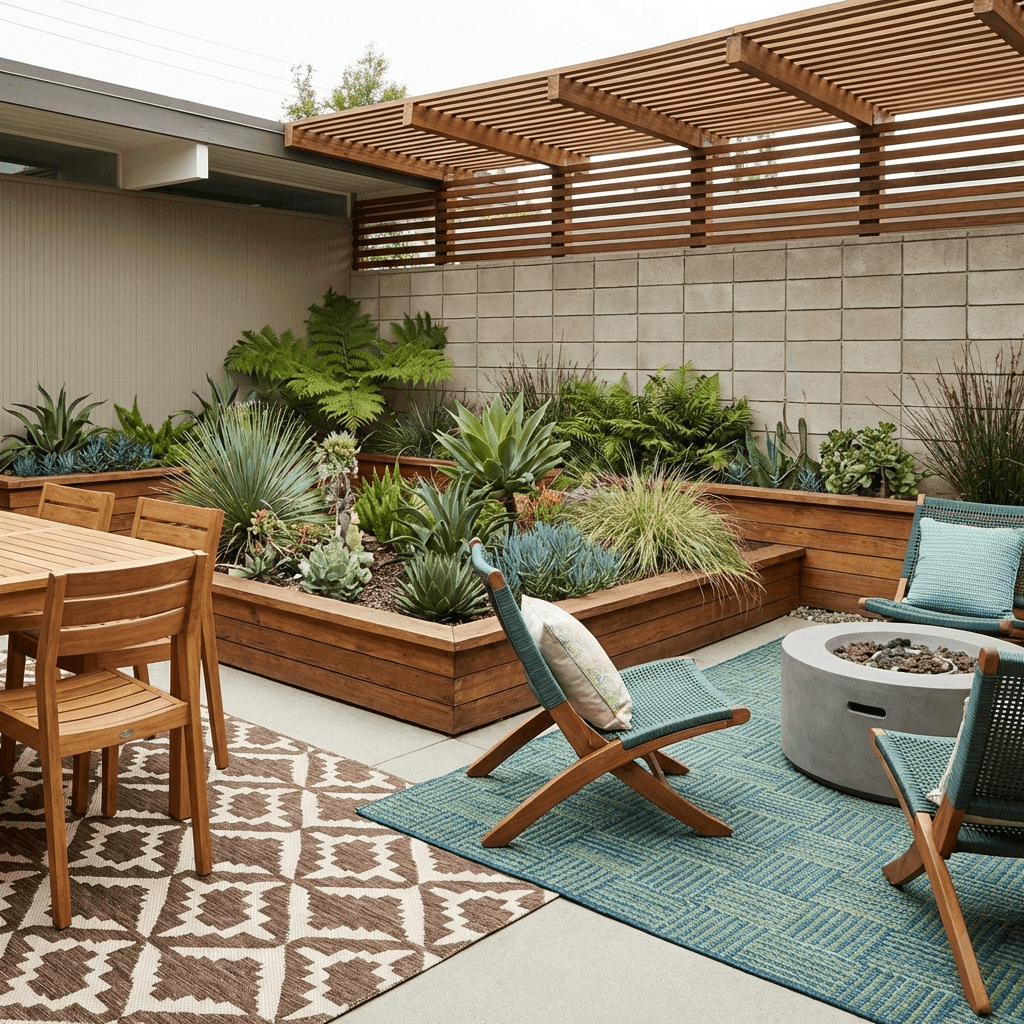
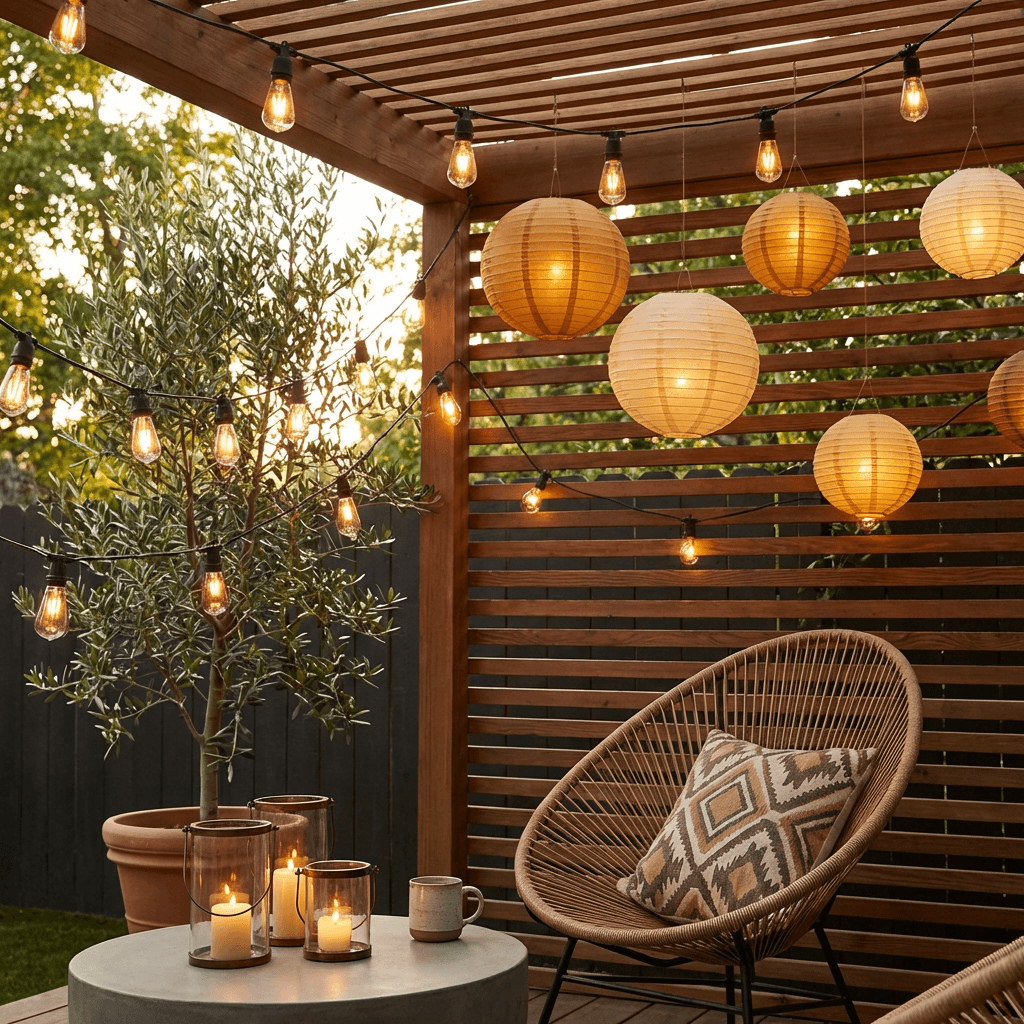
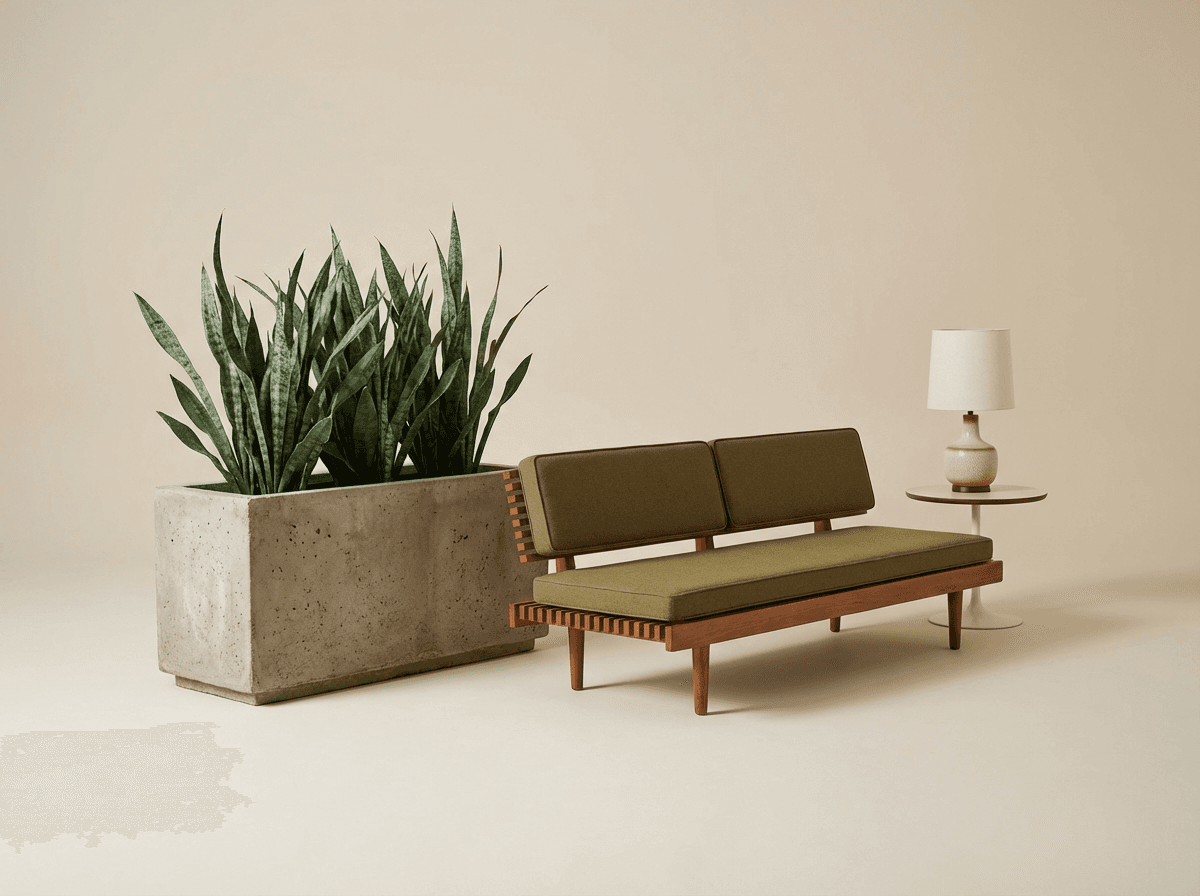
Le piante hanno una funzione architettonica più che decorativa. Agave scultoree in fioriere di acciaio Corten, erbe ornamentali in cilindri di calcestruzzo, una singola strelitzia in un vaso smaltato teal — queste piante sono scelte tanto per la forma quanto per il colore. Con il calare della sera, le luci a sfera appese in filo creano un soffitto luminoso e caldo, e il patio diventa ciò che i progettisti Mid-Century hanno sempre inteso: la stanza più bella della casa.