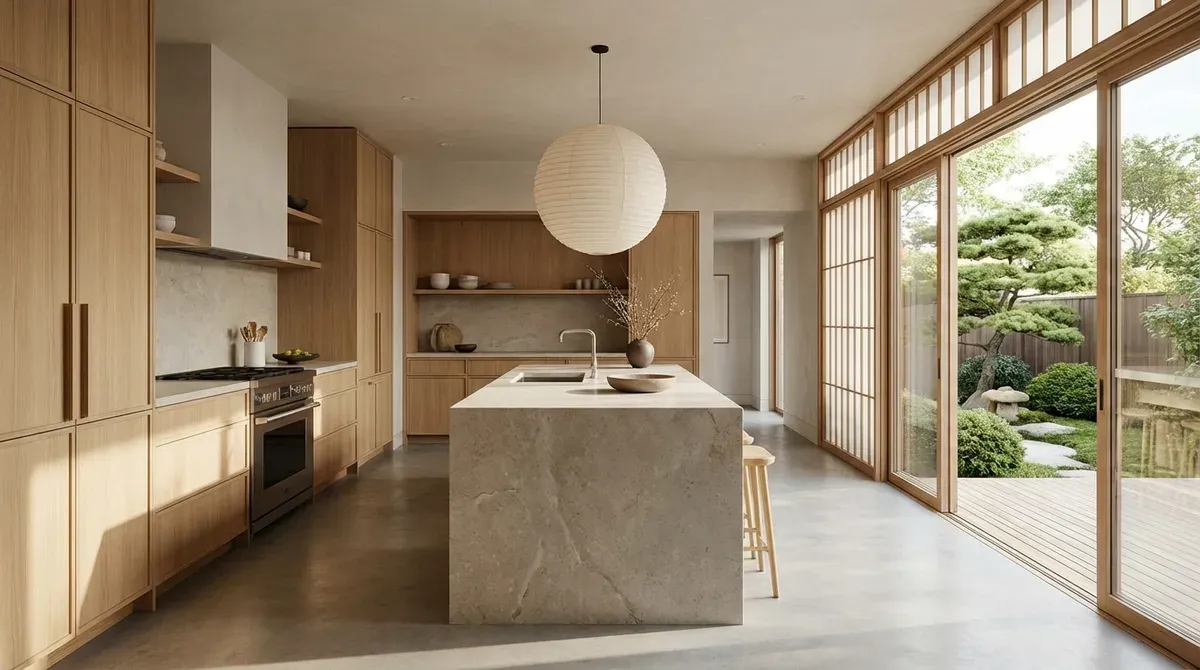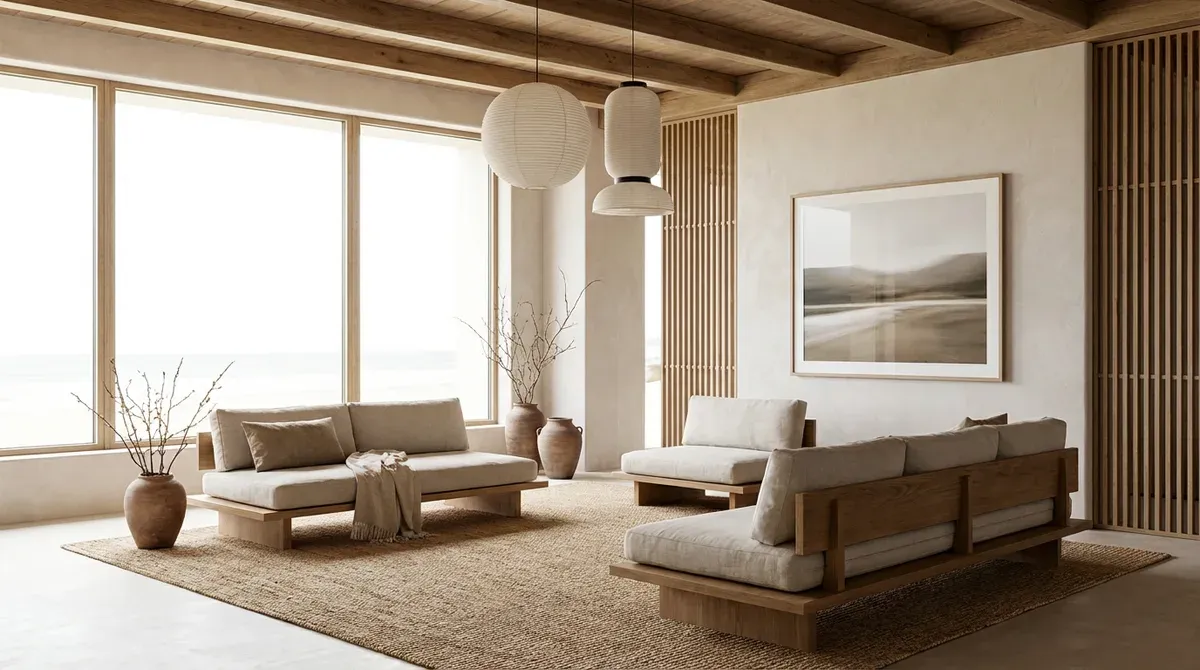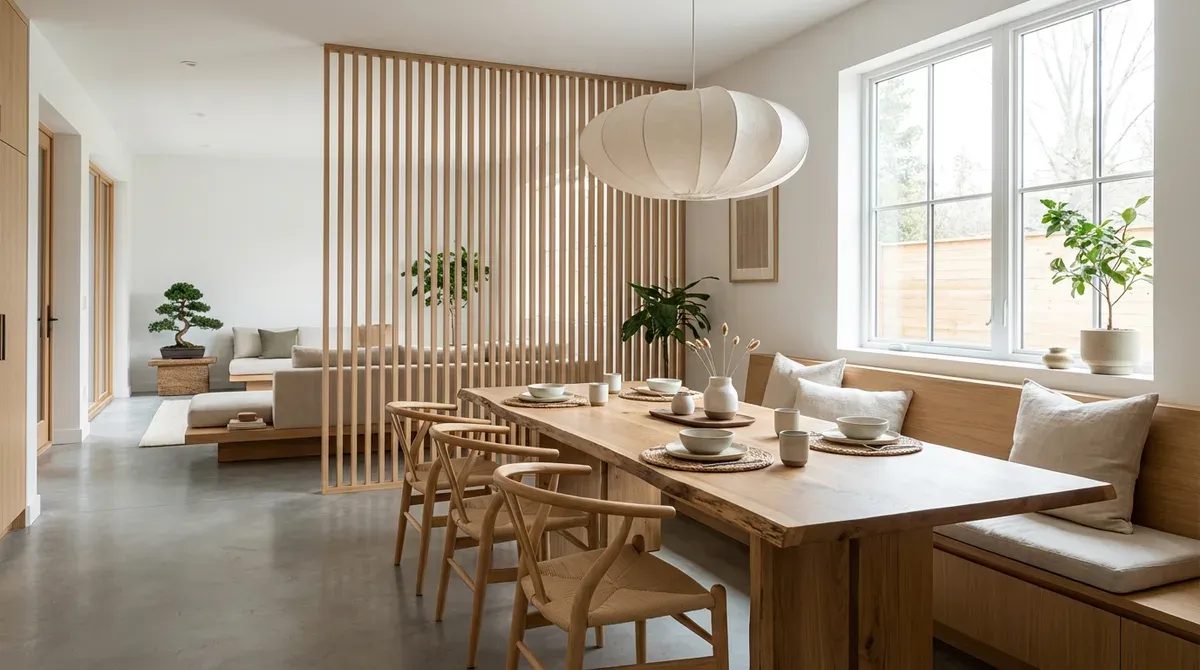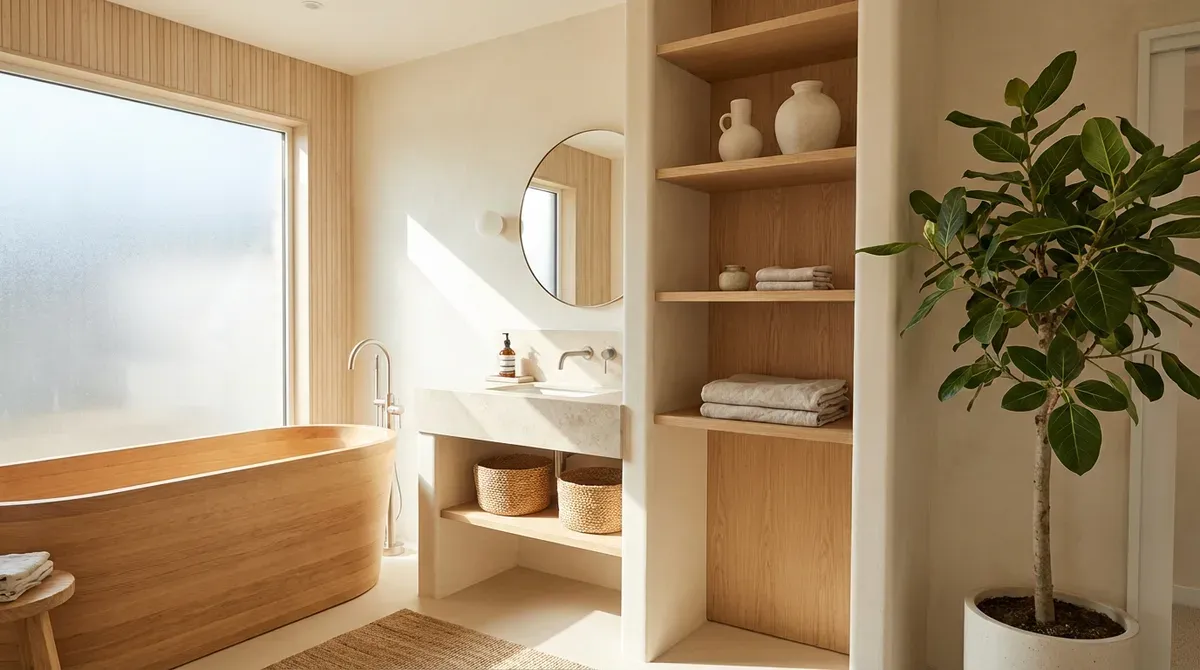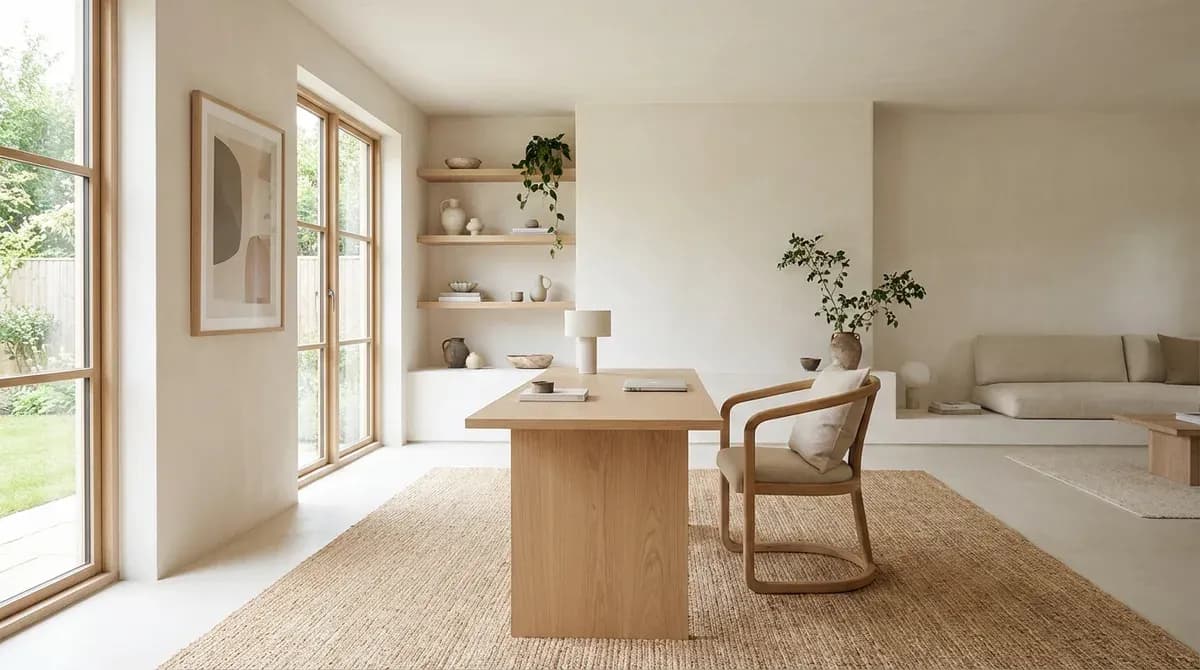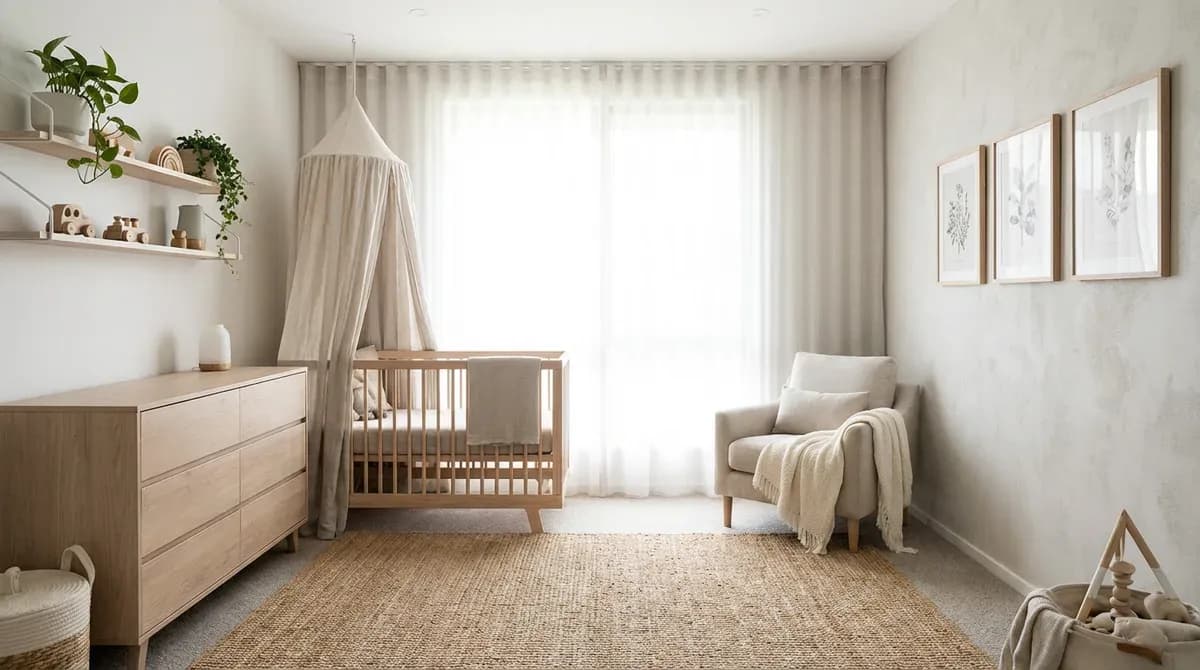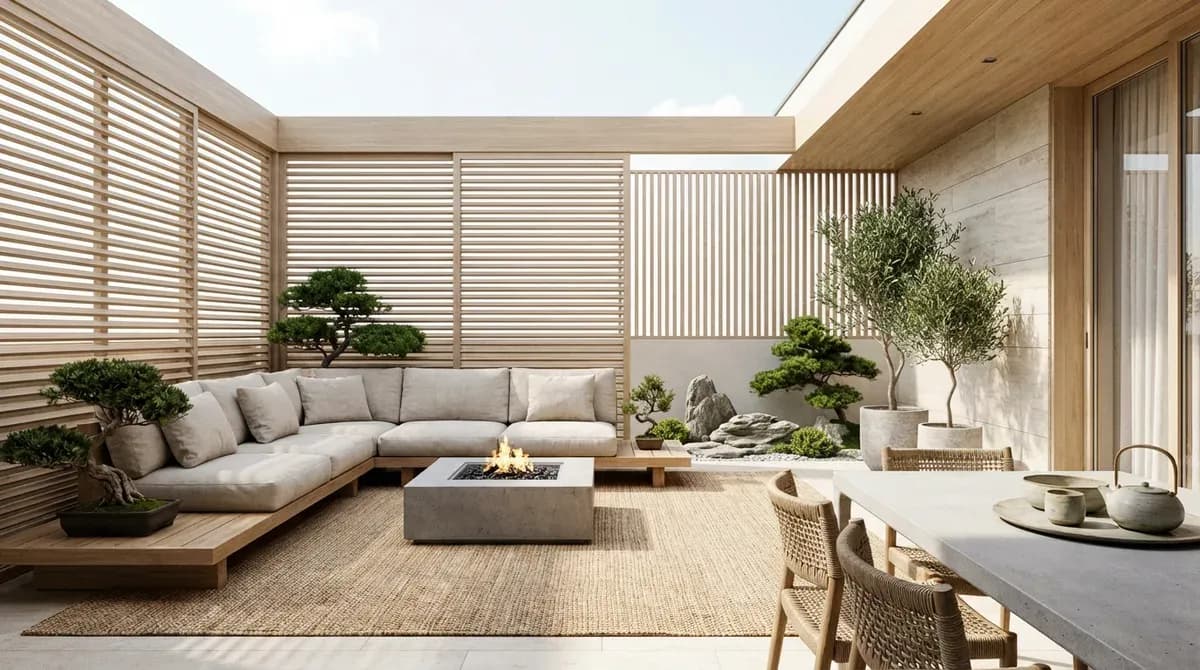


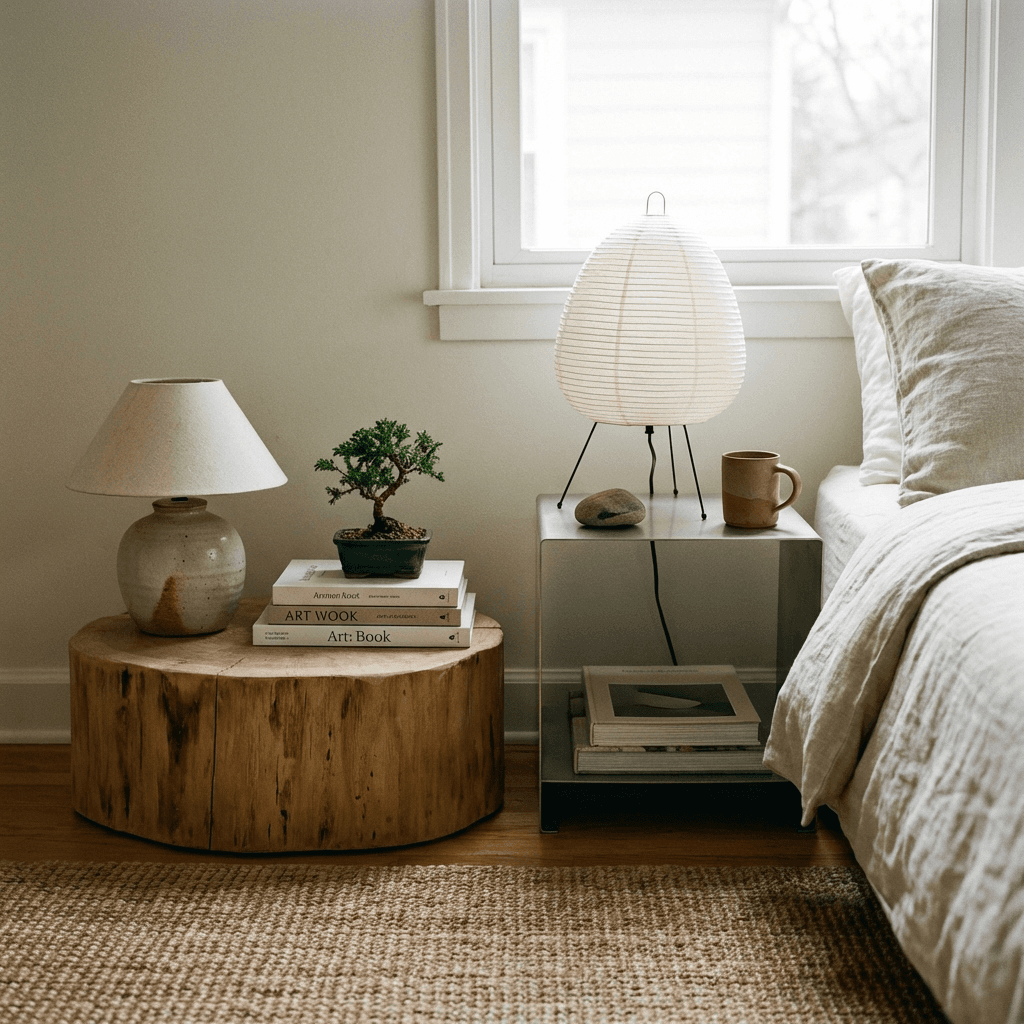

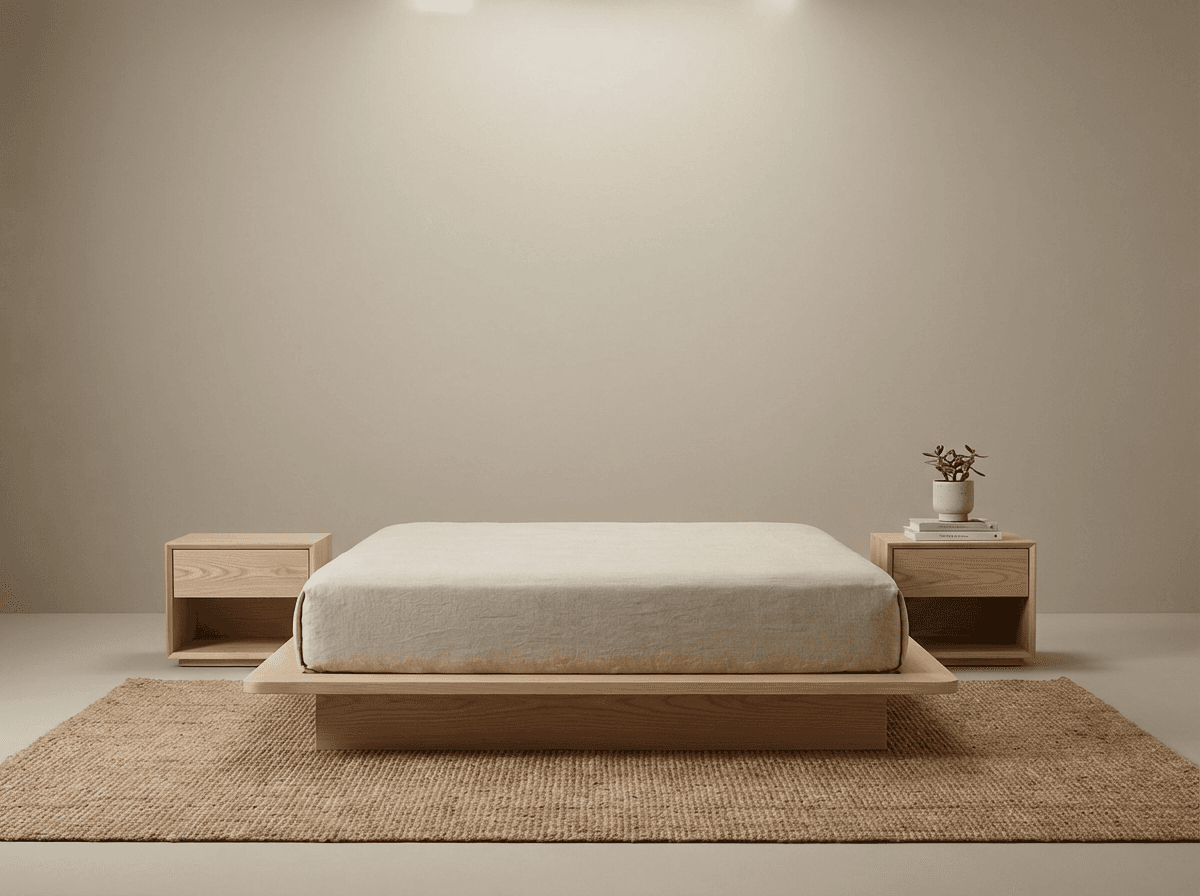



The Japandi bedroom exists to serve one purpose: deep, restorative rest. Where other styles might dress a bedroom with layers of pillows and decorative throws, Japandi strips the room to its emotional essentials — a beautiful bed, warm light, and silence. The palette is drawn from raw materials: the sandy tone of undyed linen, the umber of walnut, the soft gray of river stones.
The bed itself is the architectural anchor. A low platform frame in solid wood, dressed in washed linen that looks better the more it is used, communicates both the Scandinavian love of craft and the Japanese respect for simplicity. Nightstands are deliberately mismatched — perhaps a turned wooden stool on one side and a floating shelf on the other — because perfect symmetry feels staged rather than lived-in.
What makes a Japandi bedroom truly work is restraint. The dresser holds what you need; the clothing rack displays what you love; the windowsill is bare except for a single ceramic vessel. The room breathes, and so do you.