Home Builder Marketing Ideas: 15 Ways to Sell Unbuilt Homes
Oct 3, 2026 · 13 min read
Home builder marketing ideas that sell homes before they are built: 15 tactics with cost bands and time to impact, from plan renders to a reservation list.
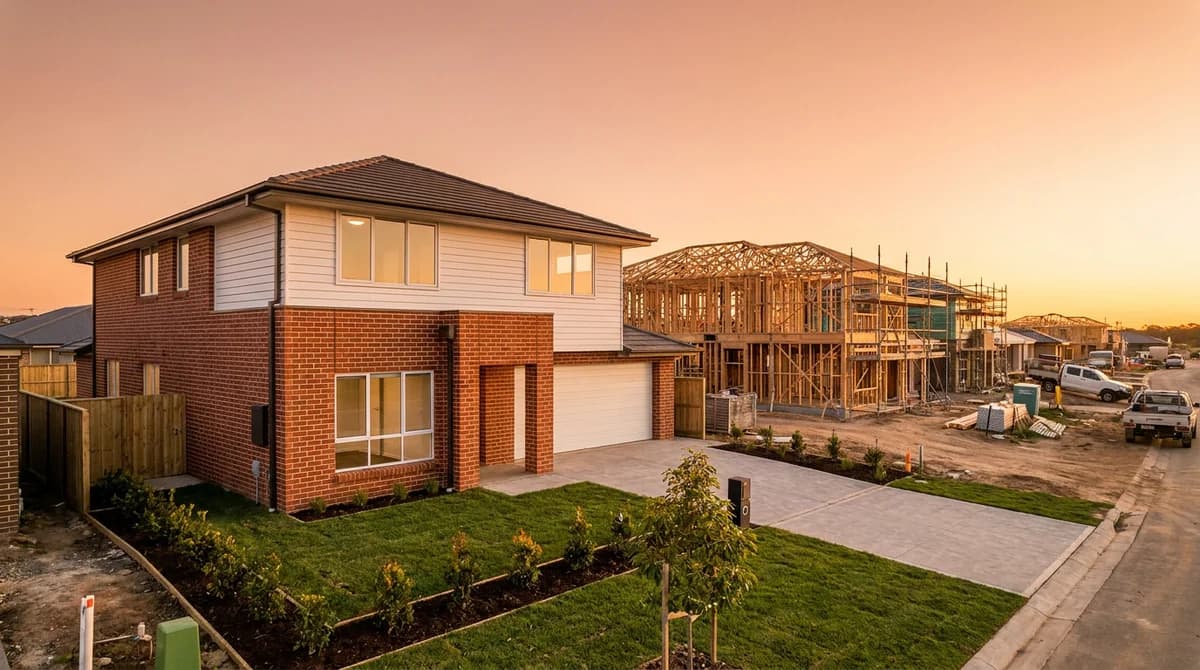
The best home builder marketing ideas solve one problem: buyers cannot walk through a home that does not exist yet. So you show it to them anyway, with renders from the plans, furnished floor plans and tour videos, then make the development easy to find and easy to reserve. Here are 15 tactics with cost bands and timelines.
The list runs in the order a sale runs: show, get found, close. Cost bands are relative: Free is staff time only, Low is a few dollars per asset, Mid is hundreds, High is the largest lines in the project budget.
How do you show the finished home before it exists?
Every plan-stage buyer is being asked to imagine. NAR's Profile of Home Staging found 81% of buyers say staging makes it easier to picture a property as their own, and a finished-looking render does the same job for a set of drawings. The cost gap is what changed: a traditional render costs $200-500 per image, while an AI render from a drawing costs about $1-5 and takes under 60 seconds (RoomLift).
| Input you already have | Marketing asset it becomes | RoomLift tool |
|---|---|---|
| Exported elevation or 3D view (image) | Photoreal exterior of the finished home | Drawing to Render |
| Site plan (image) | Aerial view of the completed development | Drawing to Aerial |
| 3D cutaway floor plan (image) | Furnished dollhouse view | Plan to Dollhouse |
| Photo of an empty spec home | Virtually staged interior | Restyle |
| Daytime exterior photo or render | Virtual twilight exterior | Photo Enhance |
| A set of finished renders | Short tour clips | Video Maker |
RoomLift works from images (photos, screenshots and exported views), not from .skp, .dwg or .rvt model files, and the output is a marketing visual, not a construction document.
1. Render every plan from the drawings before you break ground
What: A photoreal exterior of each plan type, generated from the elevation or 3D view your architect already exported. Why: It is the hero image on every listing, landing page and ad, and NAR reports photos are the primary factor in deciding whether to request a showing. For an unbuilt home, the render is the photo.
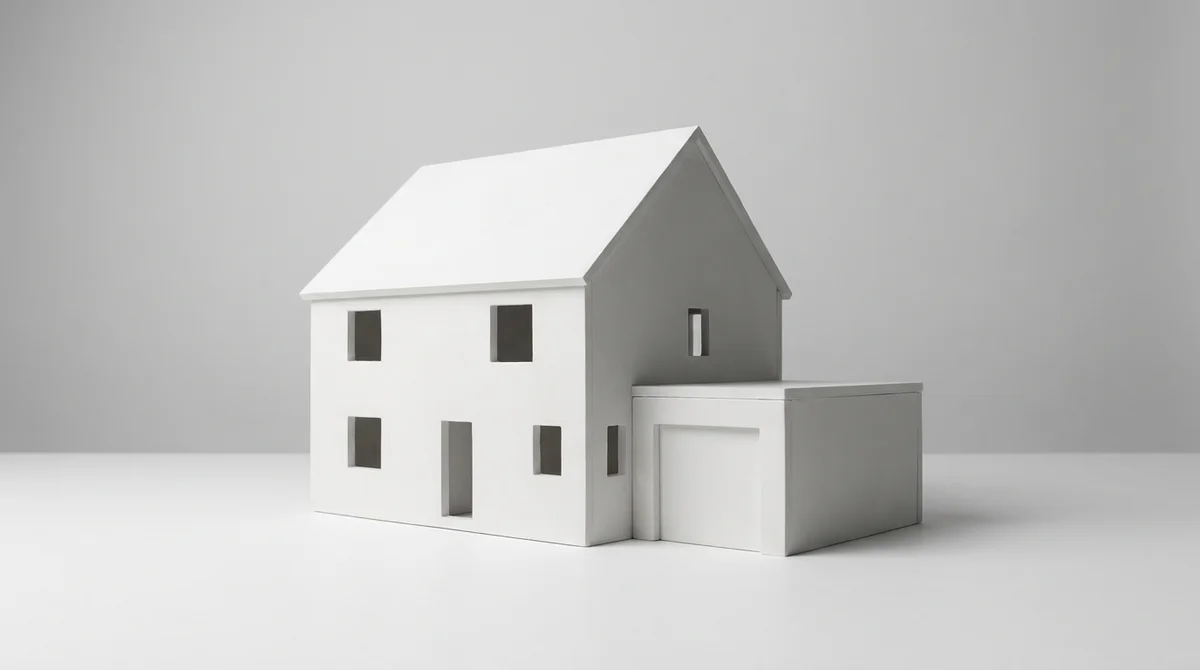
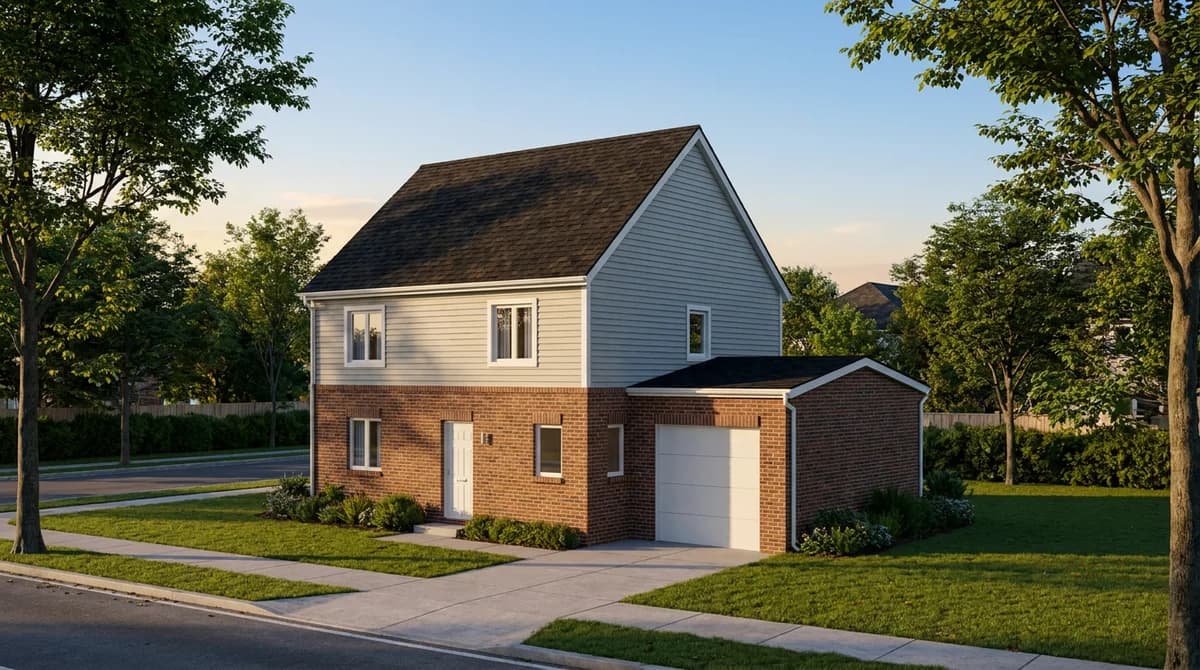
Cost band: Low with AI or Mid from a studio; see our guide to architectural rendering cost. Time to impact: same day with Drawing to Render, weeks from a studio.
2. Put an aerial render of the whole site on the sales page
What: The site plan turned into an aerial view of the finished development: streets, lots, green space and future phases. Why: Buyers pick a lot, not just a plan, and an aerial shows which lots back onto the park.
Cost band: Low with Drawing to Aerial, Mid from a studio. Time to impact: same day with AI, weeks from a studio.
3. Turn flat floor plans into furnished dollhouse views
What: A 3D cutaway plan, exported as an image, rendered with furniture, flooring and light. Plan to Dollhouse needs that 3D cutaway image, not a flat 2D plan. Why: RICS reports listings with floor plans receive 30% more engagement than those without, and the furnished version is the one buyers share. See our rendered floor plans guide.
Cost band: Low. Time to impact: same day.
4. Virtually stage the spec homes you have already finished
What: Photograph the empty spec home, then stage the photos in a style that fits the buyer profile. Why: Empty rooms photograph as small and cold. RoomLift platform data shows Modern (31%) and Scandinavian (29%) lead staging requests, and the living room is the most requested room at 30%. Disclose staging in the listing.
Cost band: Low at about $1-5 per image with Restyle, or $25-75 per room through your photographer (RoomLift); see virtual staging for real estate. Time to impact: same day.
5. Run virtual twilight on every exterior
What: A daytime exterior photo or render converted to dusk, with warm interior light and a deep sky. Why: The twilight image is the thumbnail that stops a scroll. Zillow research finds listings with high-quality photos sell up to 32% faster, and virtual twilight is 13% of photo-edit preset requests (RoomLift platform data).
Cost band: Low, one Photo Enhance edit per image. Time to impact: same day.
6. Cut a tour video from the renders
What: Animate the plan renders into short clips and stitch them into a tour with captions and music. Why: Wyzowl's State of Video Marketing report finds 91% of businesses use video as a marketing tool, yet video is only about 2.6% of RoomLift generations (RoomLift platform data), so a tour per plan stands out.
Cost band: Low with Video Maker; a filmed walkthrough with drone and twilight runs $400-800 for larger homes (RoomLift). Time to impact: same day for AI clips.
How do buyers find a new development?
Renders only work if people see them. NAR reports 97% of home buyers search for properties online, and the next five tactics put your visuals where that search happens.
7. Claim a Google Business Profile for the development, not just the company
What: A separate profile for the community with the sales office address, hours, plan renders as photos and weekly progress posts. Why: Buyers search the development name plus the town, and a profile with real photos and hours owns that map result.
Cost band: Free, Google lets you add or claim a profile at no charge. Time to impact: a week or two for verification.
8. Build a community landing page that ranks for the development name
What: One page per development, titled with the development name and town, holding the aerial, every plan render, the dollhouse plans, pricing and a reservation form. Why: It is the destination for every ad, email and portal link, and in time the page Google shows for the development name. Zillow research finds listings with 22-27 photos get the most buyer engagement, so give the page at least that many.
Cost band: Low on your own site, Mid through an agency. Time to impact: immediate for ads and email, four to twelve weeks to rank.
9. List every plan on the portals with renders, not "photo coming soon"
What: A listing per plan or released lot on Zillow, Realtor.com and your local portal, with the exterior render, dollhouse plan and aerial as the photo set. Why: A blank thumbnail is skipped, a listing that looks finished is saved and shared, and the portal's audience is bigger than any ad budget.
Cost band: Low, the renders are the main cost. Time to impact: days.
10. Nurture the waiting list by email
What: An email every few weeks to everyone who inquired: progress photos, a plan spotlight with renders, the next release date and pricing. Why: A build is a long decision, and the builder who keeps showing up is the one still in the running when the buyer is ready.
Cost band: Low, an email tool and an afternoon a month. Time to impact: compounds with every release.
11. Post construction progress and reveal reels
What: Short vertical videos: slab to framing, framing to render, render to finished home, plus the twilight reveal of each completed lot. Why: Wyzowl finds 85% of consumers say a video convinced them to buy, and progress content is the cheapest video you will make because the site is the set.
Cost band: Low, a phone plus Video Maker for captions and cuts. Time to impact: four to eight weeks of consistent posting.
How do you close buyers on a home they cannot walk through?
The last four tactics turn interest into deposits. In NAR's Profile of Home Staging, 23% of buyer's agents reported a 1-5% increase in the dollar value offered for staged homes and 18% reported 6-10%, and RESA reports that in some markets staged homes spend 33-50% fewer days on market.
12. Make the model home the whole experience
What: One completed home furnished to match the renders, staffed, and used for every appointment. Why: It is the only place a buyer can touch the finish quality, and it validates every render. NAR finds 46% of buyer's agents say the living room is the most important room to stage, so get that room right first.
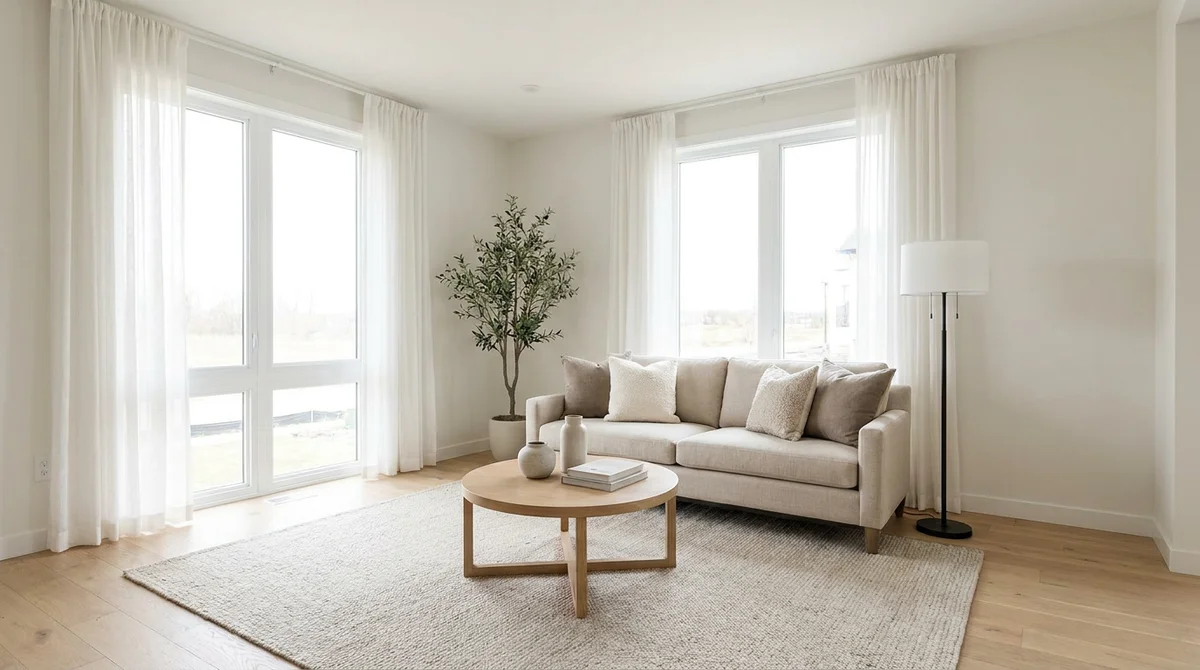
Cost band: High, usually the biggest line in the marketing budget. Time to impact: as soon as the first home completes.
13. Co-market with local agents
What: A launch event, a shared render pack agents can use in their own marketing, and a commission they can explain in one sentence. Why: Agents already hold the buyers you want, and finished-looking visuals for each plan give them a reason to pitch your development over a resale.
Cost band: Mid, the event and the commission. Time to impact: two to six weeks.
14. Run a referral program for phase-one owners
What: A reward for existing owners who bring a buyer to a later phase, paid at closing. Why: Owners on the first street are the most credible salespeople a development has: they can show a finished home and describe the build.
Cost band: Mid, one reward per closed referral. Time to impact: from the first closings onward.
15. Open a pre-launch reservation list
What: A small refundable deposit that holds a lot and priority choice before public release, backed by the plan renders, dollhouse plans and aerial. Why: It turns the waiting list into commitments and tells you which plans to prioritize. Our guide to how to sell off-plan property covers the process.
Cost band: Low. Time to impact: two to four weeks before a release.
Turn your plan-stage drawings into finished-home marketing renders with RoomLift. Upload an exported view, get a photoreal exterior in under a minute, and start with 5 free renders on signup.
Stage your first room in 20 seconds. No design skills needed.
Which home builder marketing ideas should you do first?
Start with the same-day, low-cost rows below, because those assets feed every other tactic on the list.
| Tactic | Cost band | Time to impact |
|---|---|---|
| 1. Renders from the plans | Low (AI) to Mid (studio) | Same day to weeks |
| 2. Aerial site render | Low to Mid | Same day to weeks |
| 3. Furnished dollhouse plans | Low | Same day |
| 4. Virtually staged spec homes | Low | Same day |
| 5. Virtual twilight exteriors | Low | Same day |
| 6. Tour video from renders | Low (AI) to High (filmed) | Same day |
| 7. Google Business Profile | Free | 1-2 weeks |
| 8. Community landing page | Low to Mid | Immediate for ads, 4-12 weeks for search |
| 9. Portal listings with renders | Low | Days |
| 10. Email nurture | Low | 2-4 weeks, then compounding |
| 11. Progress and reveal reels | Low | 4-8 weeks |
| 12. Model home experience | High | After the first completion |
| 13. Agent co-marketing | Mid | 2-6 weeks |
| 14. Referral program | Mid | From first closings |
| 15. Pre-launch reservation list | Low | 2-4 weeks before release |
Builders who adopt AI visuals use them everywhere: RoomLift platform data shows property developers average about 47 generations per active user, against about 7.5 for real estate agents and 5.4 for homeowners. Sequence it: profile, renders, dollhouse plans and twilight in week one; landing page, portals, email, reels and reservation list in month one; agents, referrals and the model home over the quarter.
Frequently Asked Questions
What are the best marketing ideas for home builders?
Show the finished home before it exists (renders, dollhouse plans, a tour video), make it easy to find (Google Business Profile, landing page, portal listings) and make it easy to reserve (model home, agent partners, reservation list). NAR found 81% of buyers say staging makes it easier to picture a property as their own, and a render does the same for an unbuilt home.
How do you market a new construction home before it is built?
Start with the drawings you already have: export an elevation or 3D view as an image and render it as a finished exterior, turn the site plan into an aerial view, and turn a 3D cutaway plan into a furnished dollhouse view. RICS reports listings with floor plans receive 30% more engagement than those without. Then publish them on a landing page and the portals.
How much does home builder marketing cost?
It runs from free to the largest line in the project budget. A Google Business Profile costs nothing to claim, an AI render from a drawing is about $1-5 per image and a traditional render is $200-500 (RoomLift). A photo shoot is $150-400, or $400-800 for larger homes with drone, twilight and video (RoomLift). The model home is usually the biggest spend.
Do renders actually help sell new construction homes?
Yes, because buyers decide from images before they visit. NAR reports 97% of home buyers search for properties online and photos are the primary factor in deciding whether to request a showing, and Zillow research finds listings with high-quality photos sell up to 32% faster. For a home that does not exist yet, the render is the photo.
How is custom home builder marketing different from production builder marketing?
A production builder sells a fixed set of plans on a fixed site, so the work is rendering every plan once and driving traffic to the community page. A custom builder sells a process and a portfolio, so the strongest assets are renders of past plans in several styles and finishes. RoomLift platform data shows property developers average about 47 AI generations per active user, roughly 9x the 5.4 for homeowners.
Sources & References
- National Association of Realtors. Profile of Home Staging. NAR Research.
- National Association of Realtors. Research and Statistics. NAR.
- Real Estate Staging Association. Home Staging Statistics. RESA.
- Zillow. Consumer Housing Trends Report. Zillow Research.
- Royal Institution of Chartered Surveyors. RICS News and Insights. RICS.
- Wyzowl (2026). Video Marketing Statistics 2026. Wyzowl.
- Google. Add or claim your Business Profile. Google Business Profile Help.
Ready to transform your listings?
Stage your first room in 20 seconds. No design skills needed.