How Much Do Real Estate Photographers Make? 3 Income Levers
Sep 17, 2026 · 12 min read
How much do real estate photographers make? Realistic ranges for side hustle, full-time solo and media company owners, plus the 3 levers behind six figures.
Real estate photographers make roughly $29,000 a year as a side hustle, about $160,000 gross fully booked solo, and $200,000 or more owning a small media company, based on per-shoot math. Indeed lists the average salaried role at $47,974. How much do real estate photographers make depends on three levers: volume, order value, and attach rate.
What Do Salary Sites Say Real Estate Photographers Make?
Salary aggregators measure employees, not owners. Indeed reports an average real estate photographer salary of $47,974 a year, with a typical range of $30,906 to $74,467, based on 158 salaries from job postings (updated August 17, 2026). Payscale lists an average of $21.50 an hour, with a 10th percentile of $13.03 and a 90th percentile of $99.33, from 17 profiles (September 1, 2026).
Those figures describe staff shooters at brokerages, media companies and property portals. Most real estate photographers are self-employed and paid per shoot, so their income never reaches a payroll dataset. The Payscale spread, $13 to $99 an hour, is the tell. The bottom is an entry-level employee. The top is a contractor billing a full package. The rest of this guide works from per-shoot math, because that is how the money moves.
The Real Estate Photographer Income Equation
Every real estate photographer's revenue reduces to one line:
Shoots per week x average order value x working weeks = annual gross revenue
Average order value (AOV) is the total invoice per listing, including add-ons, not just the base shoot. A standard real estate shoot bills $150 to $400, and larger or luxury homes run $400 to $800 with drone, twilight and video (RoomLift). Assume 48 working weeks.
Worked through for three profiles:
| Profile | Shoots per week | Average order value | Weeks | Annual gross revenue |
|---|---|---|---|---|
| Side hustle (evenings and weekends) | 3 | $200 | 48 | $28,800 |
| Full-time solo, fully booked | 12 | $275 | 48 | $158,400 |
| Media company, 2 shooters | 35 | $350 | 48 | $588,000 |
Two things stand out. The solo shooter's $158,400 needs 576 shoots a year, two to three listings every working day with no slack. And the media company's revenue is 3.7 times the solo number, not three, because its average order value is higher too. Volume and order value multiply. They don't add.
If you're earlier in the curve, the salary section of our guide on how to get into real estate photography covers the ramp from 3-5 shoots a month to a full calendar.
Lever 1: How Many Shoots Can You Fit in a Week?
Volume is the lever with the hardest ceiling. Time on site for a standard listing is fairly predictable. The drive between shoots decides whether you fit two into a day or four.
Route density is the fix. Photographers who own a tight territory, a handful of zip codes rather than a whole metro, shoot more listings per hour and spend less time behind a windshield.
Same-day turnaround is the second multiplier, because it wins repeat bookings. According to NAR, 97% of home buyers search for properties online, and photos are the primary factor in deciding whether to request a showing. The photographer who delivers tonight gets called for the next listing. Zillow research adds the sales argument: listings with high-quality photos sell up to 32% faster.
Agent retention makes volume predictable. A productive agent lists every few weeks, so a stable roster of loyal agents can fill a calendar. Our guide on how to get real estate photography clients covers outreach.
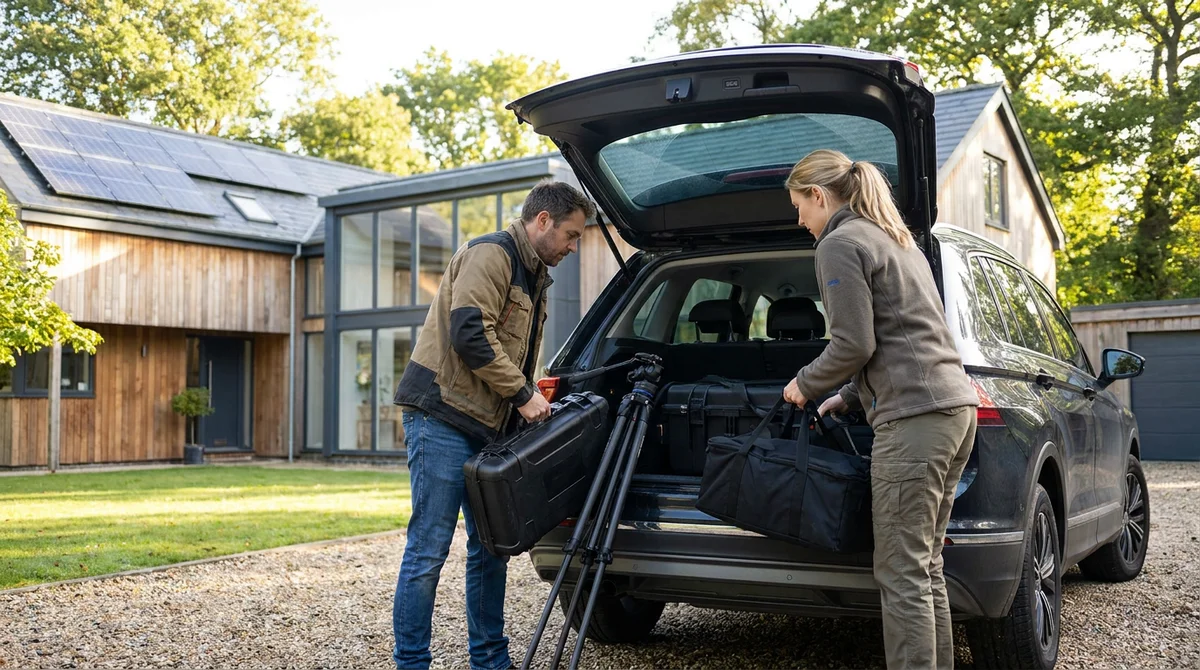
When one person is fully booked at 12 shoots a week, the only way to add volume is to add shooters. That is the moment a photographer becomes a media company.
Lever 2: How Do You Raise Average Order Value?
Average order value is the lever with no physical ceiling. You raise it by selling packages instead of base shoots, and by attaching deliverables made from photos you already captured.
Tiered packages do most of the work. Our real estate photography pricing guide lays out an Essential, Premium and Luxury menu where the middle tier carries staging and twilight, with sample tables you can copy. Agents pick the middle tier on their own, which lifts AOV without a pitch.
Add-ons are the second half. The best ones create a new billable deliverable with almost no extra cost:
| Add-on | What you bill | What it costs you | Why the agent says yes |
|---|---|---|---|
| AI virtual staging | $25-75 per room | About $1-5 per image, under 60 seconds (RoomLift) | 81% of buyers say staging makes it easier to picture a property as their own (NAR) |
| Virtual twilight | Per-image add-on | One edit, no second visit | Turns the daytime exterior into the listing hero shot |
| Floor plan | Varies by market | Measuring time or a scanner | Listings with floor plans get 30% more engagement (RICS) |
| Short listing reel | Highest-ticket add-on | Editing time, or minutes in Video Maker | 91% of businesses use video as a marketing tool (Wyzowl) |
| Drone exterior | Priced per flight | Time, equipment and licensing | High perceived value, limited supply |
Staging sits at the top because of the margin math. A room costs about $1 to $5 to stage with AI and bills $25 to $75, so even at the worst end of both ranges you keep about 80% of the add-on. Video is the biggest ticket, and 85% of consumers say a video convinced them to buy (Wyzowl), so agents already want it.
Lever 3: What Does a 33% Attach Rate Do to Annual Revenue?
Attach rate is the percentage of shoots that include at least one add-on. Here is what a single $50 virtual staging add-on does across the three profiles:
| Profile | Shoots per year | 10% attach | 33% attach | 50% attach |
|---|---|---|---|---|
| Side hustle | 144 | $700 | $2,400 | $3,600 |
| Full-time solo | 576 | $2,900 | $9,500 | $14,400 |
| Media company | 1,680 | $8,400 | $27,700 | $42,000 |
For the solo shooter, a 33% attach rate on one $50 staged room is $9,500 a year, at a cost of roughly $190 to $950 in AI staging credits. Attach two rooms per listing and it's $19,000. The calendar doesn't change. AOV moves from $275 to about $291.50, and that $16.50 is nearly all margin.
Vacant listings attach best because the empty room is the problem the agent already sees. RoomLift platform data shows living rooms (30%) and bedrooms (29%) make up nearly six in ten staging requests, with Modern (31%) and Scandinavian (29%) the styles agents pick most.
Drag the slider to see the $50 deliverable:
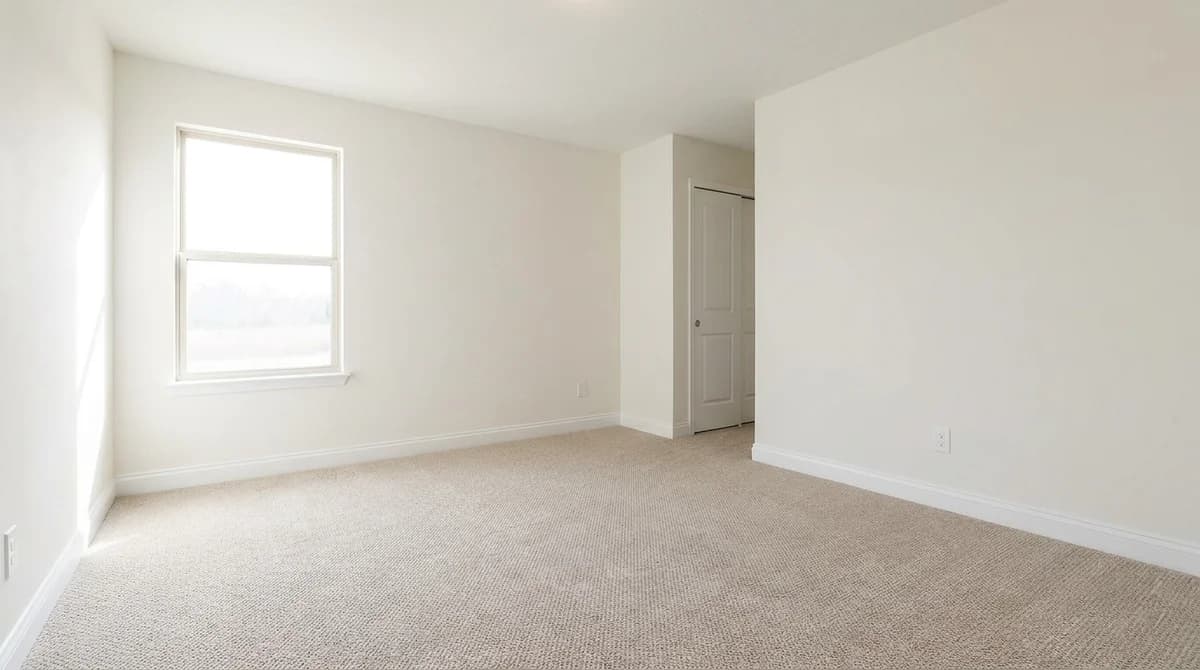
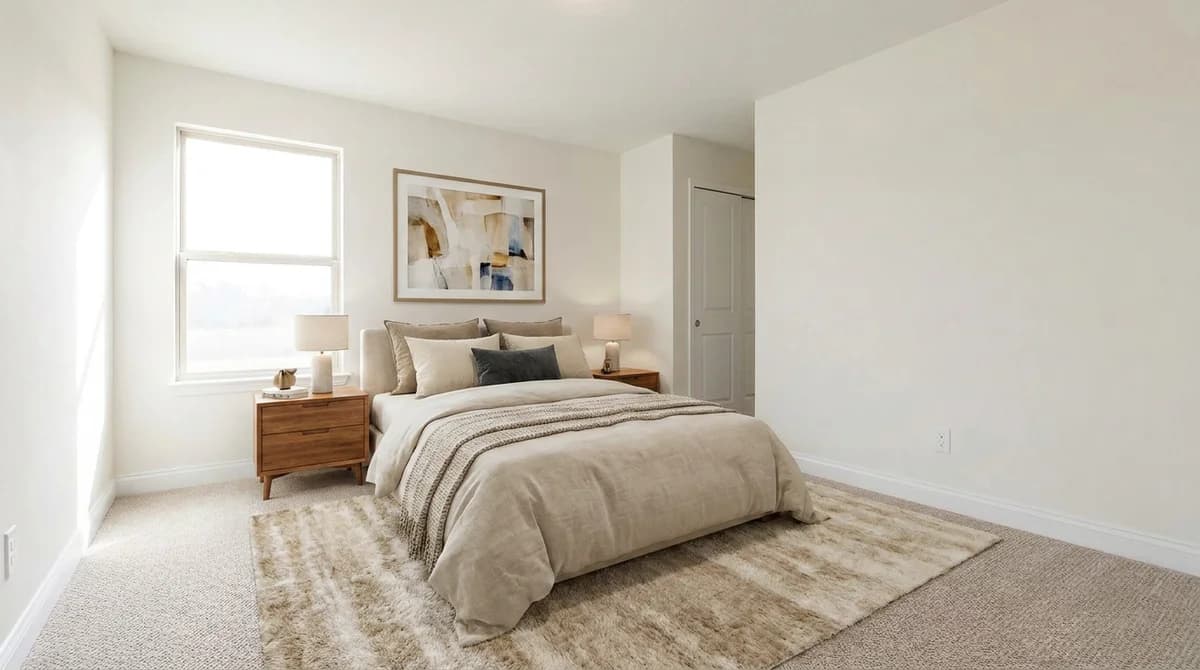
Agents pay because the outcome is documented. RESA reports staged homes sell for 1-5% more on average, and in some markets spend 33-50% fewer days on market. NAR's Profile of Home Staging found 23% of buyer's agents reported a 1-5% increase in the dollar value offered for staged homes, and 18% reported 6-10%. If you haven't set up the service yet, RoomLift's virtual staging for real estate is built for the photographer workflow: upload the empty photo, pick a room and style, deliver.
Solo vs Media Company: Where Does the Money Go?
Gross revenue is not income. The table below models where the money goes for the solo and media company profiles above. The percentages are working assumptions, not survey data.
| Line | Full-time solo (12 shoots/week) | Media company (35 shoots/week, 2 shooters) |
|---|---|---|
| Annual gross revenue | $158,400 | $588,000 |
| Shooter pay | $0 (you shoot) | $205,800 (35% of revenue) |
| Editing (outsourced or AI) | $17,300 (about $30 per shoot) | $47,000 (8% of revenue) |
| Overhead: software, insurance, vehicle, marketing | $23,800 (15%) | $88,200 (15%) |
| Owner take-home before tax | About $117,000 | About $247,000 |
| Hours behind the camera | All of them | Few or none |
The solo shooter keeps about 74 cents of every dollar, but only by shooting 576 listings a year and handling sales, scheduling and invoicing on top. The owner keeps about 42 cents of a number nearly four times larger, and the shooters absorb the physical cap. That's the difference between a well-paid job and a business. The solo income stops when the shooter stops. The company's doesn't.
Editing is the line to watch. A media company running 1,680 shoots spends about $47,000 on it in the model above, roughly $28 a shoot. Moving routine work (HDR blends, twilight conversions, decluttering, staging) to AI presets that finish in under 60 seconds (RoomLift) cuts that line and protects the same-day turnaround that lever 1 depends on.
Running the numbers on your own calendar? See how photographers use RoomLift to attach staging, twilight and reels to shoots they've already booked.
Stage your first room in 20 seconds. No design skills needed.
What Caps Real Estate Photographer Income?
Every profile above hits a ceiling. Knowing which one you're at tells you which lever to pull.
- Hours. One person tops out around 12 shoots a week. Past that, quality drops and turnaround slips. The fix is a second shooter, not a longer day.
- Geography. Drive time is unbilled time. A photographer covering a whole metro shoots fewer listings a day than one who owns three zip codes.
- Editing time. Zillow research shows listings with 22-27 photos get the most buyer engagement, so every shoot carries 25 or more edits before it ships. AI presets in Photo Enhance clear routine edits in seconds each, so the calendar, not the desk, decides your volume.
- Seasonality. Listing volume dips in winter in most US markets. Selling staging, twilight and reels lets you keep billing on already-photographed listings during a slow month.
- Agent churn. Losing one agent who lists every two weeks costs 26 shoots a year. Retention is cheaper than replacement.
- Single-service dependency. If 100% of revenue is base shoots, AOV is stuck at the market rate for photos. The RoomLift for photographers page walks through the add-on stack.
Putting It Together
How much real estate photographers make comes down to three numbers they control: shoots per week, average order value, and attach rate. A side hustle grosses about $28,800, a fully booked solo shooter about $158,000 (keeping roughly $117,000), and a two-shooter media company $588,000 with about $247,000 left for the owner. The path between those rows is not more hours. It's tiered packages, an attach rate you track, add-ons like AI virtual staging that cost $1 to $5 and bill $25 to $75, and a second shooter once your calendar is full.
Frequently Asked Questions
How much do real estate photographers make per year?
It depends on whether you're on payroll or running your own calendar. Indeed lists the average salaried real estate photographer at $47,974 a year, with a range of $30,906 to $74,467. Self-employed shooters earn per job: a fully booked solo photographer doing 12 shoots a week at a $275 average order grosses about $158,000 a year, and a two-shooter media company at 35 shoots a week and $350 grosses roughly $588,000.
How much does a real estate photographer make per shoot?
A standard real estate shoot bills $150 to $400, and larger or luxury homes run $400 to $800 once drone, twilight and video are included. What you keep per shoot depends on add-ons. A virtually staged room bills $25 to $75 and costs about $1 to $5 to produce with AI, so every staged room adds almost pure margin to the same appointment.
Can you make six figures as a real estate photographer?
Yes, but rarely on volume alone. A solo photographer needs roughly 12 shoots a week at a $275 average order to gross $158,000, and that is a physical ceiling. Owners who hire shooters and raise average order value with packages and add-ons get past six figures without holding a camera every day. In our model a two-shooter company leaves the owner about $247,000 on $588,000 of revenue.
How much does real estate photography pay part-time?
A side hustle of 3 shoots a week at about $200 each brings in roughly $600 a week, or $28,800 a year over 48 working weeks. Attaching a $50 virtual staging add-on to a third of those shoots adds about $2,400 a year with no extra appointments.
What is a good average order value for real estate photography?
In the model above, $250 to $350 is a healthy average order value for a standard listing once add-ons are in the mix. The base shoot is $150 to $400, and attaching twilight, virtual staging, floor plans or a short reel pushes the average up without changing your calendar. A media company that bundles drone and video into tiered packages can average $350 or more per order.
What caps a real estate photographer's income?
Hours and geography cap solo income first. One person can only shoot around 12 listings a week, and drive time between them eats the rest. After that it's editing time, seasonality and agent churn. Owners break the cap by adding shooters, clustering routes, keeping turnaround same-day and moving editing and staging to AI tools that finish a room in under 60 seconds.
Sources & References
- Indeed (2026). Real Estate Photographer Salary in United States. Indeed. Updated August 17, 2026.
- Payscale (2026). Real Estate Photographer Hourly Pay. Payscale. Updated September 1, 2026.
- National Association of Realtors. Profile of Home Staging. NAR Research.
- National Association of Realtors. Real Estate in a Digital Age. NAR Research.
- Real Estate Staging Association. Home Staging Statistics. RESA.
- Zillow Research. Zillow Research. Zillow Group.
- RICS. Royal Institution of Chartered Surveyors. RICS.
- Wyzowl (2026). Video Marketing Statistics. Wyzowl.
Ready to transform your listings?
Stage your first room in 20 seconds. No design skills needed.