Real Estate Photography Pricing: How to Price and Upsell
Jun 19, 2026 · 9 min read
Real estate photography pricing, explained: sample tiered packages, the highest-margin add-ons, and how to raise your average order value without more shoots.
Most US real estate photographers charge $150 to $400 for a standard shoot, with larger and luxury homes reaching $400 to $800 once drone, twilight, and video are added. But the single biggest lever on your income is not the base rate, it is what you attach to it. This guide breaks down real estate photography pricing with sample package tables, the highest-margin add-ons, and a simple way to raise your average order value without booking a single extra appointment.
How Much Real Estate Photographers Charge
Real estate photography pricing is driven by three things: the size of the home, the number of edited photos delivered, and the speed of turnaround. Most pricing scales with square footage because larger homes take longer to shoot and edit.
Here is a realistic baseline for the US market in 2026:
| Home size | Photo count | Typical price |
|---|---|---|
| Under 1,500 sq ft | 20-25 photos | $150-200 |
| 1,500-2,500 sq ft | 25-35 photos | $200-300 |
| 2,500-4,000 sq ft | 35-50 photos | $300-450 |
| 4,000+ sq ft / luxury | 50+ photos | $450-800+ |
These are stills-only numbers. The moment you add drone, twilight, video, or staging, the ceiling rises, and that is exactly where the margin lives. Treating photography as the entry point rather than the whole product is the mental shift that separates a busy photographer from a profitable one.
Why Tiered Packages Beat a Flat Rate
A single flat rate forces every agent into the same box. A tiered structure lets the price-sensitive agent say yes to the basics while the listing agent chasing a premium sale trades up on their own. The middle and top tiers do the heavy lifting on revenue.
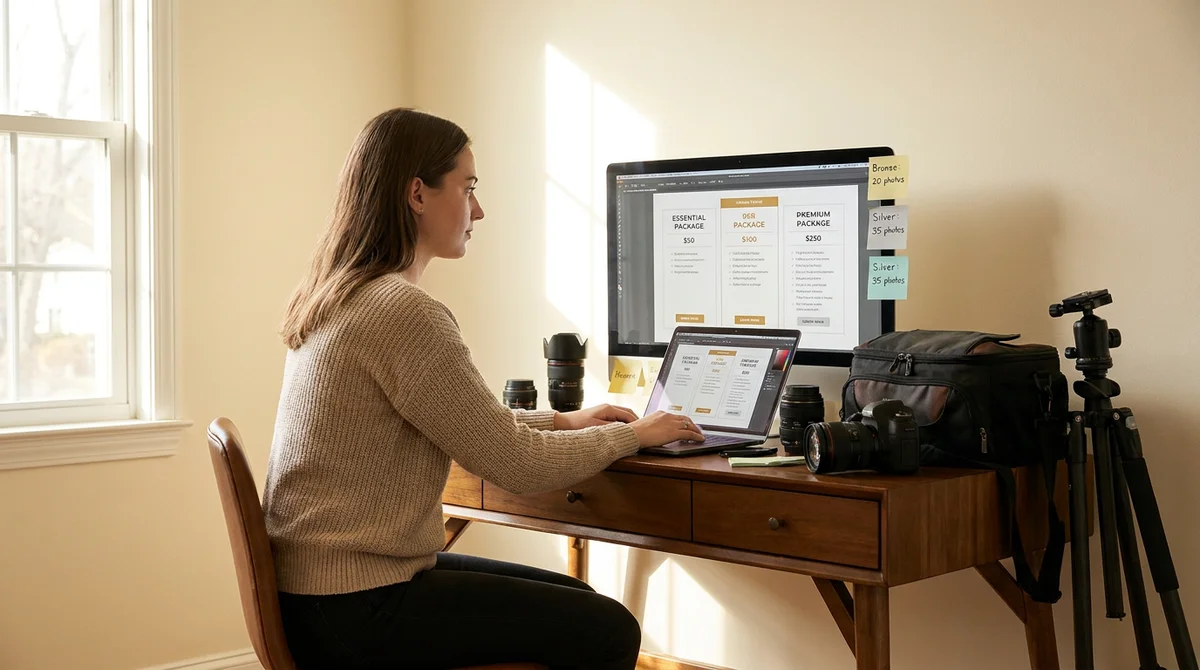
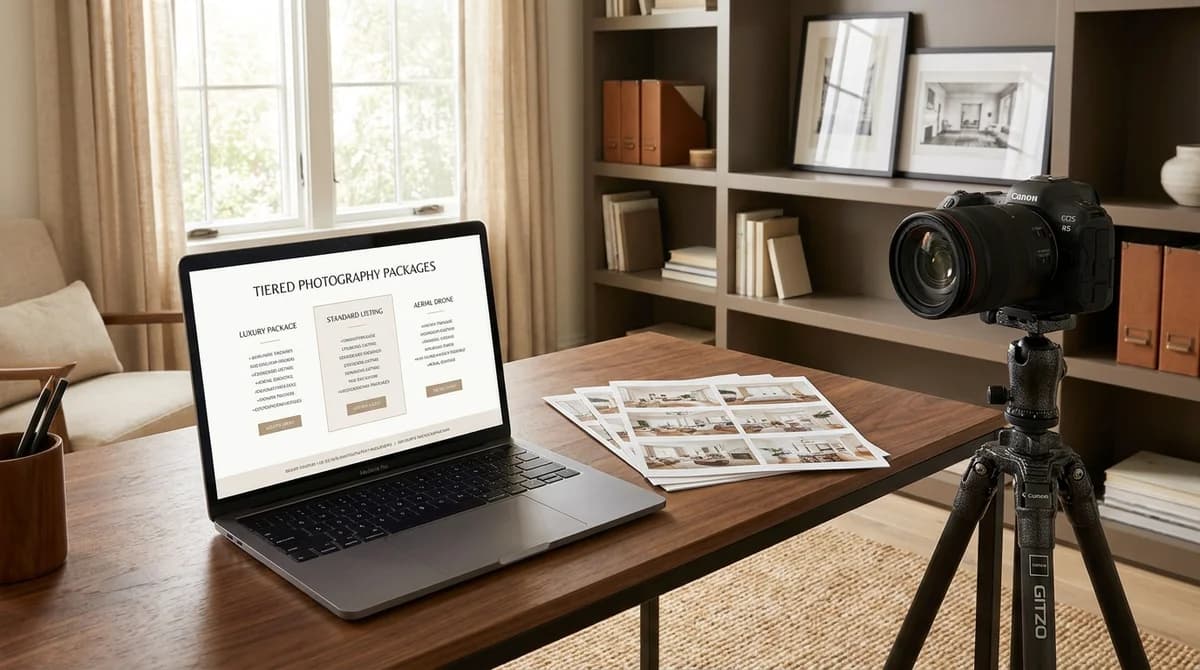
The psychology is simple. When agents see three options, most avoid the cheapest and the most expensive and anchor on the middle, so you design the middle tier to carry your best-margin add-ons. Here is a sample three-tier menu for a standard 2,000 sq ft listing:
| Package | What's included | Price |
|---|---|---|
| Essential | 25 edited interior/exterior stills, 48-hour delivery | $200 |
| Premium (most popular) | 35 stills + 2 virtually staged rooms + twilight front shot, 24-hour delivery | $375 |
| Luxury | 50 stills + 4 staged rooms + twilight + drone + walkthrough video, same-day delivery | $650 |
Notice that the jump from Essential to Premium is $175, but the actual added cost to you, a few AI-staged images and one edited twilight conversion, is a fraction of that. The tier structure is doing the upselling for you before the agent even asks.
The Highest-Margin Add-Ons
Add-ons are where average order value gets built. The best ones share a trait: they create new billable deliverables from images or visits you already have, with almost no added cost.
| Add-on | What you charge | Your cost / effort | Why it sells |
|---|---|---|---|
| AI virtual staging | $25-75 / room | $1-5 / image, under 60 sec | Empty rooms photograph poorly; staged sells |
| Twilight conversion | $25-50 / image | One edited image, no second visit | Front-exterior twilight shots get more clicks |
| Item / clutter removal | $10-25 / image | One edit | Cleans up occupied homes instantly |
| Virtual renovation | $50-150 / room | A few AI renders | Shows a fixer-upper's potential |
| Drone exterior | $100-200 | Time + equipment | High perceived value, limited supply |
| Walkthrough video | $150-300 | Time + editing | Listings with video get more engagement |
Virtual staging is the standout because the unit economics are unbeatable. You can stage a room for roughly $1 to $5 per image in under a minute with an AI tool, then bill the agent $25 to $75, and the agent gladly pays, because staging works. According to the National Association of Realtors, staged homes sell faster than non-staged ones, the Real Estate Staging Association reports staged homes sell for 1-5% more on average, and 81% of buyers say staging makes it easier to picture a property as their own. You are selling a proven outcome at a price your cost barely touches.
Every Empty Room Is an Upsell
The single most important habit is to stop seeing empty rooms as a problem and start seeing them as inventory. Every vacant listing you shoot is a stack of $25-to-$75 staging upsells you already captured. The photo exists. The only question is whether you turn it into a second billable deliverable or leave that revenue on the table for a separate staging vendor.
Drag the slider to see what a single empty-room photo becomes after AI virtual staging:
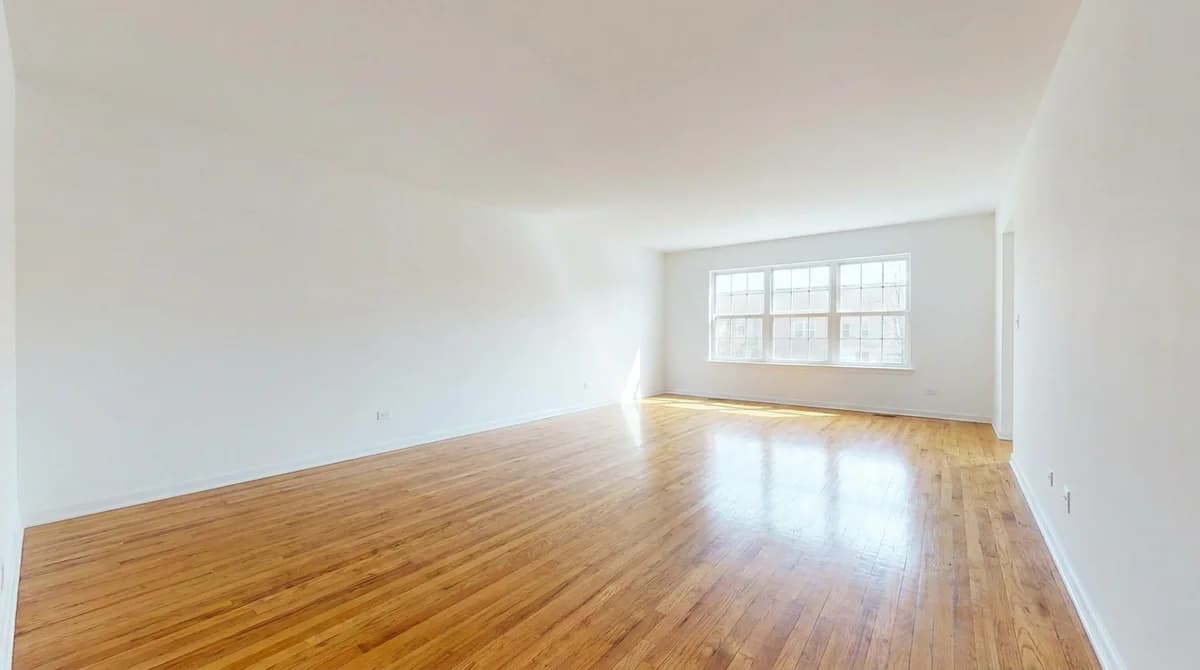
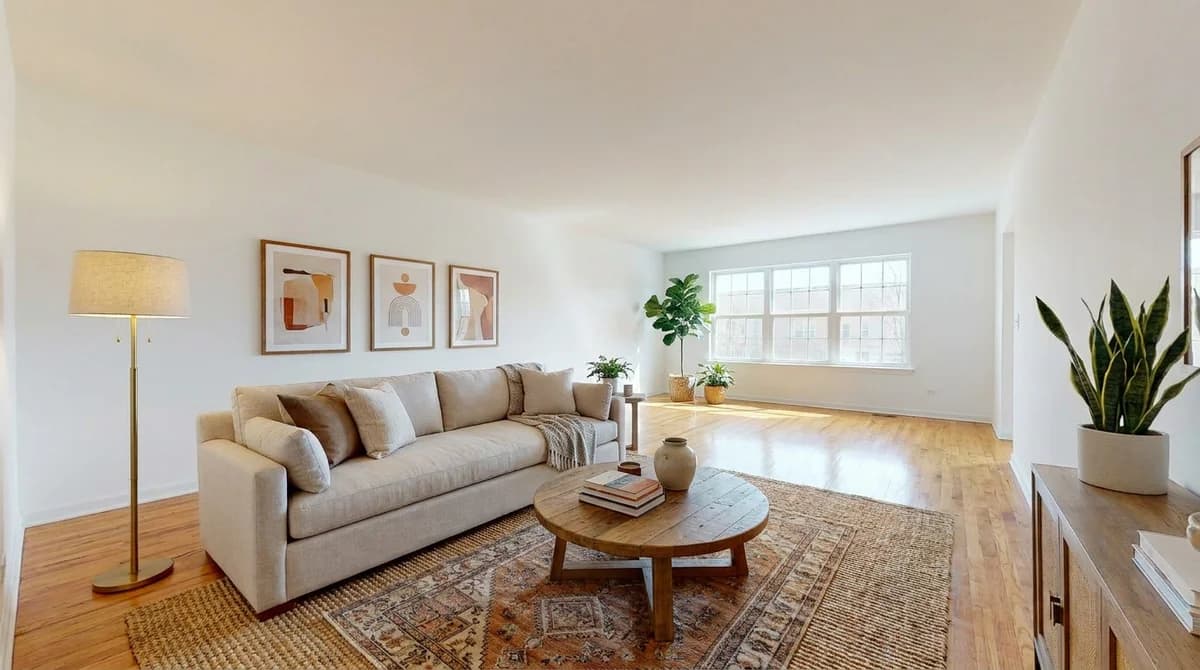
The economics of attaching staging are quietly powerful. Suppose you shoot 20 listings a month and attach two staged rooms to just a third of them at $50 each:
- 7 listings x 2 rooms x $50 = $700 extra per month
- Your cost in AI staging credits: roughly $25-70 total
- Net: several hundred dollars in near-pure margin, with zero extra shoots
That is the entire thesis of upselling: more revenue from the same calendar. For a deeper look at the tools that make this possible, see our guide to AI tools for real estate photographers.
How to Add Staging Without New Equipment or Trips
The objection photographers raise is workflow: "I don't have time to learn staging, and I don't want to manage furniture." With AI virtual staging, neither applies. There is no inventory, no second visit, and no design degree required.
The workflow is straightforward. You upload the empty-room photo you already shot, pick a style and room type, and get back a photorealistic staged image in under a minute. You can offer several styles for the same room at no extra cost, which lets you match the buyer profile for the listing, modern for a downtown condo, transitional for a family home. Tools like RoomLift's real estate photo editing handle staging, item removal, twilight conversions, and sky replacement in the same place, so a single empty photo can produce three or four billable deliverables.
If you are still weighing whether to add the service at all, we wrote a dedicated breakdown on whether real estate photographers should offer virtual staging, the short version is that it is one of the few upsells with no downside on cost, equipment, or time.
Pricing Mistakes That Cap Your Income
A few common errors quietly keep photographers stuck at a flat day rate:
- Selling one rate, not a menu. A single price gives agents nothing to trade up to. Three tiers consistently outperform one.
- Burying add-ons. If staging and twilight are only mentioned when an agent asks, most never ask. Put them in the package descriptions.
- Underpricing staging. Charging $10 because the AI image was cheap leaves money on the table. Price for the value (a faster sale), not your cost.
- Sending work to a third party. Referring staging out hands a competitor your client relationship and your margin. Keep it in-house.
- Never raising prices. If you have not adjusted rates in two years, your most loyal agents are the ones underpaying you most.
Putting It Together
Real estate photography pricing is less about finding the perfect base number and more about building a structure that nudges agents toward higher-value packages. Start with a competitive base rate scaled to square footage, wrap it in three tiers, and load your middle and top tiers with high-margin add-ons, virtual staging first, because its economics are unmatched. Done well, you can lift your average order value by hundreds of dollars a month without adding a single shoot to your calendar.
Ready to turn empty rooms into your highest-margin upsell? Stage a listing photo with RoomLift in under a minute.
Stage your first room in 20 seconds. No design skills needed.
Frequently Asked Questions
How much should I charge for real estate photography?
Most US real estate photographers charge $150 to $400 for a standard shoot, scaled by square footage and photo count. Listings under 2,000 sq ft typically run $150 to $250, while larger or luxury homes reach $400 to $800 once drone, twilight, and video are added. A tiered package structure almost always earns more per job than a single flat rate.
What should be included in a real estate photography package?
A core package should include the interior and exterior stills an agent needs to list the home, usually 25 to 40 edited photos for a standard property, professionally edited and delivered within 24 to 48 hours. The smartest packages then layer in high-margin add-ons like virtual staging, twilight, drone, and video, keeping the base price competitive while average order value climbs.
What are the highest-margin add-ons for real estate photographers?
AI virtual staging is the highest-margin add-on because it has almost no per-image cost: you can stage a photo for $1 to $5 in under 60 seconds and bill $25 to $75 per room. Twilight conversions, item removal, and virtual renovation are similar, they create new billable deliverables from images you already captured, with no second visit.
How much can I charge for virtual staging as an add-on?
Real estate photographers typically charge $25 to $75 per room for virtual staging, even though AI tools produce the image for $1 to $5 in under a minute. Agents pay readily because staging is proven to help sell homes, with 81% of buyers saying it makes a property easier to picture as their own.
How do I raise my average order value without raising prices?
Bundle add-ons into tiered packages instead of selling them one at a time. When virtual staging, twilight, and drone are framed as part of a Premium or Luxury tier, more agents trade up. A photographer who attaches $50 of staging to a third of their shoots can add hundreds of dollars in monthly revenue without booking a single extra appointment.
Should real estate photographers offer virtual staging?
Yes, for most photographers it is one of the best margin moves available. It requires no extra equipment, no second trip, and no inventory, and it turns the empty rooms you already photographed into billable deliverables. With AI tools you can offer same-day staged photos at a price agents happily pay, capturing revenue that would otherwise go to a separate vendor.
Ready to transform your listings?
Stage your first room in 20 seconds. No design skills needed.