Should Real Estate Photographers Offer Virtual Staging?
Jul 13, 2026 · 8 min read
Should real estate photographers offer virtual staging? Yes, it's a high-margin upsell. Here's the margin math, the workflow to add it, and what to charge.
Should real estate photographers offer virtual staging? Yes. For almost every photographer shooting vacant or sparsely furnished listings, it is one of the highest-margin add-ons available. Your cost per staged image with an AI tool is about $1-5, while photographers routinely bill agents $25-75 for the same image. You already shot the room. Staging it is found money. This guide covers the margin math, how to fold it into your existing workflow, and exactly what to charge.
The Short Answer: Every Empty Room Is an Upsell
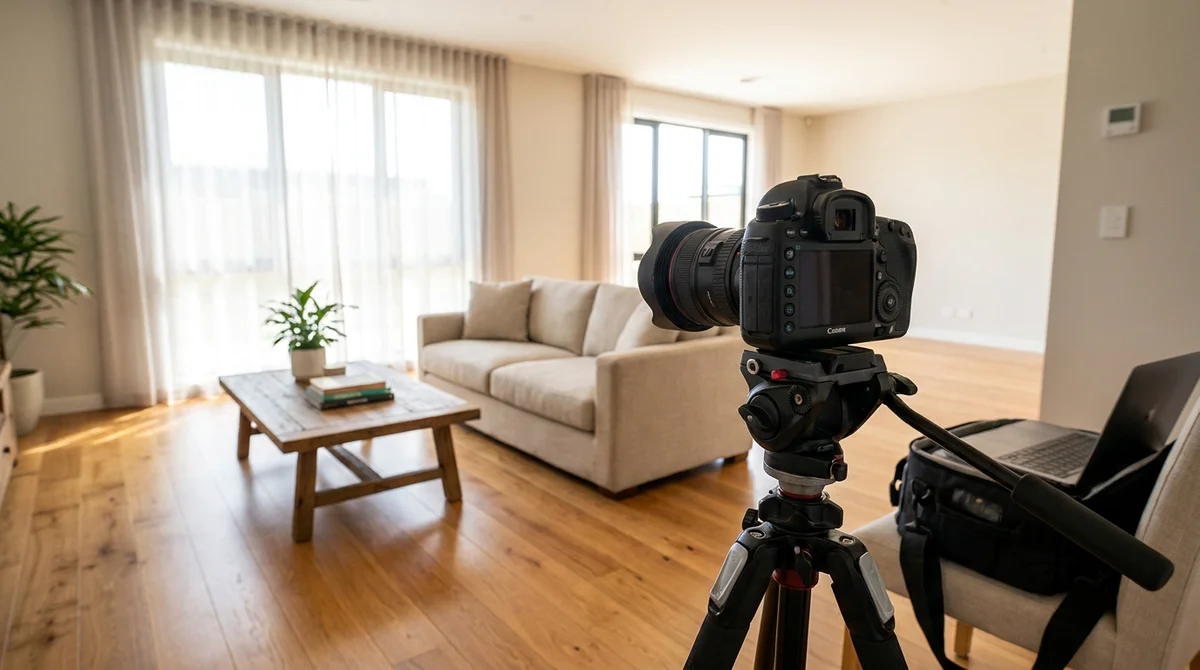
If you photograph real estate, you are already standing in front of your next upsell on most shoots. Vacant listings photograph poorly: bare rooms make it hard for buyers to judge scale, and most people cannot picture furniture that isn't there. Agents know this, which is why they pay for staging. The difference now is that you can deliver it from the same files you already captured, in minutes, without renting a single piece of furniture.
That shifts virtual staging from a specialist service into a natural extension of your photography package. You are not adding a new business. You are adding a checkbox to your booking form and a high-margin line item to your invoice.
The Margin Math
The reason this is worth your attention is the spread between what staging costs you and what agents will pay. AI virtual staging runs about $1-5 per image and finishes in under 60 seconds. The market price agents are accustomed to paying sits much higher.
| Line item | Your cost | Common client price | Gross margin |
|---|---|---|---|
| Single virtually staged image | $1-5 | $35-50 | ~90%+ |
| 5-room listing stage bundle | ~$10-25 | $149-199 | ~90% |
| Add-on attach to a $250 shoot | ~$15 | +$150 | ~90% |
On a $40 stage that costs you $3 in credits and a few minutes of selection, you keep the overwhelming majority. There is no inventory, no truck, no return trip. Compare that to physical staging at $500-3,000 per room, or even designer-led virtual staging at $25-100 per image with a 24-48 hour turnaround. You are faster and cheaper than both while keeping a premium margin.
The leverage compounds across your book. If you shoot eight vacant listings a month and attach a $150 staging package to even five of them, that is $750 in mostly-margin revenue on work you were already on-site for. For more ways to widen your service menu, see our roundup of AI tools for real estate photographers.
Why Agents Will Actually Pay for It
The upsell only works if the value is real, and staging research is clear that it is. According to the National Association of Realtors, staged homes sell faster than non-staged ones. The Real Estate Staging Association reports staged homes sell for 1-5% more on average. And 81% of buyers say staging makes it easier to picture a property as their future home.
For a listing agent, that math is overwhelming. A single percent of a $400,000 sale price is $4,000, many times the cost of staging every room you shot. When you frame your staging add-on as a tool that helps the agent win the listing, sell faster, and net more, you are not pushing an upsell. You are handing them an obvious yes.
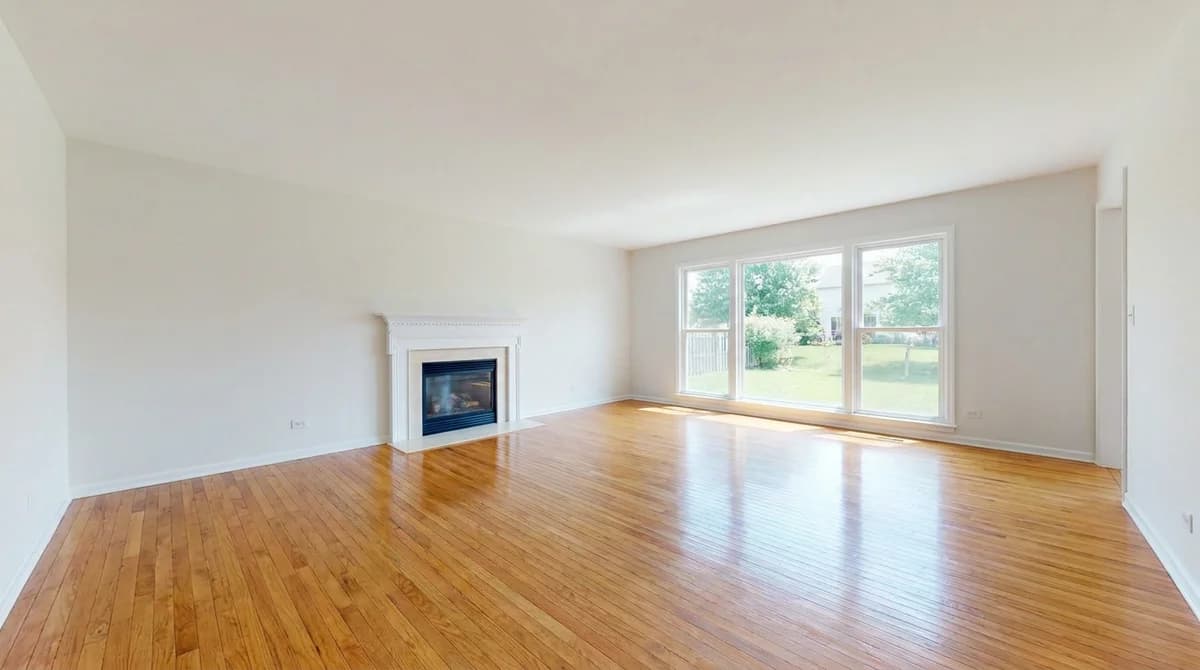
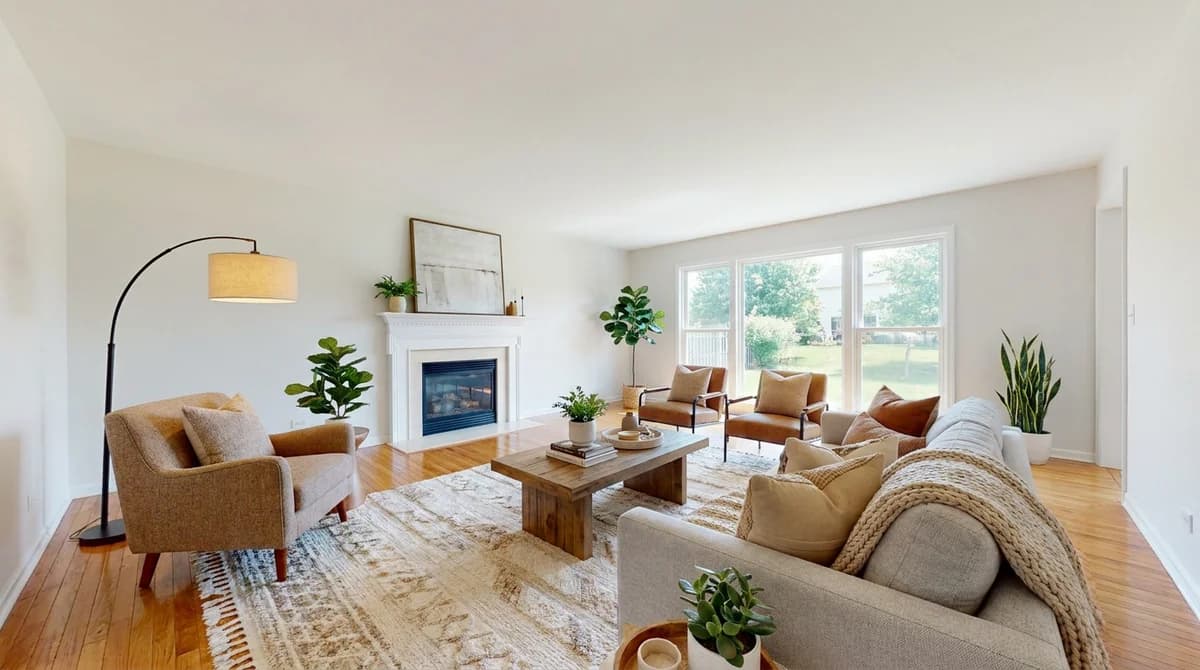
Here is the same vacant room before and after AI virtual staging, the transformation you can offer from a single empty-room frame:
How to Add Virtual Staging to Your Workflow
You can stand this up in an afternoon. The barrier used to be skill: you needed a designer to place furniture convincingly. AI tools removed that. The workflow slots cleanly into what you already do:
- Flag vacant rooms on the shoot. Capture clean, well-lit empty-room frames at a straight-on angle. These are the best inputs for staging.
- Cull and edit as usual. Run your normal selection and color correction so the staged photos match the rest of the gallery.
- Stage the empties. Upload each empty-room photo, pick the room type and a design style, and generate. With RoomLift, a photorealistic staged image comes back in under a minute, and you can produce multiple style options at no extra cost.
- Review for realism. Keep furniture believable for the space. Reject any result with floating objects or warped perspective; the whole value rests on it looking real.
- Deliver with disclosure baked in. Label staged images "Virtually staged" and include the unaltered originals so the agent stays MLS-compliant.
Because the staging reuses your existing photo-editing pipeline, it fits naturally alongside your other deliverables. If you handle your own edits in-house, the same logic that keeps editing margin in your business applies here. Explore the AI real estate photo editing workflow to see how staging and editing share one toolchain.
What to Charge
Pricing virtual staging is mostly about anchoring to what agents already expect, not to your tiny cost. The established market range is $25-100 per image for designer-led work, so positioning at $35-50 reads as fair and competitive while leaving you a wide margin.
| Package | What's included | Suggested price |
|---|---|---|
| Single staged image | 1 room, 1 style | $35-50 |
| Per-room add-on | Each additional staged room | $30-40 |
| Listing stage bundle | 3-5 rooms staged | $99-199 |
| Re-style | Same room, alternate style | $15-25 |
A few pricing principles that hold up:
- Bundle, don't itemize to death. A flat "stage this listing" package of $99-199 is easier to sell than per-image pricing and lifts your average order value.
- Attach at booking. Offer staging as a checkbox when agents book the shoot, not as an afterthought. Attach rates are far higher before the invoice.
- Charge for re-styles. Offering a second style is nearly free for you and a genuine perk for the agent, so price it modestly rather than giving it away.
- Hold your floor. Resist racing to the bottom. Your value is the convenience of one vendor delivering shoot, edit, and staging together. For broader rate guidance, see our real estate photography pricing breakdown.
When to Be Cautious
Offering virtual staging is almost always a net positive, but a few situations call for judgment. If a home is already furnished and shows well, staging adds little. If a vacant property will draw heavy in-person foot traffic, remember that staging only improves the photos: the rooms still look bare in person, so set the agent's expectations. And never let staging misrepresent the home's actual condition or dimensions; that is where disclosure and believability matter most.
Handled honestly, none of these are dealbreakers. They are reasons to advise your clients well, which only deepens the trust that makes you their default vendor.
The Verdict
For real estate photographers, the answer is a confident yes. Virtual staging turns the empty rooms you already photographed into a recurring, ~90%-margin upsell, backed by staging research agents respect and a workflow you can launch this week. The cost is a few dollars per image; the price is $35-50; the upside is faster sales and happier clients who keep booking you. Every empty room you walk into is an upsell waiting to be invoiced.
Want to see the quality before you sell it? Try staging one of your own vacant-listing photos with RoomLift and judge the result yourself.
Frequently Asked Questions
Should real estate photographers offer virtual staging?
Yes. It is one of the highest-margin add-ons available because it reuses photos you already shot. AI staging costs about $1-5 per image while photographers commonly bill $25-75, so every vacant listing becomes a recurring upsell with little extra labor.
How much should a photographer charge for virtual staging?
Most charge $25-75 per virtually staged image, with $35-50 the common sweet spot for a single room. That undercuts the $25-100 designer-led market and is a fraction of physical staging at $500-3,000 per room. Bundling three to five rooms often lands at $99-199.
What is the profit margin on virtual staging?
Very high. At a cost of $1-5 per image and a client price of $25-75, a typical $40 stage that costs you about $3 carries a gross margin above 90%, making it one of your most profitable line items per minute of work.
Does virtual staging hurt my reputation as a photographer?
Not when done well and disclosed. Staged homes sell for 1-5% more on average per the Real Estate Staging Association, and 81% of buyers say staging helps them picture a home as their own. Use a photorealistic tool, keep furniture believable, and label images "Virtually staged."
How long does it take to add virtual staging to my workflow?
You can add it in an afternoon. Upload an empty-room photo, pick a room type and style, and generate a photorealistic result in under a minute, no design skill required. Most photographers add a line item, stage a few samples, and start upselling on the next vacant-listing booking.
Ready to transform your listings?
Stage your first room in 20 seconds. No design skills needed.