How to Win a Listing Presentation (Solo Agent's Playbook)
Jul 17, 2026 · 9 min read
The best listing presentation ideas help solo agents out-prepare big brokerages. A playbook for the deck, live staged visuals, objections, and follow-up.

Winning a listing presentation as a solo agent comes down to one principle: out-prepare the bigger brokerage. Sellers do not choose the firm with the largest logo, they choose the agent who shows up with a specific plan for their specific house and proves it can be executed. The fastest way to prove it is to walk in with staged visuals of the seller's actual rooms, a tight pricing story, and a follow-up that no competing agent will match. This playbook covers each phase, from prep to close.
Why Solo Agents Lose (and How to Stop)
Most solo agents lose listings not on skill but on perception. A national brokerage arrives with brand recognition, glossy materials, and the implied promise of a team. The seller assumes more resources equals more exposure. Your job is to dismantle that assumption before it forms.
The good news: the gap is mostly cosmetic. The marketing tools that used to require an in-house creative team, professional staging visuals, polished decks, multi-style room renders, are now available to a single agent for the price of a coffee. When you show a seller a photorealistic, staged version of their own living room during the meeting, the "small operation" worry evaporates. You are no longer describing full-service marketing. You are demonstrating it.
Before the Meeting: Out-Prepare Everyone
The listing is usually won or lost before you ring the doorbell. Sellers can feel preparation, and they reward it. Do this groundwork every time:
- Research the property and the seller. Pull tax records, prior listing history, and recent comparable sales. Know why they are selling and on what timeline.
- Build a comparative market analysis (CMA) with a range, not a single number. A defensible price band signals expertise and gives you room to handle pricing objections later.
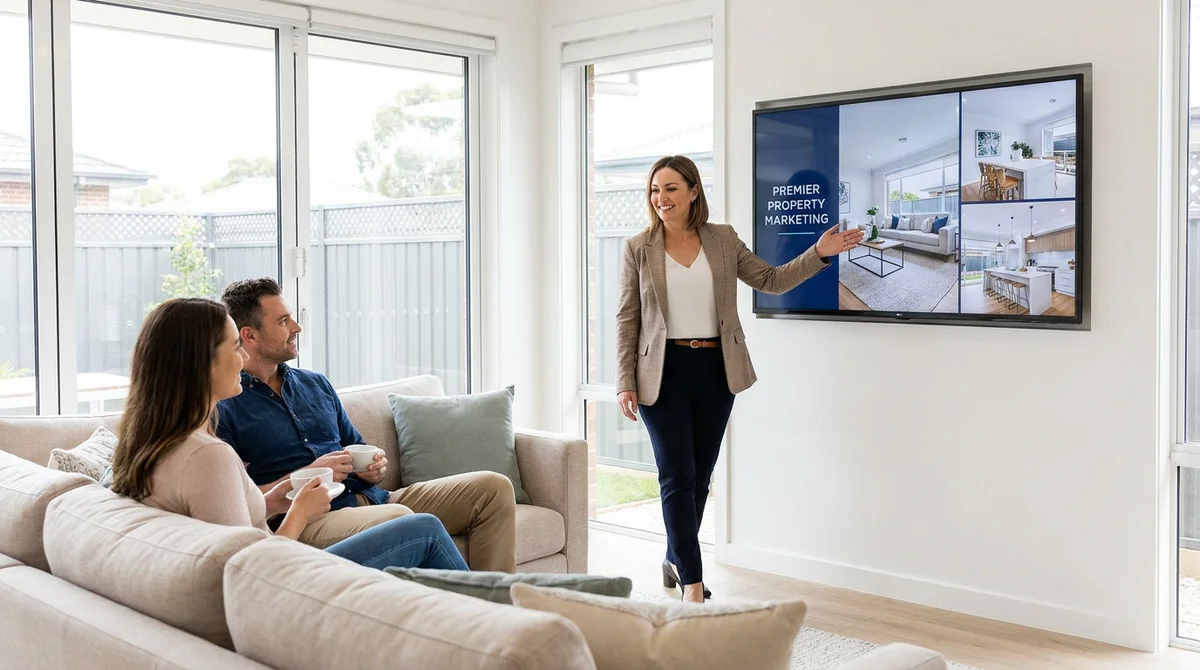
- Pre-stage their actual rooms. Ask for two or three listing photos in advance, or grab them from a prior listing, and generate AI-staged versions before you arrive. Walking in with their kitchen already restyled is a pattern-interrupt no competitor will replicate.
- Tailor the deck to this house. Generic templates read as generic effort. Swap in the seller's address, neighborhood data, and rooms.
The agent who shows up with the seller's own home already visualized has effectively won the meeting in the driveway.
The Deck: Structure That Converts
A listing presentation is a sales conversation, not a slideshow recital. Keep the deck lean, 10 to 15 slides, and structured so the seller talks as much as you do. A reliable flow:
| Section | Time | Goal |
|---|---|---|
| Rapport and discovery | ~10 min | Understand goals, timeline, motivation |
| Your marketing plan | ~10 min | Show how this home gets exposure |
| Pricing and CMA | ~10 min | Justify a price range with comps |
| Live staged visuals | ~5 min | Prove the plan with their rooms |
| Close and next steps | ~5 min | Ask for the signature |
Notice that pricing comes after the marketing plan. Lead with value, not the number. When sellers understand how you will market the home, the price conversation lands as strategy rather than negotiation. For more on the tools that power a modern marketing plan, see our roundup of the best AI tools for real estate agents.
Showing Staged Visuals Live
This is the moment that separates you from the field. Most agents promise professional photography and "maximum exposure." You can show it.
Generating a before-and-after of the seller's own room in front of them does three things at once: it proves your marketing capability, it makes the home's potential tangible, and it gives the seller a concrete reason to picture the sale going well. The persuasion is backed by research, 81% of buyers say staging makes it easier to picture a home as their own, and that visualization is exactly what you are handing the seller in real time.
Here is the kind of transformation you can produce in under a minute, on the seller's actual room:
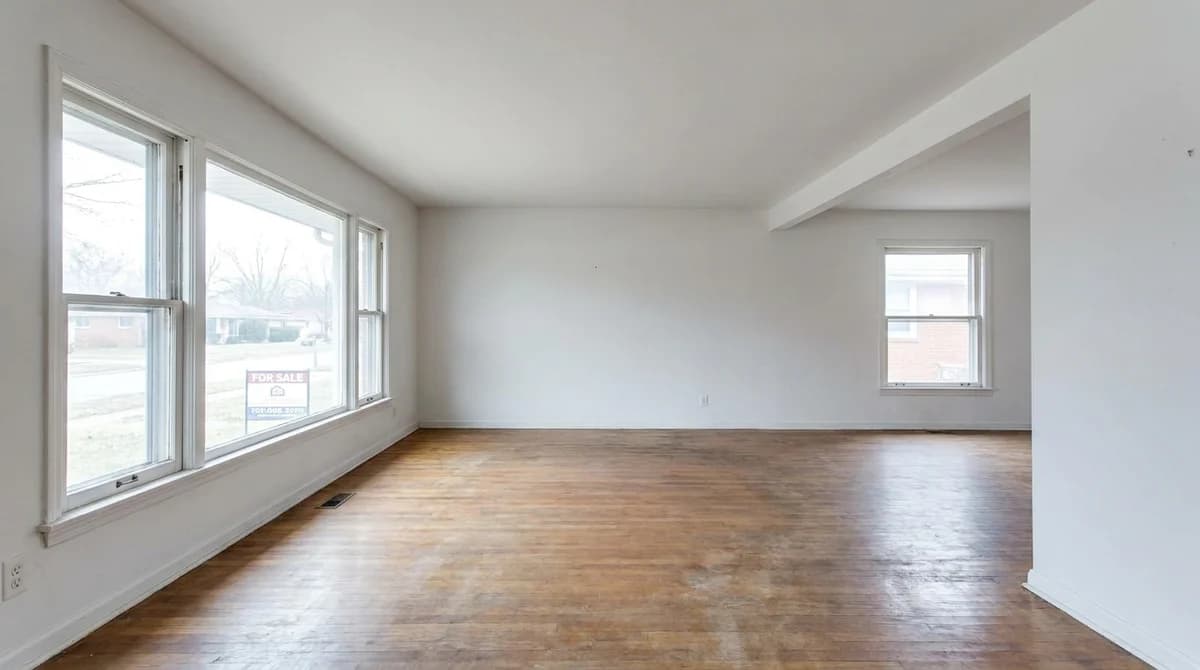
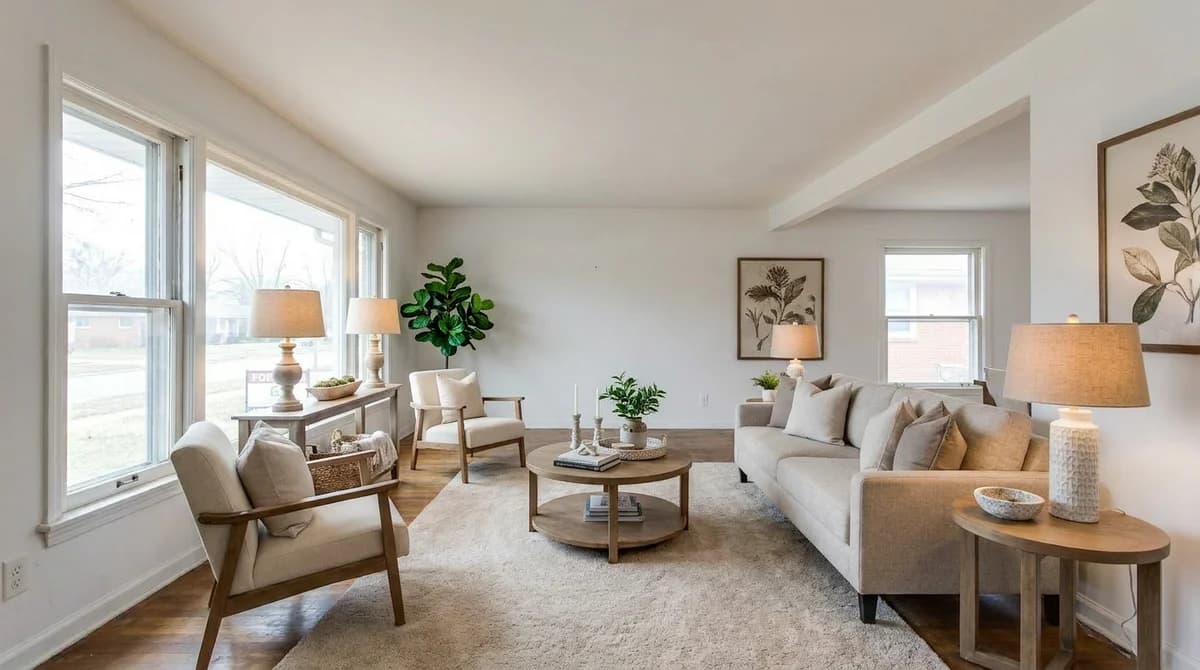
At roughly $1-5 per image in under 60 seconds, you can even show two or three style directions and let the seller pick a favorite, a level of personalization that makes the listing feel co-created. If you want to see how dramatic the shift can be, our virtual staging before-and-after gallery is full of examples. And you can stage a real listing photo yourself on our virtual staging for real estate page before your next appointment.
Handling the Big Objections
Every listing presentation has friction points. Prepare for the three that come up most.
"Another agent quoted a higher price." Do not chase the number. Walk back through your CMA range and explain that an inflated list price leads to price drops and stale days-on-market. Then pivot to your marketing plan and the staged visuals, presentation, not just price, drives the final sale figure.
"Your commission is higher than the discount brokerage." Reframe fee as return. The Real Estate Staging Association reports staged homes sell for 1-5% more on average, and the National Association of Realtors finds staged homes sell faster than non-staged ones. On a typical home, a small percentage gain in sale price can outweigh the difference in commission several times over. Show the math, then show the staged room that produces it.
"We want to think about it / interview other agents." Acknowledge it, then leave something they will keep looking at: the staged before-and-after of their own home. It works on your behalf long after you have left.
| Objection | Weak response | Strong response |
|---|---|---|
| Higher price elsewhere | Match the number | Show CMA range + days-on-market risk |
| Commission too high | Defend the fee | Reframe as net return + staging uplift |
| Want to think it over | "Take your time" | Leave staged visuals + a clear follow-up date |
The Follow-Up That Wins
The presentation does not end when you leave. Most agents go quiet after the meeting, which is exactly why a fast, useful follow-up wins. Within 24 hours, send a short recap email that includes:
- The staged before-and-after visuals you showed (the most memorable part of the meeting).
- Your suggested price range and the comps that support it.
- A single, clear next step, a date to sign or a quick call to answer remaining questions.
Sending the seller a polished image of their own restyled living room is a tangible reminder of why you stood out. It costs you a few dollars and a few minutes, and it keeps you top of mind while competitors rely on memory alone.
Putting It Together
Winning listings as a solo agent is not about having more resources, it is about deploying the right ones visibly. Out-prepare the meeting, structure the deck around value before price, prove your marketing with live staged visuals of the seller's home, reframe objections as return on investment, and follow up faster than anyone else. Do that consistently and the size of your brokerage stops mattering. The seller will remember the agent who showed them their home's future, not the one with the biggest sign.
Frequently Asked Questions
What are the best listing presentation ideas for a solo agent?
The strongest ideas all make a solo agent look like a full-service team: a tailored marketing deck, a CMA with a clear pricing range, and live staged visuals of the seller's actual rooms. The visuals matter most. With AI virtual staging at roughly $1-5 per image in under 60 seconds, you can show sellers how their listing will be marketed before the appointment ends.
How long should a listing presentation be?
A focused listing presentation runs about 30 to 45 minutes, roughly 10 minutes of rapport, 15 to 20 on pricing and marketing, and the last 10 on visuals and the close. Keep slides tight and let staged room visuals and comparable sales carry the message.
How can a solo agent compete with a big brokerage?
Out-prepare them on what sellers actually feel: responsiveness, a customized plan, and tangible proof of how the home will look online. A big brokerage sells its brand; a solo agent sells a specific plan for this specific house. Showing AI-staged photos of the seller's own rooms closes the perceived resource gap instantly.
Should I show staged photos during a listing presentation?
Yes. Showing staged visuals of the seller's actual rooms is one of the most persuasive moves you can make, because 81% of buyers say staging makes it easier to picture a home as their own. Generating before-and-after images live demonstrates your marketing plan instead of just promising it.
How do I handle the commission objection?
Reframe commission as return, not cost. The Real Estate Staging Association reports staged homes sell for 1-5% more on average, and the National Association of Realtors finds staged homes sell faster. Walk the seller through the net difference your marketing can produce, then show the staged visuals that drive it.
What should I do after a listing presentation?
Follow up within 24 hours with a short recap email that includes the staged visuals you showed, the suggested price range, and clear next steps. Most agents go quiet after the meeting, so a prompt, useful follow-up keeps you top of mind.
Ready to transform your listings?
Stage your first room in 20 seconds. No design skills needed.