How to Start an Interior Design Business (2026)
Jul 1, 2026 · 9 min read
How to start an interior design business in 2026: a step-by-step plan for skills, legal setup, pricing, building a portfolio with AI, and first clients.
Starting an interior design business in 2026 comes down to five steps: build your core skills, set up the business legally, decide how you will price, create a portfolio (you can do this with AI before you have a single paying client), and land your first projects. You can launch a lean, digital-first studio for under $1,000, and tools that produce photorealistic room designs in under a minute mean you no longer need a backlog of past clients to look credible. This guide walks through each step.
Step 1: Build the Core Skills and Setup
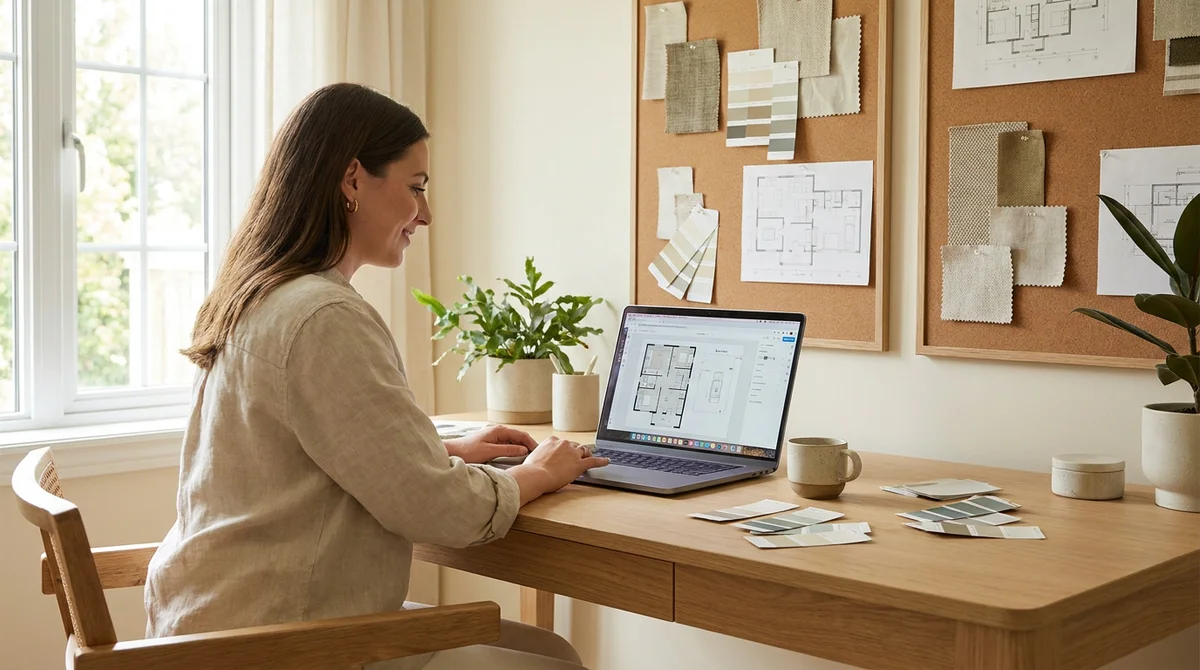
You do not need a four-year degree to start, but you do need a working command of the fundamentals: space planning, color theory, lighting, materials, and how to read a room's proportions. Pair that with one design tool you know well and the basic business skills of pricing, client communication, and project management.
A practical starter checklist:
- Design fundamentals, space planning, scale, color, lighting, and material selection.
- One visualization tool, whether that is a 3D program or an AI design tool, pick one and get fast with it.
- A simple website, one page with your services, a portfolio, and a contact form is enough to start.
- A way to take payment, Stripe, PayPal, or invoicing software.
- A repeatable process, intake questionnaire, design phase, delivery, revisions.
The fastest-moving part of the setup is visualization. Where designers once paid $200-500 per traditional render, AI tools now produce a photorealistic result for roughly $1-5 per image in under 60 seconds. That changes the economics of getting started: you can show clients real concepts of their own space immediately, instead of describing them.
Step 2: Handle the Legal and Money Basics
This is the part new designers overthink. Keep it simple at the start and tighten it as you grow.
- Business structure. A sole proprietorship is the cheapest way to begin, but an LLC adds liability protection for a modest filing fee ($50-500 depending on your state).
- Licensing. In most US states you do not need a license to offer decorating, styling, or e-design. A few states regulate the title "interior designer" or require registration for commercial work tied to building permits. Check your state board before any work that touches construction or code.
- Insurance. General liability and professional liability (errors and omissions) typically run $300-600 per year and are worth it the moment you give paid advice.
- Contracts. Use a simple written agreement that defines scope, deliverables, timeline, revisions, and payment. This prevents the most common disputes.
- Bookkeeping. Open a separate business bank account on day one so taxes are painless later.
Total realistic startup cost for a digital-first studio: under $1,000, with most of that going to registration, insurance, and a website.
Step 3: Choose How You Will Price
Pricing is where many new designers leave money on the table. There are four standard models, and you can mix them.
| Pricing model | How it works | Typical range | Best for |
|---|---|---|---|
| Flat fee | One price per room or project | $100-500 per room (e-design) | New designers; predictable scope |
| Hourly | Bill per hour worked | $50-200+ / hour | Consultations, open-ended work |
| Cost-plus | Markup on furniture and materials | 15-35% markup | Full-service, procurement-heavy projects |
| Percentage | Share of total project budget | 10-30% of budget | Large renovations and builds |
Most people starting out do best with a flat per-room fee. It is easy for clients to understand, it protects your time, and it maps cleanly onto an e-design package. As you take on full-service work, layer in cost-plus on the products you source. For a deeper look at packaging and rates, see our guide on online interior design services.
Step 4: Build a Portfolio Before You Have Clients
The classic chicken-and-egg problem: you need a portfolio to get clients, but you need clients to build a portfolio. AI solves this. You can create a credible body of work from real rooms before anyone hires you.
Here is the approach:
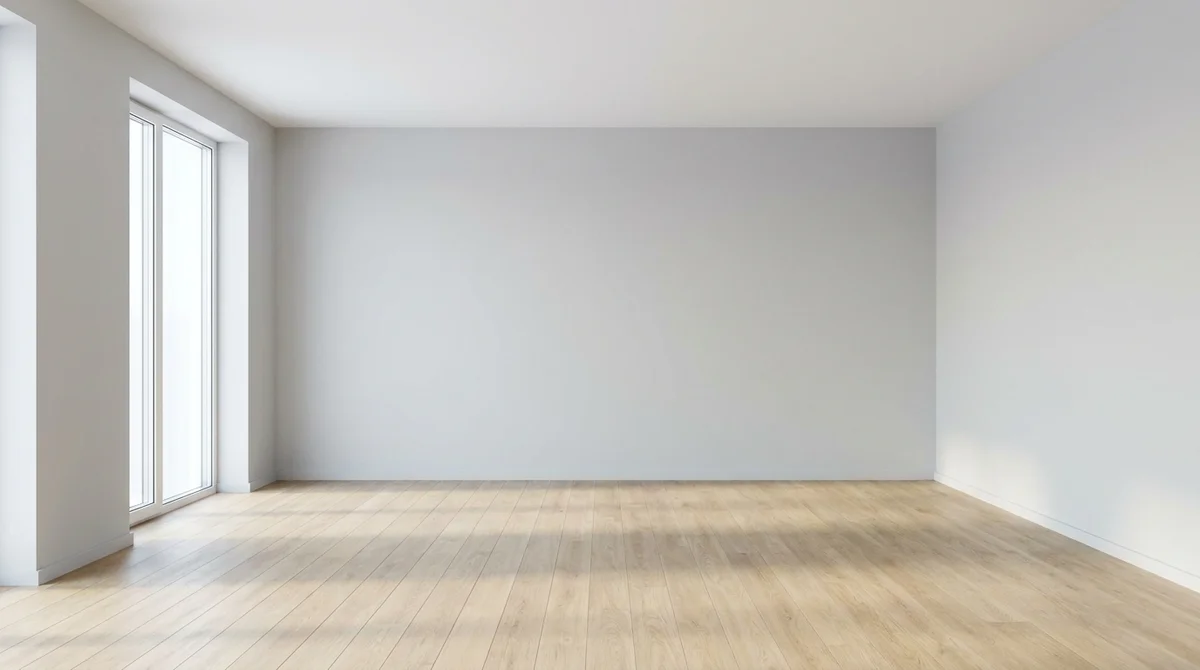
- Gather real rooms. Use photos of your own home, friends' and family's spaces, or free stock listing photos of empty rooms.
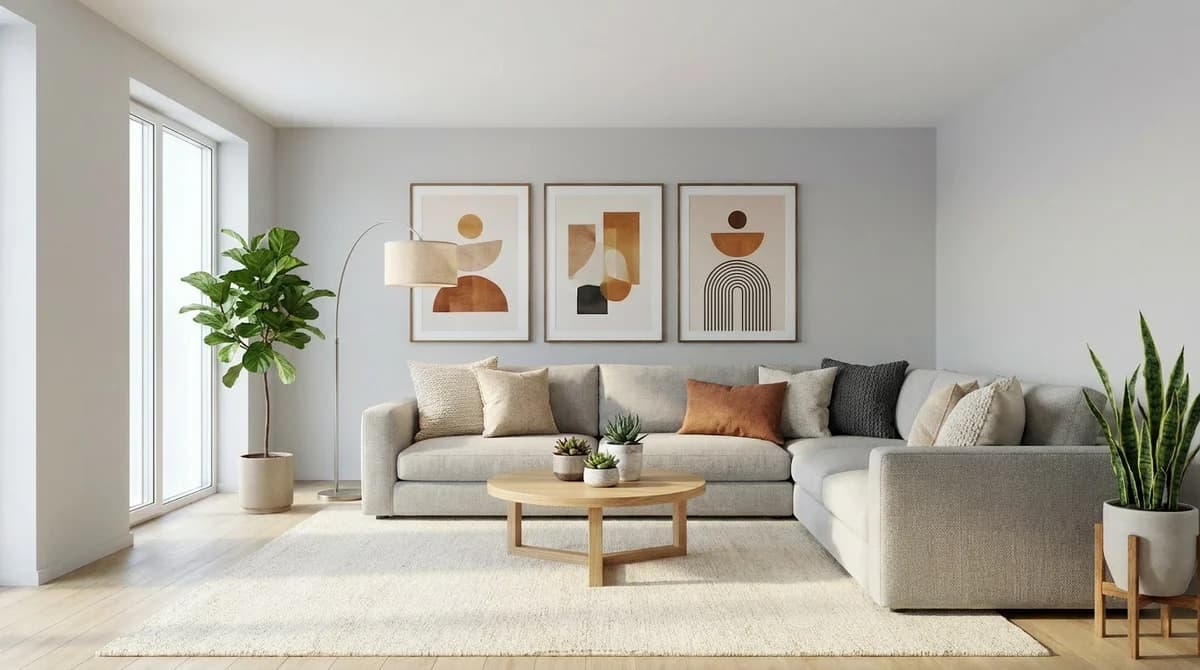
- Design them in multiple styles. Upload each room and generate photorealistic versions in Scandi, Japandi, modern, traditional, and more. This shows range.
- Present before-and-after pairs. A transformation tells the story instantly. Buyers and clients respond to seeing the change, not a flat mood board.
- Document your reasoning. For each project, write two or three sentences on the brief, the palette, and the choices. This signals expertise.
The before-and-after format is the single most persuasive thing in a new portfolio. Drag the slider to see the kind of transformation you can produce from an empty room in under a minute:
Six to eight strong before-and-after projects across a few styles is enough to start pitching. You can produce that in a weekend.
Step 5: Land Your First Clients
With skills, setup, pricing, and a portfolio in place, the last step is filling your pipeline. The first handful of clients almost always come from people who already trust you.
- Tap your network. Tell friends, family, and former colleagues you are open for business. Referrals close fastest.
- Offer a starter discount. Do two or three projects at a reduced rate in exchange for testimonials and permission to post the results.
- Show before-and-afters publicly. Post transformations on Instagram and Pinterest, where interior content performs well and is endlessly shareable.
- List locally. Google Business Profile, local directories, and design platforms put you in front of nearby searchers.
- Win the pitch fast. When a prospect asks "what would you do with this room," reply with an actual photorealistic concept of their space instead of a vague description. Being the designer who shows up with a finished-looking visual while competitors are still scheduling a call is how you win the job before anyone else replies.
For a complete playbook on outreach, referrals, and lead sources, read how to get interior design clients.
The E-Design Model: The Easiest On-Ramp
If you want the lowest-overhead, fastest-to-launch version of an interior design business, start with e-design. Instead of managing installs in person, you design a room remotely and deliver a layout, a shopping list, and renderings. Clients implement it themselves.
Why it is the easiest entry point:
- Almost no overhead. No showroom, no travel, no inventory.
- Bigger market. You are no longer limited to clients within driving distance.
- More volume. You can turn around several rooms a week because each one is digital.
- Clean pricing. E-design packages typically sell for $100-500 per room, billed as a flat fee.
AI visualization is what makes modern e-design practical for a solo designer: you can deliver photorealistic concepts of the client's actual room rather than generic catalog images. New to the format? Start with our explainer on what e-design is, then build your first sample package.
Build your first portfolio in a weekend, redesign any room in seconds and start pitching with real before-and-afters.
Stage your first room in 20 seconds. No design skills needed.
Frequently Asked Questions
How do I start an interior design business with no experience?
Build skills and a portfolio before you chase paying clients. Learn space planning, color, and one design tool, then create five or six sample projects by redesigning real rooms with an AI tool so you have something to show. Register a simple sole proprietorship or LLC, set a starting rate, and offer your first two or three projects at a discount to collect testimonials. Many designers launch for under $1,000 by going digital-first.
How much does it cost to start an interior design business?
A lean, digital-first studio can launch for under $1,000. The main costs are registration ($50-500), a website ($0-300), liability insurance ($300-600 per year), and software. AI design tools keep visualization cheap, around $1-5 per render versus $200-500 for a traditional 3D render, so a full portfolio costs a fraction of what it used to.
Do you need a license to start an interior design business?
In most US states you do not need a license to offer decorating or e-design services, but rules vary. A few states regulate the title "interior designer" or require registration for commercial work tied to building permits. Residential decorating, styling, and online design are generally unregulated. Check your state board before any work affecting construction or code.
How do interior designers charge clients?
The four common models are flat fee per room or project, hourly ($50-200+), cost-plus (a 15-35% markup on furniture and materials), and a percentage of the project budget (10-30%). Many new designers start with a flat per-room fee because it is predictable and easy for clients to understand. E-design packages are usually sold as a fixed price per room.
How do I get my first interior design clients?
First clients usually come from your network, local referrals, and a visible portfolio. Offer two or three discounted projects in exchange for testimonials and photos, post the before-and-after results on Instagram and Pinterest, and list on local directories. Real before-and-after visuals convert far better than mood boards alone, which is why AI room transformations are a fast way to fill a new portfolio.
What is e-design and is it a good way to start?
E-design is a remote service where you design a room digitally and deliver a shopping list, layout, and renderings instead of managing the project in person. It is one of the easiest ways to start because it has almost no overhead, scales beyond your local market, and lets you serve more clients per week. Most e-design packages sell for $100-500 per room.
Ready to transform your listings?
Stage your first room in 20 seconds. No design skills needed.