Stop Outsourcing Real Estate Photo Editing
Jun 22, 2026 · 9 min read
Real estate photo editing outsourcing costs $2-10 per image and rents away your margin. Here's the in-house AI workflow that keeps that money in your pocket.
If you are a real estate photographer paying an editing service $2 to $10 per image, you are renting away the most scalable margin in your business. Outsourcing made sense when editing meant hours of manual work per gallery. It does not anymore. An in-house AI workflow now handles the same exposure, lens, color, and lighting corrections in seconds, which means the money you currently send to an editing queue can stay in your pocket. Here is the math and the exact workflow.
The real cost of outsourcing real estate photo editing
Outsourcing feels cheap per image. It is brutal in aggregate. Standard edits run $2 to $10 each depending on the service and the complexity, and premium work like day-to-dusk or sky replacement pushes higher. Now multiply by your actual volume.
A photographer shooting five listings a week at 25 images per listing processes around 6,000 images a year. At the low end of $2 per image, that is $12,000 annually. At $5, it is $30,000. At $10, it is $60,000. That is not an expense line. That is a salary you are paying to someone outside your business to do work a tool can now do for you.
| Volume | Outsourced at $3/image | Outsourced at $7/image | In-house AI (~$0.50/image) |
|---|---|---|---|
| 100 images/week | $15,600/yr | $36,400/yr | ~$2,600/yr |
| 125 images/week | $19,500/yr | $45,500/yr | ~$3,250/yr |
| 250 images/week | $39,000/yr | $91,000/yr | ~$6,500/yr |
The gap is your margin. Every image you outsource is a few dollars of profit you hand to a vendor on work that increasingly does not require a human at all.
Why outsourcing used to make sense (and why it stopped)
For years, outsourcing was the rational choice. Manual editing in Lightroom and Photoshop is slow, and stacking HDR brackets, straightening verticals, and pulling windows by hand can eat 10 to 20 minutes per image. Paying $3 to a service to absorb that time was a fair trade for a photographer who would rather be shooting.
Two things changed. First, AI now does the repetitive corrections, the exposure, white balance, lens distortion, window pull, and even sky and lighting swaps, in seconds rather than minutes. Second, the quality reached a point where the output is genuinely listing-ready, not an obvious filter. The trade that made outsourcing rational no longer holds, because the time cost it was solving has collapsed.
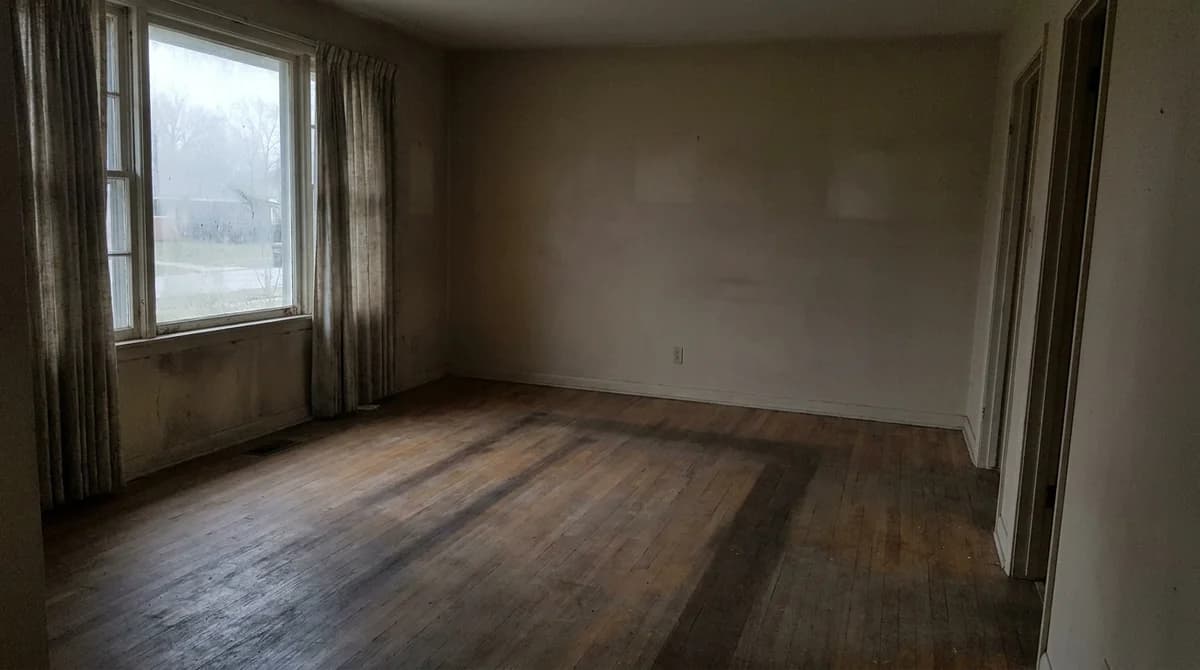
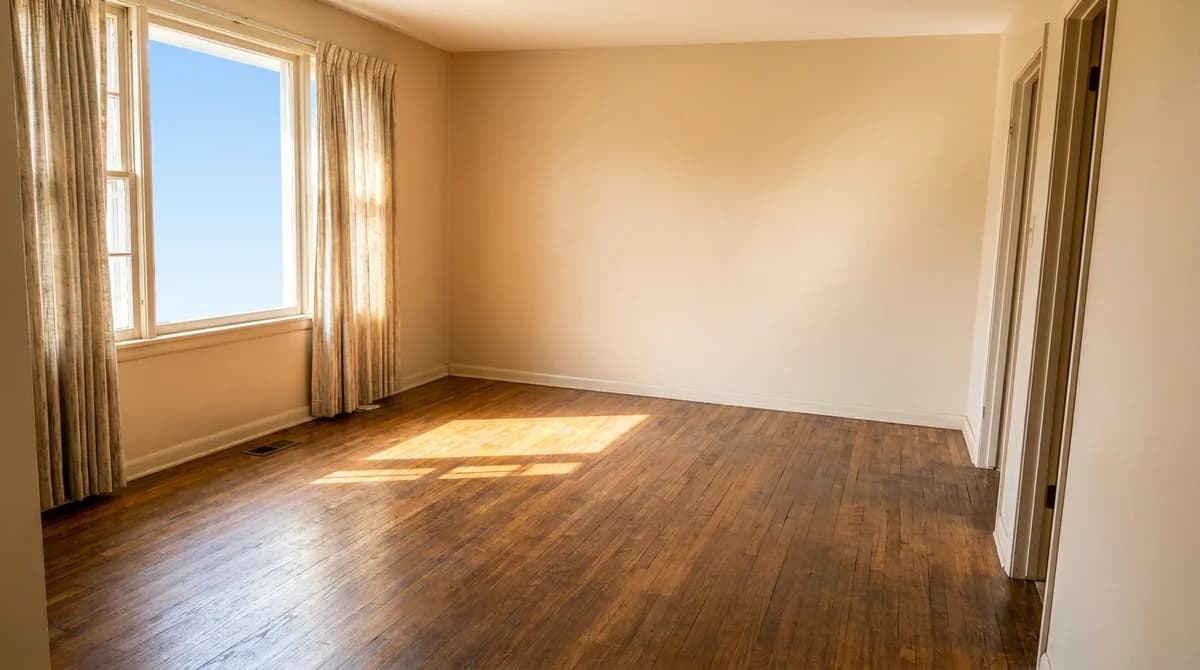
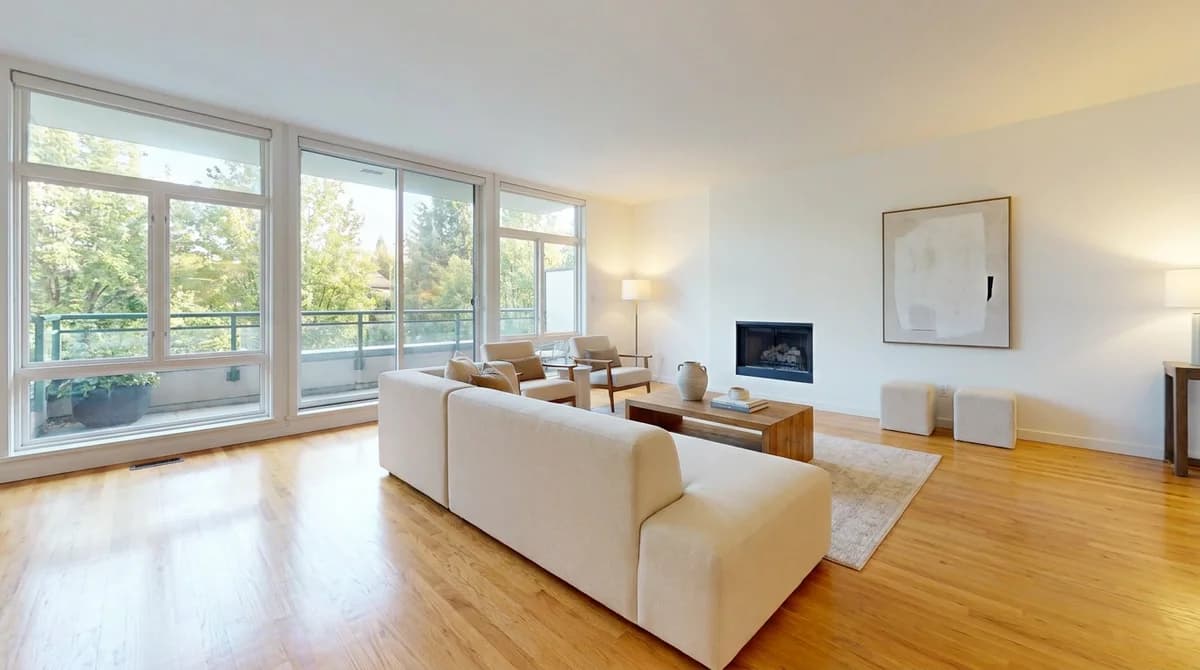
The same room, same camera angle. The left is straight off the card: flat, dark, crooked verticals, dull sky. The right took seconds in-house: corrected exposure, straightened lines, warm balance, bright daylight. That edit used to be a line item on an invoice.
The in-house AI workflow, step by step
Moving editing in-house does not mean becoming a retoucher. It means running a tight, repeatable workflow where AI does the heavy lifting and you do the approval. Here is the sequence.
- Cull on the card. Pick your keepers before anything else. There is no point processing an image you will not deliver. A typical 25-image listing usually starts from 60 to 80 frames.
- Batch the base corrections. Run exposure, contrast, white balance, and lens straightening across the whole set. AI handles this in one pass instead of slider-by-slider.
- Apply the listing-specific edits. Window pull and HDR blending for bright, true-to-life rooms, sky replacement for exterior shots, and day-to-dusk conversion for the hero image that stops the scroll.
- Stage the empty rooms. Vacant listings photograph poorly. Virtually stage the bare spaces in the same workflow so buyers can picture the home, no furniture rental required.
- Review and deliver. Scan every image at full size, fix the rare outlier, and export. You hold final approval on each shot, which is more control than any outsourced queue gives you.
The whole gallery moves in minutes, not the 12 to 48 hours an outsourcing service typically quotes. For a deeper, settings-level walkthrough, see our AI real estate photo editing workflow guide.
Why staging belongs in the same workflow
The biggest reason to keep editing in-house is not just cost, it is the upsell sitting right next to it. Once you are already processing a listing's photos, staging the empty rooms is a few extra clicks, and it is work clients pay a premium for.
The demand is real. The National Association of Realtors reports that staged homes sell faster than non-staged ones, and the Real Estate Staging Association reports staged homes sell for 1 to 5 percent more on average. 81 percent of buyers say staging makes it easier to picture a property as their future home. When you can virtually stage a room for $1 to $5 in under 60 seconds, versus $500 to $3,000 for physical staging, you can offer agents a high-value add-on at a price that still leaves you a strong margin.
An outsourcing service hands you back flat photos. An in-house workflow lets you hand the agent a staged, edited, ready-to-list gallery, and bill for the difference.
Quality control: keeping in-house edits consistent
The fear with bringing editing in-house is inconsistency. It is a fair concern, and it is solvable. The trick is to standardize, not to freestyle every image.
- Build a preset baseline. Lock in your exposure, contrast, and white-balance targets so every listing starts from the same look.
- Match your verticals every time. Straight lines are the single biggest tell of professional real estate work. Make lens correction non-negotiable.
- Keep skies believable. A replaced sky should match the light in the room. A bright blue sky over a gray-lit interior reads as fake instantly.
- Review at 100 percent. AI is fast and usually right, but you are the quality bar. A 30-second scan per image catches the rare miss.
Consistency is easier in-house than outsourced, because you are the only editor. There is no rotating pool of freelancers interpreting your brief differently each week. If you want help choosing the right tool for this, compare options in our roundup of the best real estate photo editing software.
When outsourcing still makes sense
This is not an absolutist argument. Outsourcing has a place, it is just much smaller than it used to be.
Keep a service on call for genuinely complex edits: heavy object removal, intricate compositing, twilight composites that need a careful hand, or one-off jobs outside your normal volume. Those are a small share of a typical gallery. The right model for most photographers is to move 80 to 90 percent of routine volume in-house and outsource only the exceptions, instead of sending the whole gallery out by default.
The principle is simple. Outsource what is genuinely hard. Keep the margin on everything else.
The bottom line
Outsourcing real estate photo editing was a reasonable trade when editing was slow and manual. It is now an expensive habit. At $2 to $10 per image across thousands of photos a year, the cost is a five-figure salary leaving your business for work AI can do in seconds. An in-house workflow, cull, batch-correct, apply listing edits, stage, review, keeps that money where it belongs and adds a staging upsell on top. The tooling is here, the quality is here, and the margin is yours to keep.
Ready to stop renting your margin? Try the AI real estate photo editing tool on your next listing and see how much of your editing bill you can bring in-house.
Frequently Asked Questions
How much does outsourcing real estate photo editing cost?
Outsourced real estate photo editing typically costs $2 to $10 per image for standard work like exposure correction, lens straightening, and color balancing, with premium edits like day-to-dusk or sky replacement running $3 to $15 each. A photographer shooting 5 listings a week at 25 images each spends roughly $250 to $1,250 per week, which adds up to $13,000 to $65,000 a year that leaves your business entirely.
Is in-house AI photo editing cheaper than outsourcing?
Yes, in most cases. Outsourcing runs $2 to $10 per image, while AI-assisted in-house editing costs roughly $0.20 to $1 per image in tool subscription and a fraction of the time per shot. For a photographer processing 6,000 images a year, that is the difference between paying $12,000 to $60,000 to an editing service and keeping nearly all of it in-house.
Will I lose quality by editing in-house with AI?
Not if you use a photorealistic tool and review every image. Modern AI handles the repetitive work, exposure, white balance, lens correction, and sky or lighting changes, in seconds, and you keep final approval on each shot. The quality bar is your own eye, not a stranger's queue, which usually means more consistency, not less.
How long does in-house editing take versus an outsourcing service?
Outsourcing services typically return edited galleries in 12 to 48 hours. An in-house AI workflow processes a typical 25-image listing in minutes, which lets you deliver same-day. The speed advantage matters most for time-sensitive listings where being first to market wins the client.
What real estate edits can AI handle in-house?
AI handles the bulk of routine real estate editing: exposure and contrast correction, white balance, lens distortion straightening, window pull and HDR blending, sky replacement, day-to-dusk conversion, and virtual staging of empty rooms. Complex compositing or item removal can still need a manual pass, but those are a small share of a typical listing gallery.
Should photographers stop outsourcing photo editing entirely?
Most can move 80 to 90 percent of their volume in-house and outsource only the rare complex edit. The math favors it: keeping a $2 to $10 per image margin on thousands of photos a year is one of the fastest ways for a real estate photographer to grow profit without raising prices or shooting more listings.
Ready to transform your listings?
Stage your first room in 20 seconds. No design skills needed.