Japandi vs Scandinavian Design: What's the Difference?
Jul 15, 2026 · 8 min read
Japandi vs Scandinavian: both love clean lines and light wood, but differ in palette, mood, and styling. See the differences side by side and which to choose.
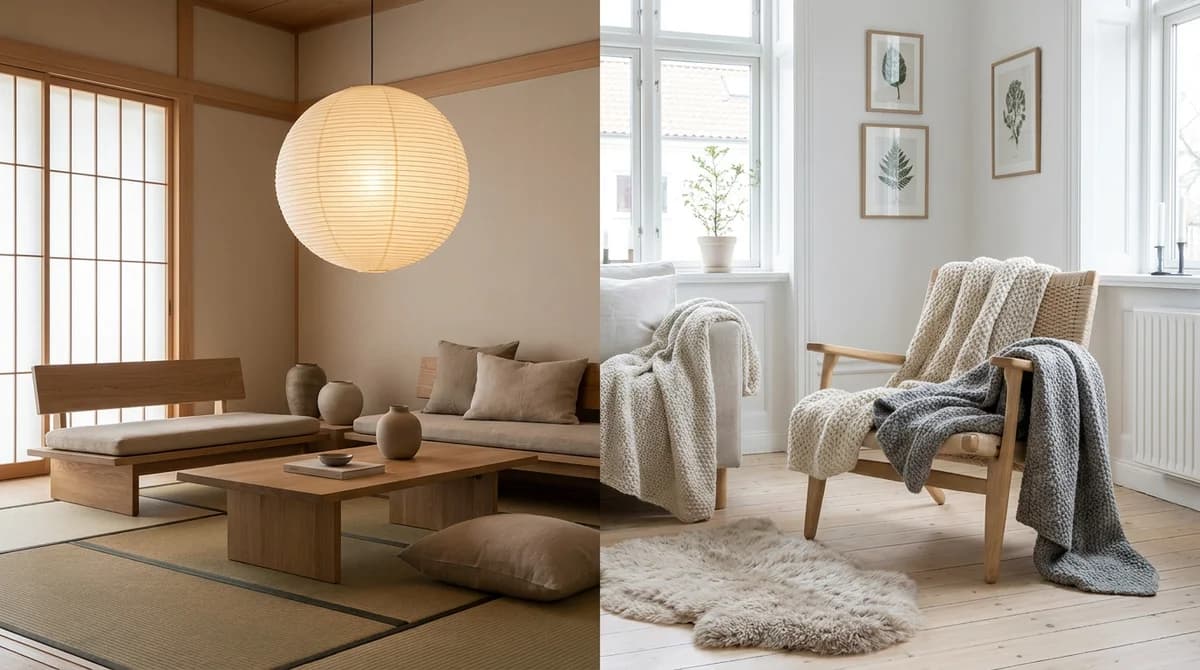
Japandi and Scandinavian design look similar at a glance, clean lines, light wood, minimal clutter, but they are not the same style. Scandinavian is the pure Nordic look built on bright whites, cozy textiles, and an airy, light-filled feel. Japandi is a hybrid that fuses that Scandinavian function with Japanese minimalism, swapping the bright palette for warmer, earthier, more grounded tones and even fewer objects. This guide breaks down the differences side by side and helps you choose.
Japandi vs Scandinavian: The Short Answer
Scandinavian design is the original Nordic style: white walls, pale birch and ash wood, soft pastels, and layered textiles that create warmth and coziness (the Danish concept of hygge). It is bright, airy, and functional, designed to make the most of limited daylight during long northern winters.
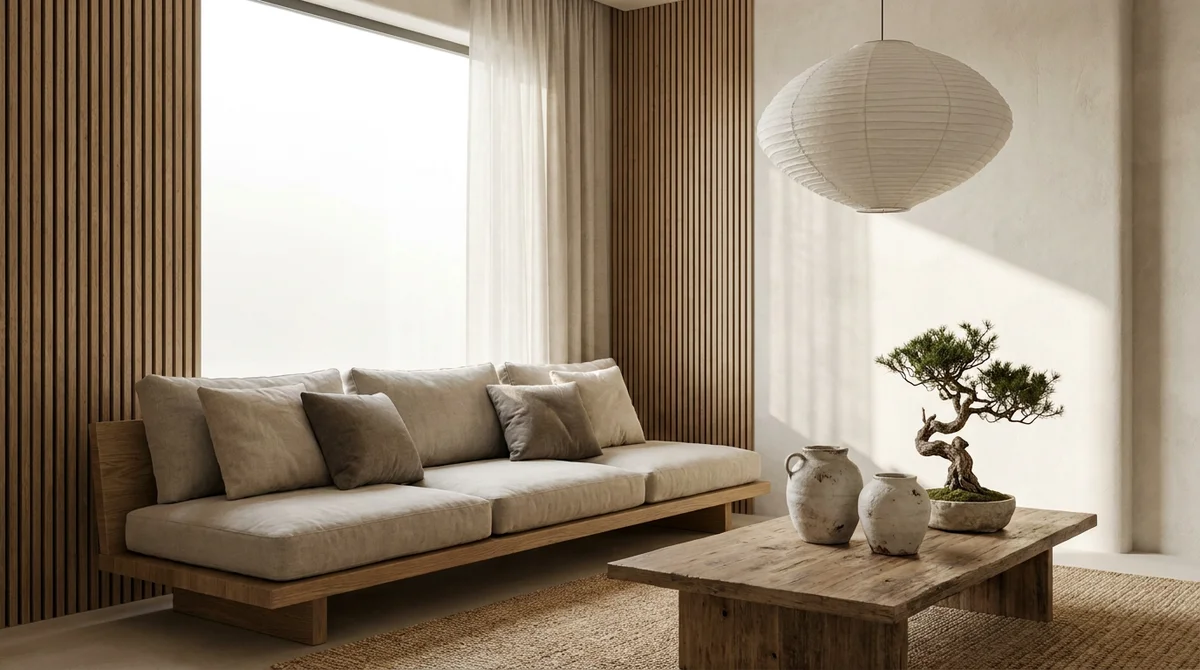
Japandi is what you get when you blend that Scandinavian foundation with Japanese minimalism. It keeps the clean lines and natural materials but trades the bright, cool palette for warm earth tones, darker woods, and more contrast. It also strips back further, embracing the Japanese idea of intentional emptiness and wabi-sabi, finding beauty in imperfect, handmade, and weathered things.
In one line: Scandinavian is light, cozy, and layered; Japandi is warm, sparse, and grounded.
Where the Two Styles Overlap
It helps to start with what they share, because the overlap is large. Both styles prize:
- Minimalism and function. Neither tolerates clutter. Every piece earns its place.
- Natural materials. Wood, linen, wool, paper, stone, and ceramics over plastic and gloss.
- Clean, simple lines. Low-profile furniture and uncomplicated silhouettes.
- Craftsmanship. Quality over quantity, with an appreciation for how things are made.
- A neutral base. Color is restrained in both; it is introduced carefully, never loudly.
This shared DNA is exactly why Japandi works. It is not a forced mashup, it is two minimalist philosophies that already agreed on the fundamentals. The differences live in palette, mood, and how far each style pushes the minimalism.
The Key Differences, Side by Side
Here is where they diverge:
| Feature | Scandinavian | Japandi |
|---|---|---|
| Origin | Nordic countries (Denmark, Sweden, Norway) | Japan + Scandinavia fusion |
| Palette | Bright whites, light greys, soft pastels | Warm earth tones, charcoal, terracotta, sage |
| Wood tones | Pale, birch, ash, light oak | Darker, walnut, smoked oak, deeper grain |
| Contrast | Low; tonal and soft | Higher; light and dark play off each other |
| Mood | Bright, airy, cozy | Calm, serene, grounded |
| Textiles | Abundant, throws, sheepskins, layering | Sparse, a few intentional, tactile pieces |
| Decor | Cozy, plentiful, hygge | Minimal, sculptural, wabi-sabi |
| Guiding idea | Hygge (coziness, comfort) | Wabi-sabi (imperfect, intentional) |
The two biggest tells are palette and quantity. If a room is bright white with pale wood and lots of soft, cozy layers, it is Scandinavian. If it is warm and earthy with darker wood, high contrast, and very few carefully chosen objects, it is Japandi.
How Each Style Feels in a Room
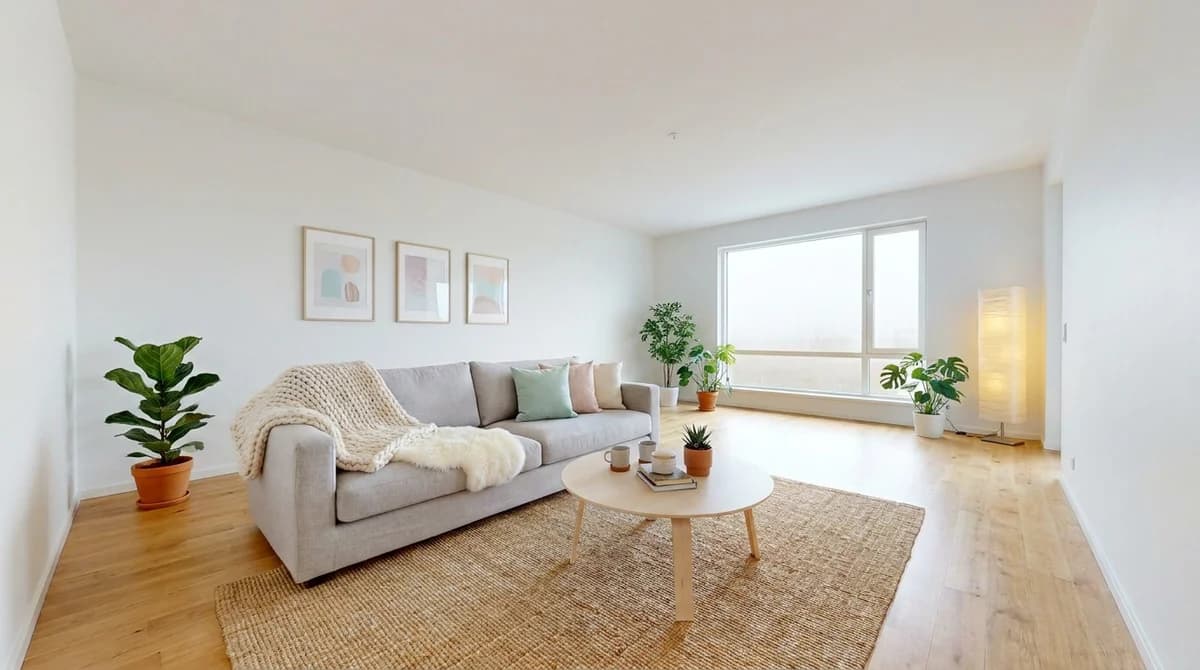
Walk into a Scandinavian living room and it feels light and welcoming. White walls bounce daylight around, pale wood floors keep things bright, and layered textiles, a chunky knit throw here, a sheepskin draped over a chair there, invite you to settle in. There is warmth, but it comes from the soft layers and the glow of candlelight rather than the colors on the wall.
A Japandi room feels different the moment you enter: quieter, more grounded, more deliberate. There is less stuff. A single handmade ceramic vase sits where a Scandinavian room might have a cluster of objects. The wood is deeper, the walls might be a warm plaster or muted clay tone, and the contrast between light and dark gives the space a sense of calm focus. It feels less like cozy comfort and more like a deep exhale.
Japandi vs Scandinavian on the Same Room
The fastest way to understand the difference is to see one style applied to a real space. Below is the same empty living room transformed, drag the slider to compare the bare room with a Scandinavian treatment: light wood, a grey linen sofa, a jute rug, cozy knit and sheepskin layers, and soft pastel art.
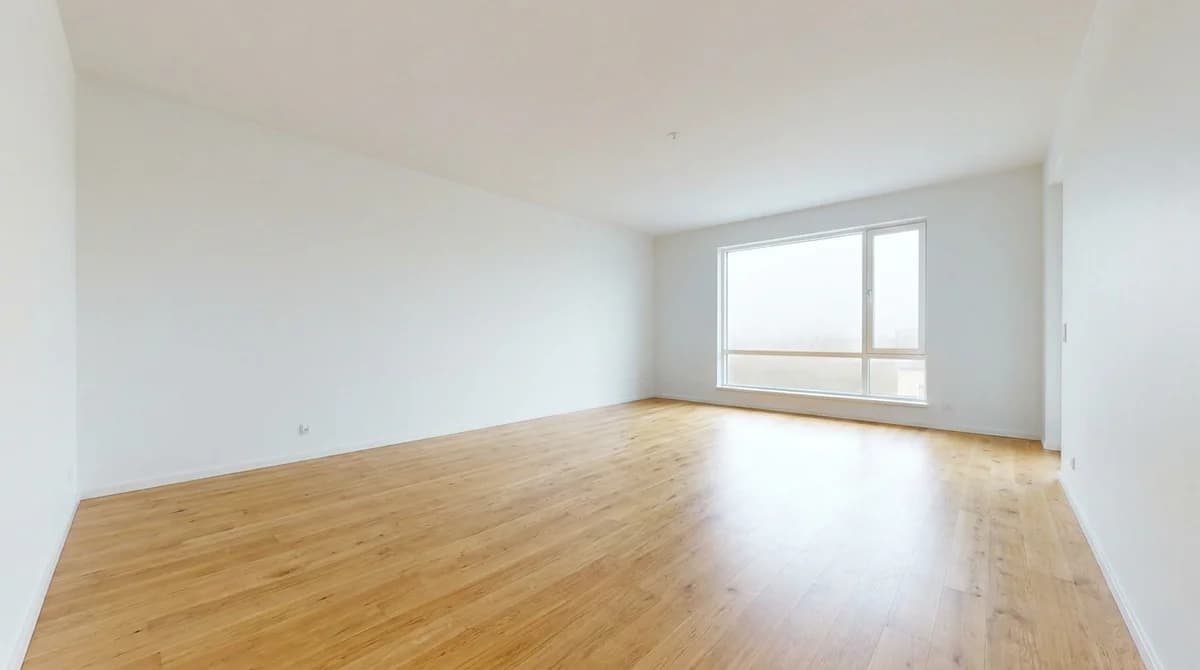
Run the same room through a Japandi treatment and you would see darker wood, a warmer wall tone, far fewer objects, and a single sculptural light fixture, same bones, very different mood. Testing both directions in your actual room, rather than guessing from catalog photos, is the only reliable way to know which one fits.
Which Should You Choose?
Both are excellent, low-risk choices that photograph well and appeal to a wide range of tastes. Pick based on the feeling you want and the light you have:
Choose Scandinavian if you want:
- A bright, airy, open feel, especially in a small, dark, or north-facing room.
- Cozy comfort with plenty of soft textiles to curl up in.
- A welcoming, family-friendly space that reads warm and casual.
- The classic, time-tested Nordic look that never goes out of style.
Choose Japandi if you want:
- A calm, serene, grounded retreat with a meditative quality.
- Warmer, earthier color and richer wood tones.
- Strict minimalism, fewer objects, more intention, easier to keep tidy.
- A more distinctive, of-the-moment look that still feels timeless.
If your room gets little natural light, lean Scandinavian to keep it bright. If you crave calm and don't mind a darker, moodier palette, Japandi delivers. And if you love both, you are not alone, the line between them is genuinely thin, and many rooms borrow from each.
For a wider view of how these fit alongside other aesthetics, see our interior design styles guide. If you are drawn to the pared-back approach in general, our minimalist interior design guide covers the principles both styles are built on.
See It in Your Own Room First
Style names only get you so far, the real test is how a look reads in your actual space, with your light, your windows, and your proportions. With RoomLift you can upload one photo of a room and generate a photorealistic Japandi version and a Scandinavian version of it in under a minute, then compare them side by side before you buy a single piece of furniture. It is the same workflow designers use to win client approvals, and it removes the guesswork from choosing between two styles this close.
Frequently Asked Questions
What is the difference between Japandi and Scandinavian design?
Japandi fuses Japanese minimalism with Scandinavian function, while Scandinavian is the pure Nordic style on its own. The biggest differences are palette and mood: Japandi uses warm, earthy, darker tones with more contrast and fewer objects, while Scandinavian leans into bright whites, pale woods, and cozy hygge layering. Japandi feels grounded and serene; Scandinavian feels light and airy.
Is Japandi just Scandinavian with Japanese elements?
Essentially, yes. Japandi takes the clean lines, light wood, and functionality of Scandinavian design and combines them with Japanese principles like wabi-sabi, natural materials, and intentional emptiness. The two share so much DNA that Japandi feels like a natural evolution rather than a clash, which is why it emerged as a distinct trend around 2017.
Which is warmer, Japandi or Scandinavian?
Both feel warm, but differently. Scandinavian warmth comes from cozy layering, chunky knit throws, sheepskins, candles, and an abundance of soft textiles (hygge). Japandi warmth comes from rich, earthy color and the depth of darker natural wood, with far fewer accessories. Scandinavian is cozy-warm; Japandi is grounded-warm.
What colors define Japandi vs Scandinavian?
Scandinavian palettes center on bright whites, light greys, pale birch and ash, and soft pastel accents to stay airy in low Nordic light. Japandi uses muted, earthy tones, warm beige, terracotta, charcoal, sage, with deeper walnut or oak woods and more contrast. Scandinavian is light and cool-leaning; Japandi is warm and grounded.
Is Japandi or Scandinavian better for a small space?
Both suit small spaces because both are minimalist and clutter-free. Scandinavian's bright whites and pale woods make a small room feel larger and more open, which is ideal for windowless or north-facing rooms. Japandi's intentional emptiness keeps small rooms calm too, though its darker tones can make a very small, dark room feel smaller.
Which style is more popular right now?
Scandinavian has been a mainstream favorite for decades and remains one of the most popular global styles. Japandi is the faster-growing trend, gaining momentum every year since around 2017 as buyers look for warmer, more grounded minimalism. Both photograph well and appeal broadly when staging a home.
Ready to transform your listings?
Stage your first room in 20 seconds. No design skills needed.