Maximalist Interior Design: How to Design a Bold, Layered Home
Feb 23, 2026 · 6 min read
Maximalist interior design isn't chaos — it's intentional abundance. Learn the principles, color strategies, and room-by-room approach to designing a maximalist home that feels curated, not cluttered.
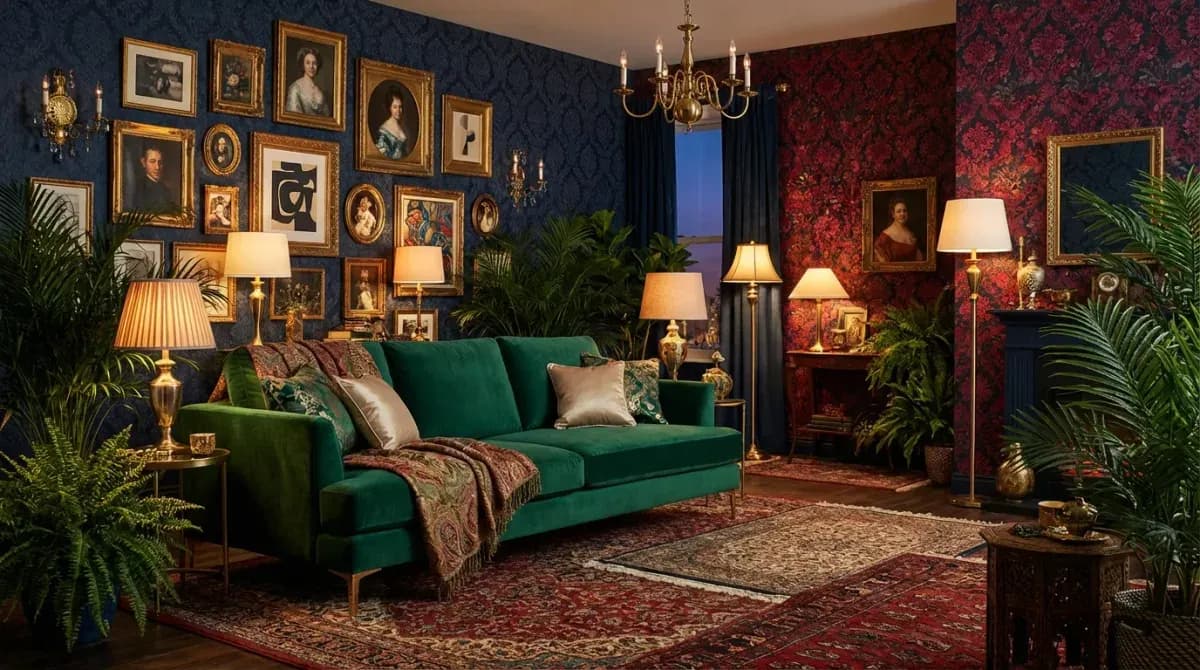
Maximalist interior design is the most misunderstood style in contemporary design culture. It's commonly equated with clutter, poor taste, or an inability to edit. In reality, authentic maximalism is one of the most demanding interior styles to execute — it requires a deeper understanding of color theory, pattern mixing, and compositional balance than minimalism precisely because the visual density leaves no room for imprecision.
The difference between a maximalist room that feels extraordinary and one that feels chaotic is the same as the difference between a great jazz improvisation and noise: both involve abundance, but only one has structural intelligence behind it.
The Principles of Successful Maximalism
1. Color Harmony is Non-Negotiable
Maximalist rooms can use any number of colors — but those colors must relate to each other through tonal harmony. The most reliable approach: choose a dominant palette (jewel tones, earth tones, or a single strong hue) and build variations and accents within that tonal family.
Jewel-tone maximalism (emerald green, sapphire blue, amethyst purple, deep ruby) is the most common and successful approach because these colors share a naturally high visual saturation that creates cohesion even when mixed liberally.
2. Pattern Mixing Requires a Shared Language
Mixing patterns — florals, stripes, geometrics, animal prints — is fundamental to maximalism, but patterns must share at least one color to remain visually connected. A floral cushion in burgundy, gold, and forest green can sit harmoniously next to a stripe in burgundy and cream and a geometric in gold and forest green because the colors form a coherent chain.
Patterns also work better in groups of three: a large-scale pattern (like a wallpaper or large rug), a medium-scale pattern (upholstery fabric), and a small-scale pattern (cushions, throws) creates a layered hierarchy that feels intentional.
3. Layer Systematically, Not Randomly
Successful maximalist rooms are built in layers, from largest to smallest:
- Architecture and walls — wallpaper, paint color, wall paneling, built-in shelving
- Large furniture — sofas, beds, dining tables, armoires
- Rugs and flooring treatments — layered rugs, patterned tile
- Medium furniture and lighting — accent chairs, coffee tables, statement pendants
- Textiles — curtains, throw blankets, cushion arrangements
- Objects and art — gallery walls, bookshelves, surface arrangements
Working through these layers in order prevents the visual confusion that comes from trying to compose all elements simultaneously.
4. Edit Ruthlessly Within the Abundance
Maximalism requires more editing discipline than minimalism, not less. Every element added to a maximalist space should earn its place: through extraordinary visual quality, meaningful personal significance, or specific compositional contribution. Objects that are merely "fine" don't make the cut — they dilute the energy of the objects that genuinely belong.
A maximalist bookshelf is not filled with every book owned. It's composed: books grouped by color, spines facing out, interspersed with objects of different heights, textures, and personal meaning. The apparent abundance is the result of careful curation.
Room-by-Room Maximalist Design
Living Room
The maximalist living room is the most expressive room in the home. Key strategies:
Walls: Jewel-tone paint (deep emerald, sapphire, burgundy) or pattern wallpaper as the dominant backdrop. Gallery walls covering an entire wall — mixing art sizes, frames, and subjects — create a personal salon-style atmosphere.
Seating: A dominant sofa in a strong color or pattern, paired with two or three accent chairs of different styles and upholstery. Velvet, brocade, and patterned fabrics are appropriate.
Rugs: Layer two rugs — a large, neutral-ground rug as the base layer and a patterned runner or smaller rug overlaid for additional pattern and texture.
Surfaces: Every surface is an opportunity: books stacked horizontally with objects placed on top, ceramic vases in varied heights and finishes, brass candlesticks, artisan pottery.
Bedroom
Maximalist bedrooms create atmosphere through deeply personal collection and layered textiles:
- Statement headboard in patterned fabric or upholstered velvet
- Gallery wall of collected artwork, mirrors, and objects behind or beside the bed
- Layered bedding — multiple cushions, a statement throw, a patterned duvet
- Rich curtains in deep color or heavy pattern that pool slightly on the floor
- Bookshelves, plants, and collected objects that make the room feel inhabited
Kitchen and Dining Room
Maximalism in functional spaces works through collected objects and material richness:
- Open shelving displaying colorful pottery, mismatched glassware, and stacked cookbooks
- Patterned tile on backsplashes or floors (Moroccan, Victorian, or geometric tile patterns)
- Statement pendant lighting in brass, colored glass, or heavily decorated ceramics
- Mismatched dining chairs in harmonious colors — a maximalist technique that creates cohesion through color despite formal variety
Common Maximalist Design Mistakes
1. No tonal discipline in color. Using many colors of equal saturation and value with no hierarchy creates visual chaos. Vary intensity — one or two dominant colors, supporting tones, accent colors.
2. Pattern mixing without a shared color. Patterns that share no color cannot coexist harmoniously regardless of how individually interesting they are.
3. Low-quality objects. Maximalism requires quality at every scale because everything is visible. Cheap objects in abundance amplify their cheapness. Better to own fewer, higher-quality objects and build the collection over time.
4. Forgetting circulation. Physical movement through the room still needs to work. Maximize visual density on surfaces and walls; maintain physical pathways and functional comfort.
5. Maximalism without personal meaning. The most powerful maximalist rooms are biographical — they tell the story of the person living there. Rooms filled with purchased "maximalist" objects rather than personally meaningful ones feel like stage sets rather than homes.
Visualizing Maximalist Design Before You Commit
Maximalism is a higher-stakes design commitment than most styles — bold colors and heavy pattern investments are more difficult to reverse. AI visualization lets you test maximalist approaches in your actual space before buying paint, wallpaper, or furniture.
Upload a photo of any room to RoomLift and generate a photorealistic maximalist redesign in under 60 seconds. See how a deep emerald wall reads in your specific light, whether your room suits jewel-tone maximalism or warmer earth-tone abundance, and which patterns would work at the scale of your actual walls and floors.
Try maximalist design in your room — 5 free renders, no credit card required →
Sources & References
- American Society of Interior Designers (2024). Interior Design Outlook and State of the Industry. ASID Research.
- Houzz (2024). Houzz Home Study: Emerging Design Trends. Houzz Research.
Ready to transform your listings?
Stage your first room in 20 seconds. No design skills needed.