Best Lens for Real Estate Photography: Complete 2026 Guide
Jul 30, 2026 · 11 min read
The best lens for real estate photography is a 16-35mm f/2.8 wide-angle zoom. Compare picks by mount, real prices, and the distortion mistakes to avoid.
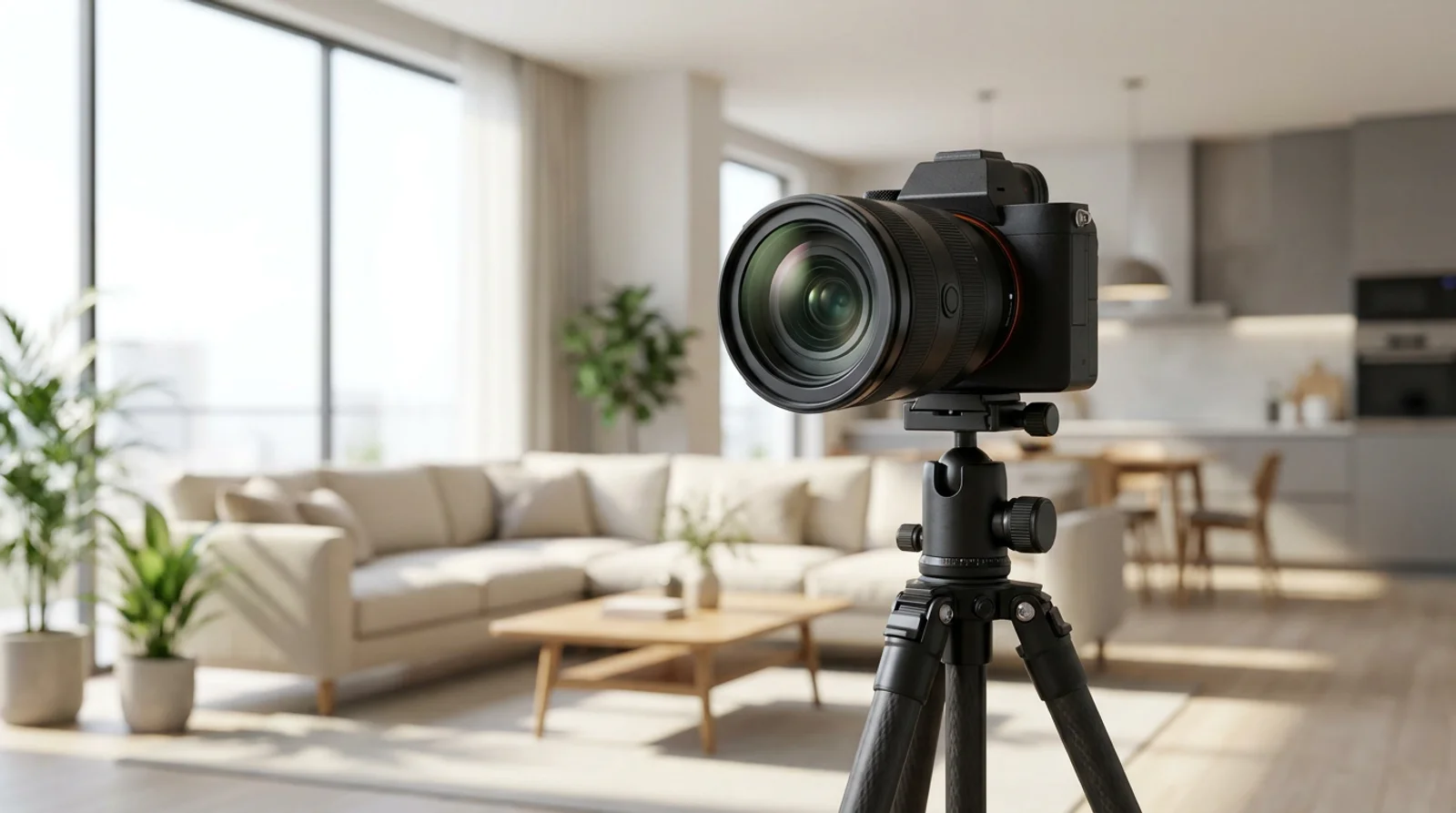
The best lens for real estate photography is a wide-angle zoom in the 16-35mm range (roughly 10-24mm on a crop-sensor camera) with a maximum aperture of f/2.8 to f/4. That range is wide enough to make a 10x12 bedroom read accurately in a single frame, but not so wide that it bows the walls and stretches the corners the way a 12mm or fisheye lens does. Pair it with a full-frame or APS-C body and you can cover interiors, exteriors, and twilight shots without swapping glass mid-shoot.
Below: real picks by mount, the distortion mistakes that turn into retakes, when a tilt-shift lens earns its price tag, and which one-lens kit to buy at every budget.
Why 16-35mm Is the Real Estate Workhorse
Every focal length in a real estate photographer's bag is a trade-off between coverage and distortion. Go too narrow, 24-70mm alone, and you can't back a small bathroom or bedroom into frame without standing in the hallway. Go too wide, 12mm and under, and straight walls start to bow, ceiling lines curve, and furniture near the edge of the frame stretches in a way that looks unnatural on the MLS.
16-35mm sits in the sweet spot. At 16mm you can fit most standard rooms in one frame from a normal shooting position, at 24-35mm you have a natural, undistorted focal length for hallways, kitchens, and detail shots, and the fast end of the range (f/2.8 to f/4) means you can shoot ambient-light interiors and twilight exteriors without dragging in flash gear. That versatility is why a real estate photography lens in this range covers nearly every frame of a shoot on its own, which matters when every extra lens change costs you time you're not billing for.
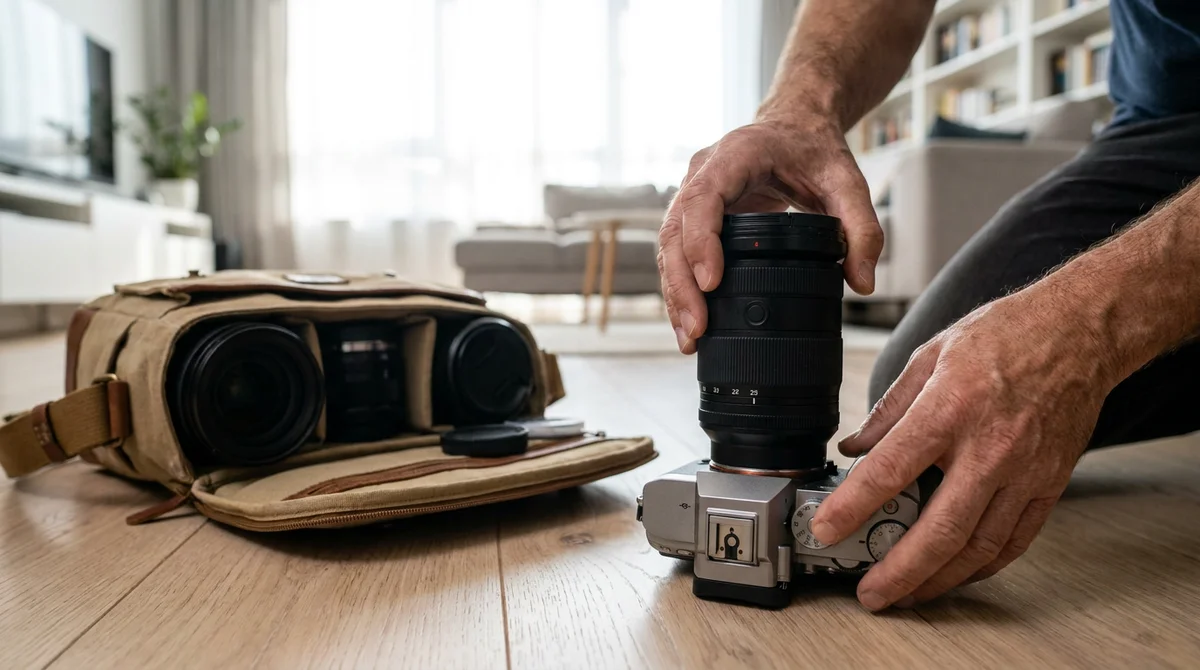
Wide-Angle Lens Picks by Mount
Every major system has a native wide-angle zoom built specifically for this kind of work, plus a cheaper third-party alternative that gets most photographers nearly all the way there.
| Mount | Lens | Focal range | Realistic price |
|---|---|---|---|
| Canon RF (mirrorless, full-frame) | Canon RF 15-35mm f/2.8L IS USM | 15-35mm | ~$2,300 |
| Canon RF (mirrorless, full-frame) | Canon RF 14-35mm f/4L IS USM | 14-35mm | ~$1,700 |
| Canon EF (DSLR, full-frame) | Canon EF 16-35mm f/4L IS USM | 16-35mm | ~$1,000 |
| Sony E (mirrorless, full-frame) | Sony FE 16-35mm f/2.8 GM II | 16-35mm | ~$2,200 |
| Sony E (mirrorless, full-frame) | Tamron 17-28mm f/2.8 Di III RXD | 17-28mm | ~$900 |
| Nikon Z (mirrorless, full-frame) | Nikon Z 14-30mm f/4 S | 14-30mm | ~$1,300 |
| Nikon Z (mirrorless, full-frame) | Nikon Z 17-28mm f/2.8 | 17-28mm | ~$1,200 |
| Nikon F (DSLR, full-frame) | Nikon AF-S 16-35mm f/4G ED VR | 16-35mm | ~$900 (less on the used market) |
The f/2.8 versions cost roughly double the f/4 versions in every system. Unless you're shooting a lot of dim twilight interiors without lighting gear, the f/4 options deliver nearly identical real estate results for a fraction of the price, the extra stop of light matters far more for events and low-light work than it does for a tripod-mounted interior shot at ISO 400.
Full-Frame vs. Crop Sensor: Why the Math Matters
If you're shooting on an APS-C (crop-sensor) body rather than full-frame, the focal lengths above don't mean the same thing. Canon crop bodies apply a 1.6x crop factor, and Sony, Nikon, and Fujifilm crop bodies apply roughly 1.5x. That means a 16mm lens on a crop body frames like a 24-26mm lens on full-frame, which is not wide enough for a tight primary bathroom or a small bedroom.
To get an equivalent field of view to a full-frame 16-35mm on a crop body, you need something closer to 10-24mm. That's why crop-sensor real estate kits typically center on lenses like the Canon EF-S 10-18mm f/4.5-5.6, Sony E 10-18mm F4 OSS, Nikon Z DX 12-28mm f/3.5-5.6 PZ VR, or Fujinon XF 10-24mm f/4. None of these are exotic or expensive, but skipping this math is the single most common reason a new real estate photographer buys a lens and then finds it isn't wide enough on move-in day.
Distortion Pitfalls That Cost You Clients
A wide-angle lens is a tool, not a shortcut, and the mistakes tend to repeat across new real estate photographers:
- Barrel distortion. Straight walls and ceiling lines bow outward toward the edges of the frame, most visible on anything wider than 14mm. Most editing software (Lightroom, Capture One) applies a lens profile correction automatically, but check every image instead of assuming it's fixed.
- Converging verticals (keystoning). Tilting the camera up to fit a tall ceiling or ceiling fan makes vertical lines lean inward, a dead giveaway of an amateur shot. Keeping the camera level, or shooting a bit lower and cropping up, avoids it entirely.
- Edge stretching. At 12mm and under, objects and furniture near the corners of the frame visibly stretch, a couch arm or doorway can look warped in a way clients notice immediately.
- Over-wide framing that misrepresents room size. Going as wide as the lens allows can make a small bedroom look considerably larger than it is in person. Beyond the distortion issue, this creates a mismatch between the listing photos and what a buyer sees at the showing, which is exactly the kind of complaint that erodes trust with an agent. Our MLS photo requirements guide covers the accuracy standards agents expect from listing photography.
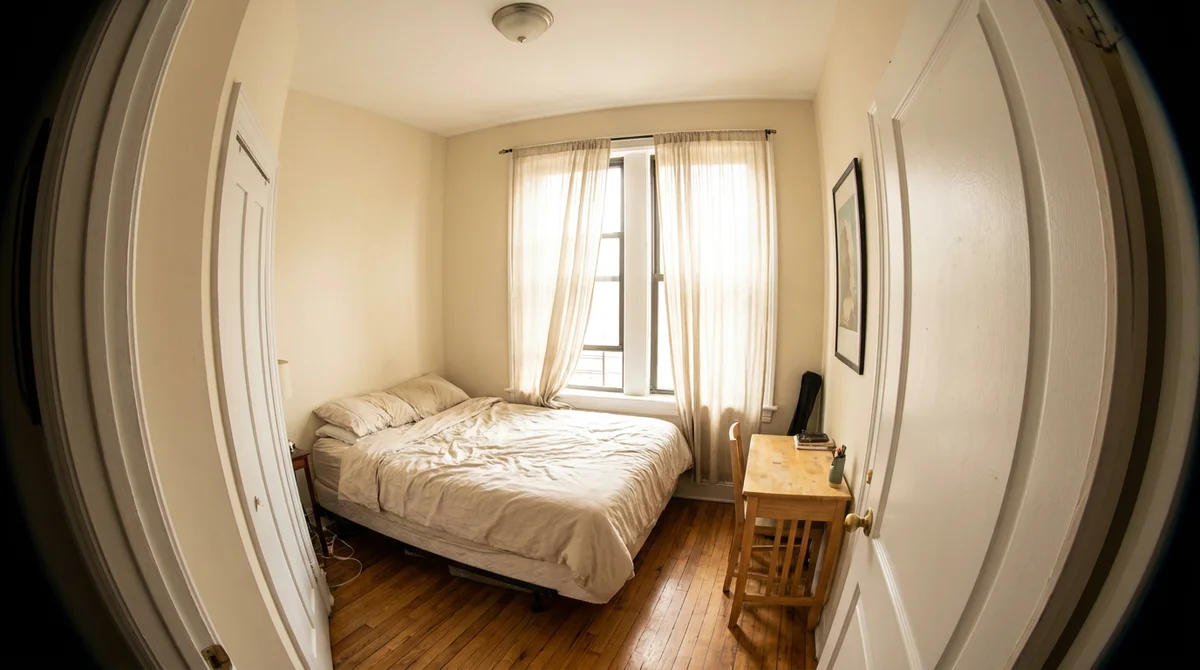
The fix for most of these issues is simple: shoot at 16-24mm instead of maxing out at 12mm, keep the camera level, and let your editing software's lens profile handle the residual barrel distortion. Reserve anything under 14mm for genuinely tiny spaces where there's no other way to fit the room in frame.
Tilt-Shift Lenses for Luxury Listings
For photographers who regularly shoot high-end exteriors or architectural interiors, a tilt-shift (perspective control) lens solves the converging-verticals problem at the optical level instead of in post. Shifting the lens element up while keeping the camera and sensor perfectly level lets you fit a full two-story facade in frame with dead-straight vertical lines, no keystoning correction, and no loss of resolution at the edges from cropping and stretching a corrected image back into shape.
The category has both premium and budget options: Canon's TS-E 17mm f/4L and TS-E 24mm f/3.5L II run around $2,200, Nikon's PC 19mm f/4E ED is closer to $3,400, and the manual-focus Laowa 15mm f/4.5 Zero-D Shift (available across Canon RF, Nikon Z, Sony E, and Leica L mounts) delivers most of the same correction for around $950.
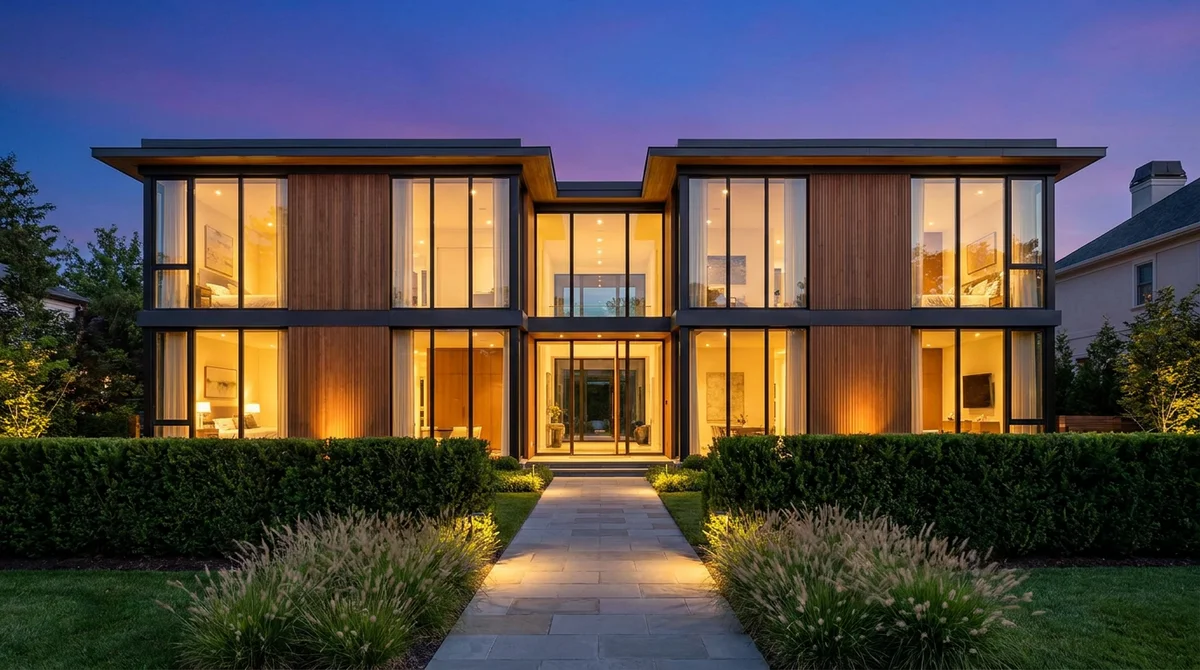
Whether it's worth the investment comes down to your listing mix. If luxury exteriors and architectural detail shots are an occasional add-on, correcting convergence in Lightroom is good enough. If they're a recurring part of your business, a tilt-shift lens lets you deliver a genuinely higher-end product yourself, rather than referring the job to an architectural specialist and losing that fee.
The One-Lens Kit: What to Buy at Every Budget
If you only buy one lens for real estate work, here's how to match it to your budget and workload.
| Budget tier | Recommended lens | Price | Best for |
|---|---|---|---|
| Starter | Crop-sensor wide zoom (Canon EF-S 10-18mm, Sony E 10-18mm F4) or a manual 14mm f/2.8 prime | $280-500 | New photographers on an APS-C body or side-hustle shooters |
| Working Pro | Full-frame f/4 zoom or third-party f/2.8 (Tamron 17-28mm, Nikon Z 14-30mm f/4 S, Canon RF 14-35mm f/4L) | $900-1,700 | Full-time photographers who need low-light range for twilight and unlit interiors |
| Premium | Brand-name f/2.8 zoom (Canon RF 15-35mm f/2.8L, Sony FE 16-35mm GM II) plus a tilt-shift lens for architectural work | $2,200-3,400+ combined | Luxury-listing specialists billing for architectural-grade deliverables |
A working photographer shooting a handful of listings a week rarely needs to go past the middle tier. The jump to premium glass buys you a stop or two of extra light and slightly better corner sharpness wide open, real advantages, but not ones that change whether a listing sells.
Protecting Your Margin: The Right Glass Pays for Itself
The math on a real estate photography lens is a margin decision as much as a gear decision. A $900-1,700 zoom that nails every room in one pass, with straight lines and no do-overs, pays for itself within a handful of listings if it saves even one callback trip. The wrong lens does the opposite: distorted hallway shots you have to explain to an agent, rooms you can't fit in frame, and specialty work, luxury exteriors, architectural detail, that you end up referring out because your kit can't cover it. Every referral is margin someone else keeps. For more on packaging the shoot once your kit is dialed in, see our guide to real estate photography pricing and our roundup of AI tools for real estate photographers.
The same keep-it-in-house logic applies once the stills are captured. Walkthrough video is one of the highest-priced add-ons on a listing package, but most photographers refer that work out because they don't own a gimbal or have editing time to spare. RoomLift's Compose tool turns the same photos you shot with your wide-angle lens into a polished property tour: drop in your images (or pull them straight from the listing URL), pick a preset like property tour or before/after, and Compose handles AI camera motion, voiceover, and background music, then exports in the aspect ratios you need for MLS, Reels, TikTok, and YouTube. No gimbal, no video subcontractor to split the fee with.
Turn the photos from your next shoot into a video tour with RoomLift Compose, no video gear required.
Stage your first room in 20 seconds. No design skills needed.
If your listings could also use a virtual staging upsell for the empty rooms you shot with that same lens, RoomLift's real estate photo editing handles staging, item removal, and twilight conversion in one workflow. For exterior-heavy shoots, our guide to AI exterior rendering covers previewing facade or landscaping changes before a listing goes live.
Frequently Asked Questions
What is the best lens for real estate photography?
For most photographers, the best lens for real estate photography is a wide-angle zoom in the 16-35mm range (roughly 10-24mm on a crop-sensor body) with a maximum aperture of f/2.8 to f/4. That range is wide enough to make small rooms read accurately without the exaggerated stretching of anything under 14mm, and it doubles as a capable exterior and twilight lens so you rarely need to swap glass mid-shoot.
Should I use a zoom or a prime lens for real estate photography?
A zoom is almost always the better choice. A 16-35mm zoom lets you adjust framing room to room without repositioning the tripod or swapping lenses mid-shoot, which matters when you're billing by the listing, not the hour. Manual-focus primes like a 14mm f/2.8 are cheaper and sharp, but the lack of framing flexibility slows down a multi-room shoot.
What focal length is best for photographing interiors?
Most professional real estate photographers shoot the majority of interior frames between 16mm and 24mm on a full-frame camera. Anything wider than 14mm starts to visibly bow straight lines and stretch the corners, and anything narrower than 24mm struggles to fit a full room in frame from a normal standing position.
Do I need a full-frame camera for real estate photography?
No, but the lens math changes. A crop-sensor (APS-C) camera has a 1.5x to 1.6x crop factor, so a 16mm lens behaves like a 24-26mm lens, which is not wide enough for tight rooms. To match a full-frame 16mm field of view on a crop body, look for a lens closer to 10-11mm, such as the Canon EF-S 10-18mm or Sony E 10-18mm F4.
Is a tilt-shift lens worth it for real estate photography?
It depends on your market. Tilt-shift lenses like the Canon TS-E 17mm f/4L or the budget Laowa 15mm f/4.5 Zero-D Shift correct converging vertical lines optically, without the cropping and edge-stretching that comes from fixing keystoning in post. At $950 to $3,400, they only pay for themselves if you regularly shoot luxury listings or architectural work where perfectly straight lines are part of the pitch.
Can I use my kit lens for real estate photography?
A standard 18-55mm or 24-70mm kit lens works for exteriors and larger rooms, but it struggles in small bedrooms, bathrooms, and hallways where you can't back up far enough to fit the whole space in frame. Most photographers find they need something wider than 18mm full-frame equivalent within their first few shoots of tight interiors.
Ready to transform your listings?
Stage your first room in 20 seconds. No design skills needed.