RoomLift Logo

Traditional Patio Design

AI-Powered Design Visualization

Upload a photo of your patio and transform it into stunning Traditional design in under 60 seconds.

Start designing now

No credit card required. 10 free renders.

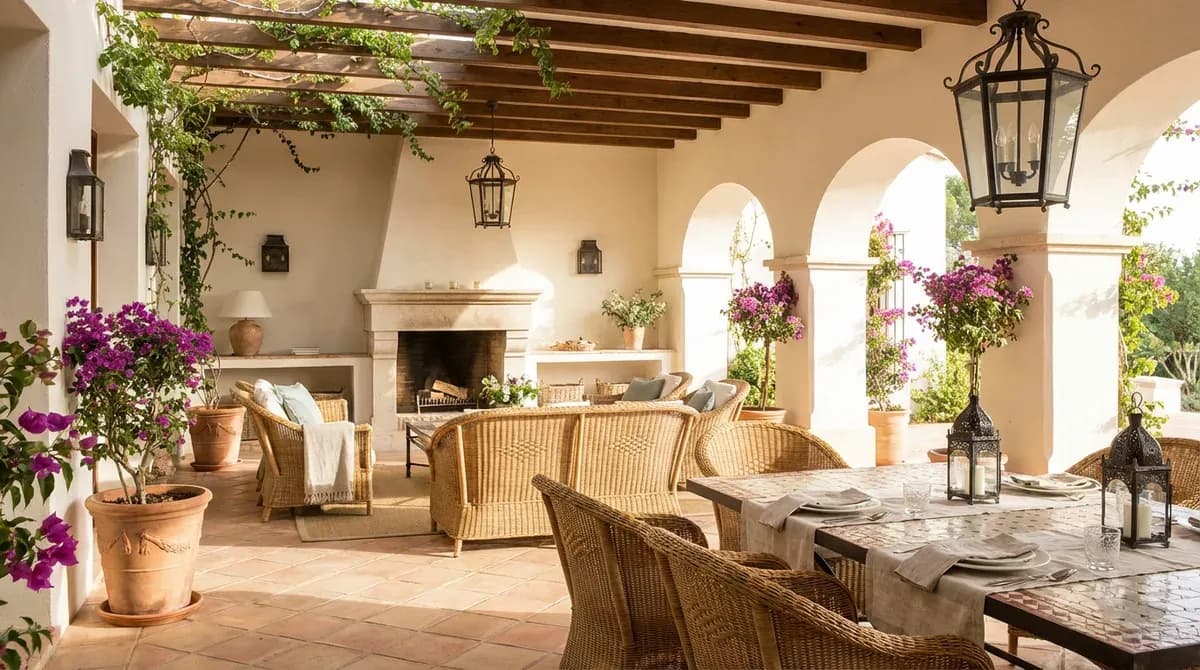
Traditional Patio design visualization

Color Palette

The essential colors of Traditional patio design

Ivory
Hunter Green
Warm Walnut
Antique Gold
Rich Burgundy
Weathered Stone

Design Tips

Expert recommendations for your Traditional patio

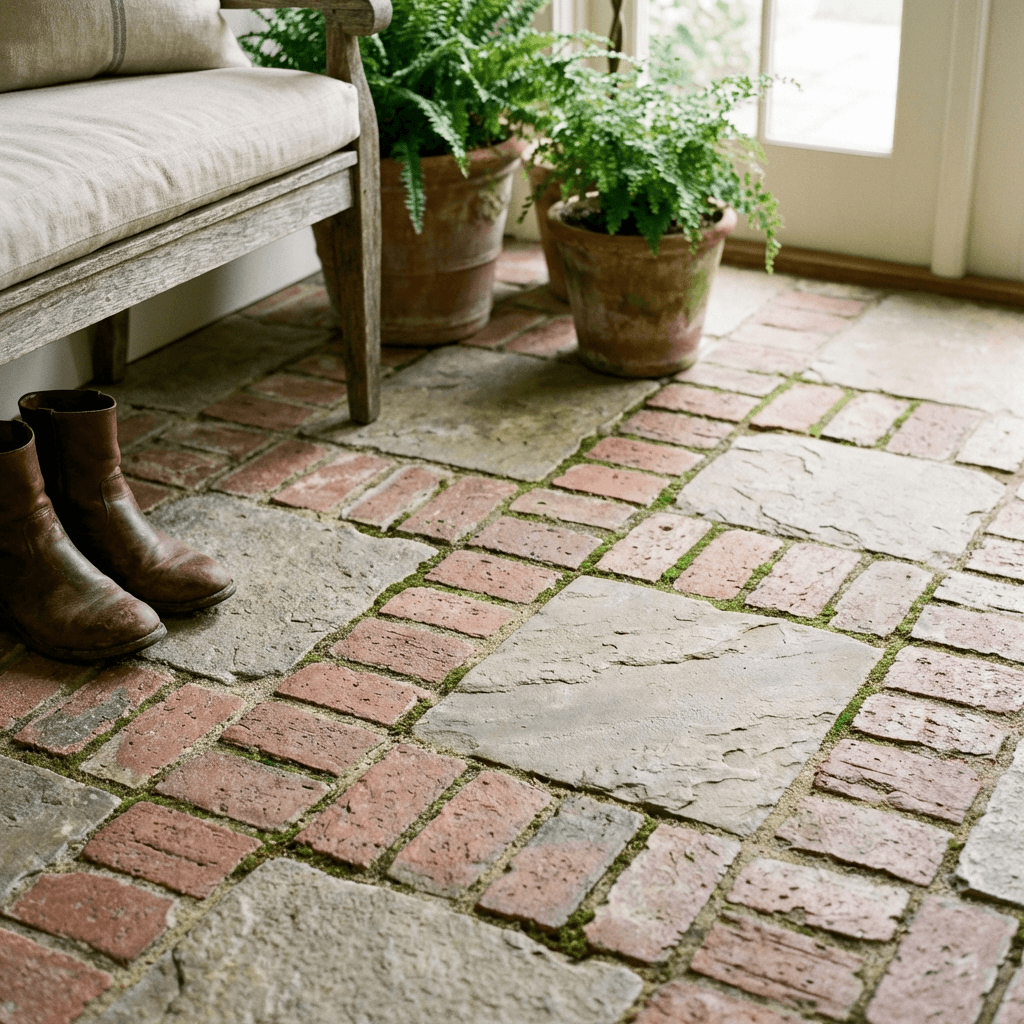
Use natural stone or brick for the patio surface

Use natural stone or brick for the patio surface

Flagstone, bluestone, or reclaimed brick laid in a herringbone or running-bond pattern creates an authentic traditional patio foundation. The natural variation in stone color and texture adds character that poured concrete cannot replicate. For a more formal look, use large, evenly cut stone pavers with tight mortar joints in a geometric grid.

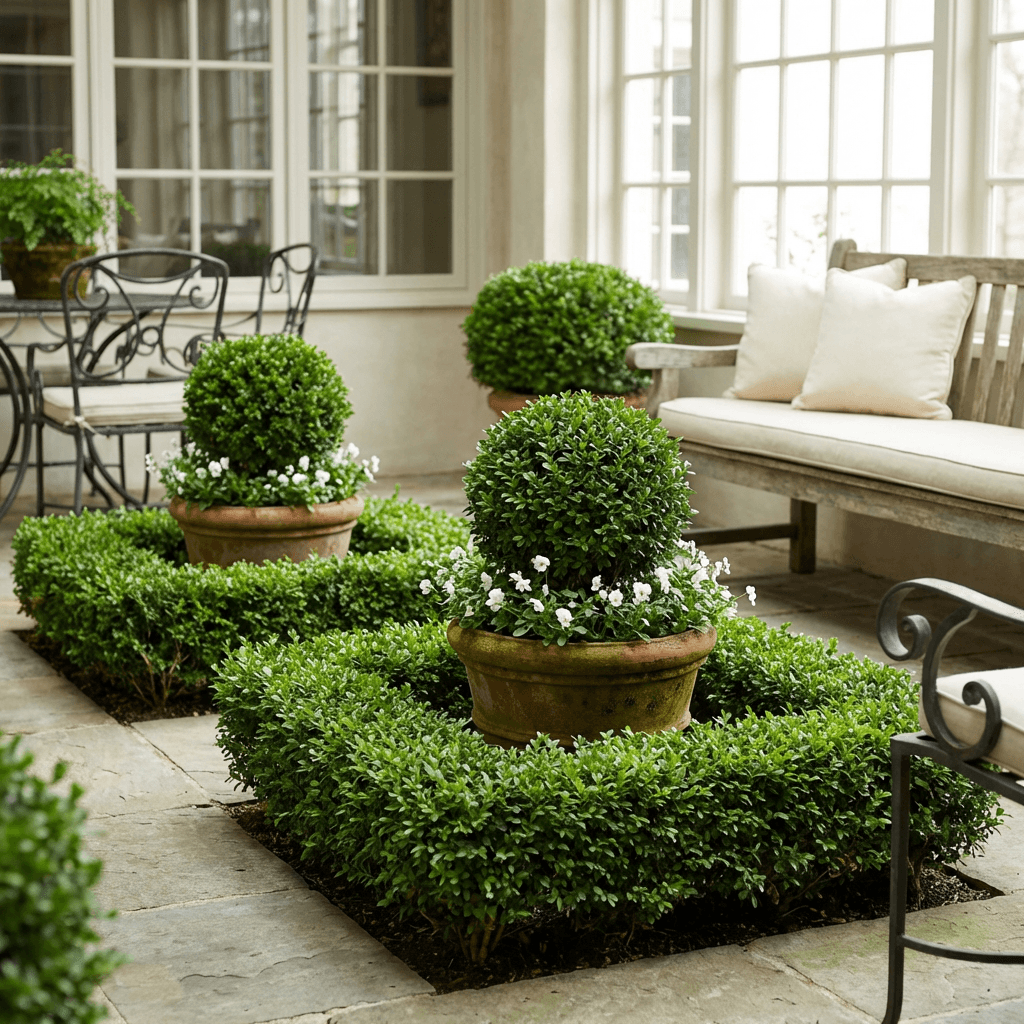
Create structure with boxwood hedging and symmetrical plantings

Create structure with boxwood hedging and symmetrical plantings

Traditional patios are framed by the garden rather than separated from it. Low boxwood hedges define the patio's edges, and symmetrical plantings in matching urns flank doorways and seating areas. Formal garden structure — clipped hedges, repeating plant groupings, a central focal point — extends the home's traditional language outdoors.

Furnish with weather-resistant pieces that echo indoor formality

Furnish with weather-resistant pieces that echo indoor formality

Outdoor furniture should feel like a continuation of the living room. Cast-iron or cast-aluminum dining sets with ornate detailing, deep-seat wicker armchairs with all-weather cushions in stripe or solid fabric, and a substantial teak bench along a garden wall bring traditional gravitas to the outdoor room.

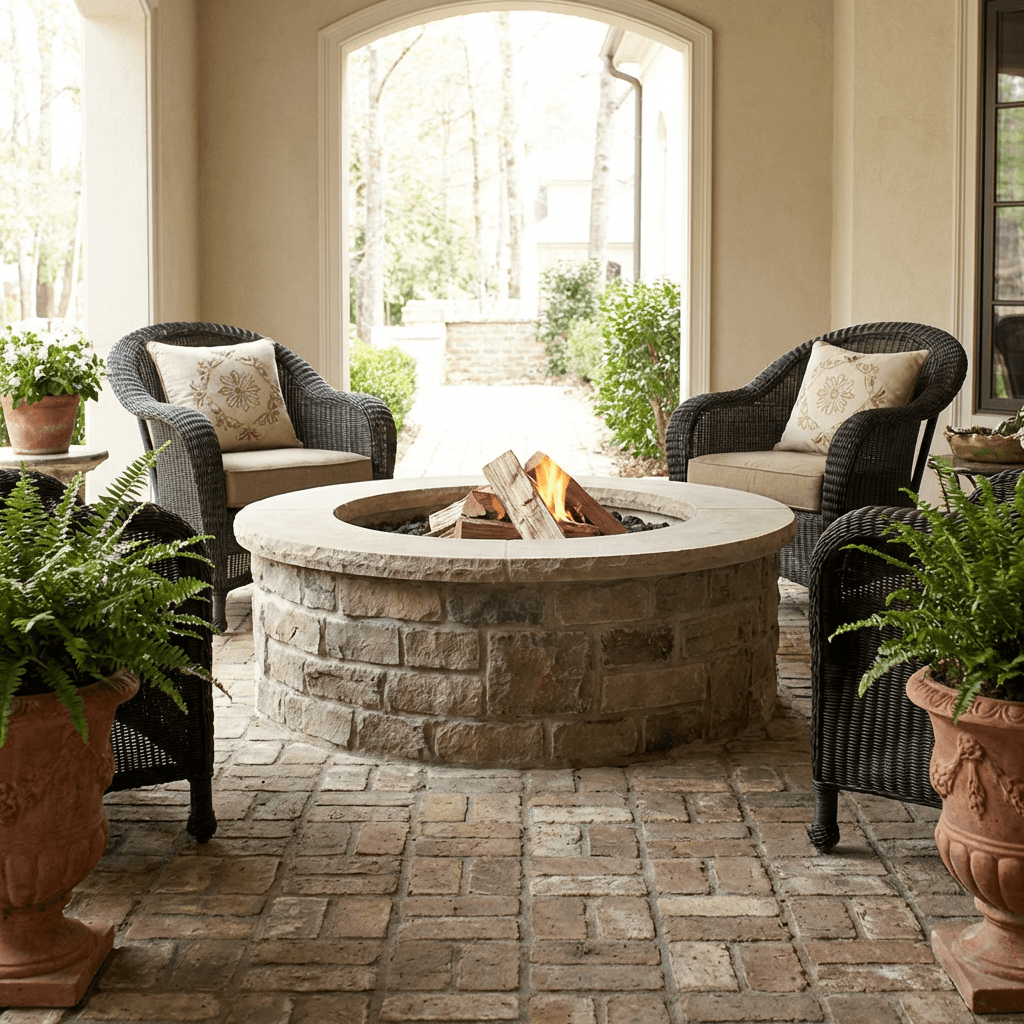
Add a focal point with a fountain, urn, or fire pit

Add a focal point with a fountain, urn, or fire pit

Every traditional outdoor space needs a centerpiece. A tiered stone fountain creates soothing sound and visual interest. A pair of large planted urns flanking the entrance establishes symmetry. A stone fire pit with a surrounding seating circle becomes the patio's evening gathering spot. Choose one focal element and let it anchor the design.

Furniture Recommendations

Key pieces for the perfect Traditional patio

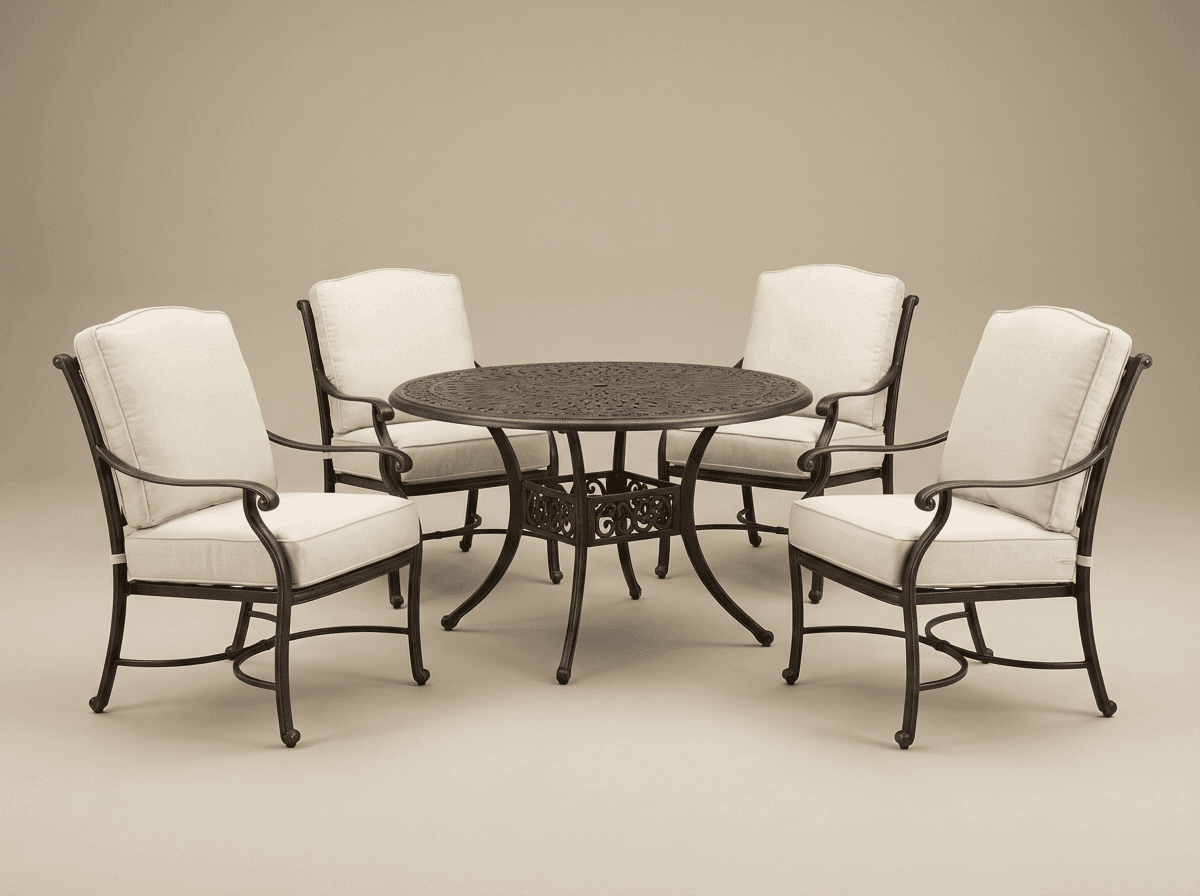
Cast-aluminum dining set with cushioned chairs

Cast-aluminum dining set with cushioned chairs

A round or oval cast-aluminum table (120-150 cm) with ornate scrollwork and four to six matching armchairs with Sunbrella cushions in hunter green, navy, or ivory stripe. Cast aluminum mimics the look of traditional cast iron but is lighter and rust-proof. Choose a set with a parasol hole for a market umbrella.

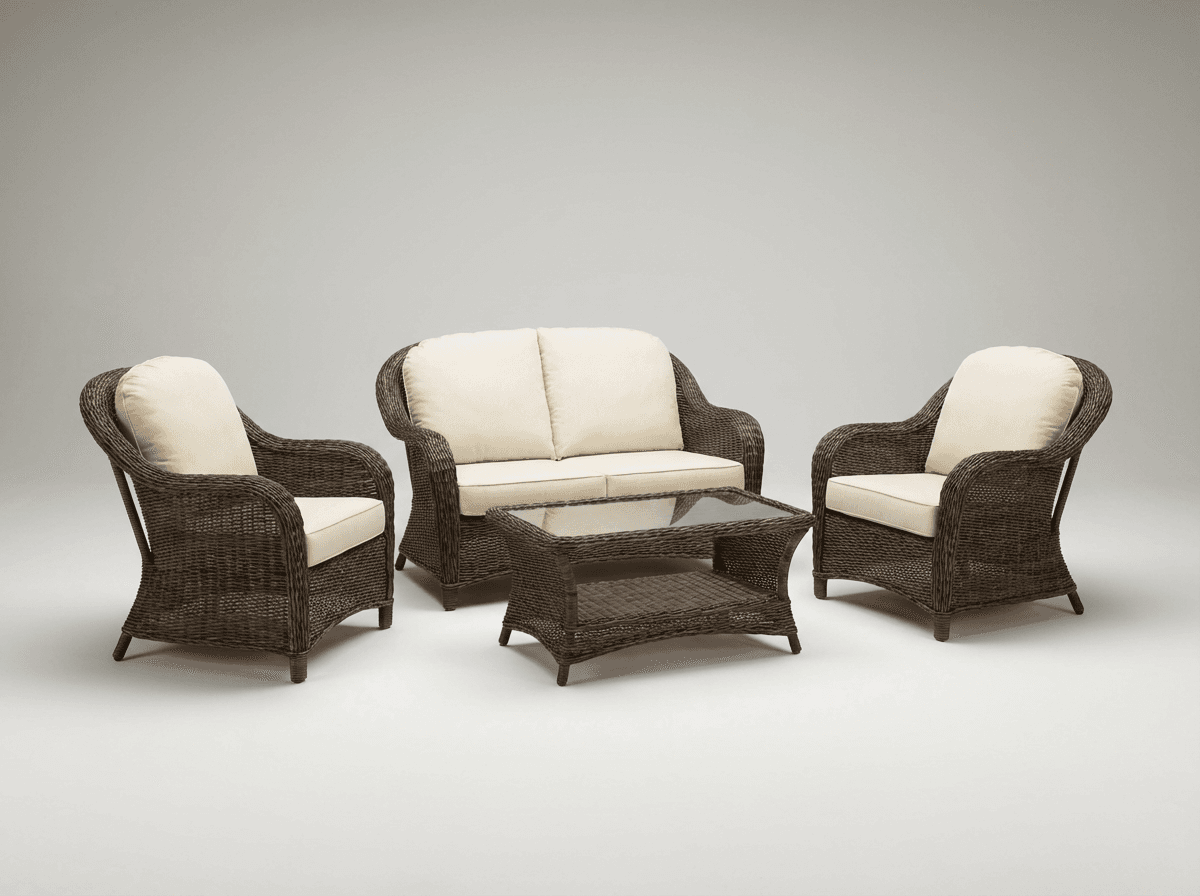
Deep-seat wicker conversation set

Deep-seat wicker conversation set

A four-piece outdoor wicker set — sofa, two chairs, and a coffee table — in a natural or dark brown all-weather wicker with thick cushions. Position around a fire pit or as a secondary seating area adjacent to the dining set. The deep seats and rolled arms mirror the comfort of indoor traditional upholstery.

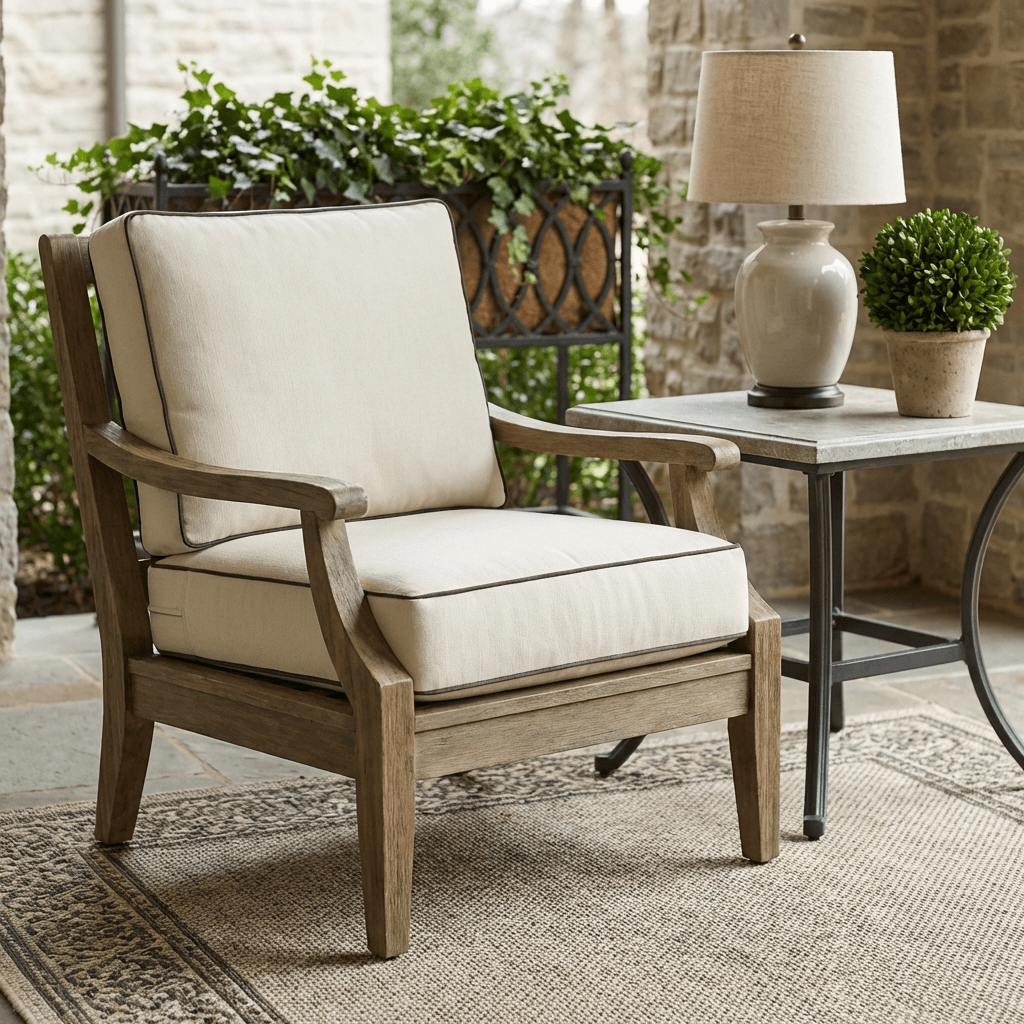
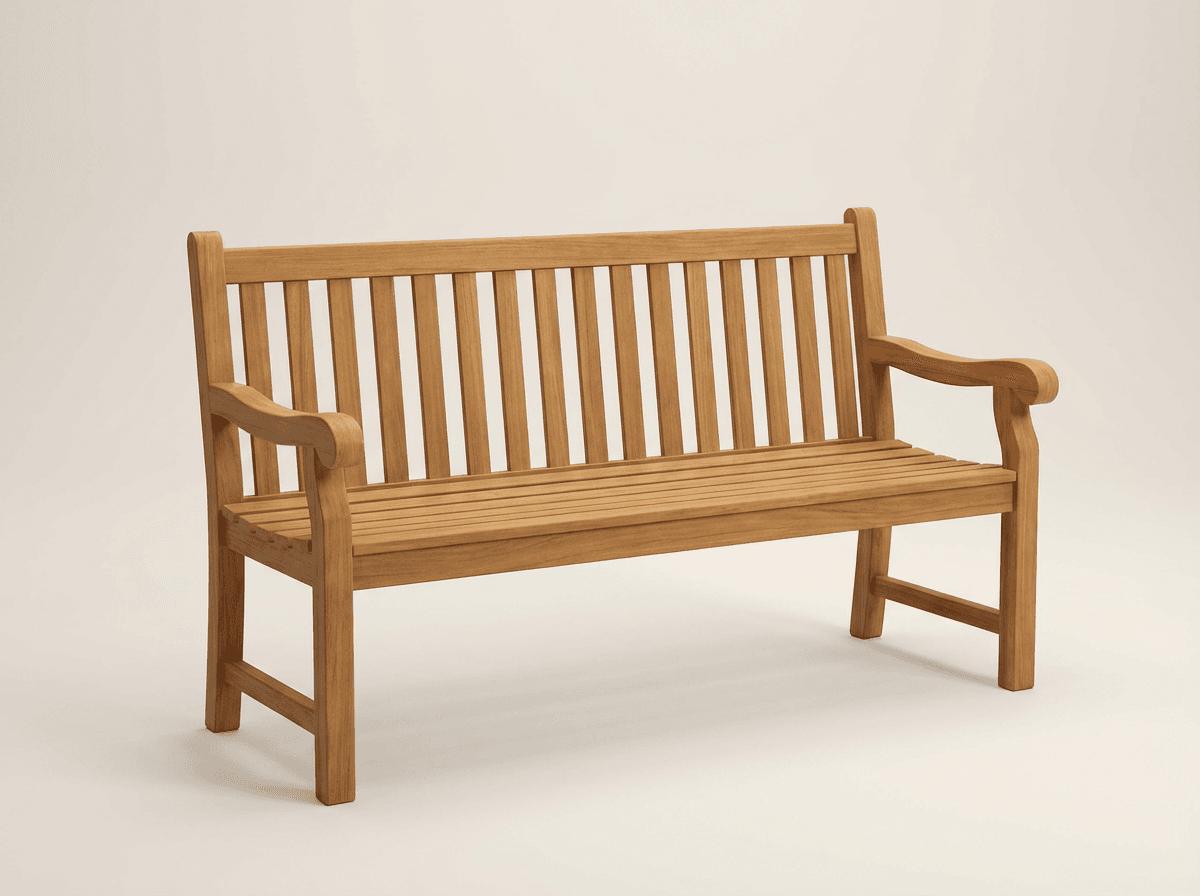
Teak garden bench

Teak garden bench

A 150-180 cm teak bench with a contoured seat, armrests, and a slatted back, positioned against a garden wall or under a shade tree. Teak weathers to a silver patina outdoors and lasts decades without maintenance. Engrave it with a family name for a personal, estate-garden touch.

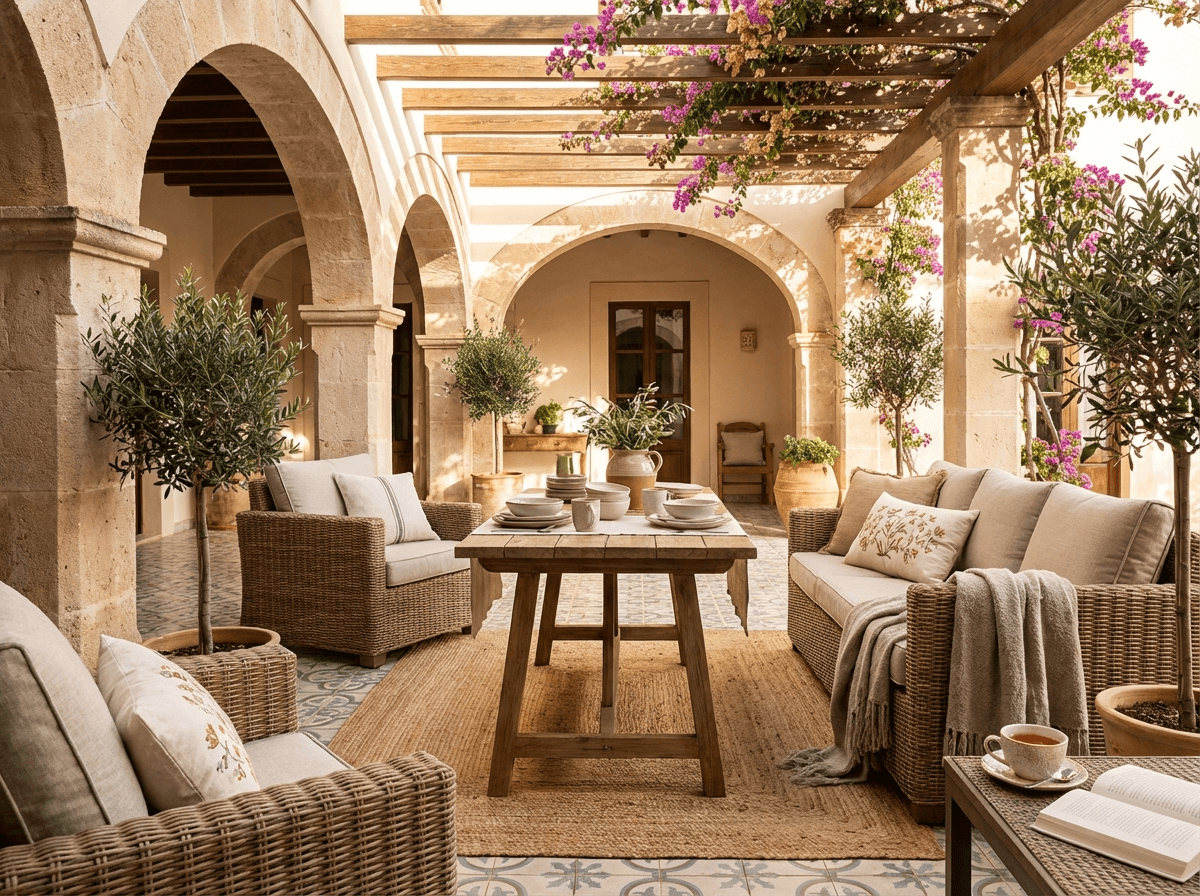
Traditional Patio interior inspiration
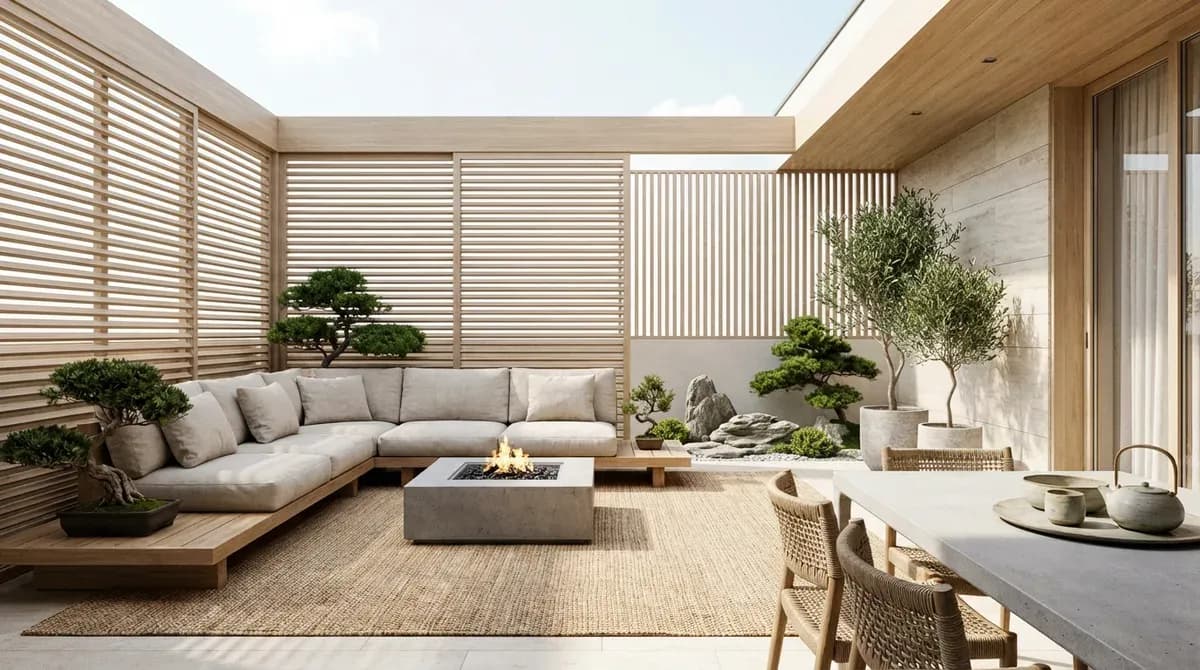
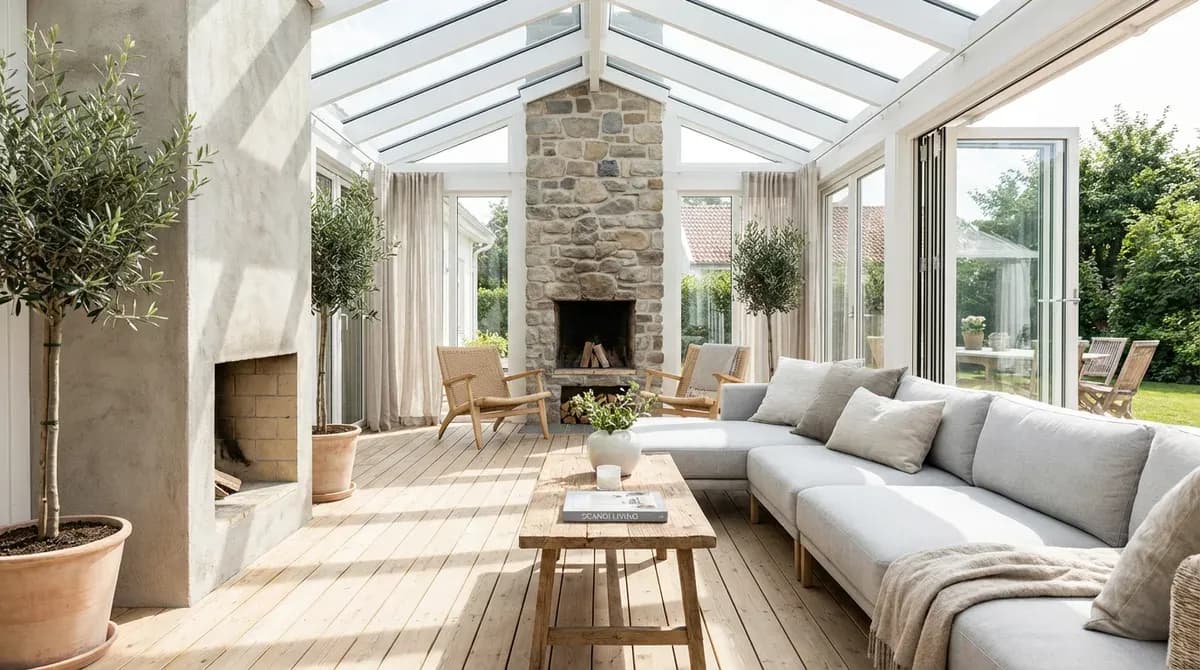
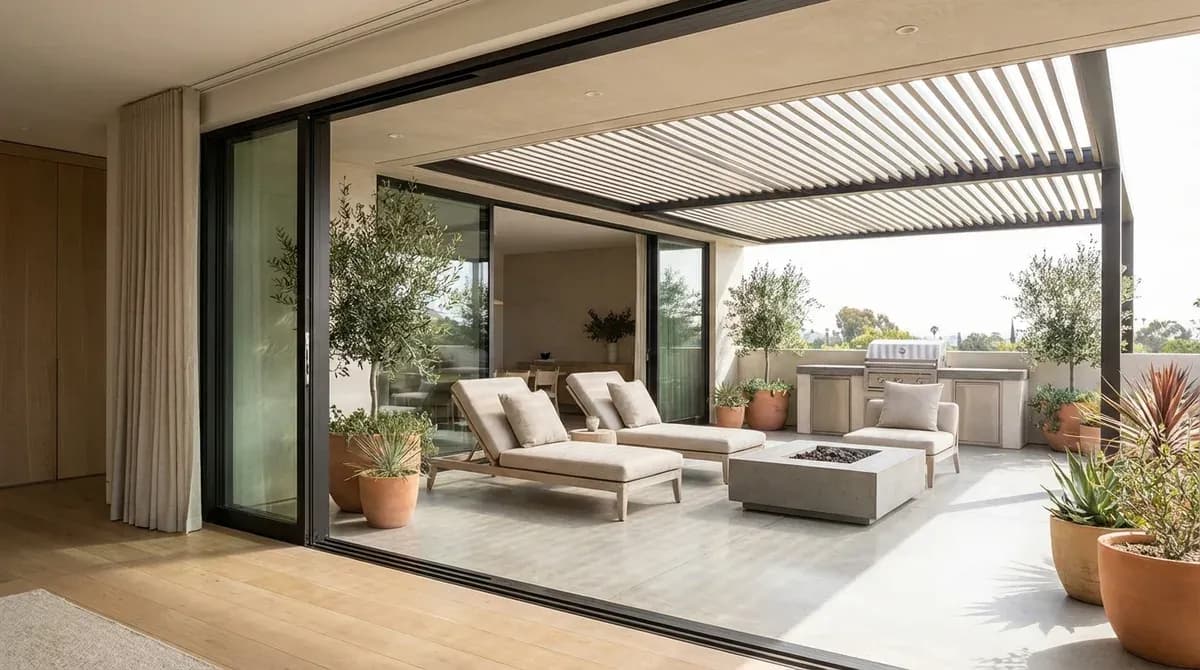
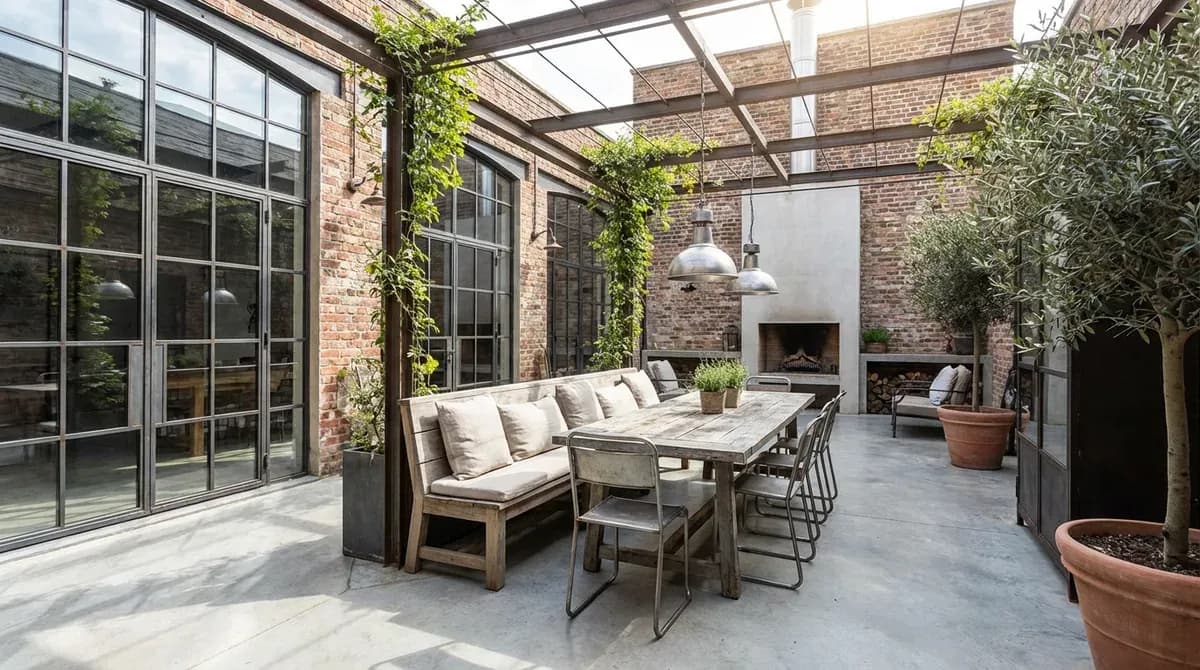
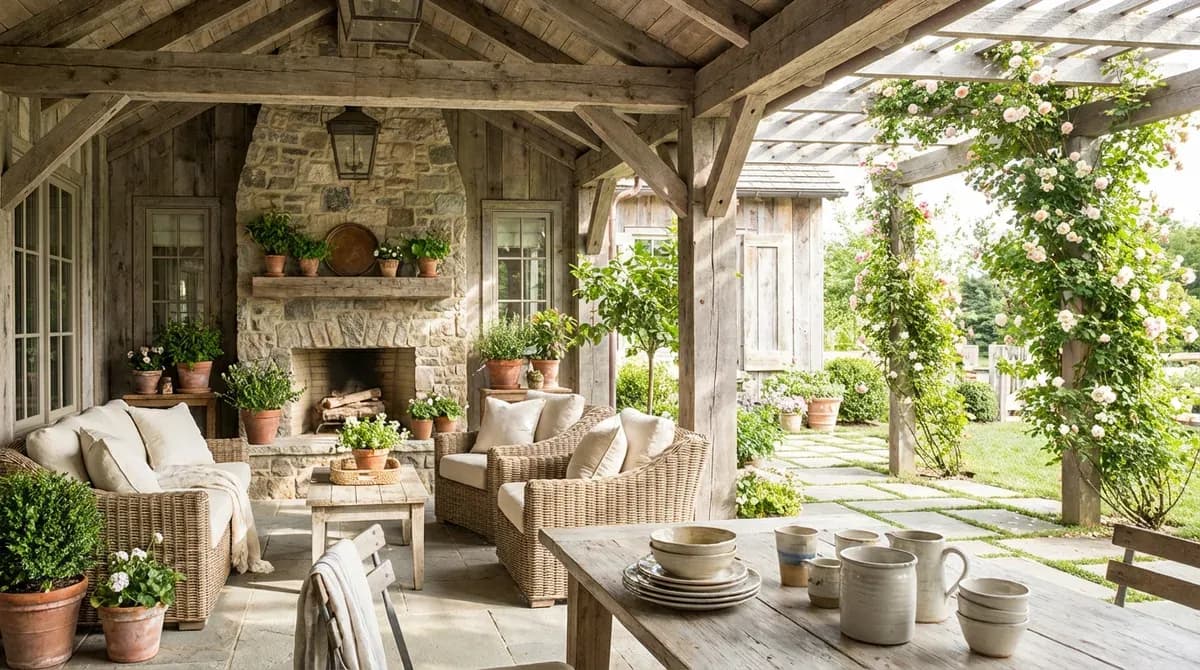
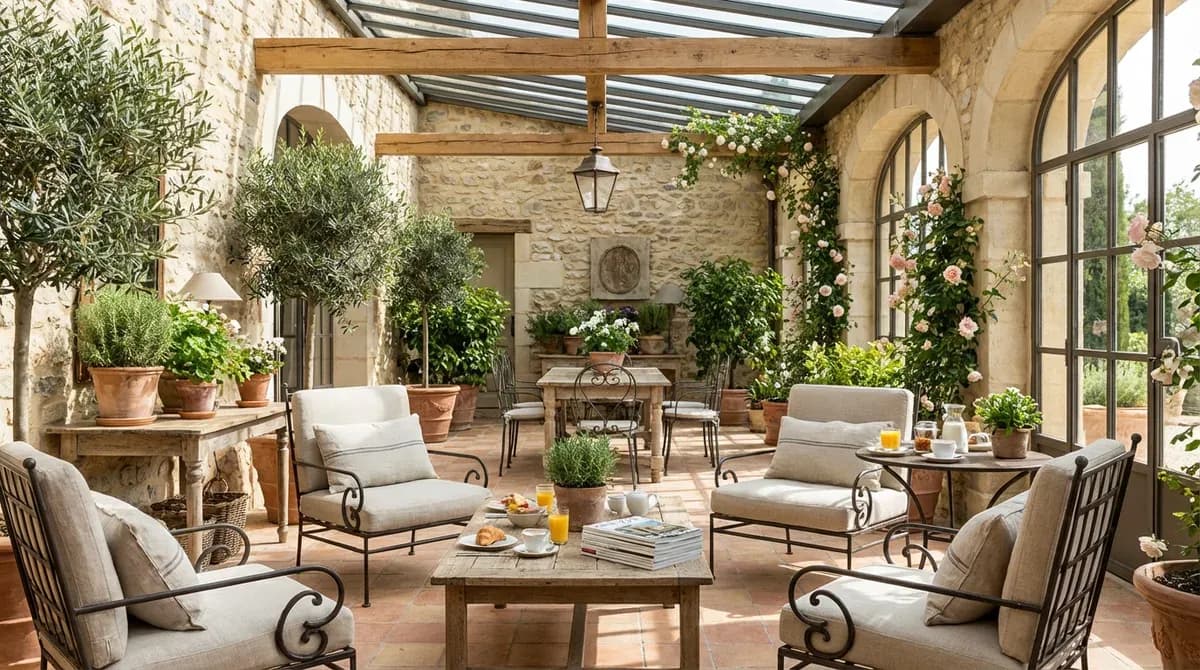
A traditional patio is the outdoor extension of a well-appointed home — not a concrete slab with a grill, but a designed room that happens to be under the sky. It shares the indoor rooms' commitment to quality materials, symmetry, and comfort: natural stone underfoot, substantial furniture arranged for conversation and dining, and garden structure that frames the space with the same intentionality as crown molding frames a ceiling. The surface matters. Bluestone, flagstone, or reclaimed brick — materials with natural variation, patina, and weight — establish the patio's character before a single piece of furniture arrives. Boxwood hedges and symmetrical plantings border the space, creating green walls that define the room and connect it to the garden beyond. A pair of planted stone urns flanks the door, echoing the bilateral balance found inside. Furnished for lingering, the patio holds a cast-aluminum dining set for evening meals, a deep-seat wicker grouping around a fire pit for after-dinner conversation, and a teak bench along the garden wall for quiet morning reading. As evening falls, coach lanterns by the door and hurricane candles on the table cast the warm, flickering light that has drawn people outside since the first terrace was laid in the first garden — a tradition that no design trend can improve upon.

This Room in Every Style

Explore more design styles for your patio

More Traditional Rooms

See Traditional design in other rooms

Frequently Asked Questions

Tout ce que vous devez savoir sur RoomLift — pour les designers, agents et tous ceux qui transforment des espaces avec l'AI.

How do I design a traditional outdoor patio?
Use natural stone or brick for the patio surface. Choose substantial outdoor furniture in cast aluminum, teak, or all-weather wicker. Add symmetrical plantings, boxwood borders, and a focal point like a stone fountain or a pair of planted urns. Use outdoor-rated fabrics in classic colors — hunter green, navy, ivory, and burgundy stripes.
What patio furniture material is most traditional?
Cast iron or cast aluminum with ornate detailing for dining sets, teak for benches and accent tables, and all-weather wicker for lounge seating. These materials have been used in traditional outdoor furniture for over a century and develop beautiful patinas with age. Avoid plastic resin or ultra-modern powder-coated steel.
How do I make a patio feel like an outdoor room?
Define the space with a stone or brick surface, border it with plantings or hedges, furnish it with comfortable seating arranged for conversation, add a rug and throw pillows, and install layered lighting (string lights, lanterns, sconces). The more the patio mimics an interior room's comfort and structure, the more it will be used.
What plants work around a traditional patio?
Boxwood hedges for borders, hydrangeas and roses for color, lavender for fragrance, and climbing jasmine or wisteria on a trellis or pergola. Use matched pairs of planted urns (ivy topiaries, citrus trees, or standard roses) for formal symmetry. Evergreen structure is more important than seasonal flower displays.
How do I light a traditional patio for evening use?
Combine functional and atmospheric lighting: wall-mounted coach lanterns by the door, post lanterns or path lights along walkways, string lights or a chandelier in a covered area, and hurricane candle holders on the dining table. Warm-toned bulbs (2700K) create the inviting glow that makes outdoor evening gatherings feel special.
Commencer à concevoir gratuitement

No credit card required. 10 free renders.