RoomLift Logo

Japandi Home Office Design

AI-Powered Design Visualization

Upload a photo of your home office and transform it into stunning Japandi design in under 60 seconds.

Start designing now

No credit card required. 10 free renders.

Japandi Home Office design visualization

Color Palette

The essential colors of Japandi home office design

Paper White
Calligraphy Black
Birch Tan
Pale Sesame
Walnut Shell

Design Tips

Expert recommendations for your Japandi home office

Choose a desk with honest craftsmanship

Choose a desk with honest craftsmanship

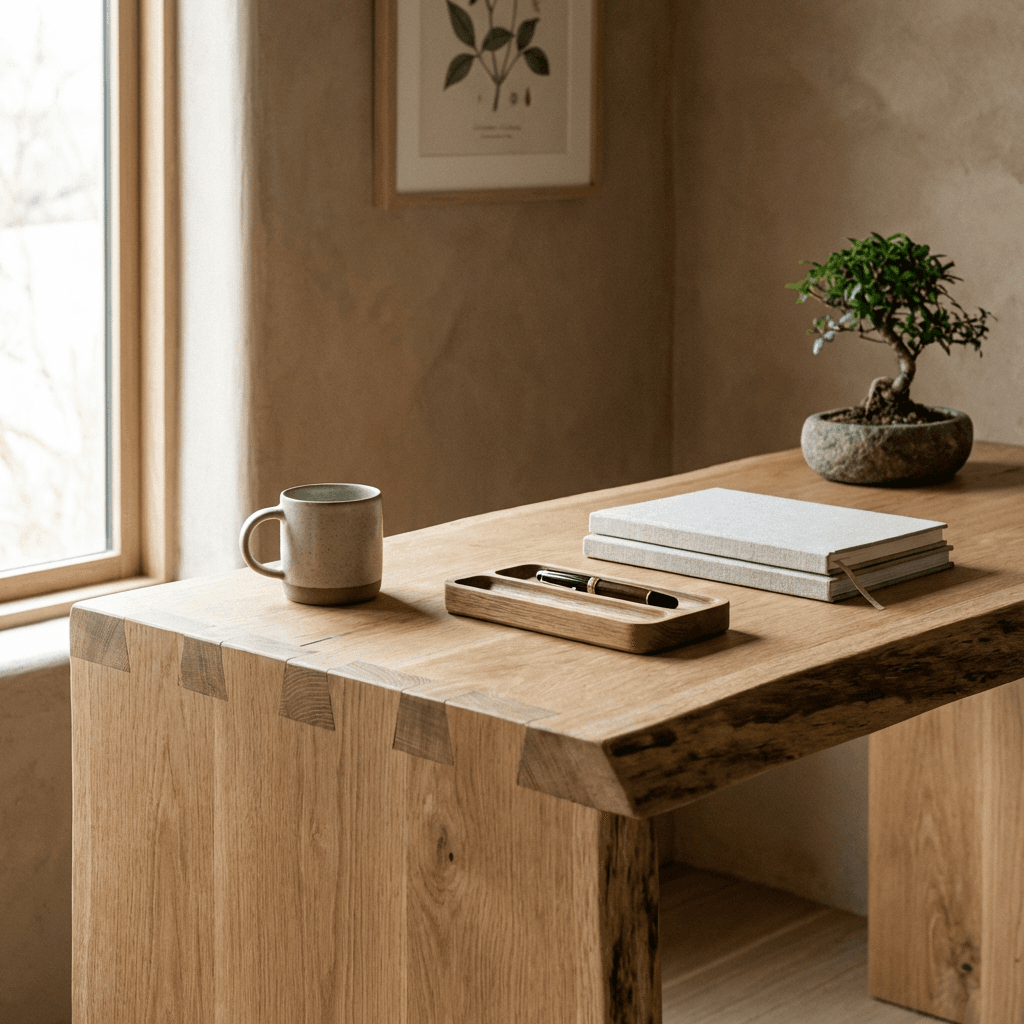
A solid wood writing desk with visible joinery — mortise-and-tenon or dovetail — grounds the workspace in craft. Avoid L-shaped or bulky executive desks. A simple rectangular surface in oak or walnut, 140-160 cm wide, provides ample workspace while maintaining the room's sense of breathing space.

Clear the desk at the end of each day

Clear the desk at the end of each day

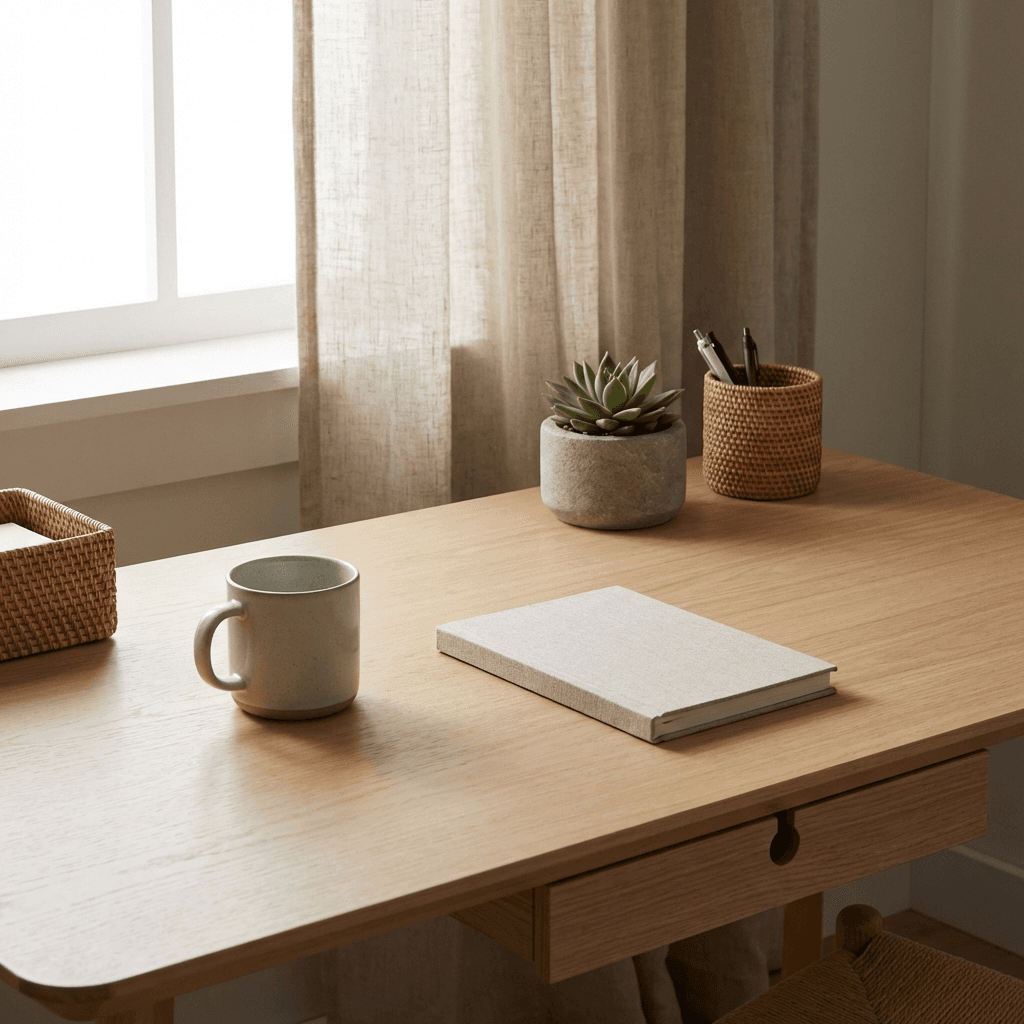
The Japandi workspace is defined as much by what is absent as what is present. Keep only your current task on the surface: a laptop, a notebook, a pen. Everything else — chargers, papers, supplies — lives in a nearby drawer or woven basket. A clear desk signals a clear mind.

Soften the room with natural textiles

Soften the room with natural textiles

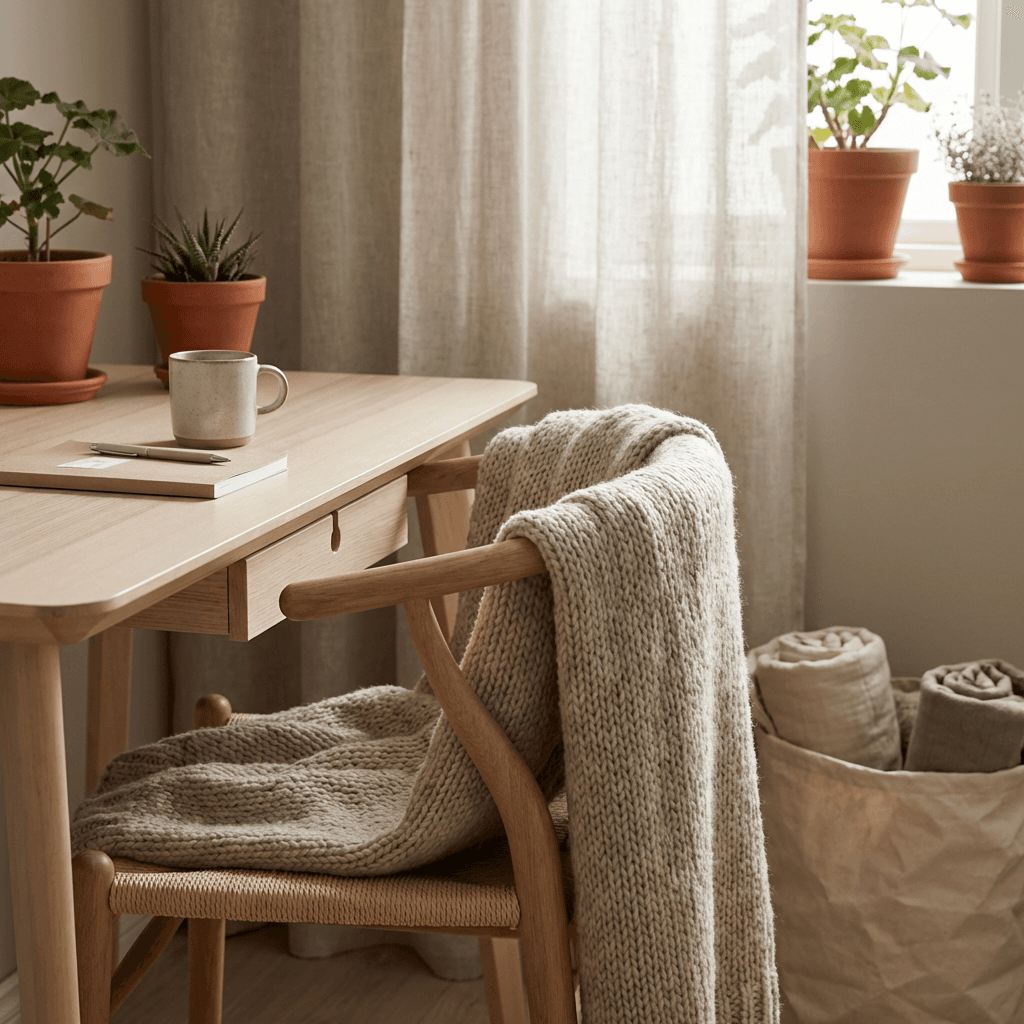
A linen curtain that diffuses harsh screen glare, a flat-weave wool rug underfoot, and a cotton seat cushion on a wooden chair prevent the home office from feeling sterile. These textures absorb sound and add the hygge warmth that keeps long work sessions comfortable.

Use indirect, warm lighting for screen work

Use indirect, warm lighting for screen work

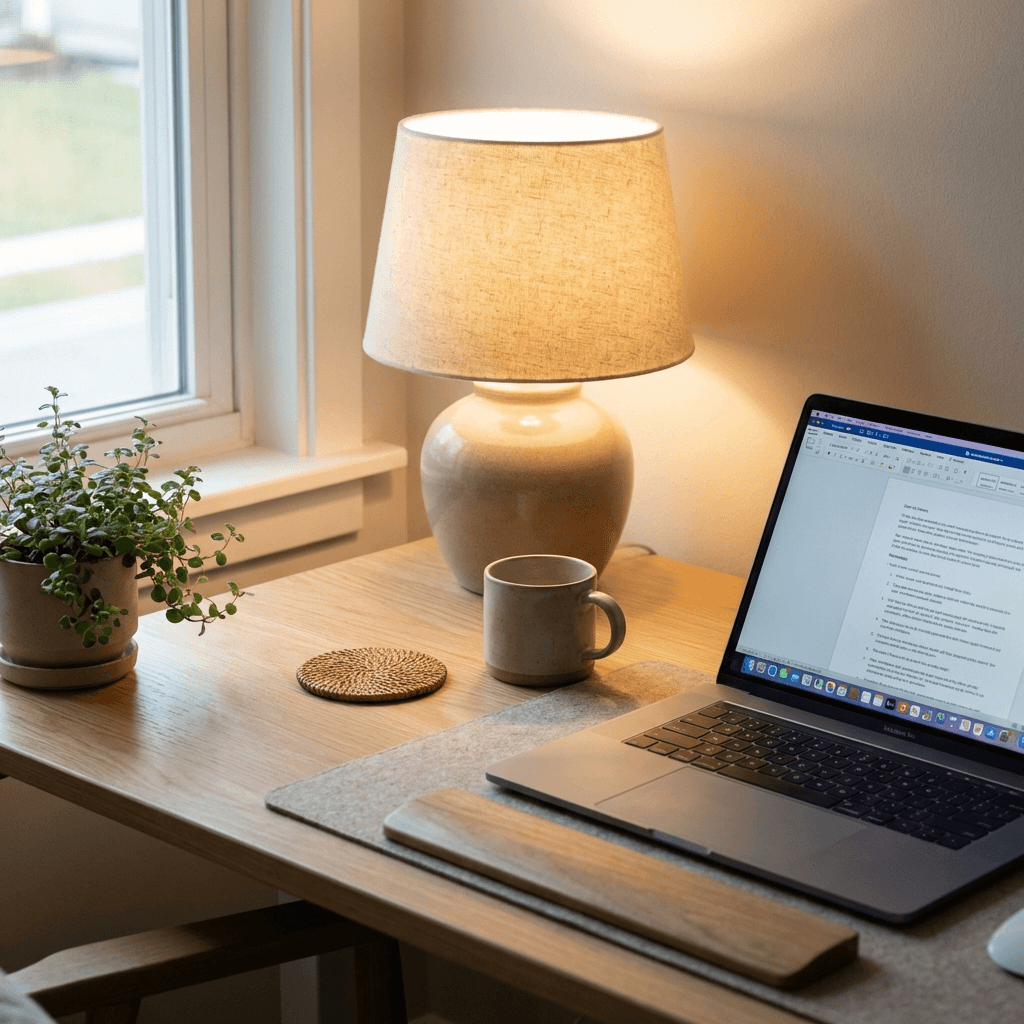
Avoid overhead downlights that create glare on monitors. Instead, pair a shoji-style floor lamp behind the desk with a small task lamp to one side. The layered, diffused lighting reduces eye strain and creates the contemplative mood of a Japanese study.

Furniture Recommendations

Key pieces for the perfect Japandi home office

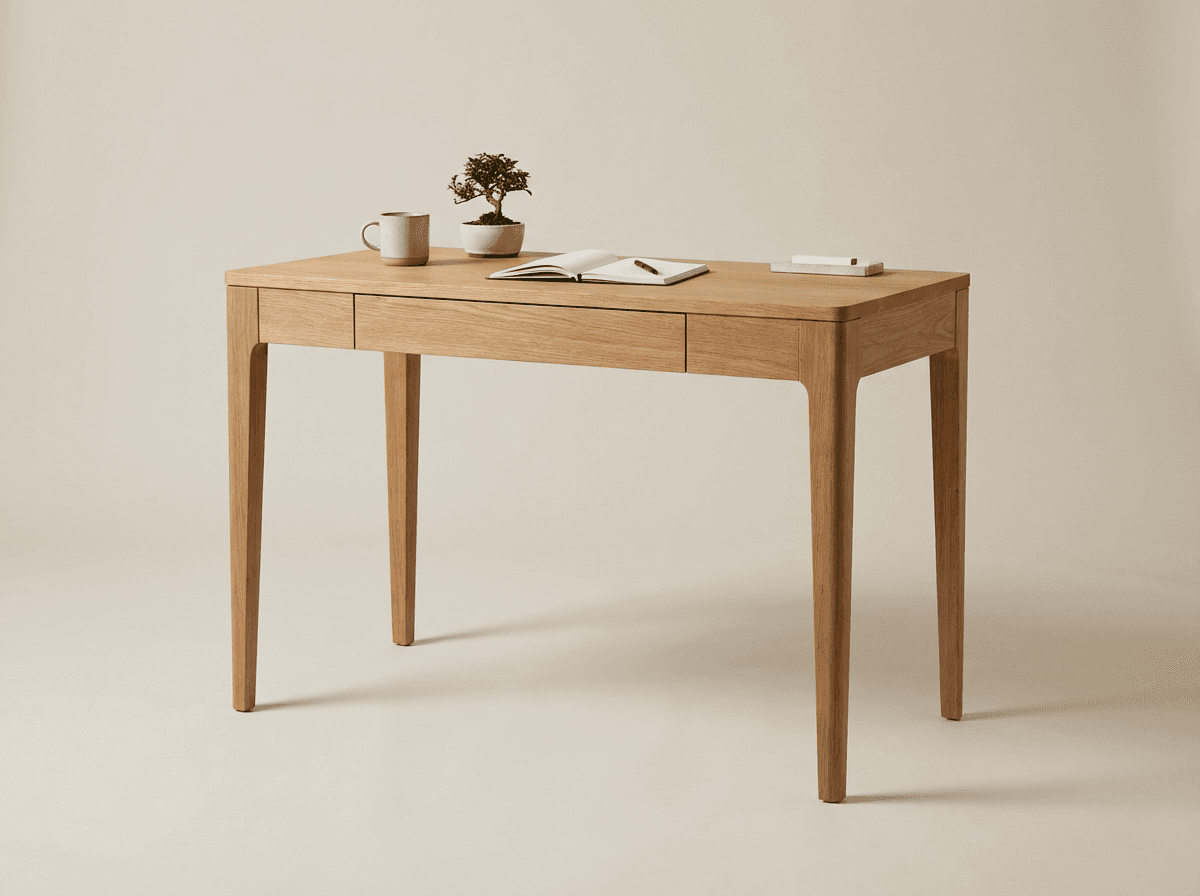
Solid oak writing desk

Solid oak writing desk

A clean-lined desk with a single shallow drawer, in light or medium oak. No cable management holes or metal frames — just a honest wood surface on tapered legs. The simplicity forces you to keep only essentials on top.

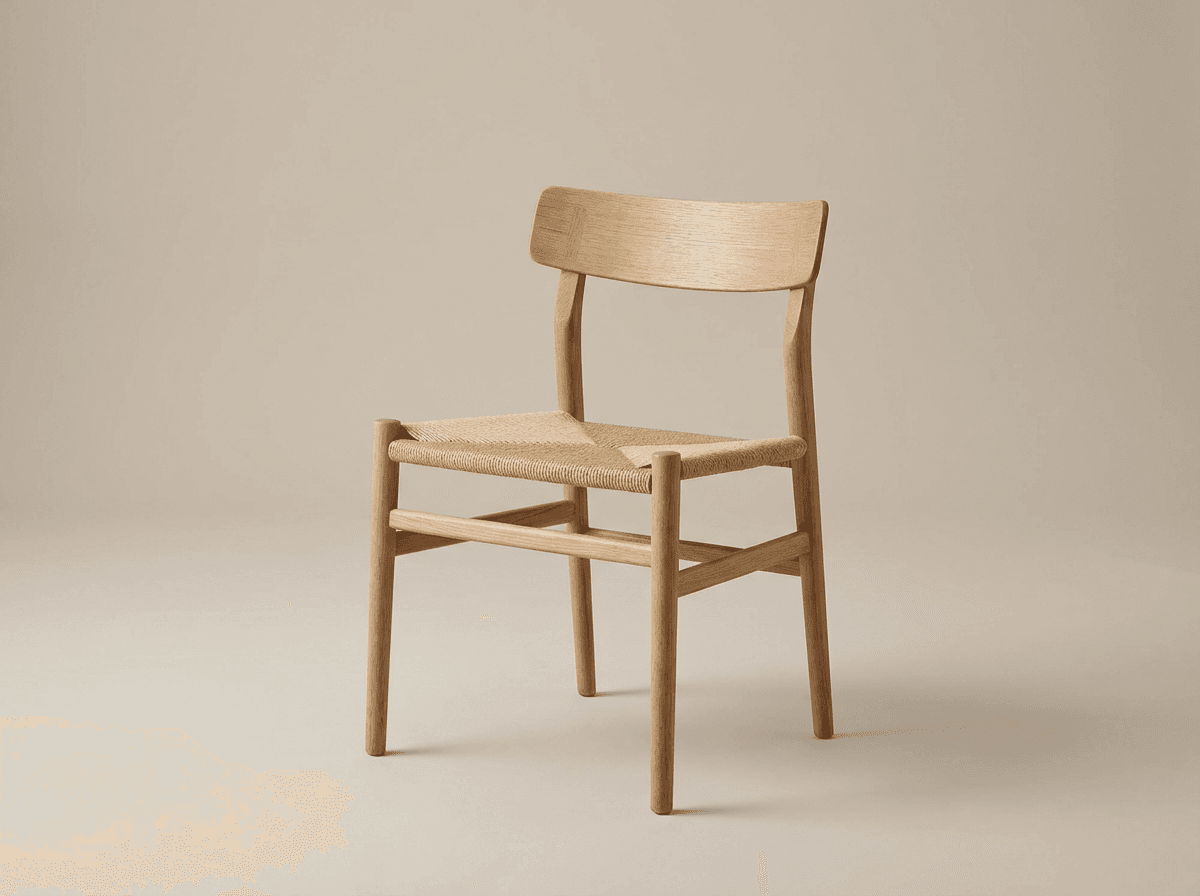
Woven-seat desk chair

Woven-seat desk chair

A wooden chair with a paper-cord seat, inspired by the Danish CH23 or a Japanese zaisu adaptation. Supportive enough for focused work sessions, visually light enough to maintain the room's airiness. Add a linen cushion for extra comfort.

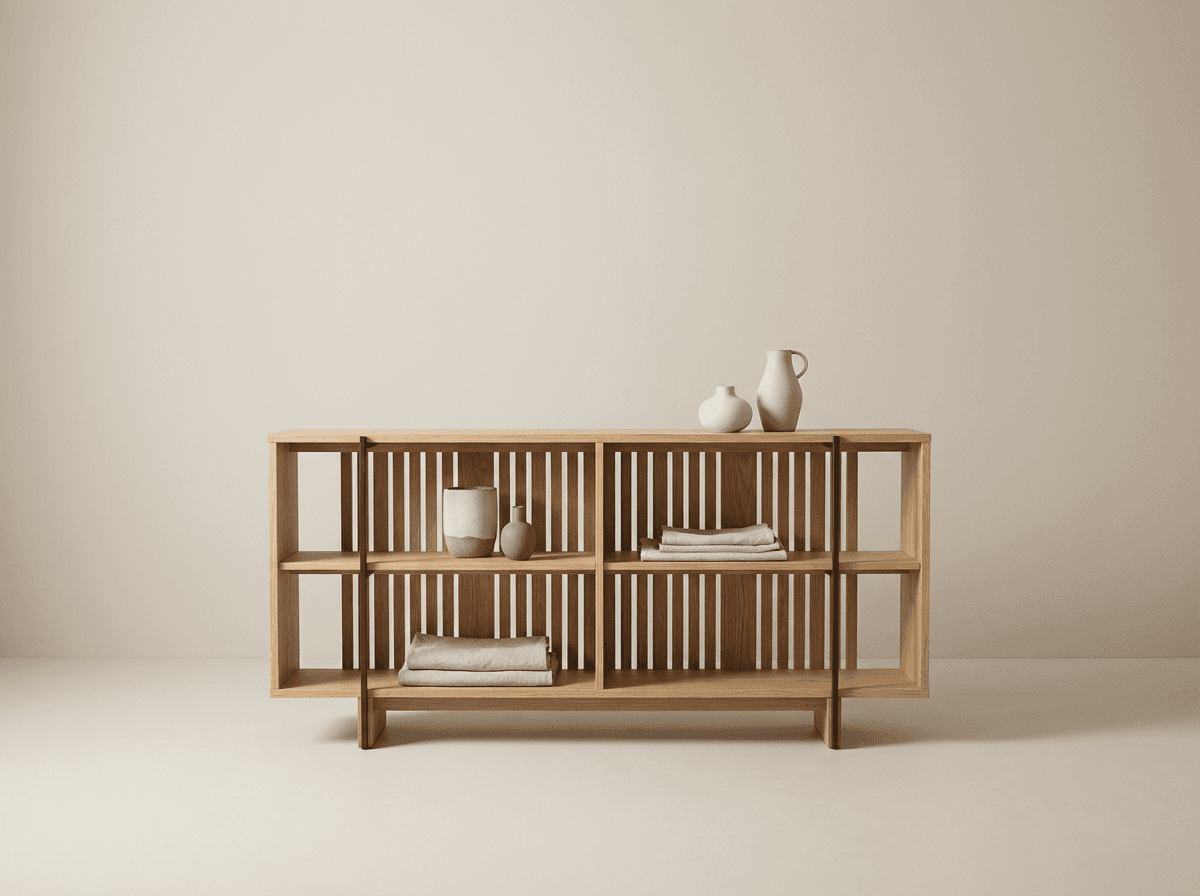
Low open bookshelf

Low open bookshelf

A two- or three-tier shelf in matching wood, no taller than 90 cm, placed against the wall beside the desk. Keep books vertical in small groups with ceramic bookends, and leave deliberate gaps between clusters. The shelf should look curated, never stuffed.

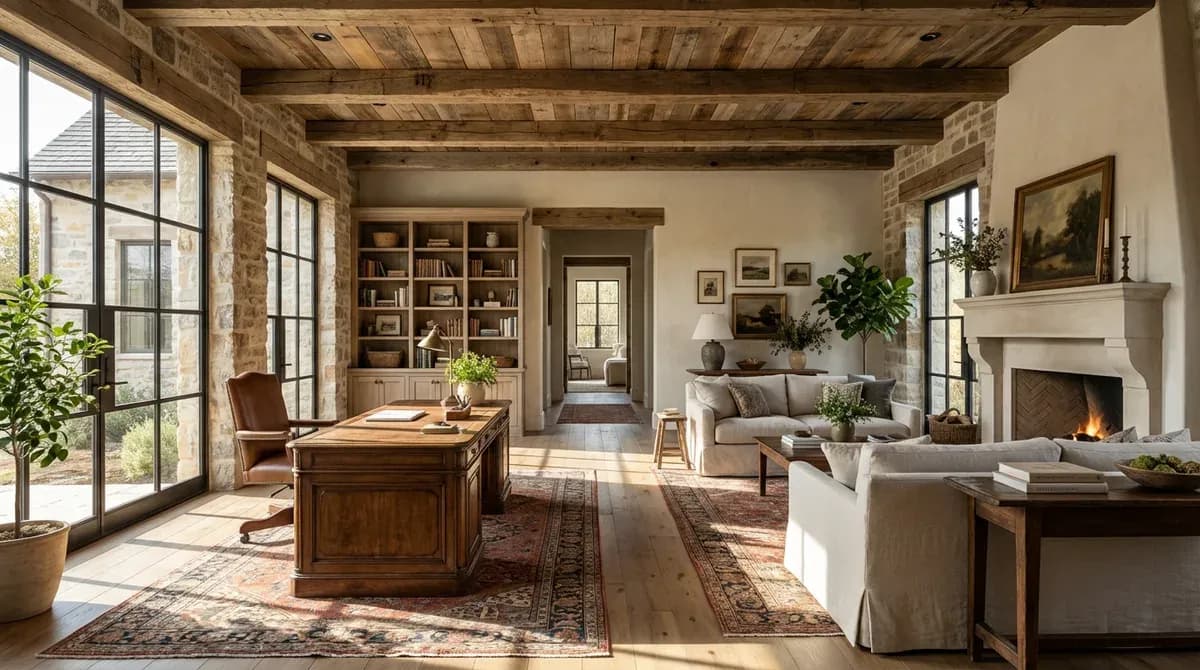
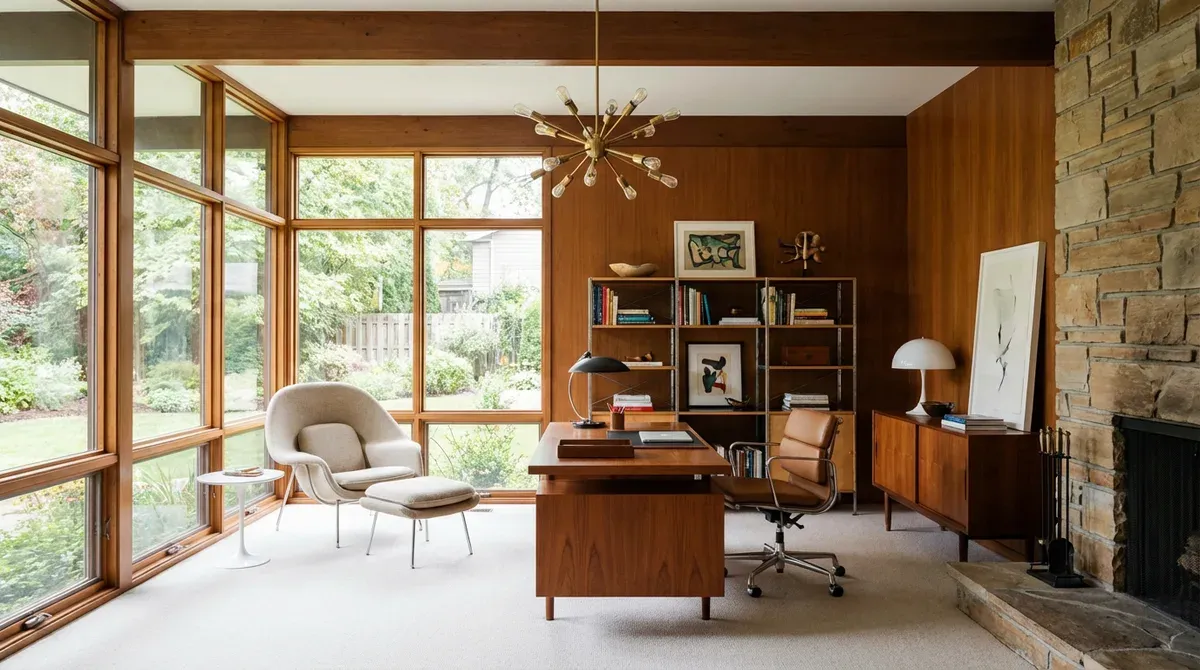
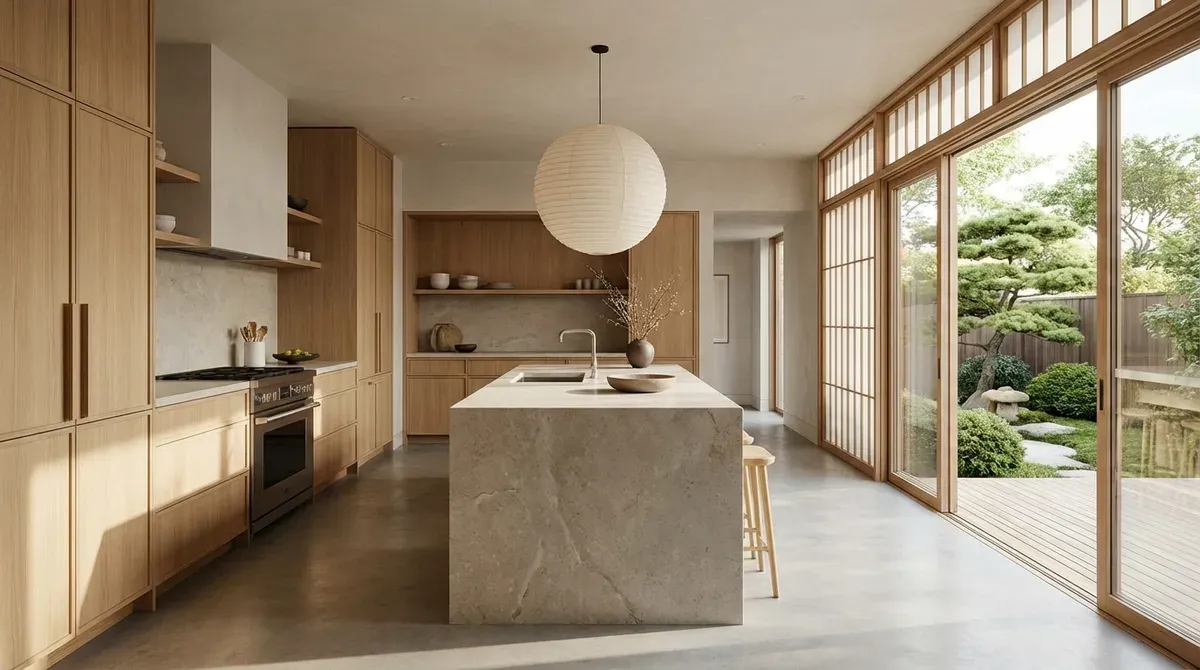
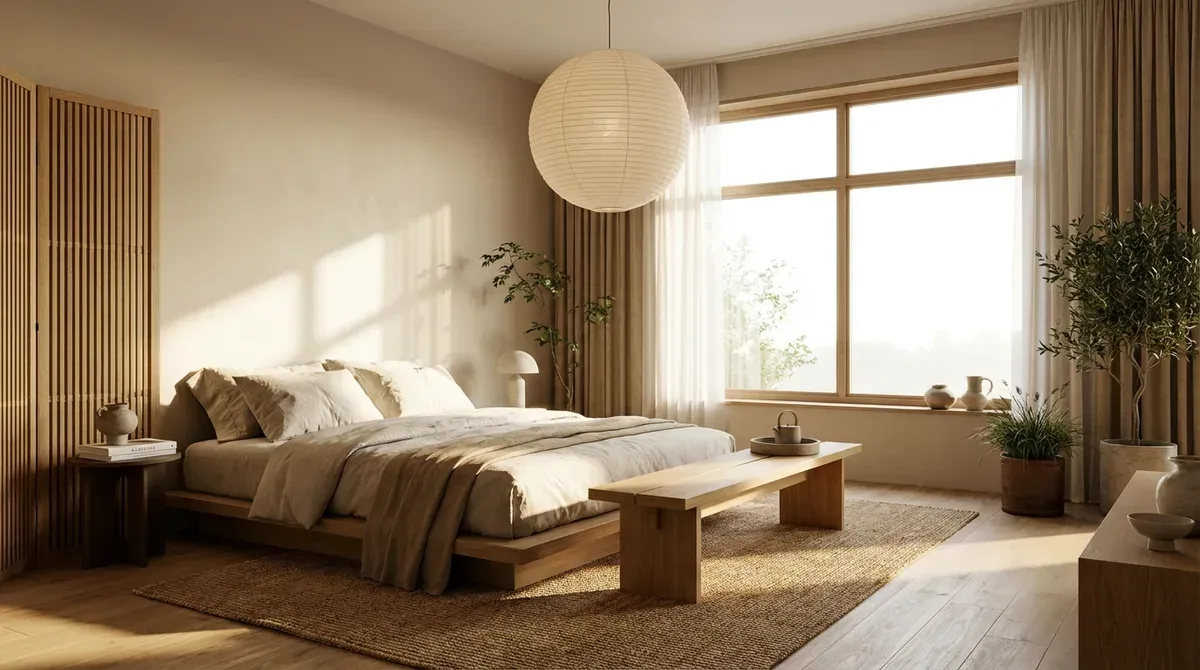
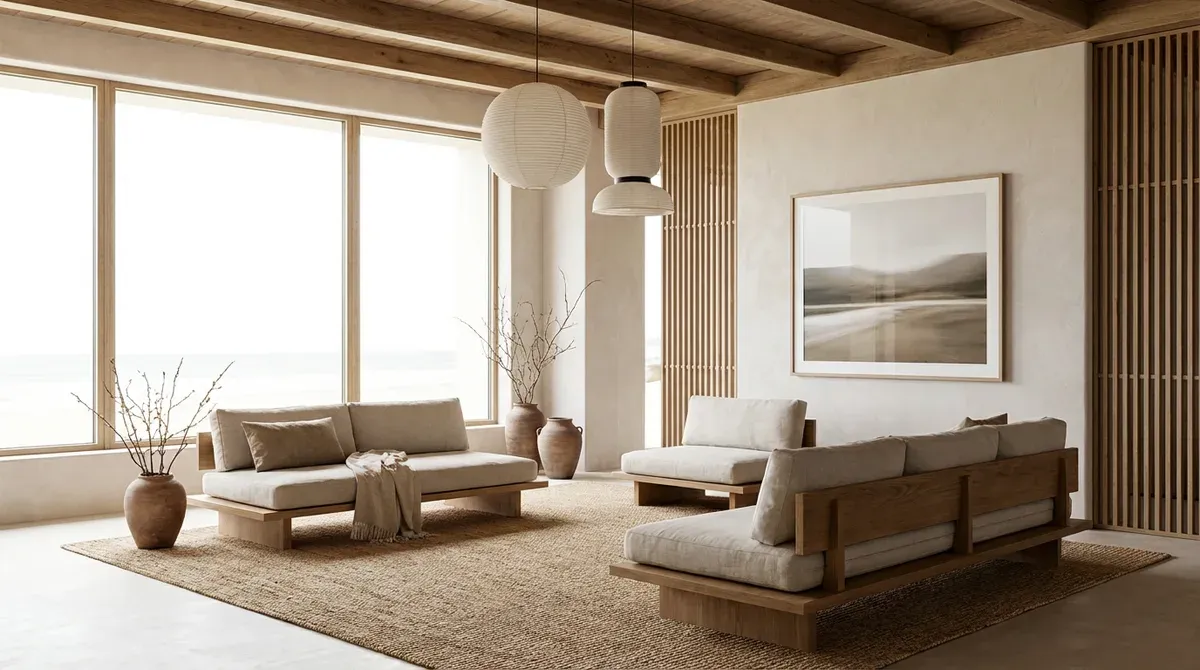
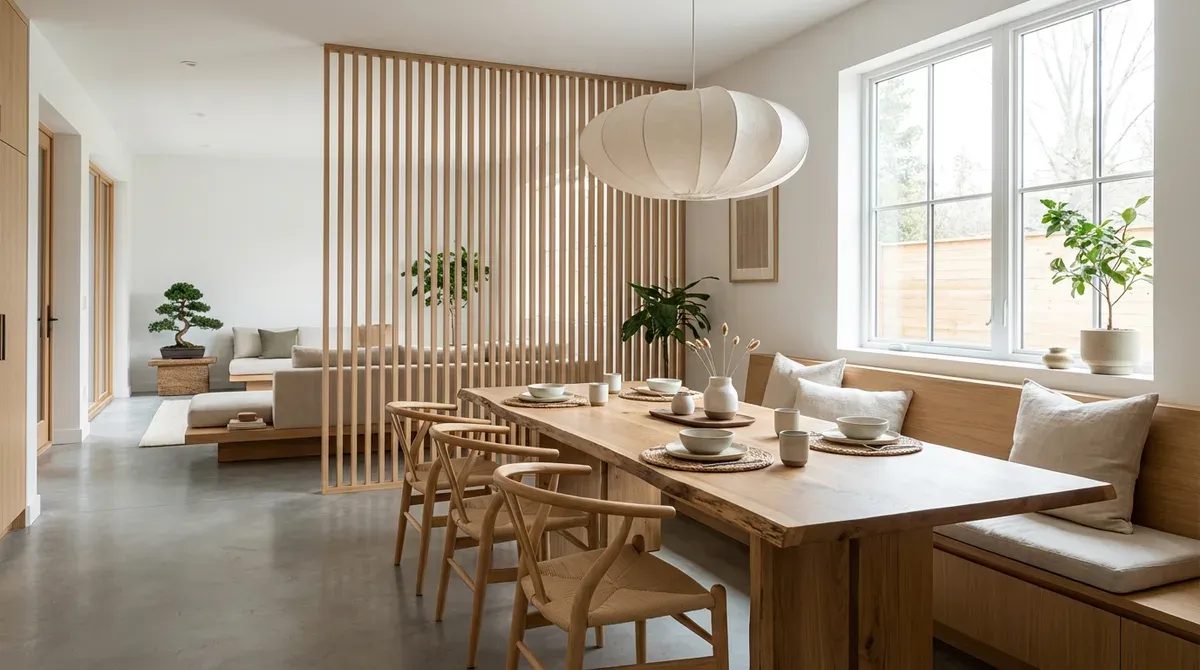
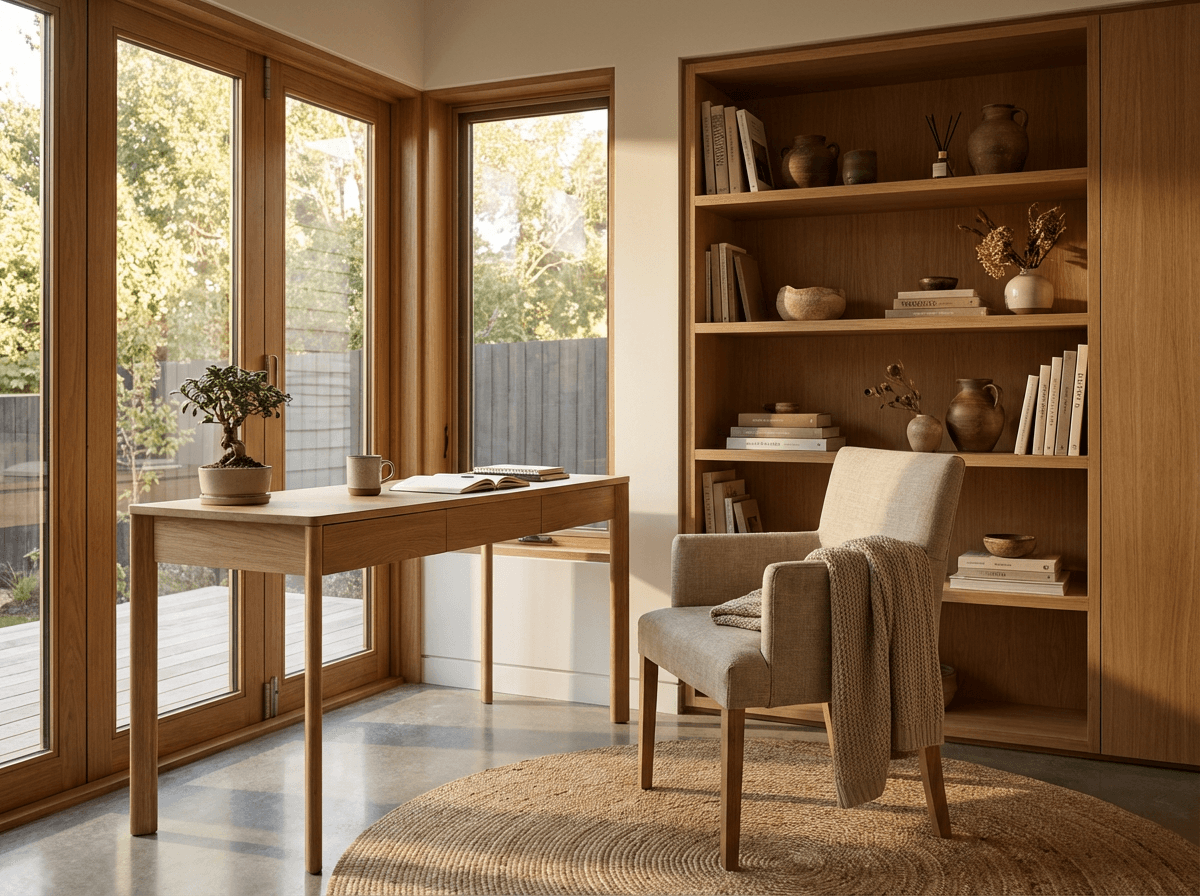
Japandi Home Office interior inspiration
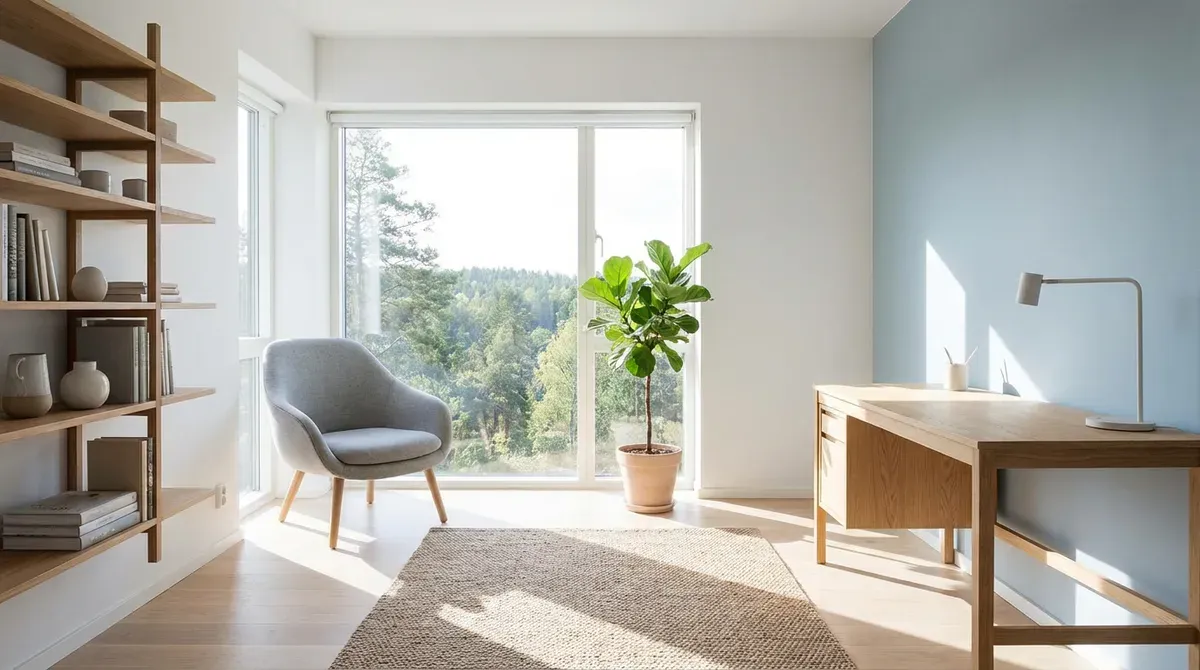
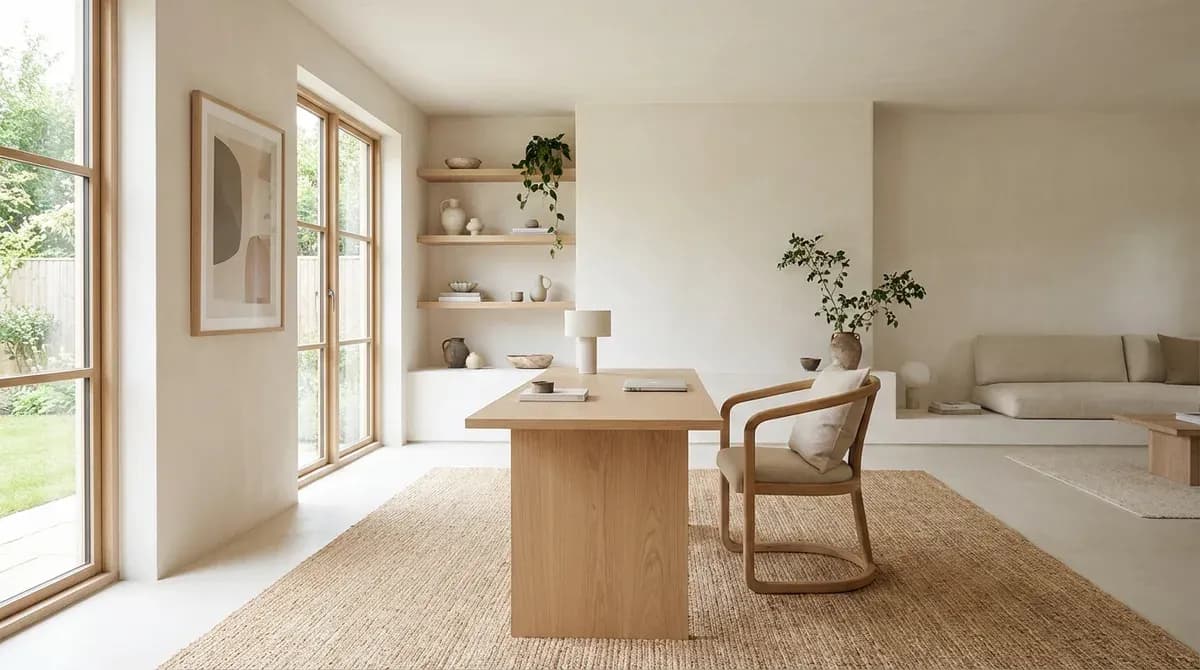
A Japandi home office is a quiet rebellion against the chaos of modern work. Where conventional offices pile up monitors, sticky notes, and wire nests, this workspace strips back to a single beautiful desk, a comfortable chair, and the tools of your current task. The philosophy is borrowed from the Japanese concept of ichigo ichie — one moment, one encounter — applied to focused work. The desk itself is a piece of furniture you could pass down. Solid wood, visible joinery, a surface that develops a gentle patina from years of notebooks and coffee cups. The chair is wooden with a woven seat — no ergonomic mesh or pneumatic cylinders — though a linen cushion ensures comfort during long sessions. Behind you, a low bookshelf holds only the volumes you reference regularly, with space between them for air and light. The room's atmosphere supports deep work: warm, diffused light that reduces screen glare, a wool rug that absorbs keyboard clicks, and a linen curtain that softens the window. When the workday ends and you clear the desk to bare wood, the room transforms back into a contemplative space — a small Japandi room that happens to be where you earn your living.

This Room in Every Style

Explore more design styles for your home office

More Japandi Rooms

See Japandi design in other rooms

Frequently Asked Questions

Tout ce que vous devez savoir sur RoomLift — pour les designers, agents et tous ceux qui transforment des espaces avec l'AI.

How do I set up a Japandi home office in a small room?
A wall-mounted floating desk takes up minimal floor space and keeps sightlines open. Pair it with a slim wooden stool that tucks underneath, and use a single wall shelf above for essentials. The Japandi emphasis on fewer, better objects actually works in your favor in tight quarters.
What colors work for a Japandi home office?
Warm off-whites, soft greige, and pale wood tones as the base, with matte black accents for contrast — a desk lamp, a pen holder, a small clock. Avoid bright or saturated colors that stimulate rather than calm. The palette should support sustained focus.
How do I hide cables in a Japandi workspace?
Route cables through a woven basket or wooden cable box behind the desk. Use adhesive cable clips in matching wood tone along the desk leg. A wireless keyboard and mouse eliminate two cables instantly. The goal is not perfection but visual quiet.
Can a Japandi office feel professional on video calls?
It looks exceptional on camera. The neutral palette, clean desk surface, and carefully placed background objects — a single plant, a few books, a ceramic piece — create a composed, credible backdrop that signals calm competence without trying too hard.
What desk accessories suit Japandi style?
A ceramic pen holder, a wooden letter tray, a linen-covered notebook, and a small potted succulent or moss. Avoid plastic organizers, branded items, or anything that disrupts the natural material palette. Every object on the desk should be something you would be happy to look at all day.
Commencer à concevoir gratuitement

No credit card required. 10 free renders.