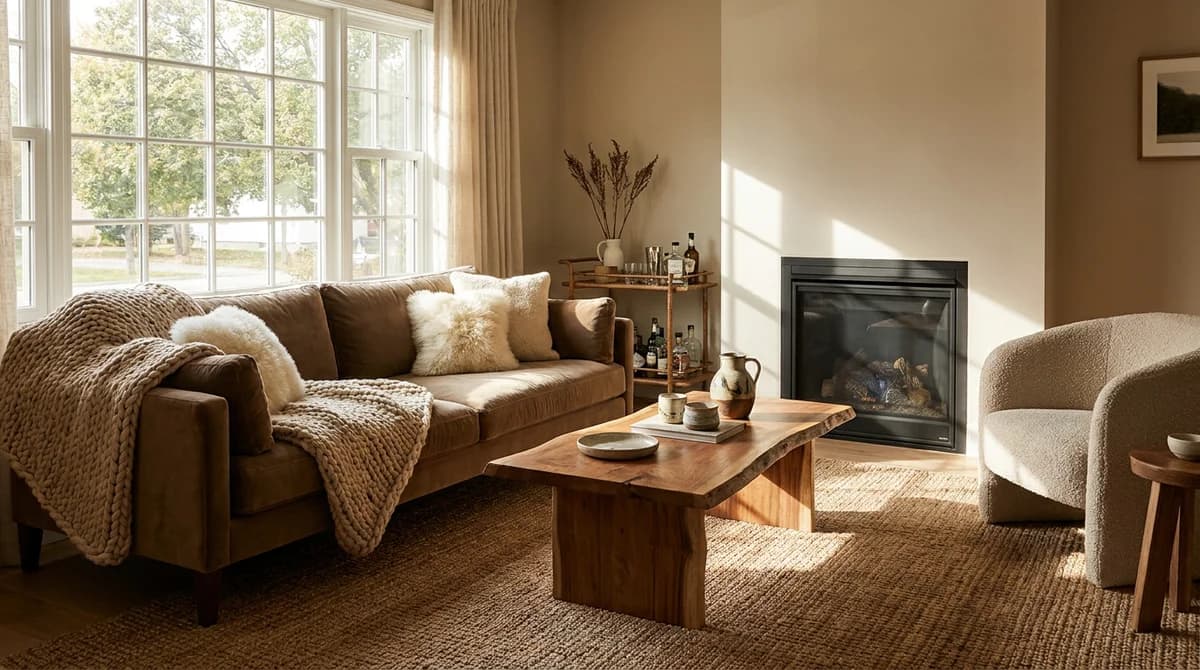
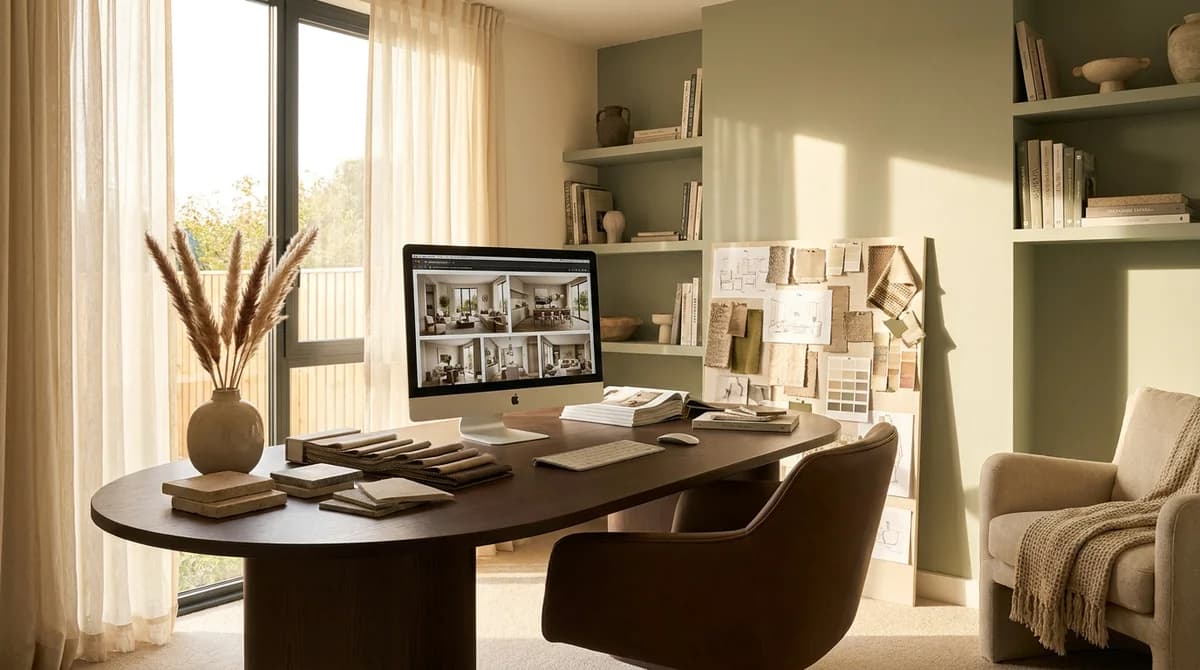
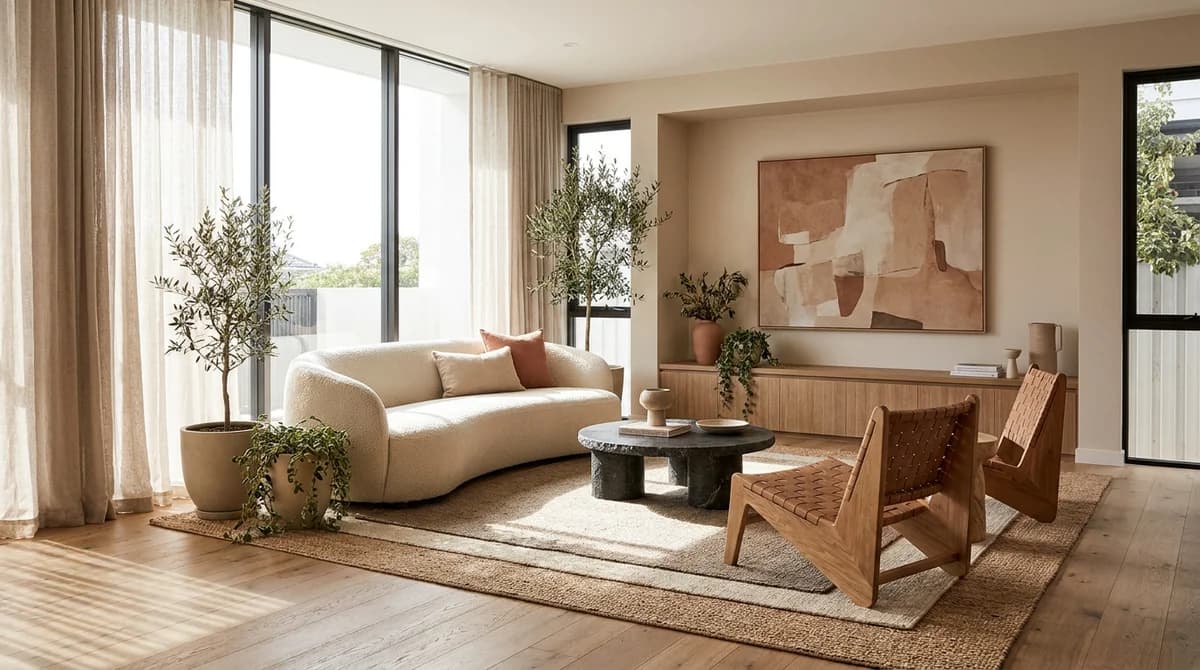
Le style transitionnel : le guide complet
Jun 7, 2026 · 7 min de lecture
Le style transitionnel marie la chaleur du classique à la sobriété du moderne. Découvrez ses éléments clés, sa palette de couleurs, des idées pièce par pièce et ce qui le distingue du style moderne.
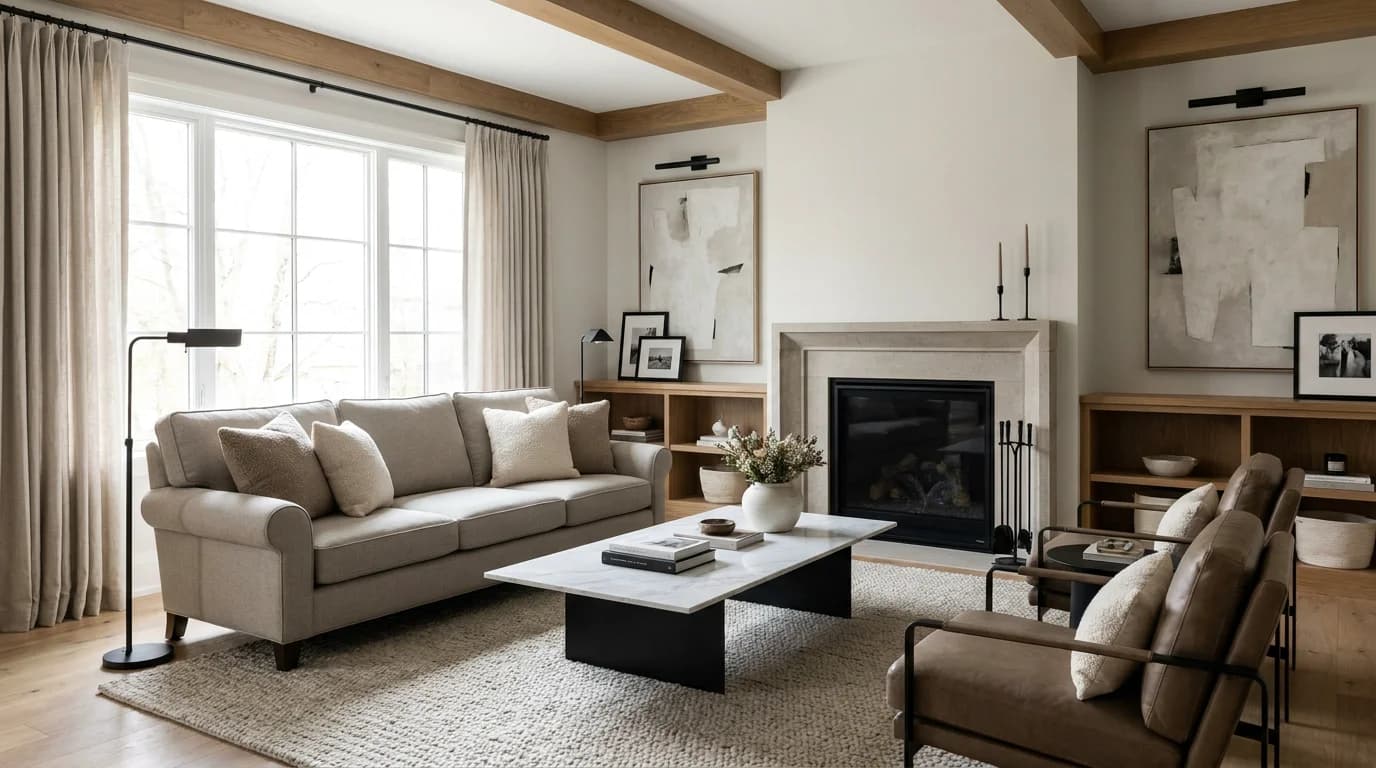
Le style transitionnel est l'un des styles décoratifs les plus appréciés, et ce n'est pas un hasard. Il marie la chaleur du classique aux lignes épurées du moderne, pour des espaces à la fois intemporels et actuels. Ce guide explique précisément ce qu'est le style transitionnel, ses éléments caractéristiques, ce qui le distingue du moderne et du contemporain, et comment l'obtenir dans n'importe quelle pièce.
Qu'est-ce que le style transitionnel ?
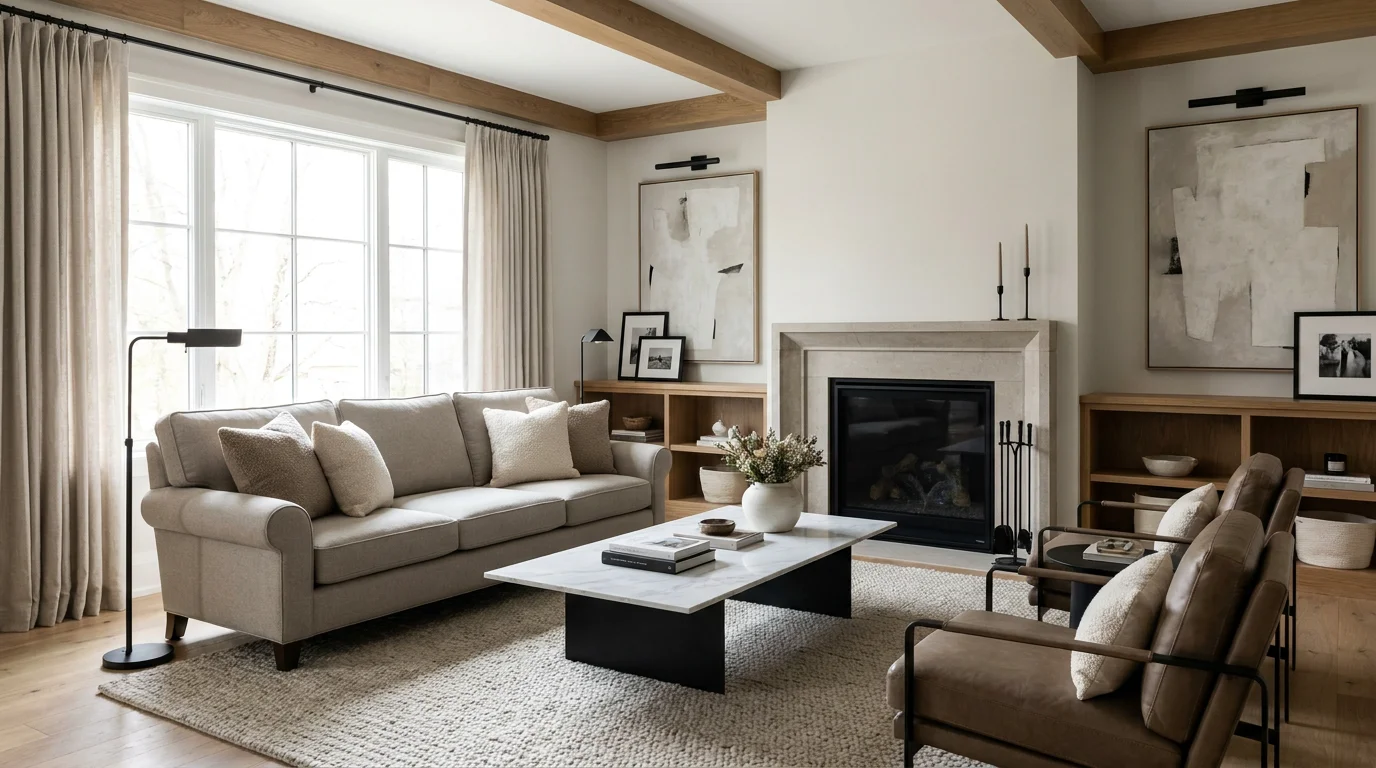
Le style transitionnel combine éléments classiques et modernes dans un ensemble équilibré et cohérent. Il associe les silhouettes de mobilier classique et les textures chaleureuses et superposées aux lignes épurées, aux palettes neutres et aux volumes dégagés du design contemporain.
Tout son intérêt tient dans cet équilibre. Le classique pur peut sembler lourd ou guindé, le moderne strict peut paraître froid ou dépouillé. Le transitionnel se place entre les deux : confortable mais raffiné, actuel sans courir après la tendance. Comme il emprunte aux deux extrémités du spectre, une pièce transitionnelle se démode rarement. Voilà pourquoi les architectes d'intérieur y reviennent si souvent, et pourquoi il fonctionne si bien quand on aménage un bien en vue d'une vente.
Les éléments clés du style transitionnel
Quelques ingrédients récurrents définissent ce style :
- Une palette de couleurs neutres : blancs, greiges, taupes et gris doux forment la base, le noir s'employant avec parcimonie pour le contraste.
- Un mélange de mobilier classique et moderne : un canapé traditionnel à accoudoirs roulottés associé à une table basse en verre ou en métal, c'est la signature du style.
- Des lignes nettes aux angles adoucis : les formes restent simples, mais les coins sont arrondis et les assises confortables plutôt que rigides.
- Des textures superposées et nuancées : lin, laine, cuir, métaux mats et bois naturel apportent de la profondeur sans ajouter de couleur.
- Des accessoires mesurés : moins de pièces, mais plus grandes, pour garder des surfaces apaisées et réfléchies.
- Symétrie et équilibre : lampes assorties, fauteuils par paire et œuvres centrées créent une impression d'ordre.
Transitionnel, moderne, contemporain ou classique ?
On confond sans cesse ces quatre styles. Voici comment se situe le transitionnel :
| Style | Lignes | Palette | Ambiance | Cycle des tendances |
|---|---|---|---|---|
| Classique | Ornées, détaillées | Riche, chaleureuse | Solennelle, intemporelle | Intemporel, parfois daté |
| Moderne | Strictes, épurées | Neutre, froide | Sobre, minimaliste | Ancré dans la première moitié du XXe siècle |
| Contemporain | Épurées, évolutives | Au goût du jour | Dans l'air du temps | Suit les tendances |
| Transitionnel | Épurées mais adoucies | Neutre, chaleureuse | Équilibrée, confortable | Intemporel par choix |
En bref : le classique regarde vers le passé, le moderne et le contemporain vers le présent, et le transitionnel mêle les deux sans jamais appartenir tout à fait à une époque. Pour un décryptage de chaque esthétique, consultez notre guide des styles de décoration.
Le style transitionnel pièce par pièce
Salon
Ancrez l'espace autour d'un canapé neutre et confortable, de forme classique, puis ajoutez des touches modernes : une table basse simple en métal ou en verre, des luminaires aux lignes nettes, une ou deux œuvres de grand format. Gardez un tapis ton sur ton et des coussins déclinés en deux ou trois textures plutôt qu'en multiples couleurs.
Chambre
Une tête de lit capitonnée à la silhouette douce et classique s'accorde bien avec des tables de chevet minimalistes et des lampes modernes. Restez sur une literie neutre et superposée (blanc, avoine, gris doux) et apportez de la chaleur avec un plaid épais et des tons de bois naturel.
Cuisine
Les façades de style Shaker sont le choix transitionnel par excellence : à la fois classiques et épurées. Associez-les à une quincaillerie sobre, à un plan de travail en quartz ou imitation marbre, et à des suspensions de forme moderne mais à la finition chaude, comme le laiton brossé ou le noir mat.
Palette de couleurs et matières
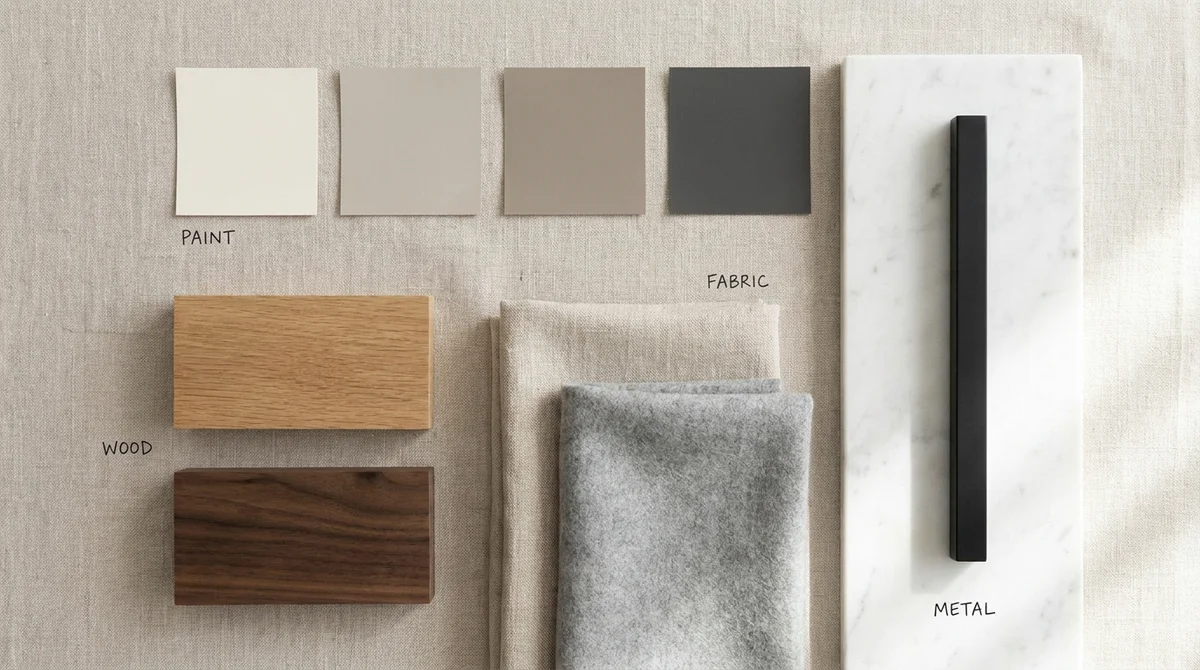
Les pièces transitionnelles reposent sur des neutres et laissent la texture porter l'intérêt. Une palette fiable :
- Base : blanc chaud, greige, taupe
- Profondeur : anthracite, noir doux, noyer
- Touche sourde facultative : sauge, bleu marine ou terracotta, à petites doses
Côté matières, mélangez le naturel et le raffiné : bois de chêne ou de noyer, lin et laine, cuir, marbre ou quartz, métaux mats. C'est cette variété de textures qui empêche une pièce tout en neutres de paraître plate.
Les erreurs courantes à éviter
- Trop d'assorti. Le transitionnel est un mélange. Évitez d'acheter un ensemble de mobilier entièrement coordonné.
- Trop d'accessoires. L'encombrement fait basculer le style vers le classique chargé. Faites le tri sans pitié.
- Oublier la texture. Sans matières superposées, une pièce tout en neutres paraît froide au lieu d'être chaleureuse.
- Négliger l'échelle. Quelques grandes pièces semblent plus réfléchies qu'une multitude de petites.
Comment tester le style transitionnel chez vous
Le moyen le plus rapide de savoir si le transitionnel convient à une pièce, c'est de le voir appliqué à votre espace réel, pas à une photo de catalogue. Avec RoomLift, vous importez la photo de n'importe quelle pièce, choisissez une direction déco et générez une version transitionnelle photoréaliste en moins d'une minute. Comparez-la au moderne ou au Mid-Century Modern dans la même pièce, mettez les rendus côte à côte, et ne choisissez votre mobilier qu'ensuite. C'est la méthode que les architectes d'intérieur utilisent pour faire valider leurs projets, et elle vaut aussi bien pour les salons que pour les chambres.
Foire aux questions
Qu'est-ce que le style transitionnel ?
Le style transitionnel mêle éléments classiques et modernes dans un ensemble équilibré et cohérent. Il associe les silhouettes de mobilier classique et les textures chaleureuses aux lignes épurées, aux palettes neutres et aux espaces dégagés, pour un résultat intemporel plutôt que tendance.
Quelle est la différence entre le style transitionnel et le style moderne ?
Le style moderne se définit par des lignes strictes et épurées et une ornementation minimale. Le transitionnel reprend ces lignes nettes mais les adoucit avec le confort du classique : angles arrondis, tissus moelleux et formes traditionnelles. Le moderne peut sembler froid et dépouillé ; le transitionnel reste chaleureux et habité tout en restant actuel.
Quelles couleurs utilise-t-on en décoration transitionnelle ?
Les palettes transitionnelles reposent sur des neutres : blancs, greiges, taupes et gris doux, relevés d'une pointe de noir pour le contraste. La couleur s'invite par la texture et les nuances plutôt que par des teintes vives, avec parfois quelques touches sourdes de sauge, de bleu marine ou de terracotta.
Le style transitionnel est-il toujours d'actualité en 2026 ?
Oui. Parce qu'il marie l'ancien et l'actuel, le transitionnel vieillit bien et évite de paraître démodé quand les tendances évoluent : un choix durablement apprécié, aussi bien pour habiter que pour aménager un bien en vue d'une vente.
Comment donner un esprit transitionnel à mon intérieur ?
Partez d'une base neutre, combinez une ou deux pièces classiques avec des éléments modernes, limitez les accessoires, superposez les textures et soignez la symétrie. Prévisualiser le rendu sur votre propre pièce avec un outil AI avant d'acheter vous aide à trouver le bon équilibre.
Prêt à transformer vos annonces ?
Mettez en scène votre première pièce en 20 secondes. Aucune compétence en design requise.