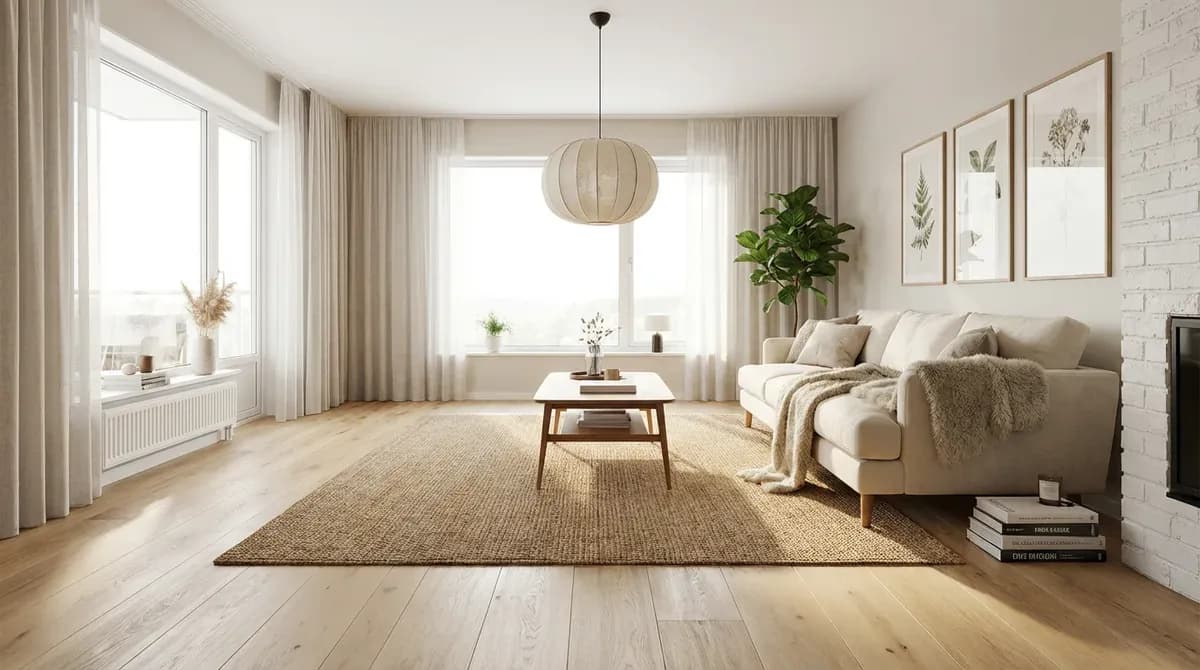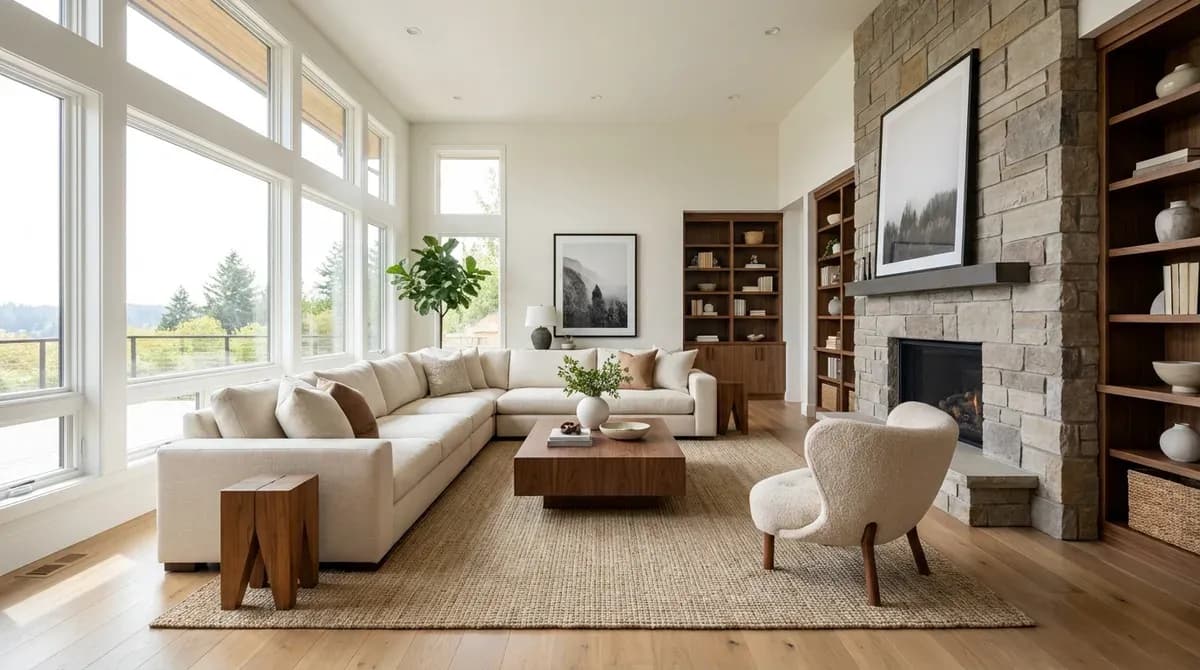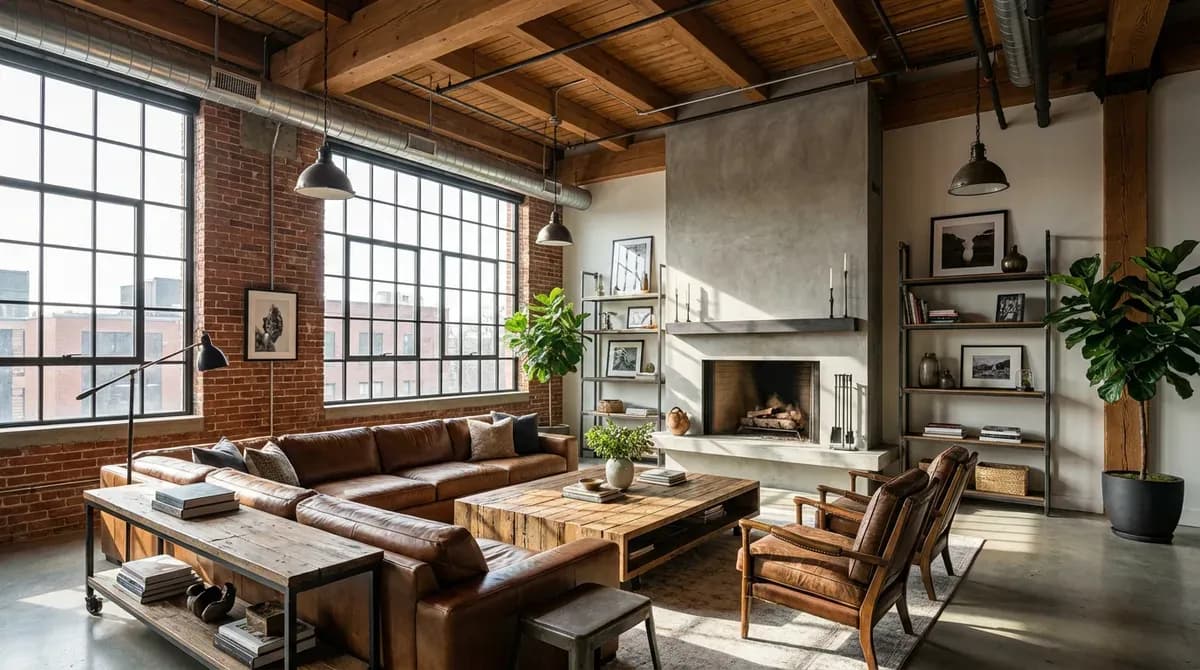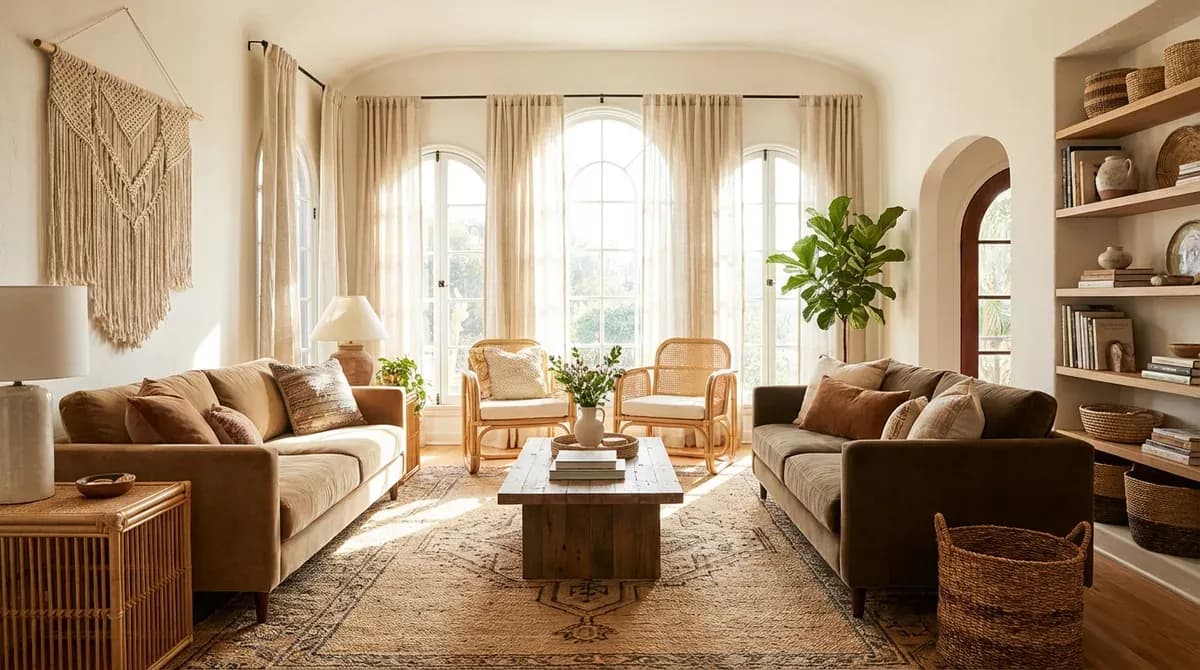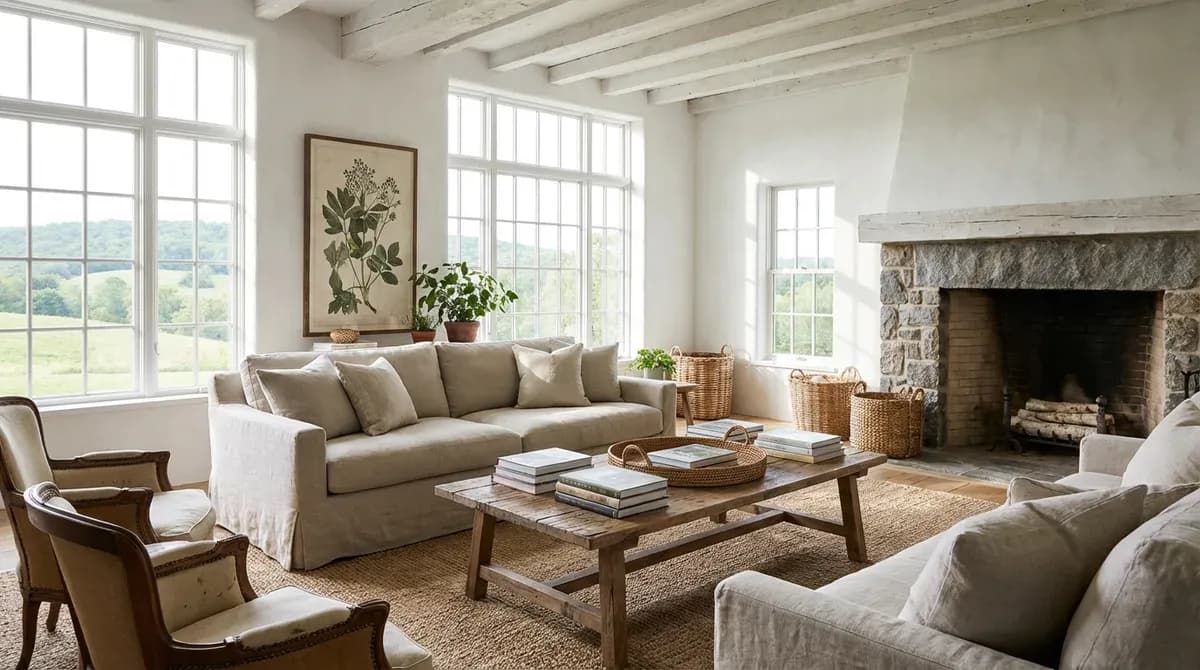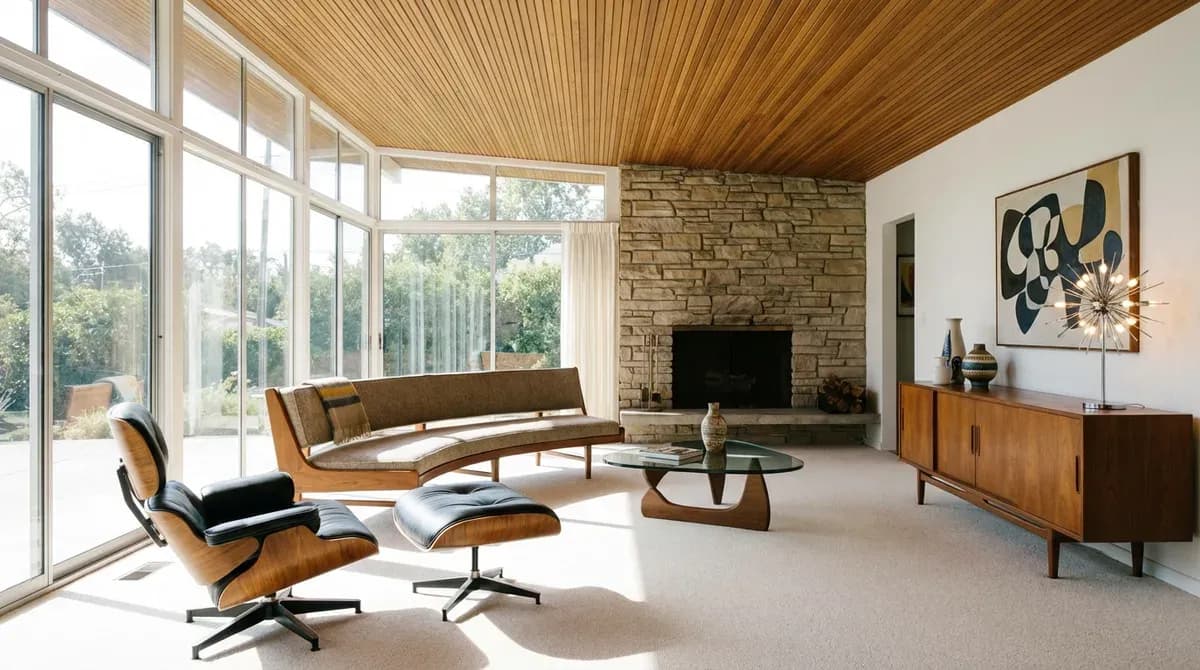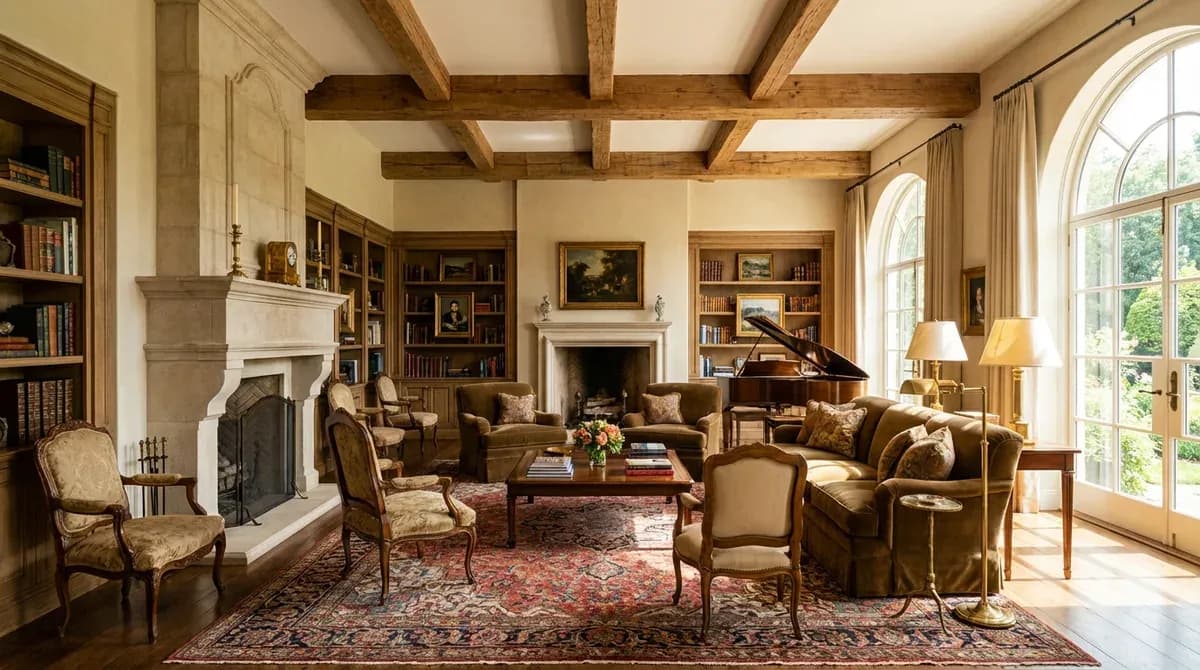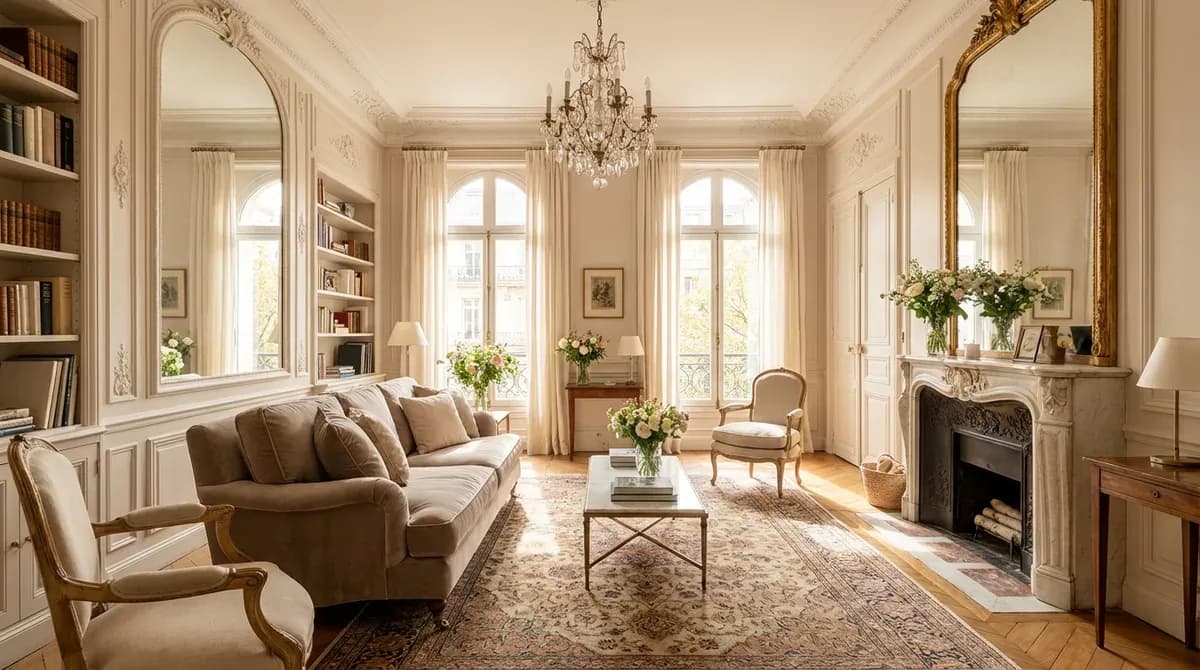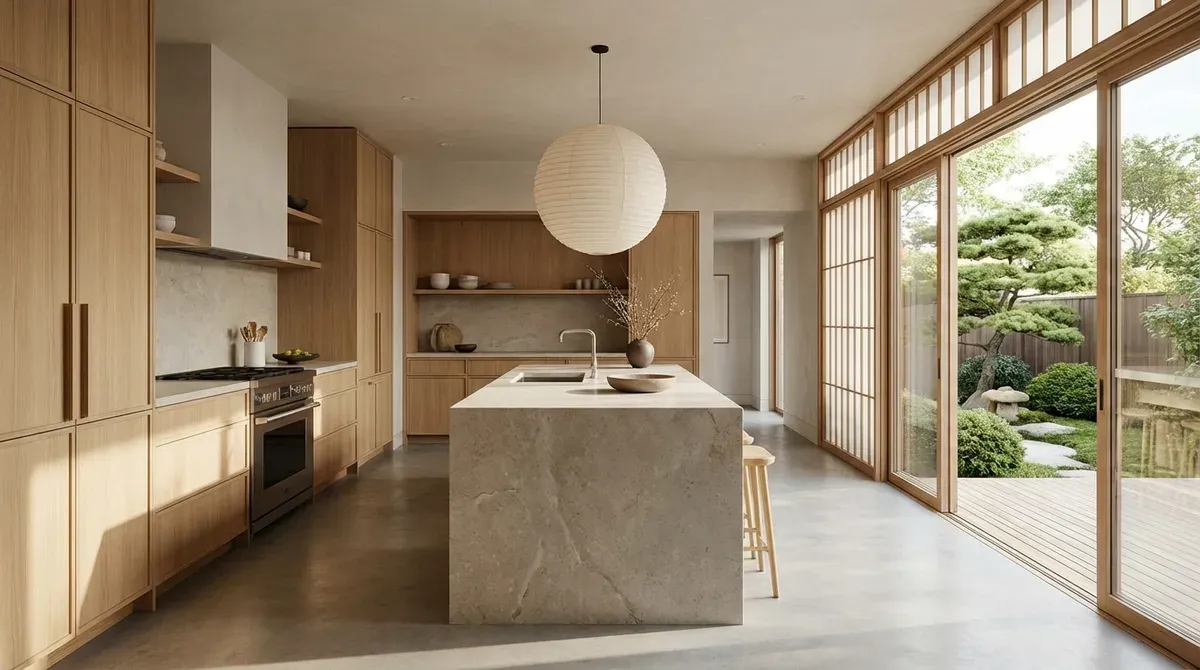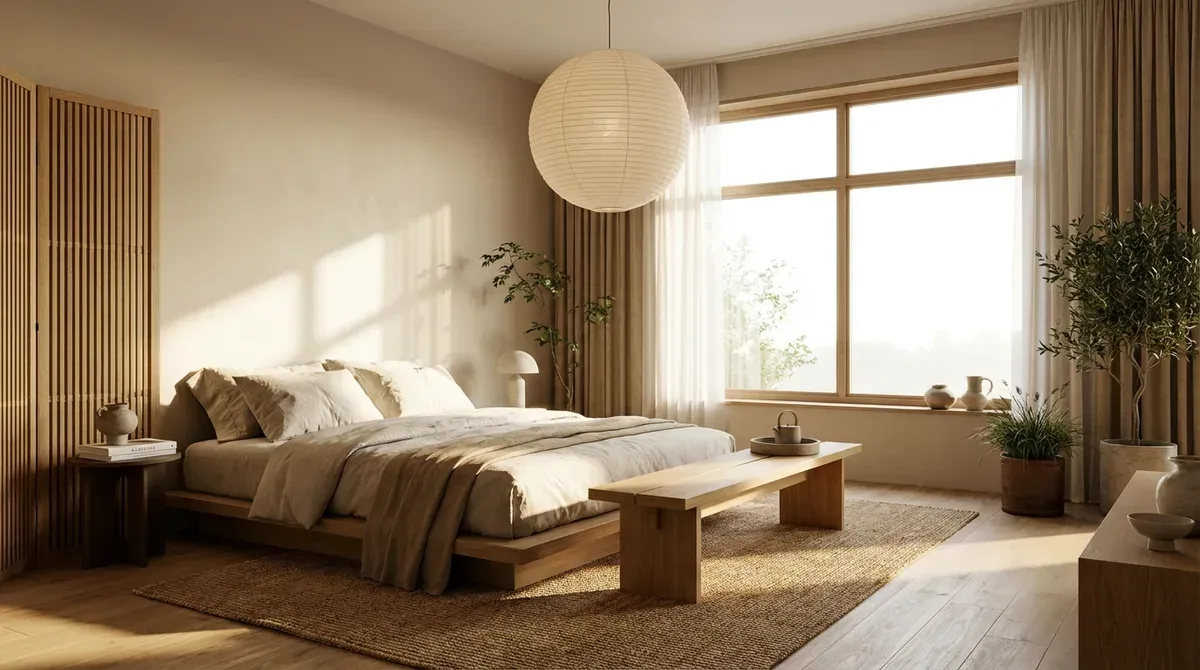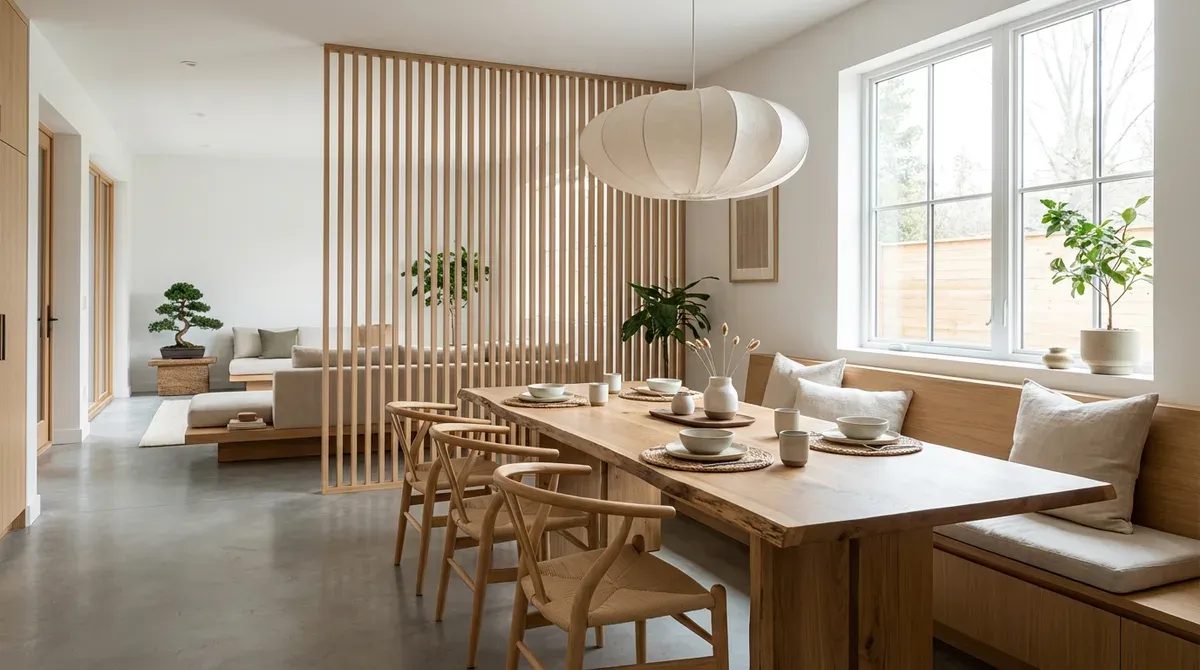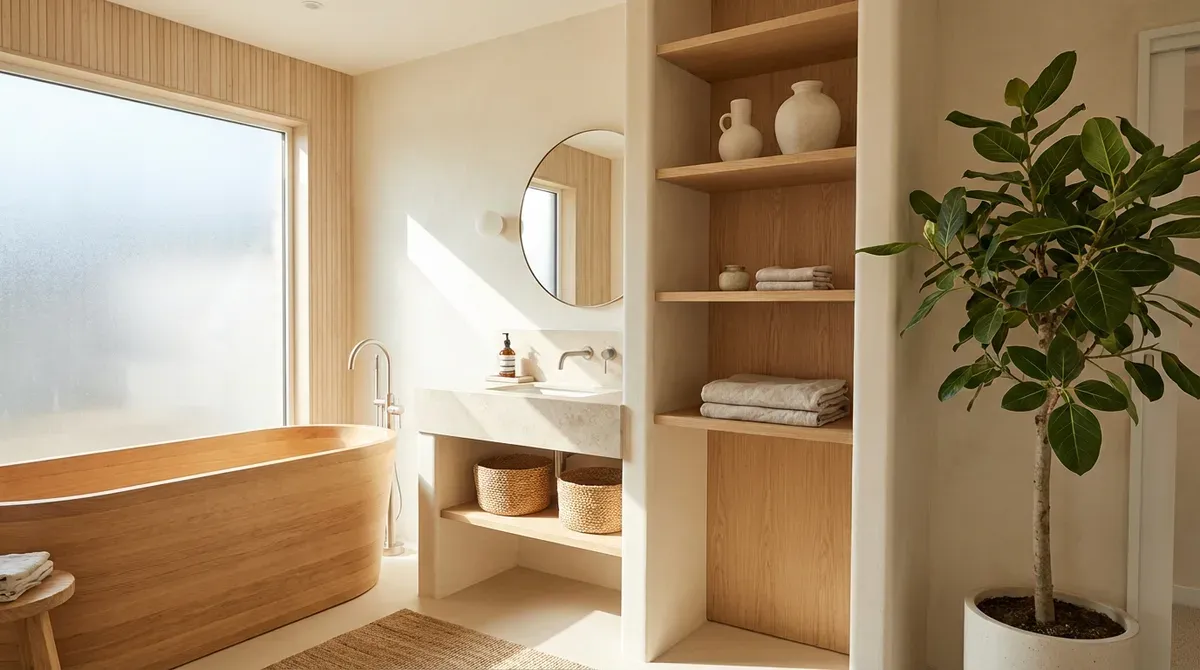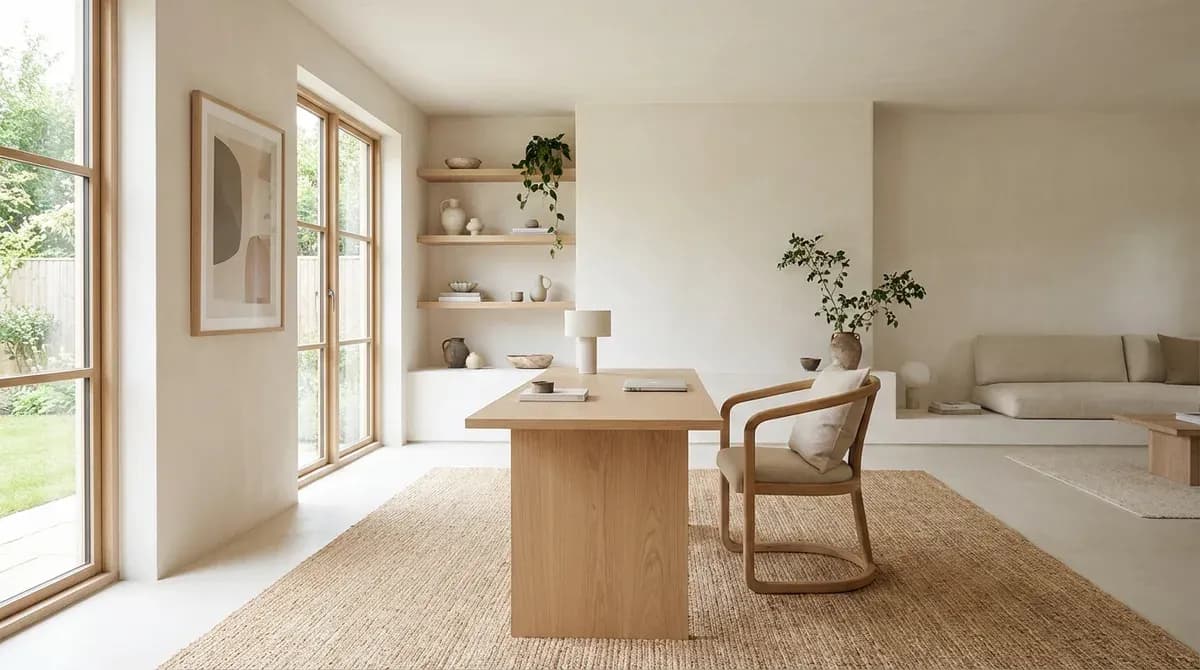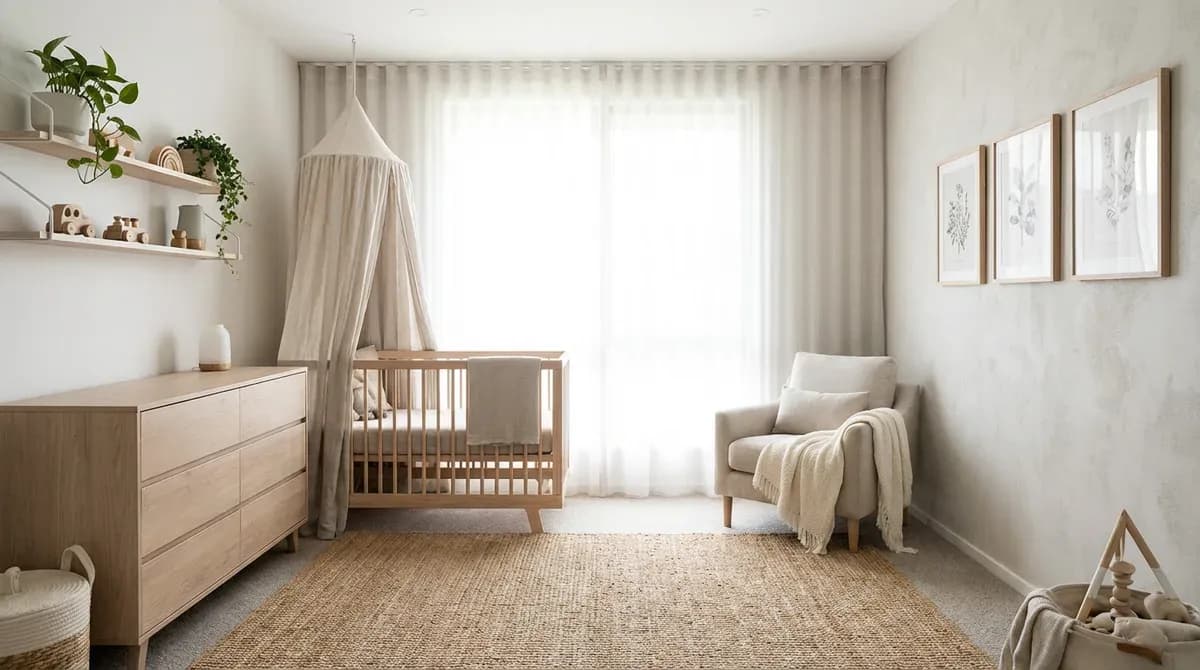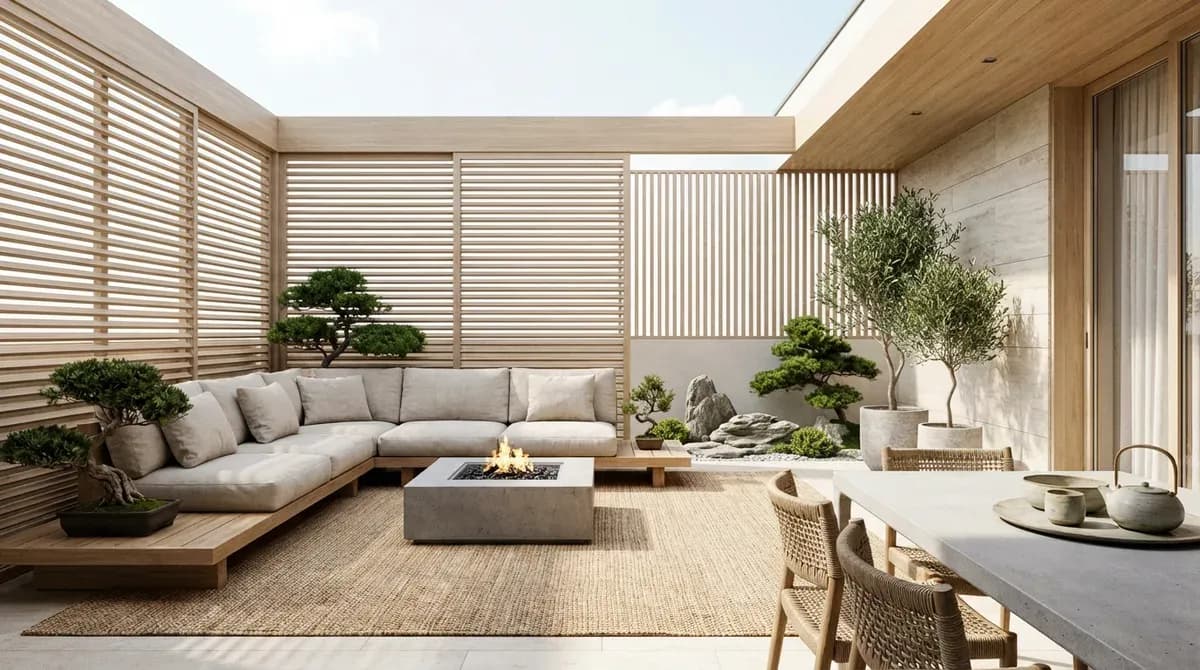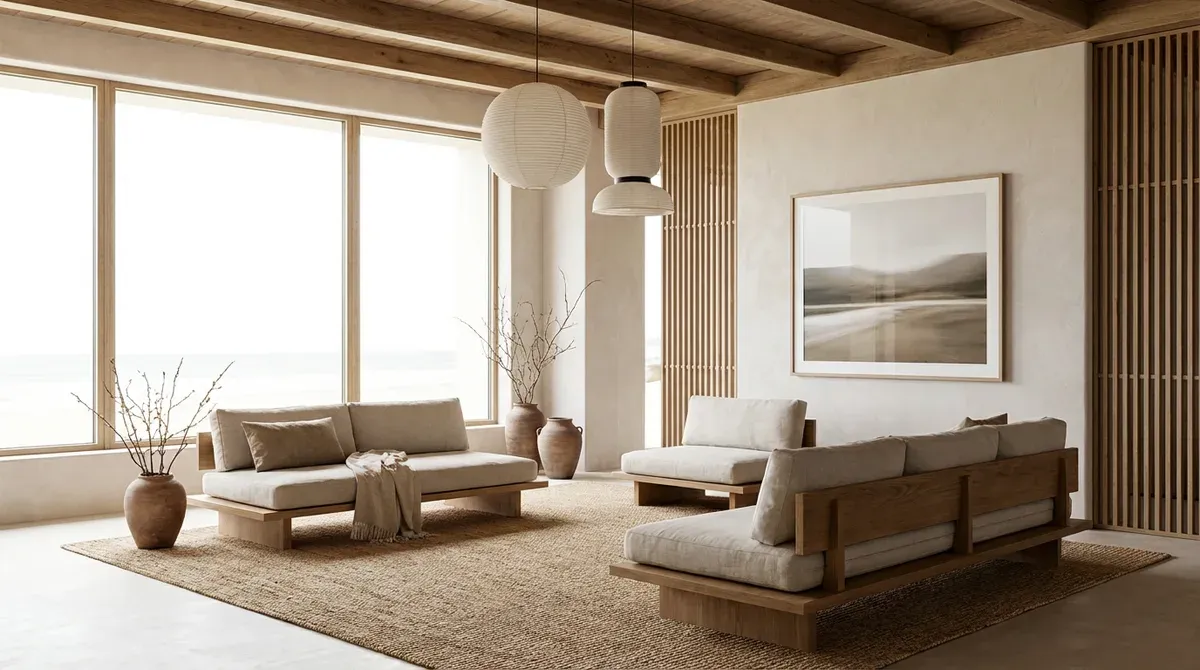
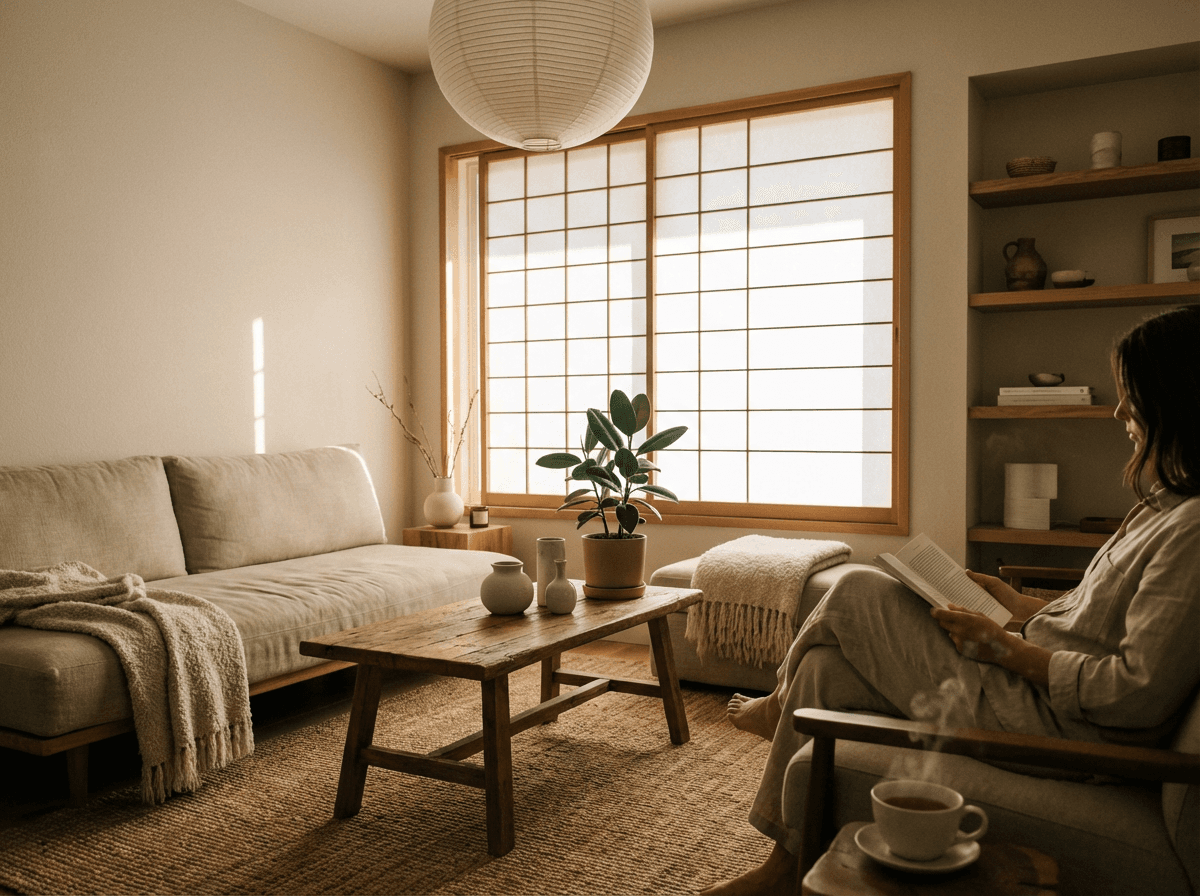
Japandi Living Room Design
AI-Powered Design Visualization
Upload a photo of your living room and transform it into stunning Japandi design in under 60 seconds.
No credit card required. 10 free renders.

Color Palette
The essential colors of Japandi living room design
Design Tips
Expert recommendations for your Japandi living room

Choose low-profile seating
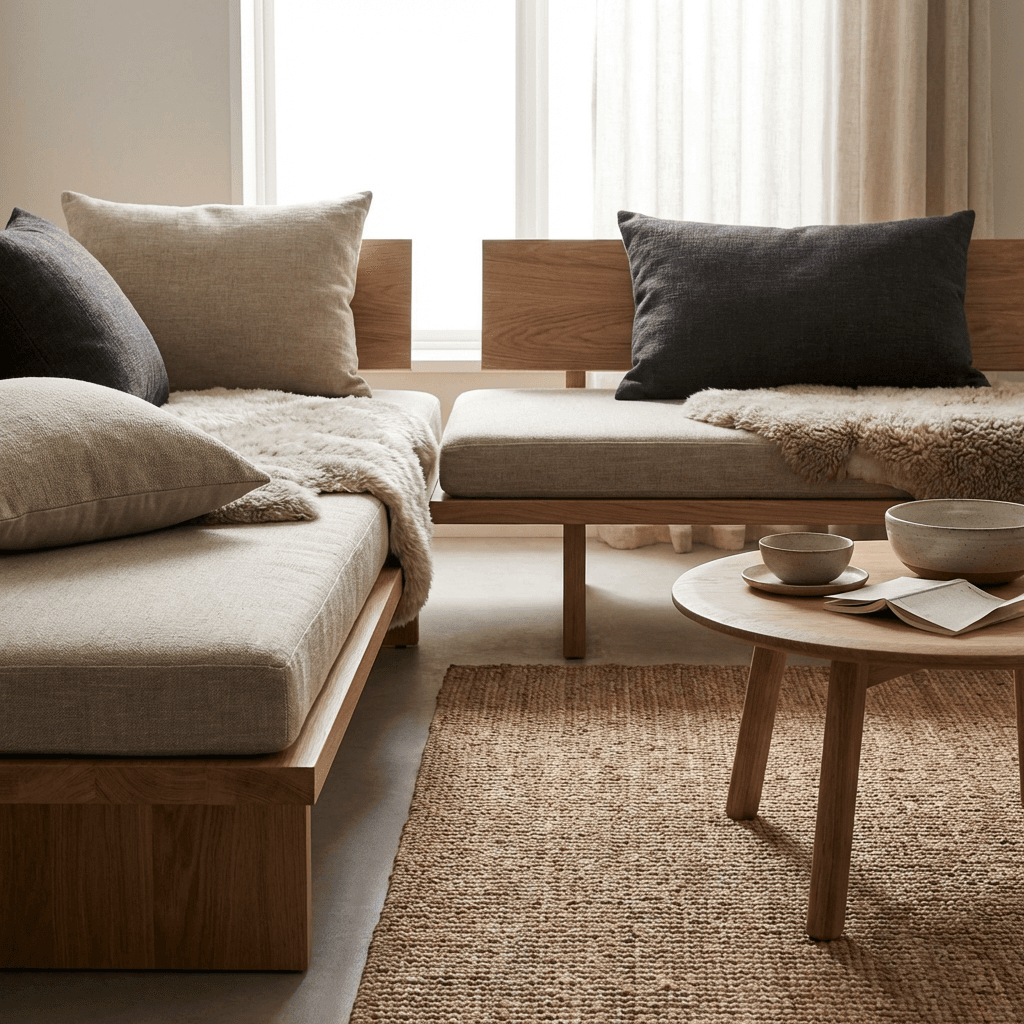
Japandi living rooms favor sofas and chairs that sit close to the ground, drawing from the Japanese tradition of floor-level living. A sofa with a seat height under 40 cm creates a grounded, calm atmosphere and makes the room feel more spacious.

Prioritize natural, tactile materials
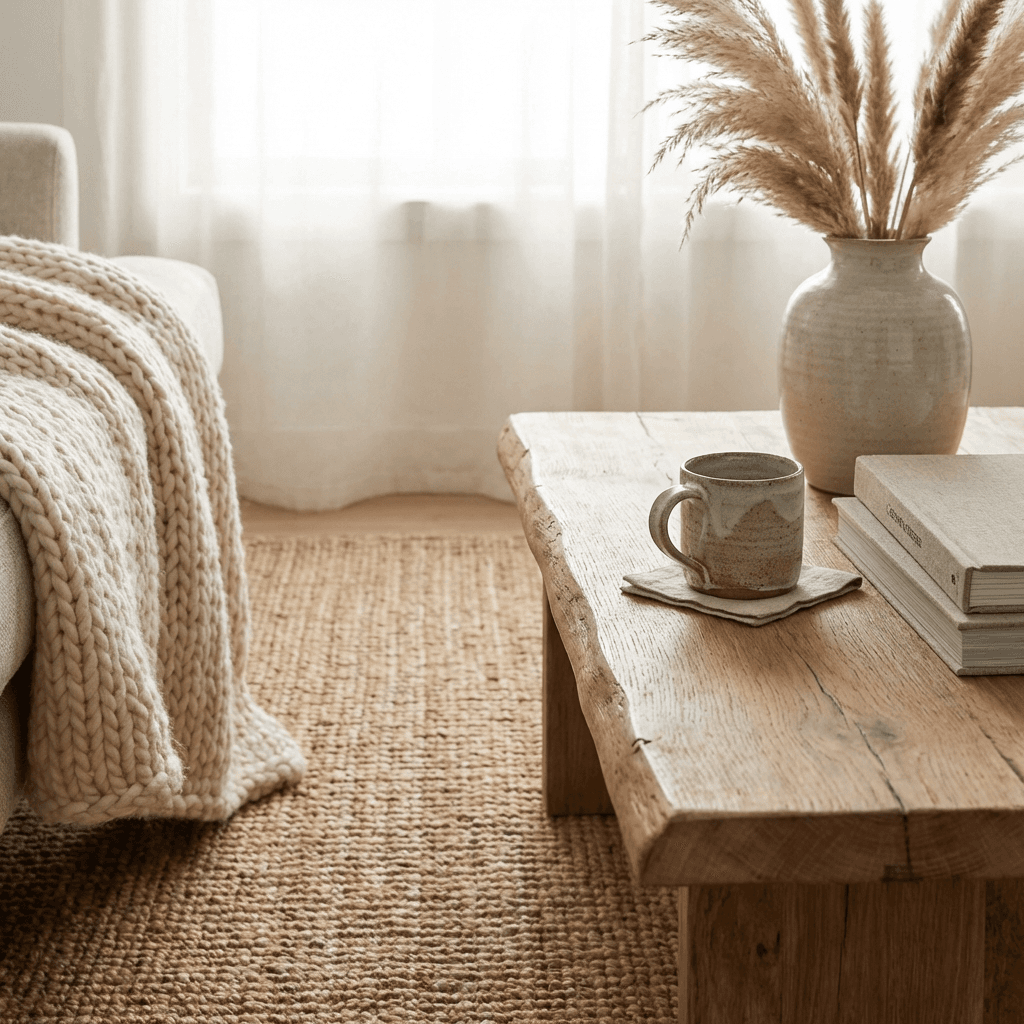
Combine Scandinavian light woods like ash or birch with Japanese elements such as bamboo, rattan, and linen. Every material in the room should feel good to touch — rough-woven cushion covers, a solid wood side table, a ceramic vase rather than glass.

Edit your decor ruthlessly
Japandi merges the Scandinavian concept of lagom (just enough) with Japanese wabi-sabi (beauty in imperfection). Limit decorative objects to three to five meaningful pieces per surface, and leave at least 30% of shelf space empty to let the room breathe.

Ground the palette with muted earth tones
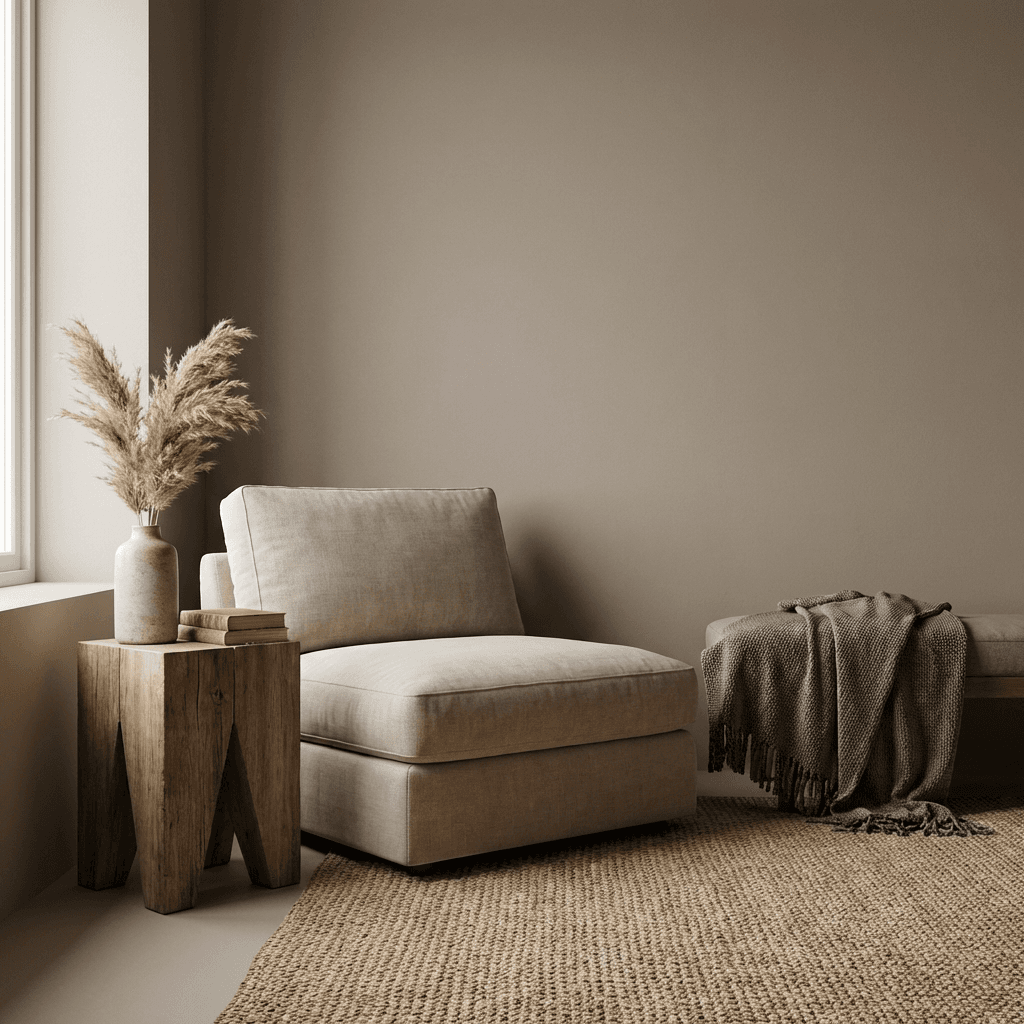
Avoid stark whites; instead lean toward warm off-whites, clay, and greige. Introduce contrast with soft black accents — a matte-black pendant light or a charcoal throw — to anchor the space without making it feel heavy.
Furniture Recommendations
Key pieces for the perfect Japandi living room

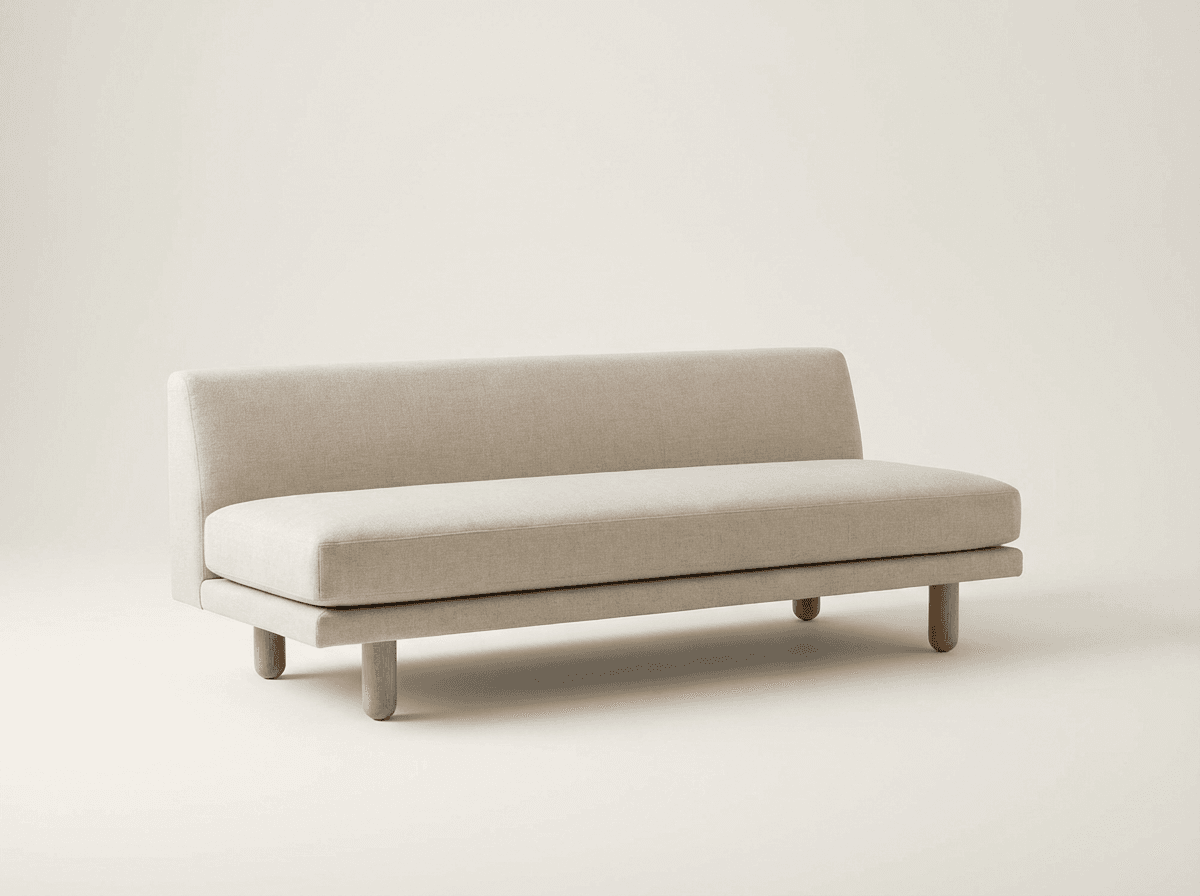
Low-profile linen sofa
A clean-lined sofa in oatmeal or warm gray linen with slender wooden legs, no higher than 75 cm at the backrest. The low silhouette is the defining piece of a Japandi living room.

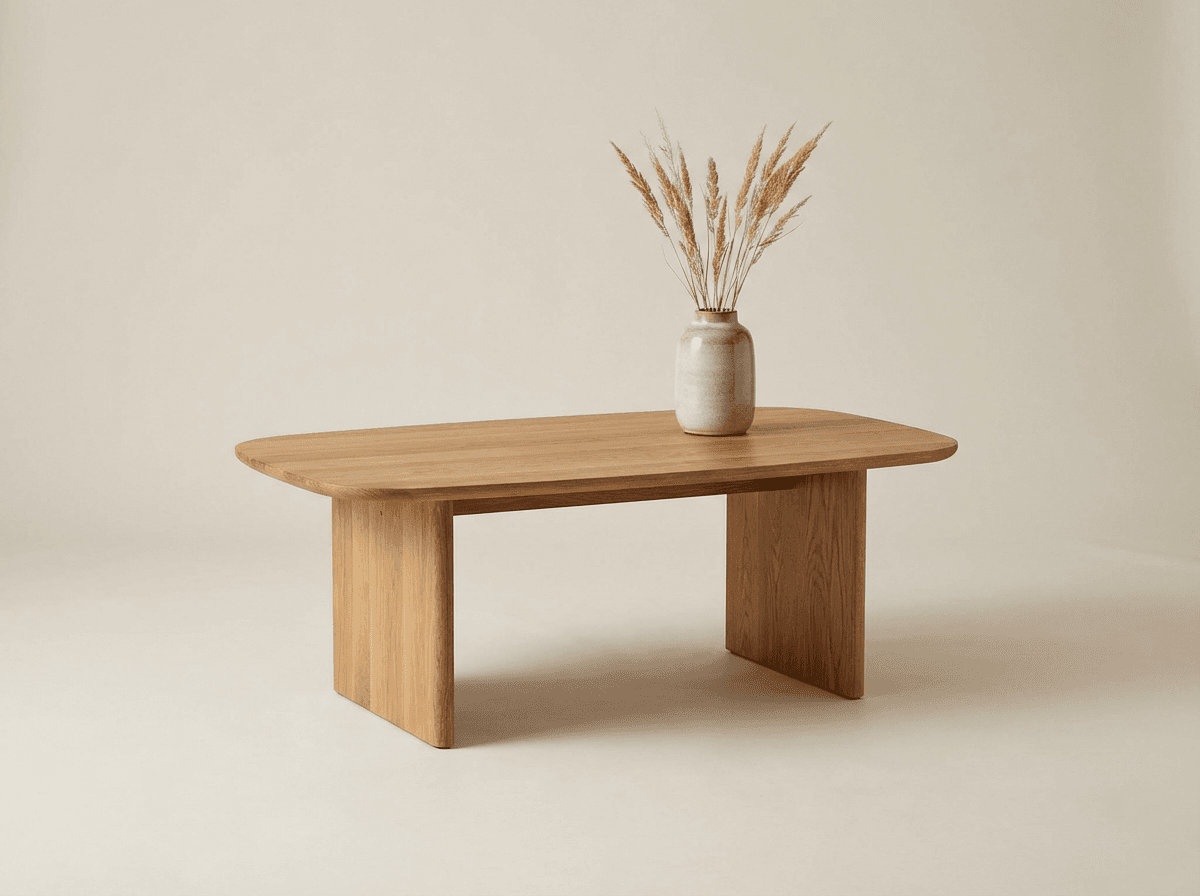
Solid wood coffee table
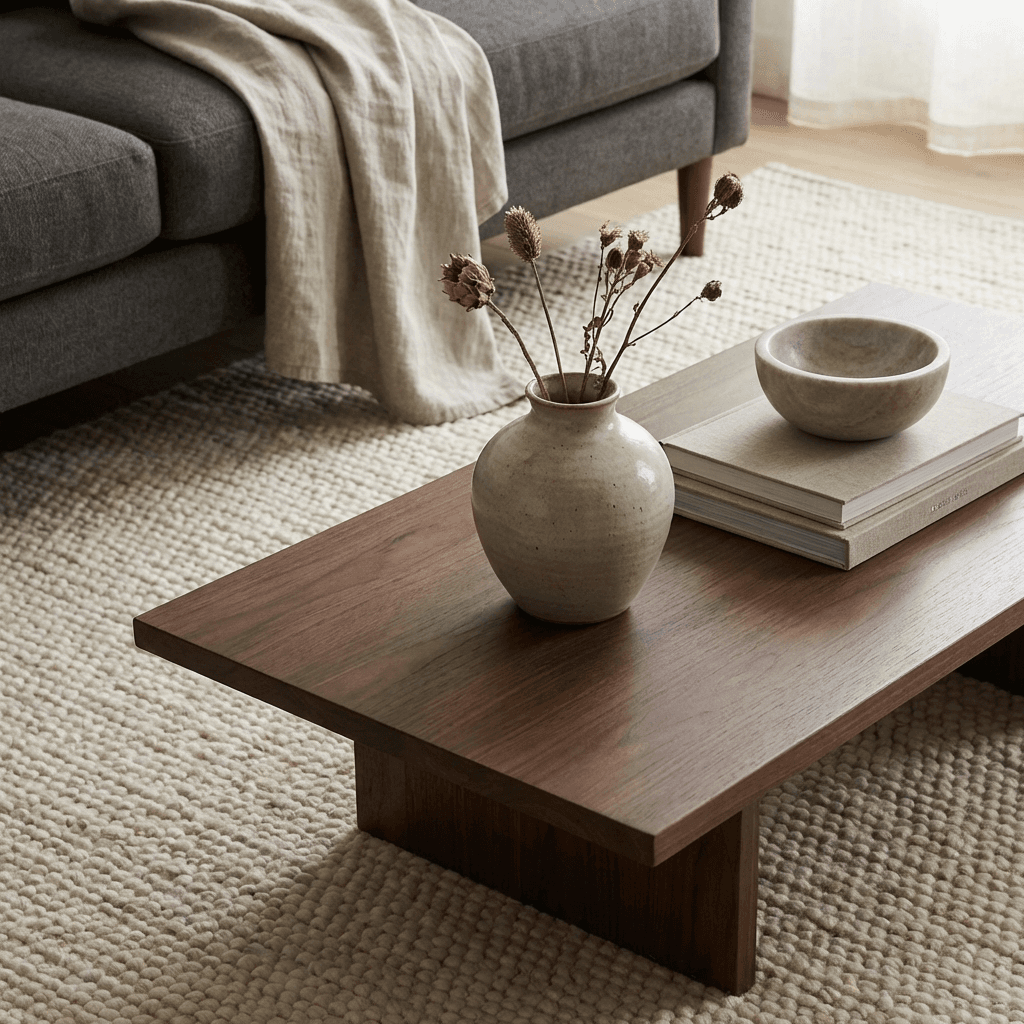
A round or oval table in light oak or walnut with visible grain and simple joinery. Skip tables with drawers or shelves — the goal is honest craftsmanship and open space beneath.

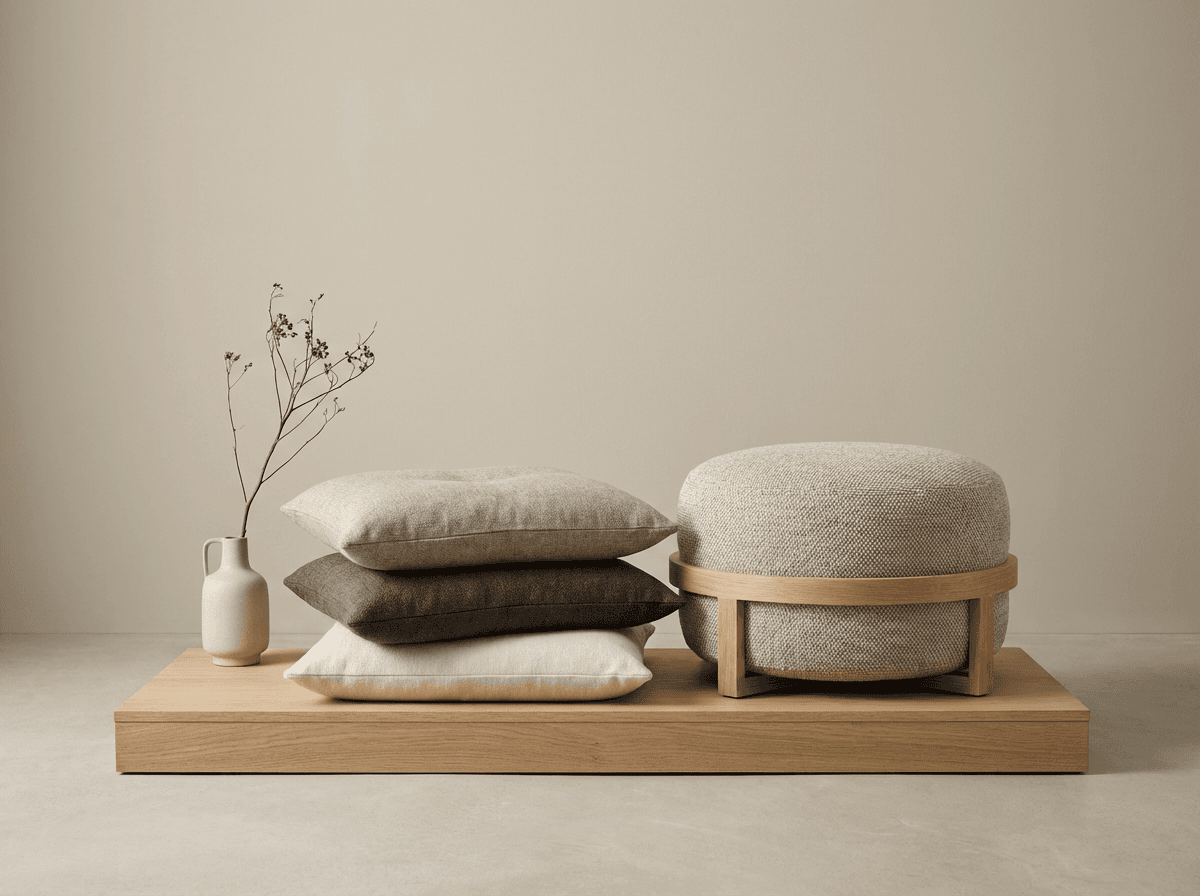
Floor cushions or zabuton
Traditional Japanese floor cushions in neutral linen or undyed cotton add flexible seating while reinforcing the low-living ethos. Stack two or three near the coffee table for an authentic touch.

This Room in Every Style
Explore more design styles for your living room
More Japandi Rooms
See Japandi design in other rooms
Frequently Asked Questions
Todo lo que necesitas saber sobre RoomLift — para diseñadores, agentes y cualquiera que transforme espacios con AI.
- What is Japandi style and how is it different from minimalism?
- Japandi blends Japanese wabi-sabi philosophy with Scandinavian hygge. While pure minimalism can feel cold and clinical, Japandi layers warmth through natural materials, earthy tones, and handmade objects. The focus is not on owning less but on owning well — every piece should be both functional and beautiful.
- What colors work best in a Japandi living room?
- Stick to a muted, nature-inspired palette: warm whites, sand, clay, greige, and soft charcoal. Avoid bright or saturated colors. The only pops of color should come from natural elements like a green plant or a terracotta pot.
- Can I mix Japandi with other styles?
- Japandi pairs well with mid-century modern because both favor organic shapes and natural wood. It can also absorb a few wabi-sabi ceramics or Scandinavian textile art. Avoid mixing in maximalist elements like bold patterns or high-gloss finishes, which break the calm aesthetic.
- How do I add warmth to a Japandi living room without clutter?
- Layer textures instead of objects. A chunky wool throw on the sofa, a jute rug on the floor, and linen curtains create visual and tactile warmth. Warm-toned LED bulbs (2700 K) in paper or wood pendant lights complete the cozy atmosphere.
- Is Japandi style expensive to achieve?
- It can be budget-friendly because the style requires fewer pieces. Invest in a few quality items — a good sofa, a solid wood table — and keep everything else simple. Thrift stores are great for finding imperfect ceramic bowls and vintage wooden trays that suit the wabi-sabi side of Japandi.
No credit card required. 10 free renders.