¿Es legal el home staging virtual? Normativa y reglas del MLS
Mar 26, 2026 · 9 min de lectura
El home staging virtual es legal en EE. UU. y en la mayoría de países, pero exige divulgarlo. Normas del MLS, código ético NAR y qué puedes y no puedes alterar.
El home staging virtual se ha convertido en una herramienta estándar del marketing inmobiliario. Pero a medida que la tecnología mejora y las fotos ambientadas con AI resultan indistinguibles de las reales, los agentes se preguntan, con razón, si esto es realmente legal. ¿Dónde está el límite entre un marketing eficaz y la tergiversación?
Esta guía repasa el marco legal, las normas del MLS, las directrices éticas de NAR y las buenas prácticas para usar el home staging virtual cumpliendo la normativa.
¿Es legal el home staging virtual?
Sí. El home staging virtual es legal en los 50 estados de EE. UU. No existe ninguna ley federal ni estatal que prohíba añadir digitalmente mobiliario y decoración a las fotos de un anuncio.
El home staging virtual se trata igual que otras prácticas habituales del marketing inmobiliario: la fotografía profesional, la edición HDR o la corrección de color. Es una herramienta de presentación, no de engaño, siempre que se use correctamente.
La diferencia clave está entre presentar el espacio y tergiversarlo:
- Presentación (legal): añadir mobiliario, decoración y accesorios para mostrar cómo se podría usar un espacio
- Tergiversación (ilegal): alterar la propiedad en sí, cambiar las dimensiones de las habitaciones, ocultar defectos, modificar las vistas o eliminar elementos estructurales
Mientras te quedes del lado de la presentación y declares correctamente que las imágenes están mejoradas digitalmente, el home staging virtual es totalmente legal.
Requisitos de divulgación del MLS
Aunque el home staging virtual en sí es legal, la mayoría de los sistemas MLS tienen normas específicas sobre cómo deben presentarse las fotos ambientadas.
Requisitos habituales del MLS
Los requisitos exactos varían según el MLS, pero la mayoría comparte estos estándares:
| Requisito | Detalles |
|---|---|
| Etiquetado de fotos | Las imágenes con home staging virtual deben incluir un pie de foto, una marca de agua o un aviso con la mención "Virtually Staged" |
| Fotos sin alterar | Al menos algunas fotos del anuncio deben mostrar la propiedad en su estado actual real |
| Divulgación en la descripción | La descripción del anuncio debe indicar que algunas fotos tienen home staging virtual |
| Sin alteraciones estructurales | Las fotos alteradas digitalmente no deben tergiversar el estado físico de la propiedad |
Ejemplos de los principales MLS
- Bright MLS (Mid-Atlantic): exige que todas las fotos con home staging virtual estén claramente etiquetadas. También hay que incluir fotos sin alterar de las mismas habitaciones.
- CRMLS (California): las fotos mejoradas virtualmente deben identificarse como tales. Los agentes deben incluir las fotos originales sin editar.
- Stellar MLS (Florida): exige un aviso en todas las imágenes mejoradas digitalmente y prohíbe cualquier alteración que tergiverse el estado de la propiedad.
- MLS PIN (New England): exige declarar el home staging virtual en los pies de foto y recomienda incluir las versiones sin editar.
Si no tienes claras las normas de tu MLS local, consulta el manual del MLS o contacta directamente con el equipo de cumplimiento normativo. Las reglas son sencillas: prácticamente todos los MLS permiten el home staging virtual siempre que se declare correctamente.
Consecuencias del incumplimiento
No declarar el home staging virtual en el MLS puede acarrear:
- Retirada o suspensión del anuncio
- Multas (normalmente entre 500 y 5.000 € según el MLS)
- Suspensión temporal o permanente del acceso al MLS
- Denuncias éticas de otros agentes
- Posible responsabilidad legal frente a los compradores
Las sanciones son serias, pero cumplir la normativa es sencillo: etiqueta tus imágenes e incluye las originales.
Código Ético de NAR
El Código Ético de la National Association of Realtors (NAR) marca el marco ético sobre cómo deben gestionar los Realtors el home staging virtual.
Artículo 12: una imagen fiel
El Artículo 12 establece que los Realtors deben ser honestos y veraces en sus comunicaciones inmobiliarias y presentar una imagen fiel en su publicidad, su marketing y el resto de representaciones.
El home staging virtual cumple el Artículo 12 cuando:
- Las imágenes ambientadas se identifican claramente como mejoradas digitalmente
- La ambientación no altera las características físicas de la propiedad
- Las fotos originales sin alterar están disponibles para que los compradores las revisen
- La presentación general no crea una impresión falsa del estado de la propiedad
Norma de Práctica 12-2
Esta norma aborda específicamente que los Realtors pueden representar las propiedades mediante descripciones, fotografías y visitas virtuales, siempre que sean representaciones fieles de la propiedad o se declaren claramente como alteradas.
NAR no ha emitido ninguna directriz que prohíba el home staging virtual. Se considera una herramienta de marketing legítima siempre que se use con transparencia.
Qué puedes hacer y qué no
Aquí es donde los agentes deben prestar más atención. La línea entre un home staging virtual aceptable y la tergiversación es clara, pero conviene entender exactamente dónde está.
Permitido (legal con divulgación)
- Añadir mobiliario a habitaciones vacías, sofás, camas, mesas, sillas
- Añadir decoración, alfombras, cortinas, cuadros, plantas, cojines, lámparas
- Añadir accesorios, libros, jarrones, menaje de cocina para dar ambiente
- Cambiar el color de las paredes, mostrando posibilidades de pintura (con divulgación)
- Añadir mobiliario de exterior en patios, terrazas y jardines
- Mostrar distintos estilos de diseño, moderno, tradicional, rústico, etc.
- Conversión al atardecer, pasar fotos de exterior diurnas a la hora azul o el atardecer (con divulgación)
No permitido (tergiversación)
- Eliminar paredes o alterar la distribución de las habitaciones
- Ampliar las dimensiones de una habitación para que parezca más grande
- Cambiar las vistas de las ventanas por otras distintas a las reales
- Ocultar defectos de la propiedad, tapar grietas, manchas de humedad o problemas estructurales
- Eliminar tendidos eléctricos, construcciones vecinas o elementos poco estéticos de las fotos de exterior
- Añadir elementos que no existen, piscinas, chimeneas, muebles empotrados
- Alterar la altura de los techos o las proporciones arquitectónicas
- Eliminar elementos fijos, como armarios o electrodomésticos anticuados, para mostrar "potencial"
La regla general: si al entrar en la propiedad un comprador se llevara una sorpresa porque algo que aparece en las fotos no existe o se ve distinto, has cruzado la línea.
Buenas prácticas para cumplir la normativa
Seguir estas prácticas te mantendrá totalmente dentro de las normas del MLS, la ética de NAR y la legislación aplicable.
1. Divulga siempre
Añade una etiqueta clara de "Virtually Staged" a cada foto alterada digitalmente. Puede ser una marca de agua en la imagen, un pie de foto en la descripción del MLS, o ambas cosas. En caso de duda, declara de más.
2. Incluye las fotos originales
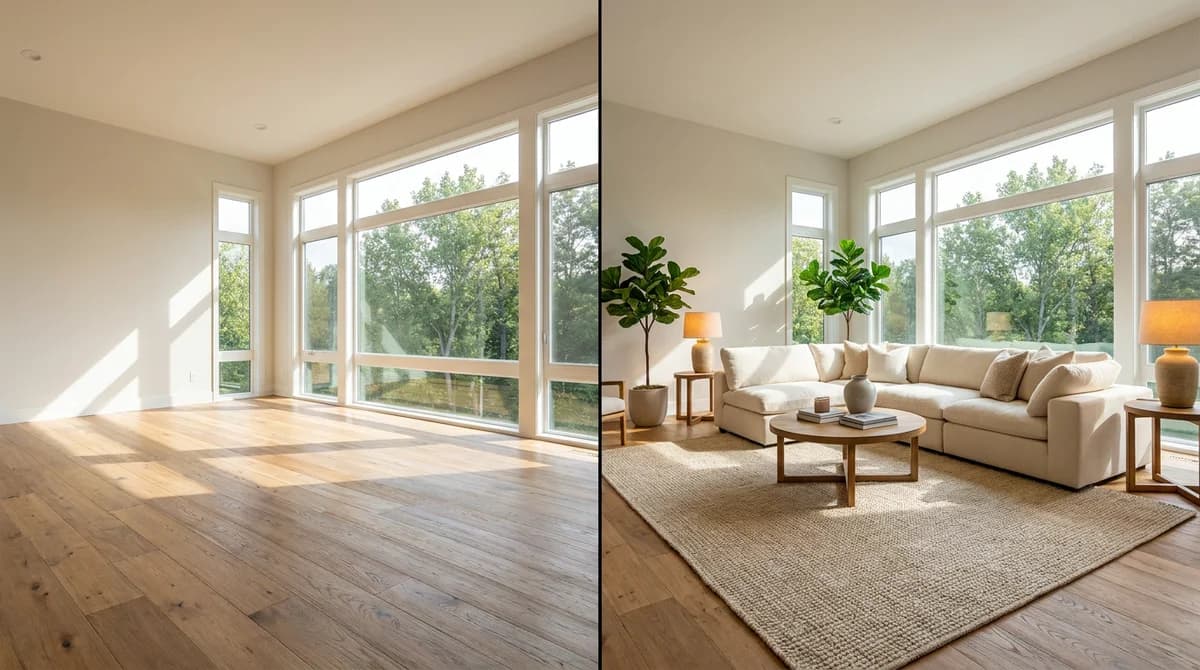
Por cada habitación con home staging virtual, incluye en el anuncio la foto original sin alterar. Muchos agentes colocan las fotos sin editar justo después de las versiones ambientadas para que los compradores puedan comparar fácilmente. Esta transparencia genera confianza en lugar de restarla.
3. Limita los cambios al mobiliario y la decoración
Usa herramientas de home staging virtual como RoomLift únicamente para añadir elementos extraíbles, mobiliario, decoración y accesorios. No alteres paredes, suelos, techos, instalaciones fijas ni ningún elemento permanente de la propiedad.
4. Añade un aviso a la descripción del anuncio
Incluye una línea sencilla en la descripción del anuncio:
"Algunas fotos incluyen home staging virtual para ilustrar el potencial del espacio. El anuncio también incluye fotos sin alterar."
5. Conserva los archivos originales
Guarda tus fotos originales sin alterar. En el improbable caso de una disputa, tener los originales a mano demuestra buena fe y transparencia.
6. Informa a tus clientes
Asegúrate de que tus vendedores entienden que las fotos del anuncio incluyen home staging virtual y que hay que declararlo. Incluye la divulgación del home staging virtual en el contrato de representación o en tu proceso de aprobación de marketing.
Consideraciones internacionales
El home staging virtual se usa en todo el mundo, pero los requisitos de divulgación varían según el país.
Reino Unido
La Consumer Protection from Unfair Trading Regulations 2008 y la Property Misdescriptions Act exigen que el marketing inmobiliario no sea engañoso. El home staging virtual está permitido siempre que se declare con claridad. La Advertising Standards Authority (ASA) espera que las imágenes de propiedades alteradas digitalmente se etiqueten como tales.
Unión Europea
Las directivas de protección al consumidor de la UE exigen publicidad honesta en todos los estados miembros. El home staging virtual es legal, siempre con divulgación, en todos los países de la UE. Algunos países, como Alemania, tienen requisitos más estrictos sobre la fidelidad fotográfica en los anuncios inmobiliarios.
Australia
La Australian Consumer Law (ACL) prohíbe las conductas engañosas o fraudulentas en el comercio, lo que incluye el marketing inmobiliario. El home staging virtual es legal si se declara. El Real Estate Institute of Australia recomienda etiquetar con claridad todas las imágenes mejoradas digitalmente.
Canadá
La Competition Act de Canadá y la normativa inmobiliaria provincial permiten el home staging virtual con divulgación. Las directrices de CREA (Canadian Real Estate Association) van muy en línea con los estándares de NAR: declara las alteraciones e incluye las fotos originales.
En resumen
El home staging virtual es inequívocamente legal cuando se hace bien. Los requisitos legales y éticos son sencillos:
- Declara que las fotos tienen home staging virtual
- Incluye las fotos originales sin alterar en tu anuncio
- Limita los cambios al mobiliario, la decoración y los accesorios
- Nunca alteres elementos estructurales, dimensiones de habitaciones ni ocultes defectos
- Sigue las normas de divulgación de tu MLS local
No son requisitos pesados. Se implementan en minutos y te protegen de posibles problemas legales o éticos.
El sector inmobiliario ha adoptado de forma generalizada el home staging virtual como herramienta estándar de marketing. Herramientas como RoomLift facilitan generar imágenes ambientadas fotorrealistas sin salirte de lo permitido. Mientras seas transparente con los compradores sobre qué es real y qué se ha añadido digitalmente, el home staging virtual es una forma potente, legal y ética de promocionar tus anuncios.
¿Listo para transformar tus anuncios?
Ambienta tu primera habitación en 20 segundos. Sin conocimientos de diseño.